Container Shipping
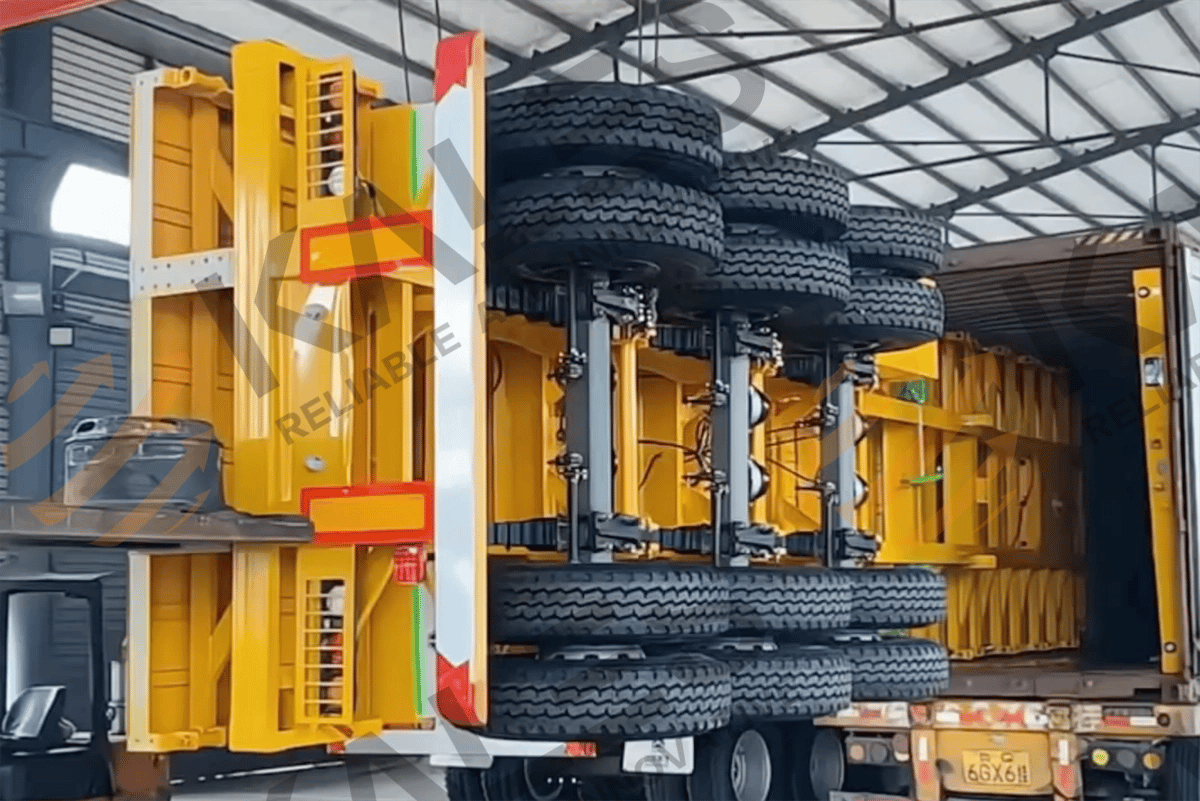
Container loading of Kales semi trailer for export, ensuring secure fastening and space optimization.



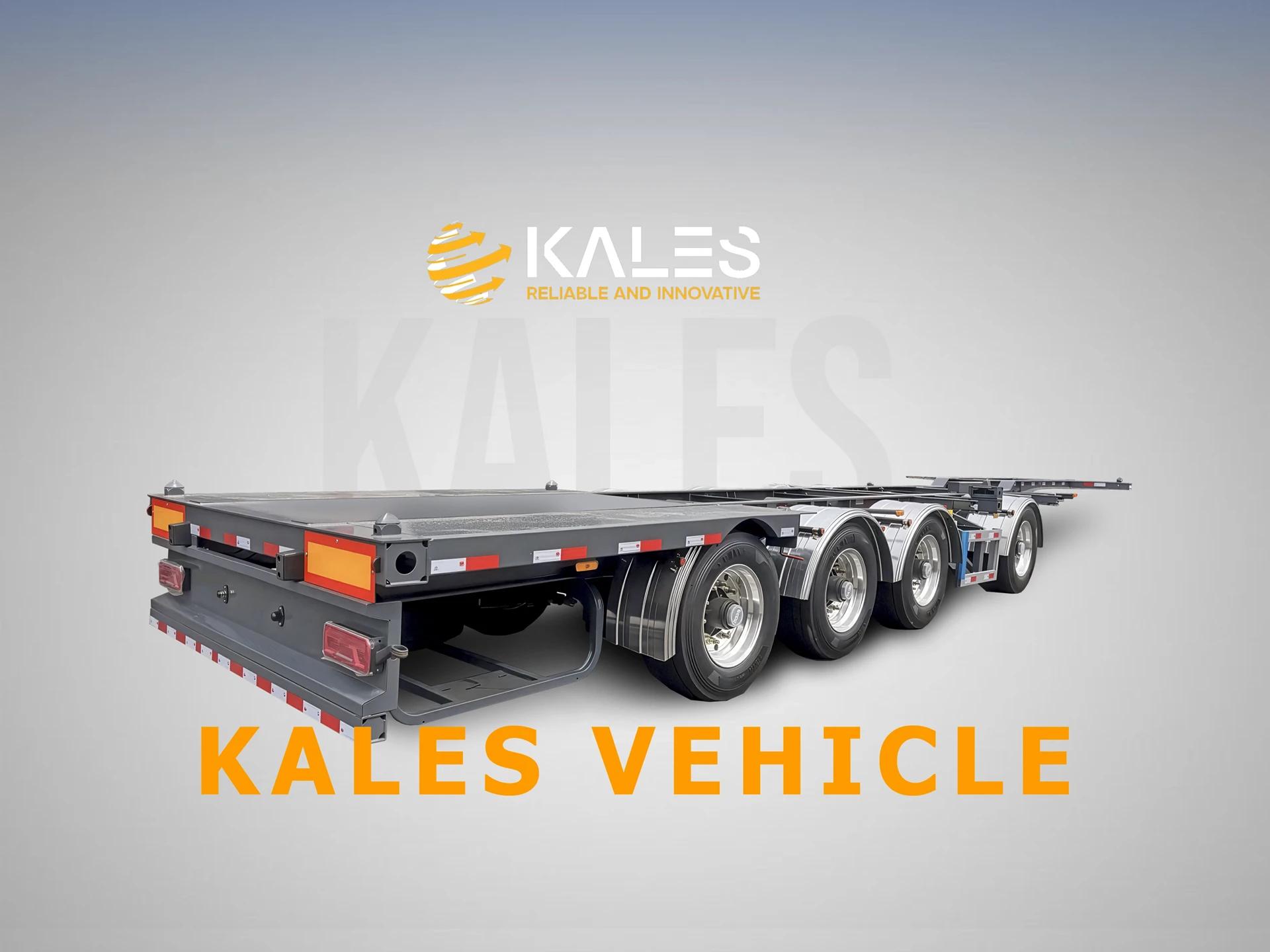
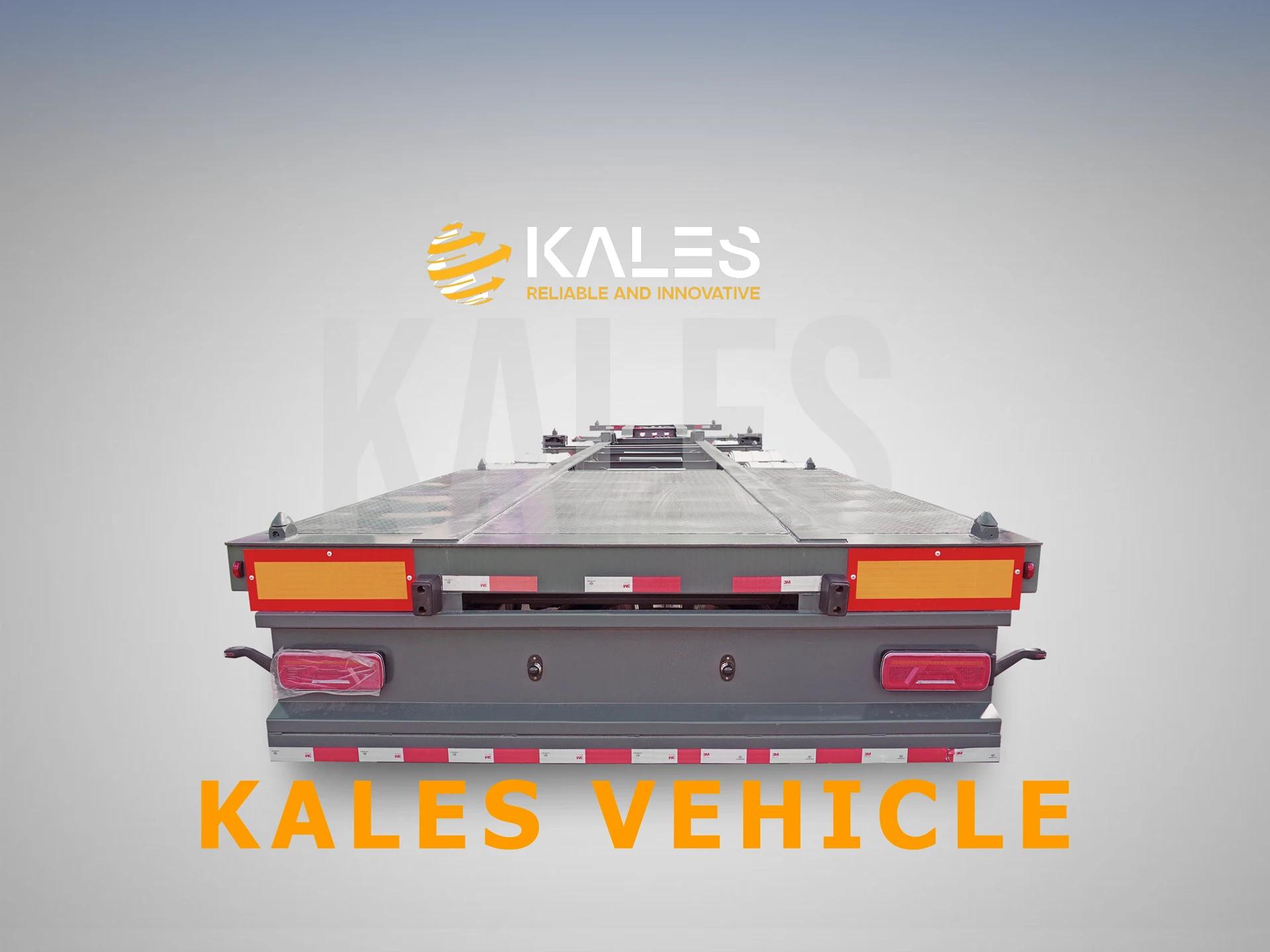
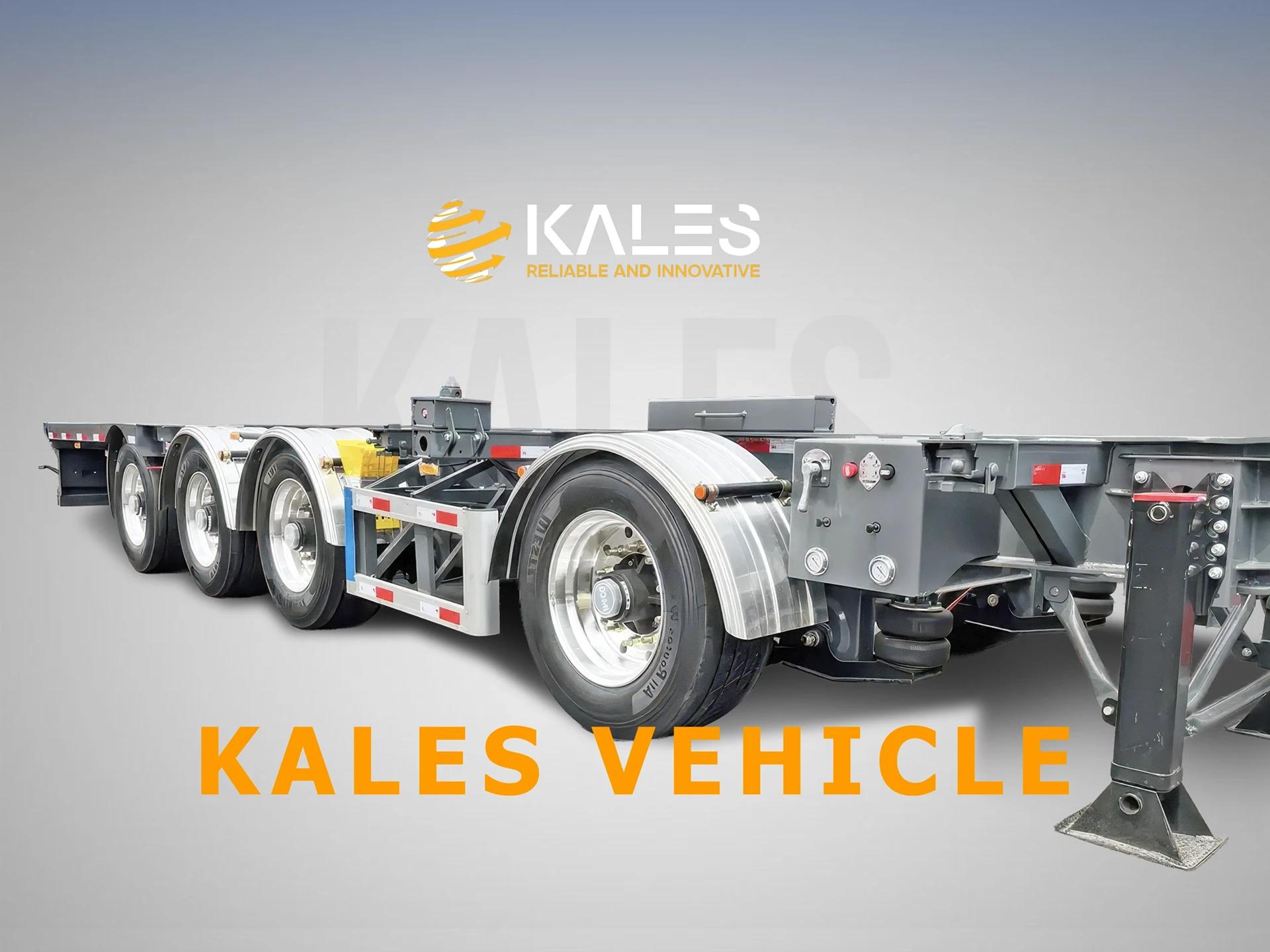
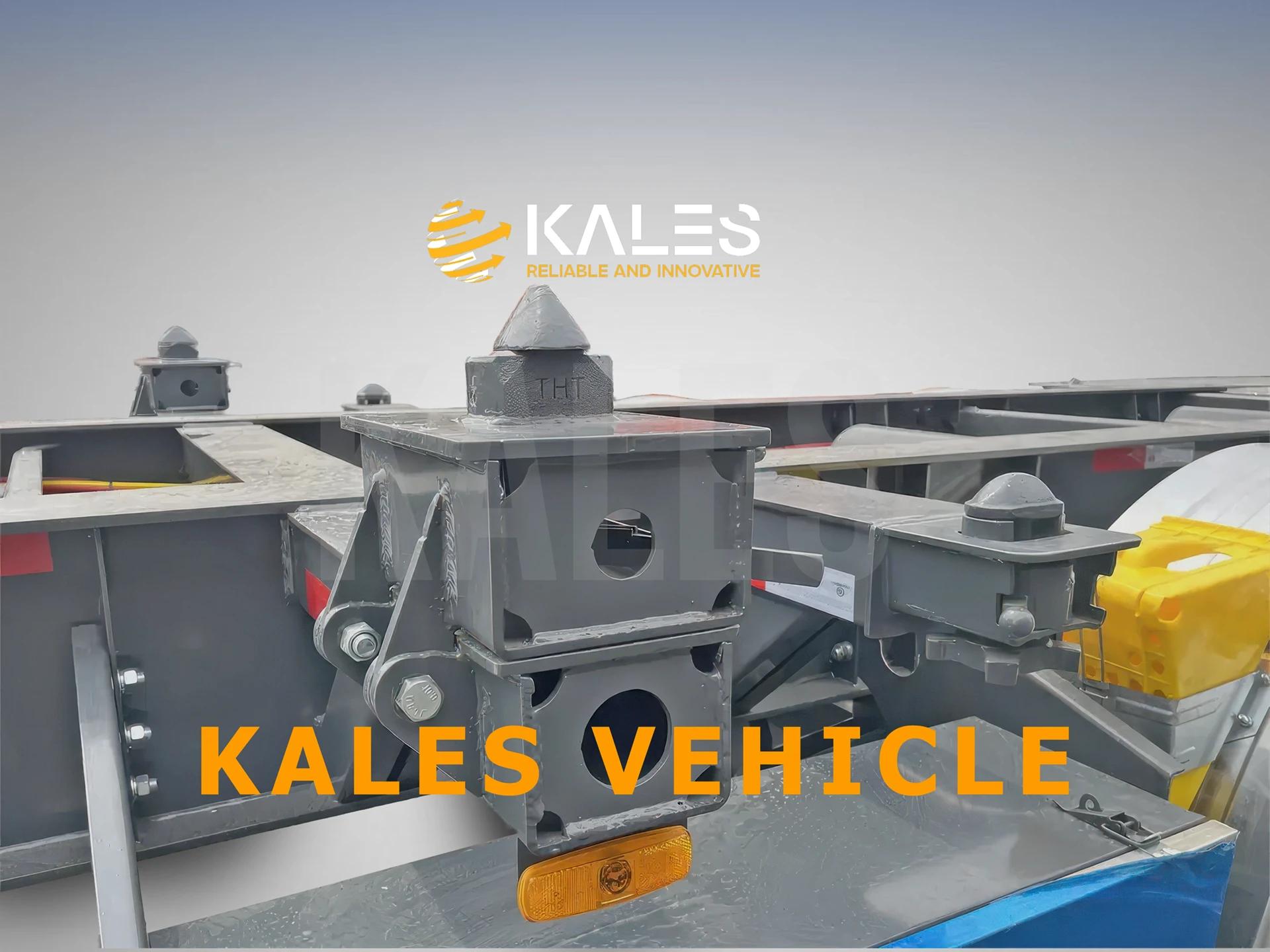
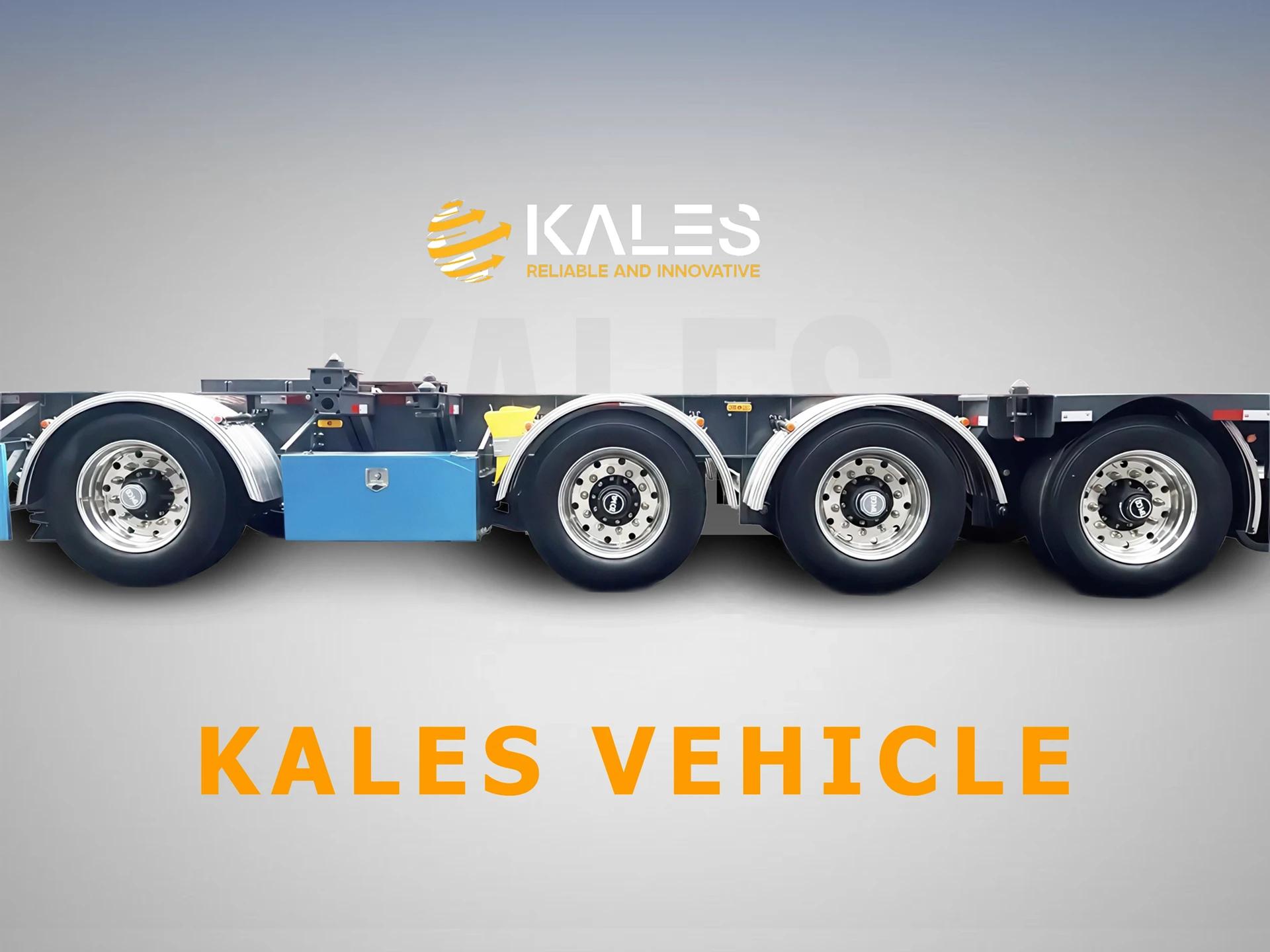
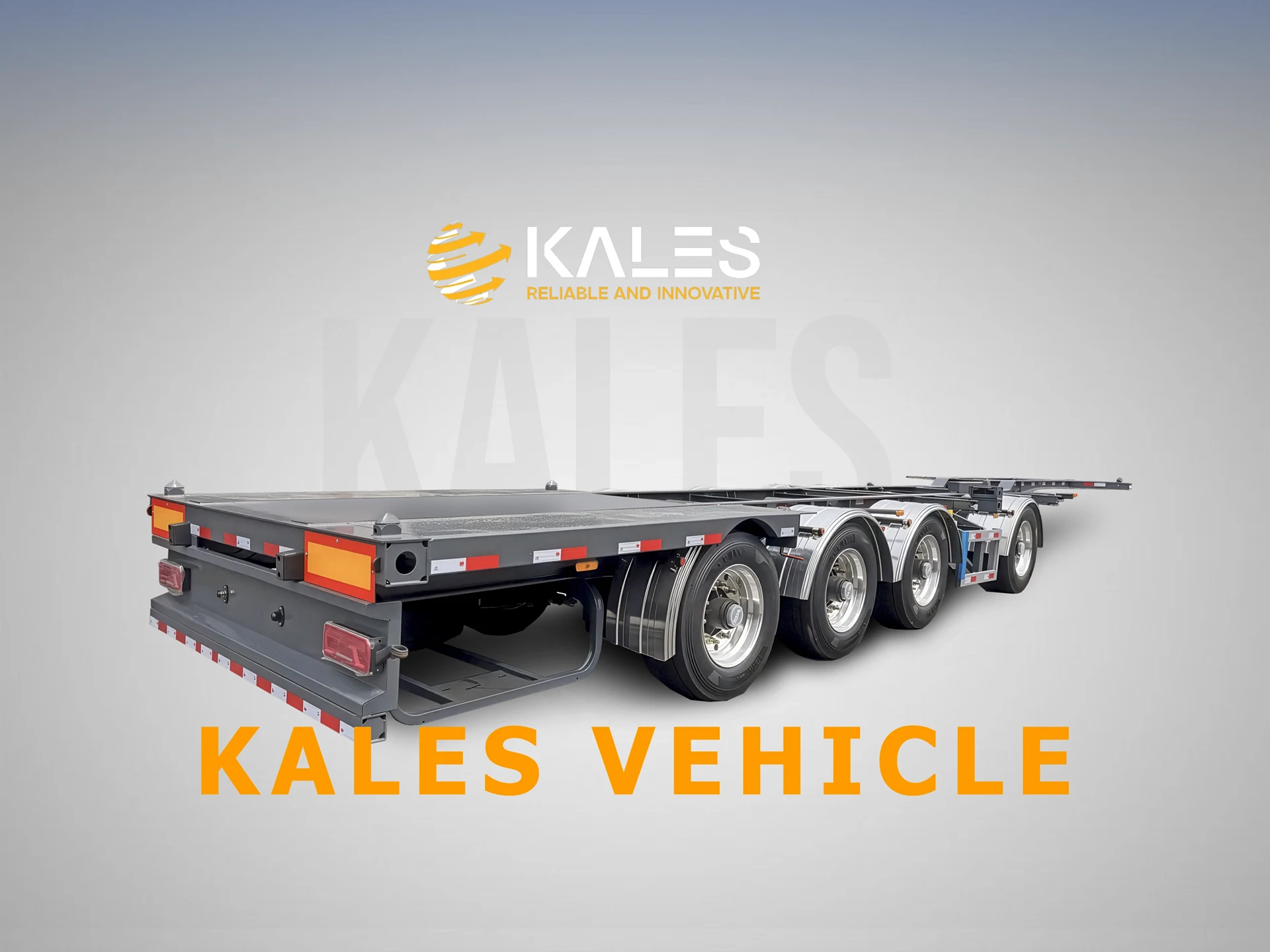
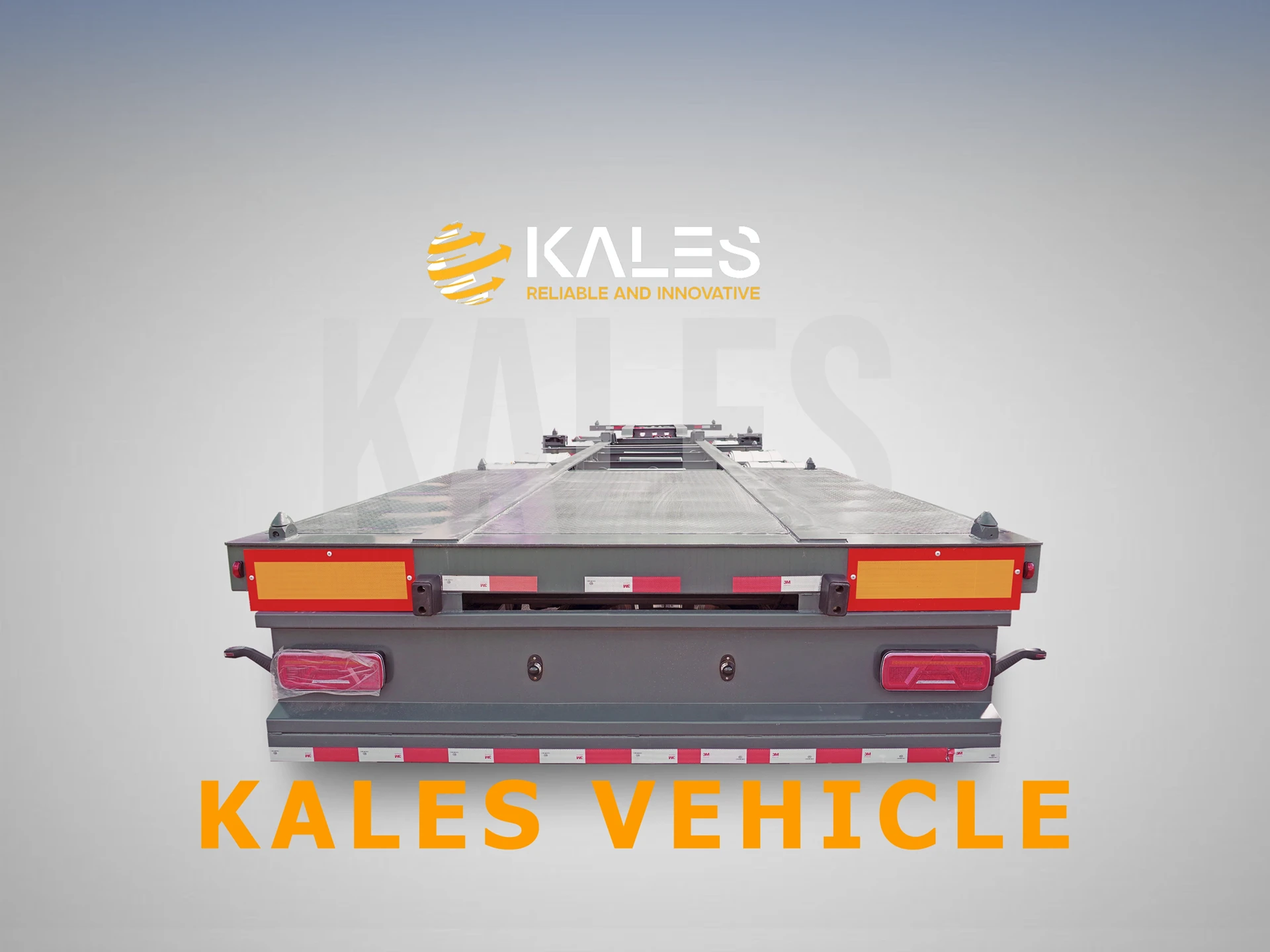
Trailer Type
skeletal
Axles
Multi-axle options
Payload
40
Road Matching
air suspension
Quick answer: choose this 4-axle 12m container skeleton semi-trailer when your route or compliance logic already requires broader axle-load distribution than a 3 axle chassis can provide, and when lower tare, lift axles, disc brakes, and Euro-style spec matter to fleet economics. Contact KALES for a tailored quotation based on the required configuration, order quantity, and destination.
✓ Direct technical consultation from factory engineers · Zero trader markup
Factory Direct Export
Zero trader markup
Heavy-Duty Certified
ISO9001 / CCC / CIQ
Global Sea Freight
Container / Ro-Ro / Bulk
Custom Engineering
Tailored configurations
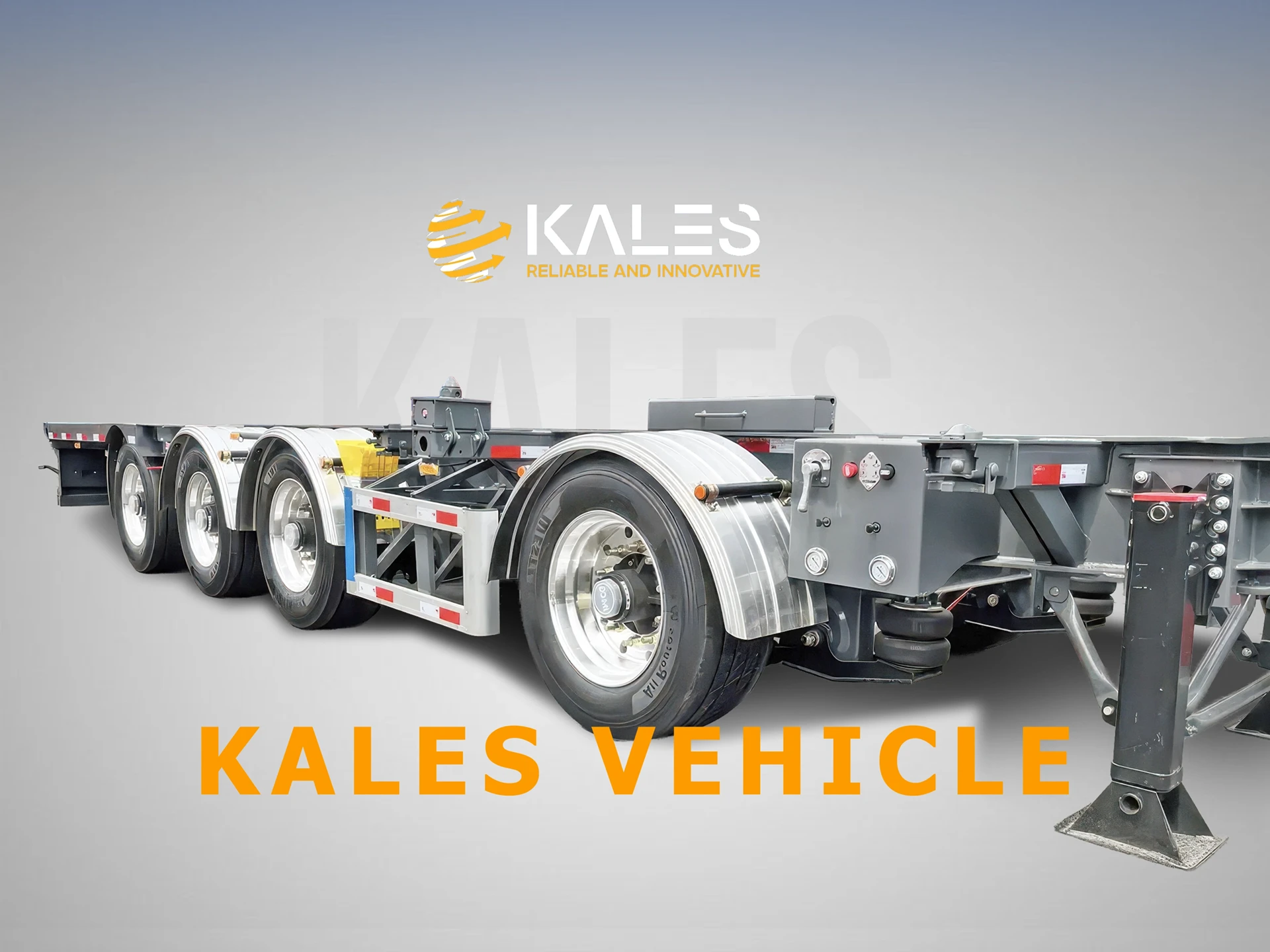
| Product type | 4 axle 12m container skeleton semi-trailer / lightweight 40ft chassis |
|---|---|
| Primary role | 40ft ISO container, reefer container, port shuttle, and export container haulage with broader axle-load distribution |
| Container fit | 40ft container duty with Euro-spec 12m chassis layout; specific lock positioning can be matched to route and load program |
| Overall dimensions | About 12,550 mm x 2,550 mm x 1,100 mm on the represented build |
| Payload class | About 40 tons on the represented lightweight 4 axle export configuration, subject to route regulation and container load concentration |
| Main beam | T700 high-strength cold-bent steel structure for lower tare and stronger fatigue resistance than basic carbon-steel chassis |
| Axle package | 4 axles with disc brakes; front two axles liftable on the represented Euro-spec build |
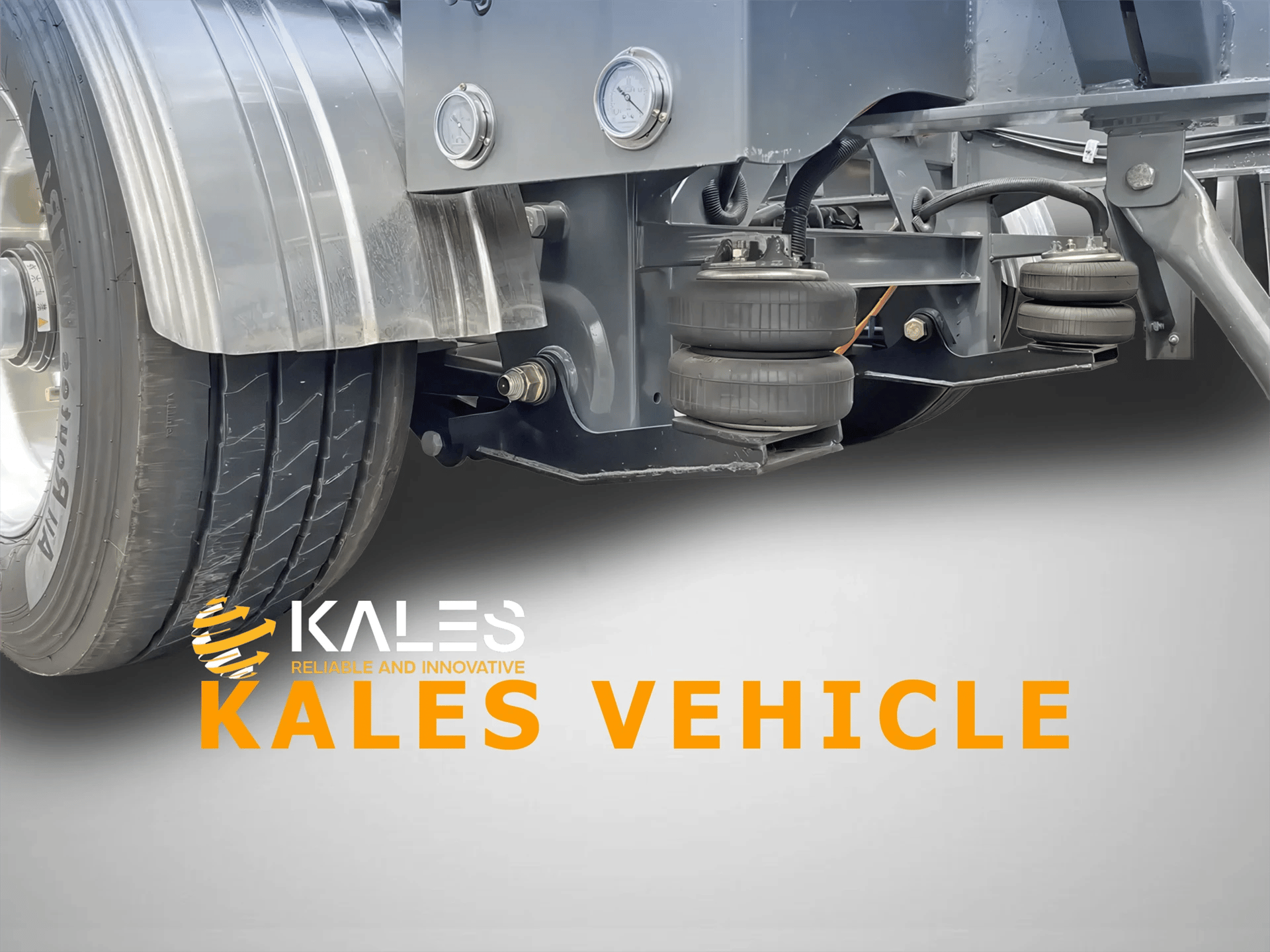
| Suspension | Air-ride running gear with lift-axle control logic on the front axle set |
| Wheels and tires | Single wide-base tire layout with aluminum-alloy rim package on the represented lightweight export specification |
| Brake system | WABCO valve logic with ABS-ready disc-brake setup |
| Container locks | Up to 14 container lock positions depending on the final dispatch pattern and container program |
| Landing gear | JOST 28T linkage landing gear |
| Custom quotation | Contact KALES for a tailored quotation based on the required configuration, order quantity, and destination. |
This page fits buyers whose container operation has already moved beyond the mainstream 3 axle chassis. The real driver here is not decoration. It is axle distribution, tare control, reefer-friendly running gear, and a higher-spec export platform for port, bonded, and long-haul container work. It is strongest where a lighter 4 axle chassis makes more sense than a cheaper but more concentrated 3 axle frame.
| Buyer situation | Best-fit Kales page | Why |
|---|---|---|
| Mainstream 20ft and 40ft container haulage without extra axle complexity | 40ft container chassis semi trailer | The standard 3 axle chassis remains the more rational default when the route does not require 4 axles |
| 40ft container work with lighter tare and broader axle-load distribution | This 4 axle 12m skeleton trailer | The page owns lightweight 4 axle skeleton intent with higher-spec running gear |
| Open-deck 40ft or 45ft freight rather than pure container chassis work | Tri-axle 45ft flatbed semi trailer | A flatbed is more suitable when the cargo is not consistently moving as an ISO container |
| Open platform freight without container-chassis specialization | 40ft flatbed semi trailer | A flatbed is simpler when the fleet needs deck utility instead of skeletal container logic |
Buyers often misread this page as simply a heavier chassis. That misses the real reason it exists. The 4 axle layout is primarily about better load distribution, route legality, and axle-pressure management on container work that has already outgrown a mainstream 3 axle format.
This page uses a lighter-weight export logic because extra axles alone do not help if tare weight climbs too far. T700 high-strength steel, aluminum-alloy wheel logic, and a more optimized 12m frame help fleets keep payload efficiency while gaining the route benefits of a 4 axle chassis.
The represented front lift-axle setup matters because container work often includes empty returns, depot transfers, or lighter repositioning moves. Being able to lift the front axle set reduces tire wear, drag, and scrub that would otherwise make a 4 axle chassis unnecessarily expensive to run.
This page is not positioned as a rough, low-spec yard chassis. Disc brakes, WABCO control logic, and air suspension make more sense for buyers running reefer containers, higher-speed trunk routes, and markets where better braking consistency and smoother road behavior are commercially useful.
KALES confirms the quotation after reviewing the required specification, quantity, destination, and delivery terms. Send the operating requirements for an accurate proposal.


Share your target market, usage scenario, and preferred configuration.
Receive our model recommendation, specification review, and factory quotation.
Confirm production, inspection, shipment route, and export documents.
Stay supported after delivery with spare parts and remote assistance.
At Kales Vehicle, we keep freight planning practical so your trailer or truck reaches the destination with the right balance of protection, speed, and cost.
Container Shipping, Ro-Ro (Roll-on/Roll-off), and Bulk Cargo each serve different export needs, and we choose the safest route, loading method, and packing approach for the order.
Container loading of Kales semi trailer for export, ensuring secure fastening and space optimization.
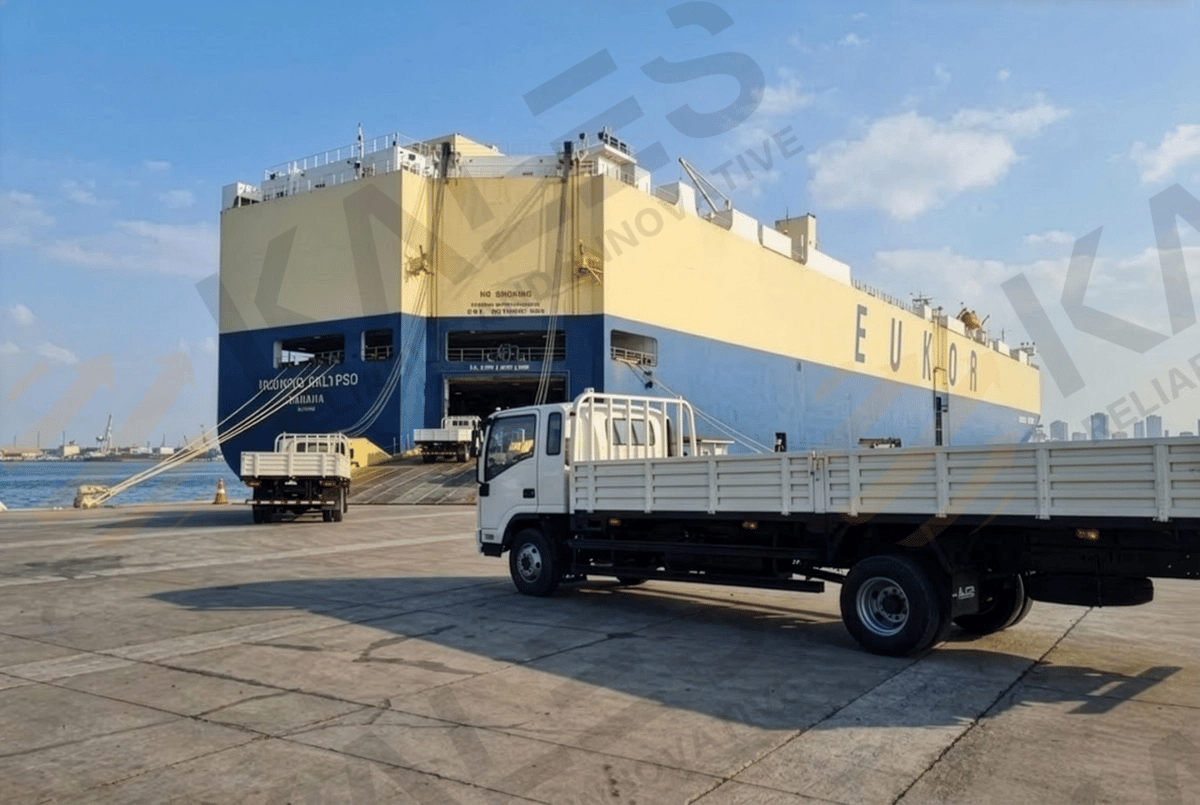
Ro-Ro shipping method for Kales commercial trailers, driving directly onto the vessel for maximum safety.
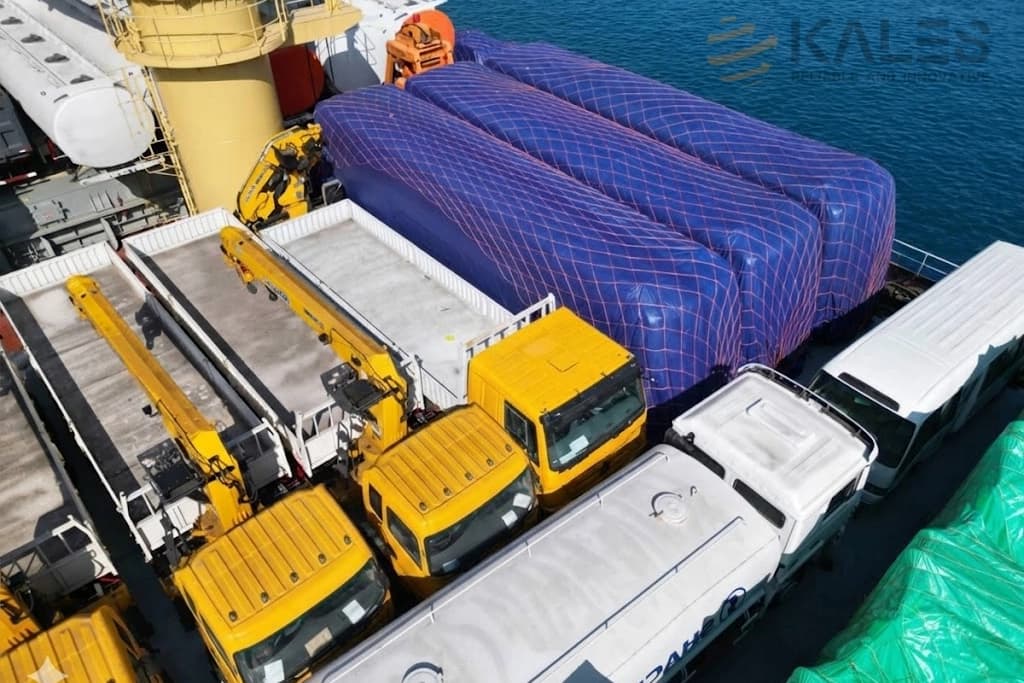
Bulk cargo transport of stacked Kales semi trailers with wax spraying protection against seawater corrosion.
If you are comparing a 4 axle 12m container skeleton semi-trailer for regulated container routes, reefer box transport, or higher-compliance export work, send your container mix, route country, target payload, and axle-load requirement. Kales can then match the lock pattern, lift-axle package, brake setup, and reinforcement level to the real route.
Factory engineering notes, maintenance protocols, and buyer checklists related to this equipment.
Mobilizing oversized industrial machinery—including hydraulic excavators, crawler bulldozers, rotary drilling rigs, crus…
In African open-pit mining, quarrying, and bulk mineral haulage—from the gold corridors of Geita and Kahama in Tanzania…
Nigeria represents the largest commercial vehicle market in Sub-Saharan Africa, serving as the industrial and trade loco…
Kales 4-Axle 12m Container Skeleton Semi-Trailer
Factory Direct · Free Quote