Container Shipping
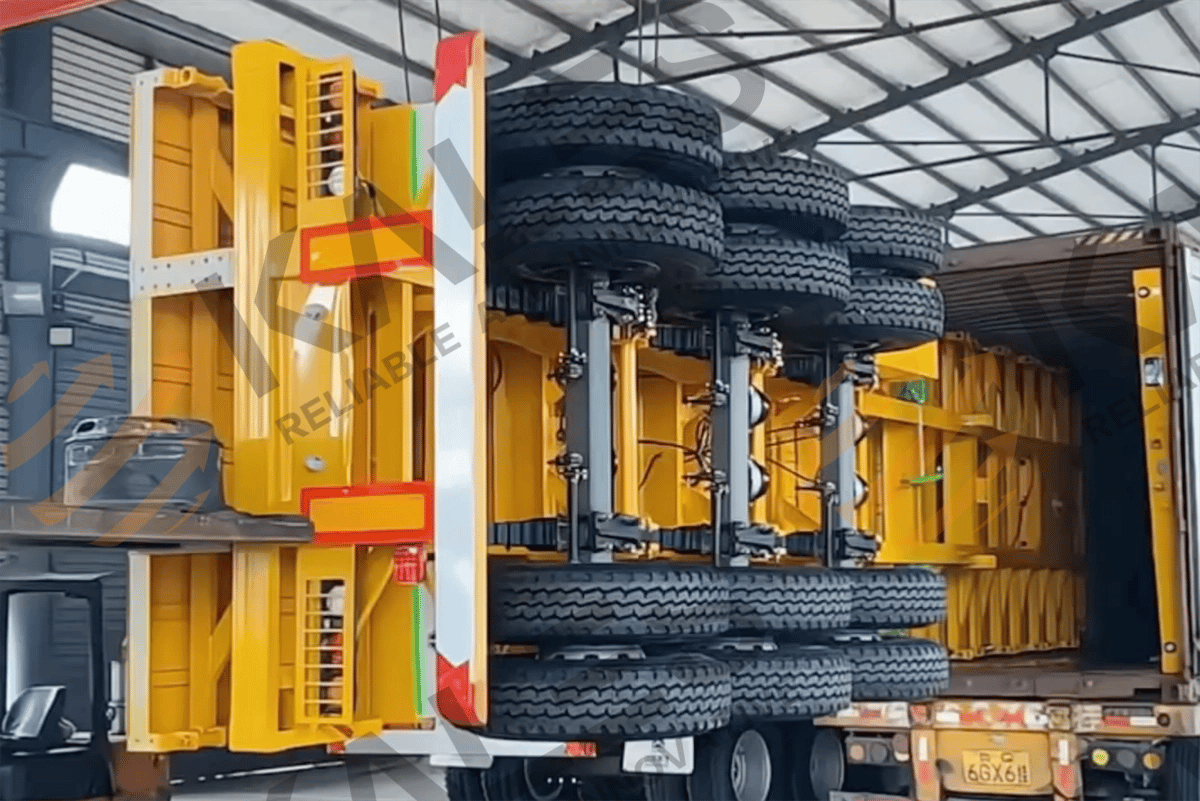
Container loading of Kales semi trailer for export, ensuring secure fastening and space optimization.



Trailer Type
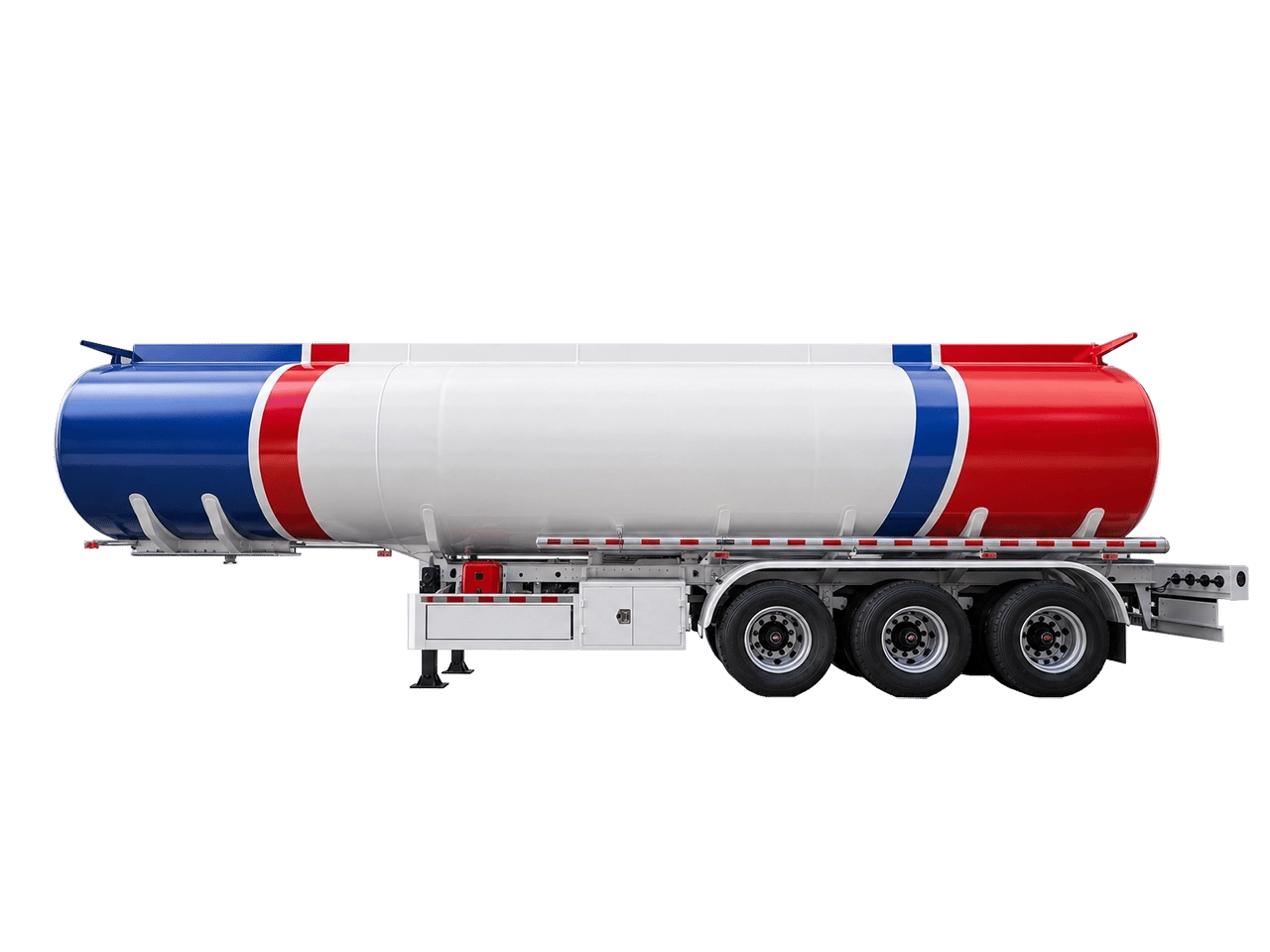
tanker
Axles
3 axles
Payload
40
Road Matching
leaf spring
Quick answer: choose this 54,000L fuel tanker trailer when your fleet needs a higher-volume carbon-steel fuel tanker with 3 x 13T axles, reinforced mechanical suspension, ABS, anti-wave baffles, and practical export serviceability for petrol and diesel delivery. The represented stock type uses a 54 CBM tank, 4 mm Q345B shell, 5 mm end structure, heavy-duty leaf-spring suspension, tubeless tires. Contact KALES for a tailored quotation based on the required configuration, order quantity, and destination.
✓ Direct technical consultation from factory engineers · Zero trader markup
Factory Direct Export
Zero trader markup
Heavy-Duty Certified
ISO9001 / CCC / CIQ
Global Sea Freight
Container / Ro-Ro / Bulk
Custom Engineering
Tailored configurations
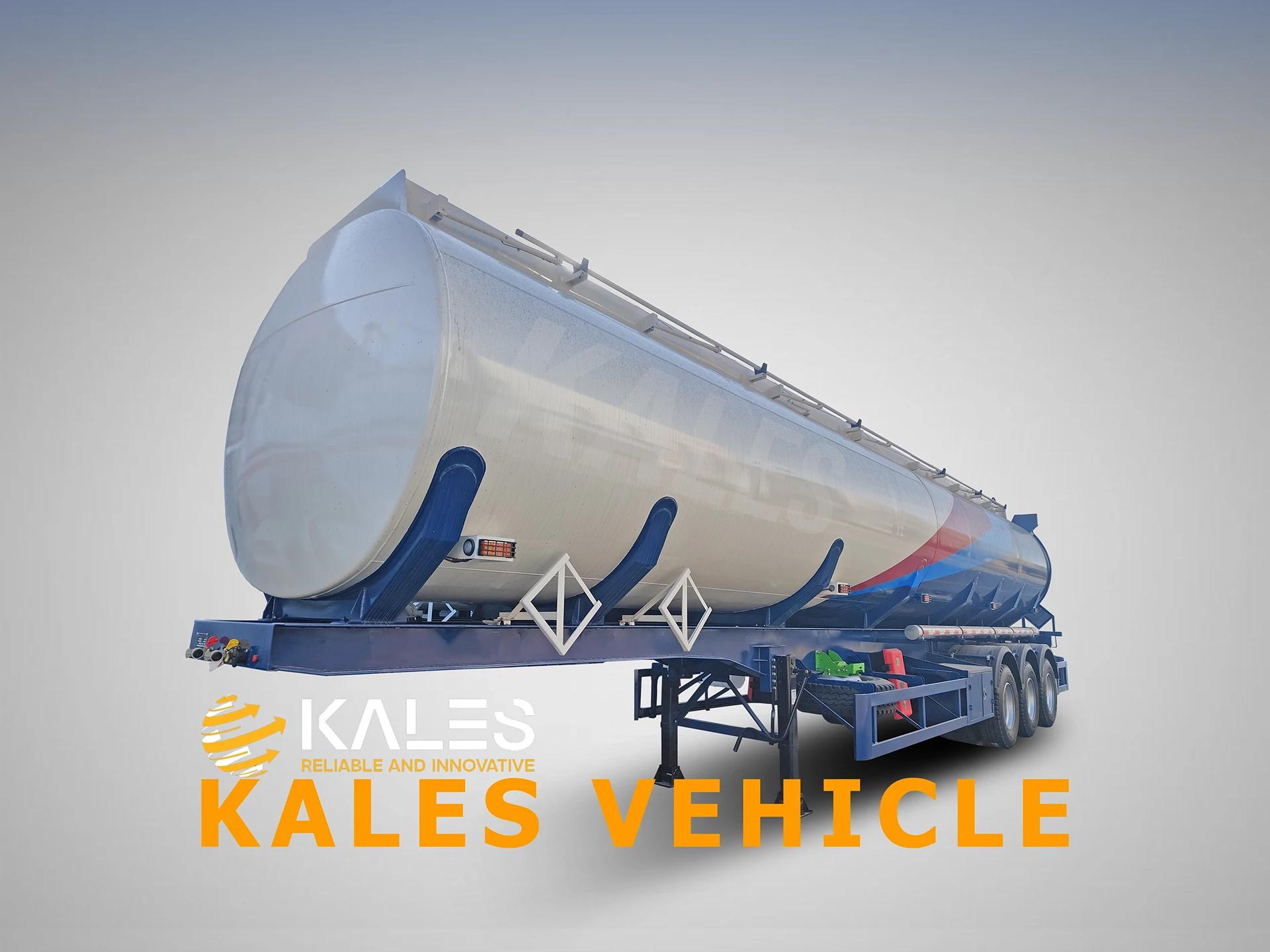
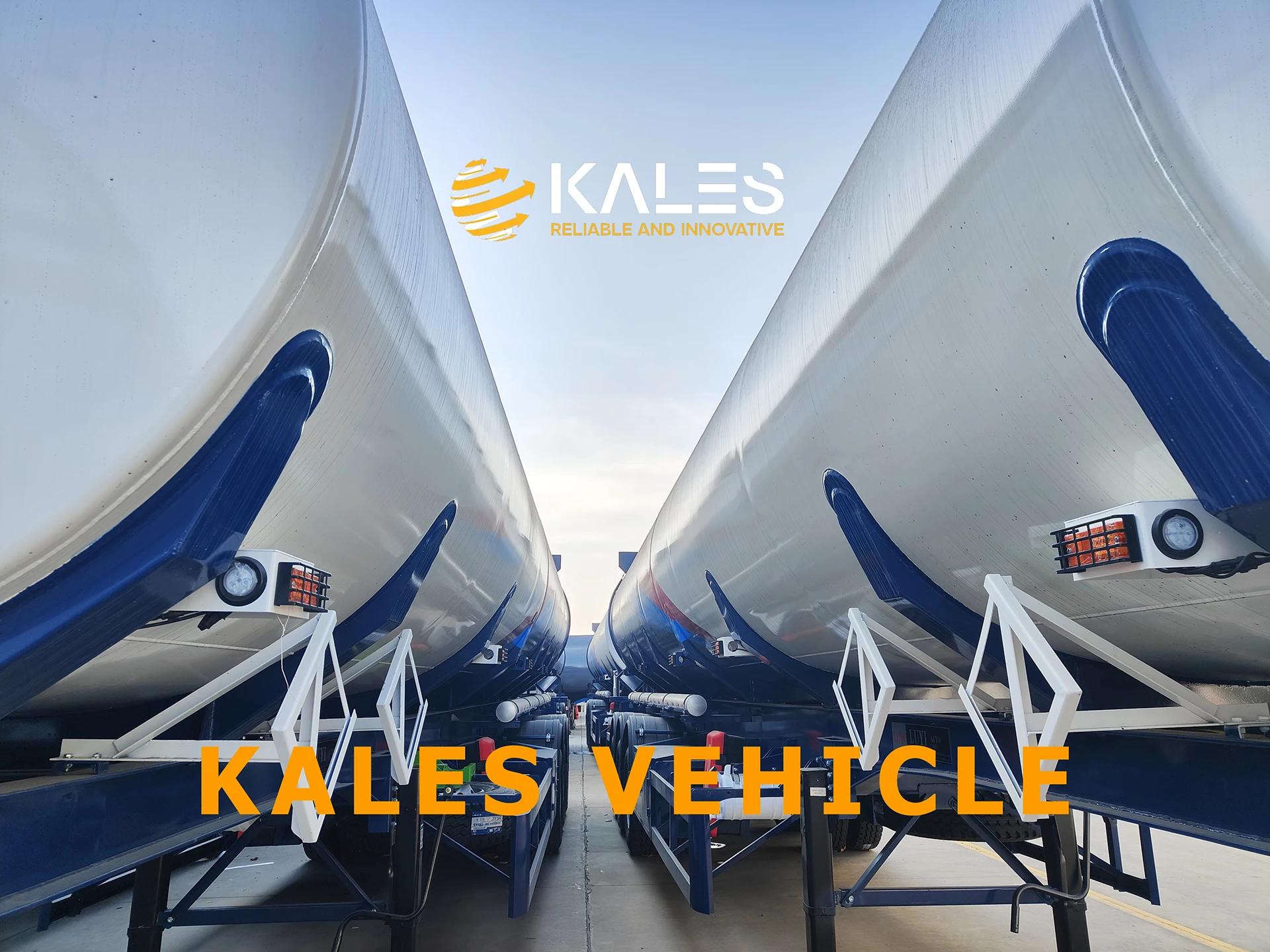
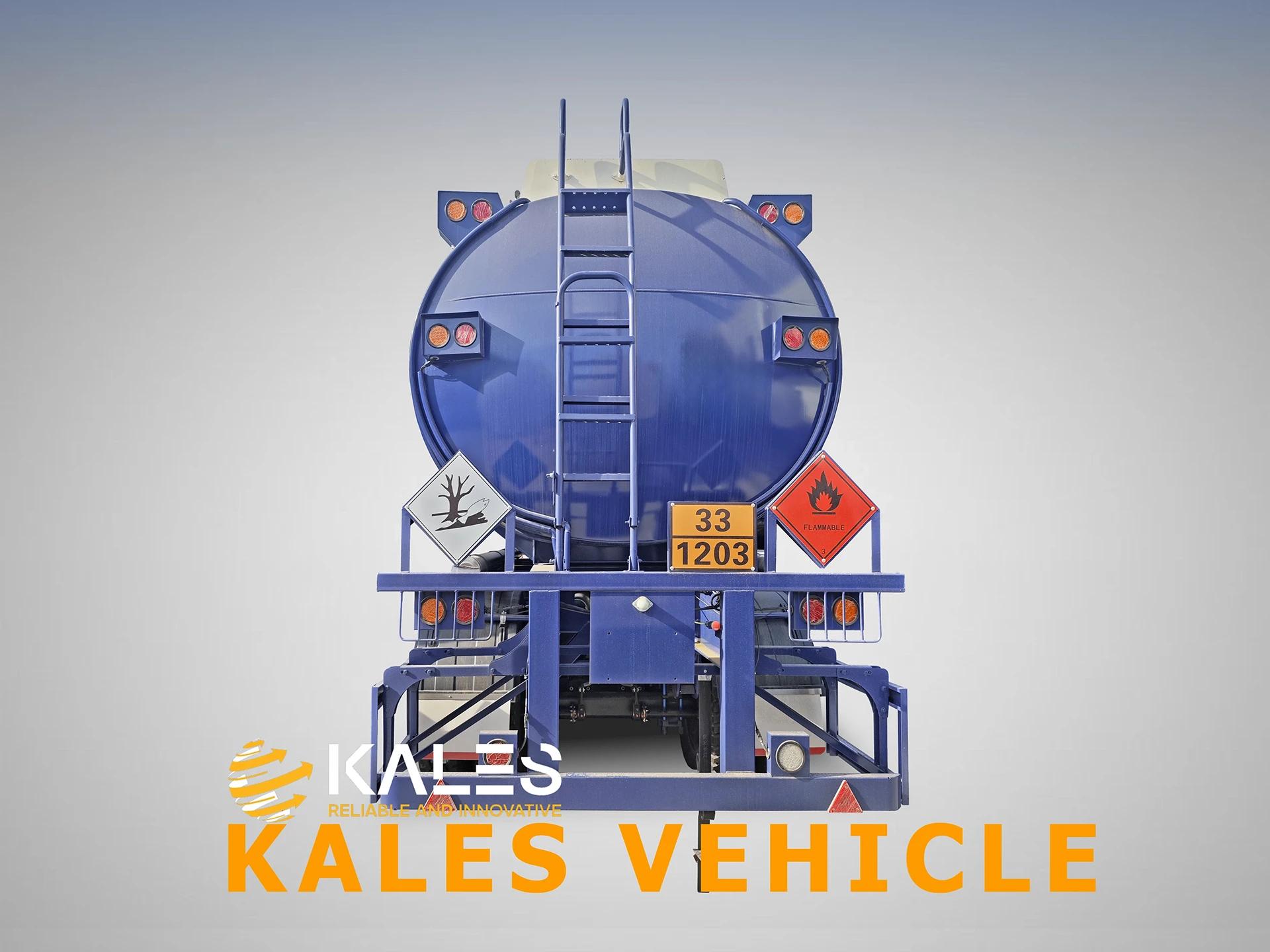
Kales 54 CBM fuel tanker trailer: this page is built for buyers who need a large-capacity 3 axle steel fuel tanker for petrol, diesel, oil, and similar refined liquid fuels, especially where liters per trip and rugged workshop-familiar running gear matter more than the tare savings of an aluminum tank. It is positioned as a volume-first export bowser, not as a lighter aluminum tanker and not as a dry powder or cement trailer.
Engineering guidance from the Kales Vehicle tanker team for buyers comparing 54,000L steel fuel tankers, 45,000L aluminum tankers, and powder transport trailers.
| Product type | 3 axle carbon-steel fuel tanker semi trailer |
|---|---|
| Tank volume | 54,000 liters / 54 CBM |
| Overall dimensions | 13,000 mm x 2,600 mm x 3,950 mm |
| Tare weight | Approx. 10,500 kg |
| Payload guidance | About 40 to 50 tons depending on fuel density and legal road limit |
| Tank shell material | Q345B high-tensile steel, 4 mm |
| Dish ends and roof | Q235B carbon steel, 5 mm |
| Compartment layout | Single compartment stock type; multi-compartment customization available on request |
| Axles | 3 x 13T, FUWA, KALES, or BPW matching |
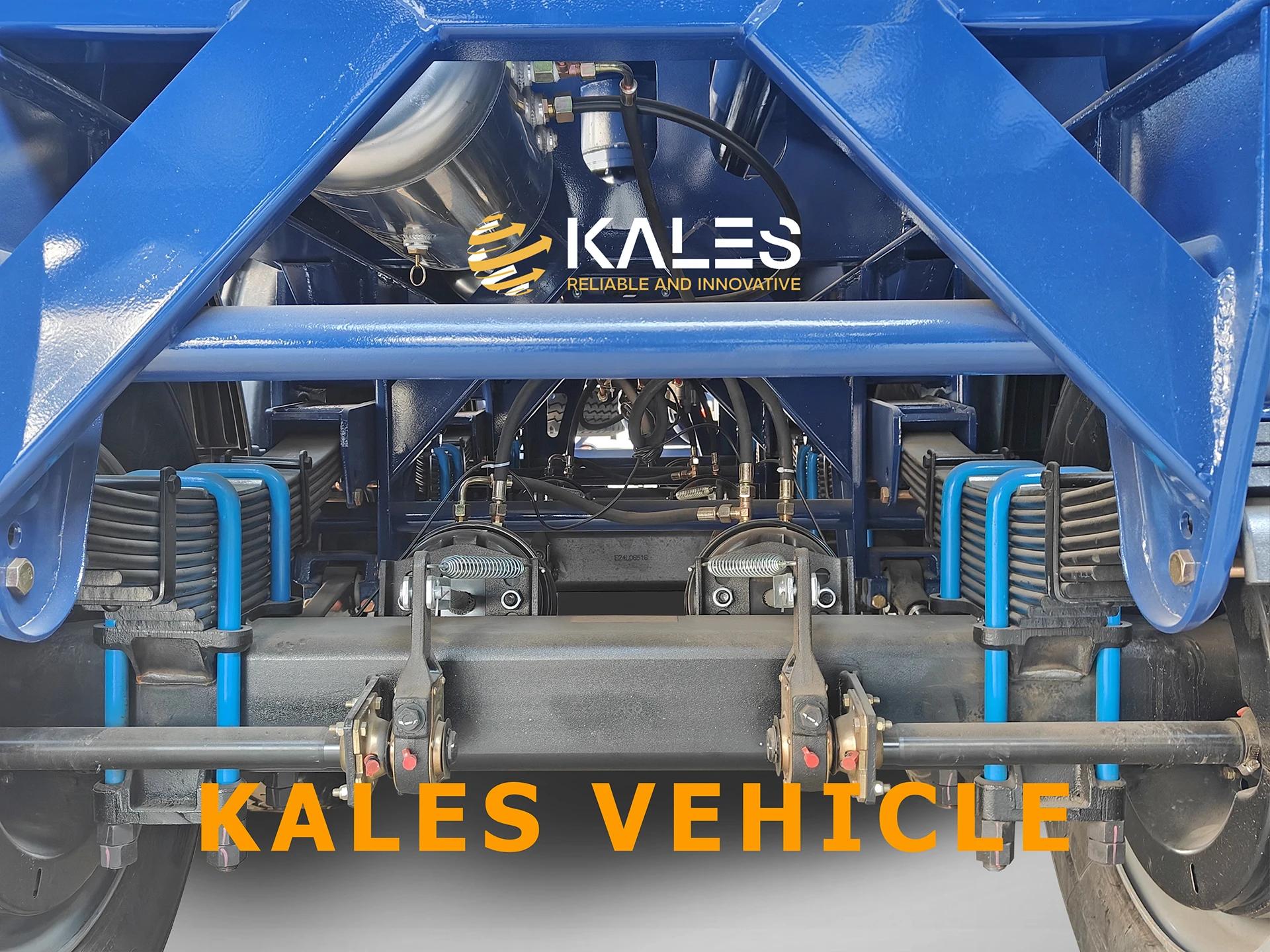
| Suspension | Heavy-duty mechanical leaf spring suspension with reinforced plates |
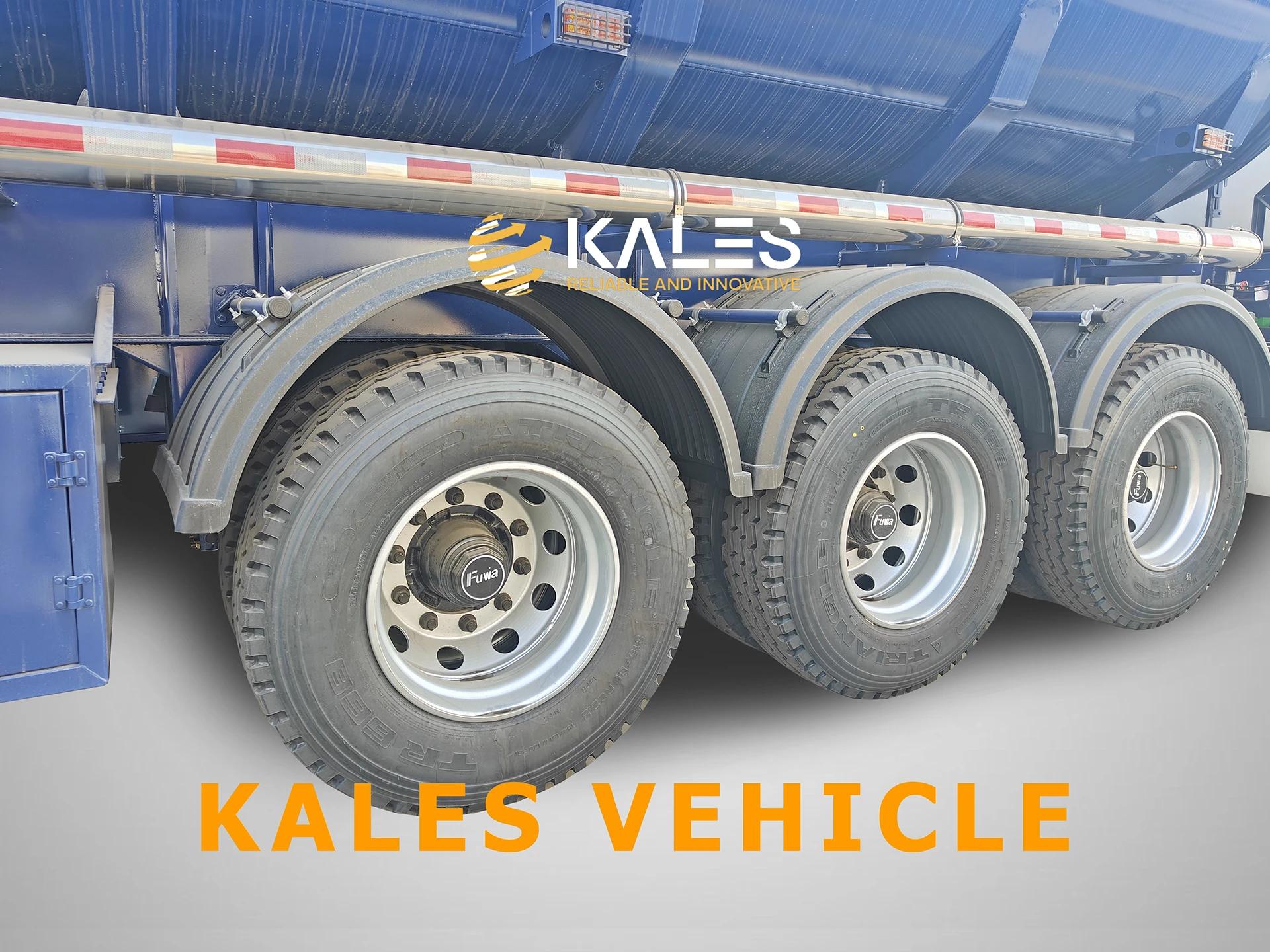
| Tires | 12 x 12R22.5 tubeless tires |
| Custom quotation | Contact KALES for a tailored quotation based on the required configuration, order quantity, and destination. |
| Specification item | Kales data |
|---|---|
| Anti-wave baffles | 3 mm internal anti-surge baffles |
| Suspension pack | 10 leaf springs, 90 x 13 mm, plus 4 reinforced 22 mm plates |
| Rims | 9.00-22.5 steel disc, optional 8.0-20 or 8.5-20 |
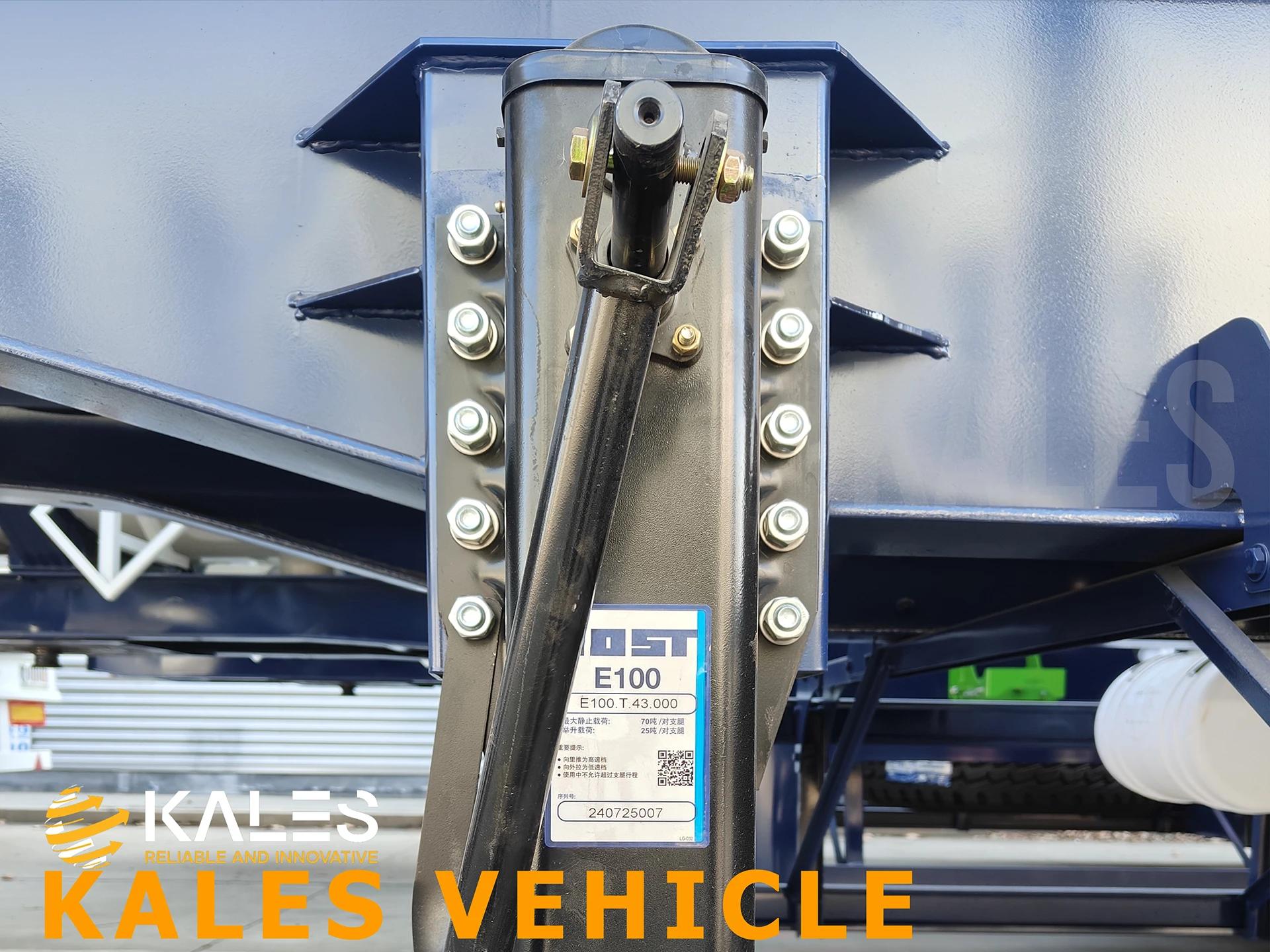
| Kingpin | JOST 2 inch (50 mm) or 3.5 inch (90 mm) bolt-in type |
| Landing gear | JOST or FUWA 28 ton double-speed landing gear with sand shoes |
| Braking system | Dual-line air brake with factory-fitted ABS 4S/2M |
| Discharge arrangement | Manual discharge boxes on left and right for the represented stock build |
| Electrical system | 24V, 7-pin socket, LED lighting |
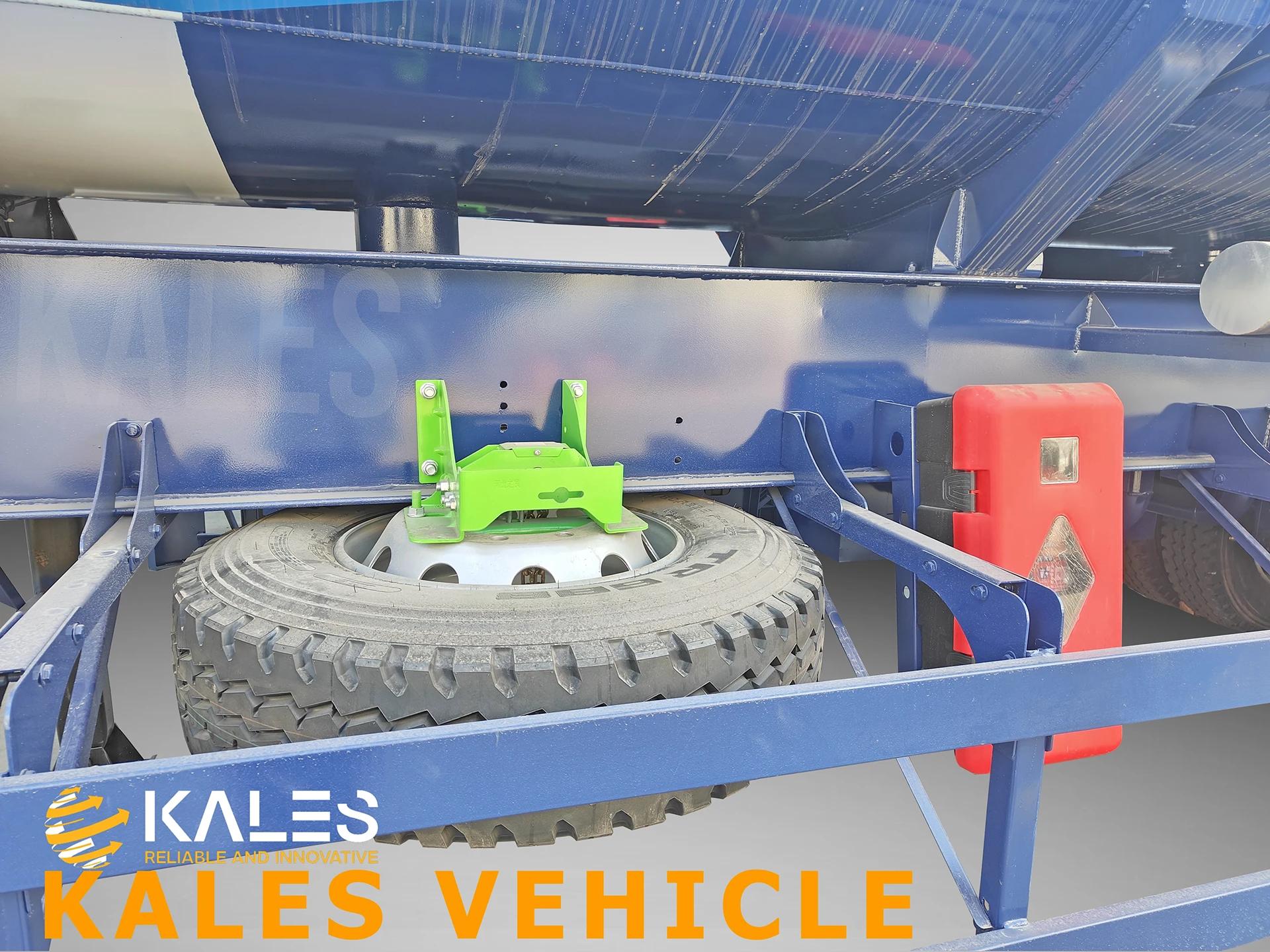
| Safety accessories | 2 tool boxes, 2 fire-extinguisher carriers, 1 spare-wheel carrier |
| Leak test reference | Pressure-tested tanker build logic with zero-leakage sealing focus before delivery |
This 54 CBM fuel tanker is best for buyers who want more raw liquid volume per trip on a familiar steel platform and who operate petrol or diesel delivery between depots, bulk storage, industrial users, and fuel stations. It fits fleets that value easy steel-tanker repair and reinforced mechanical running gear more than the lower tare and corrosion benefits of aluminum.
This page should be understood as a large-volume steel fuel tanker, not as a catch-all tanker for every liquid or powder job. The core buying choice is whether your operation needs more liters on a rugged steel base, a lighter aluminum fuel tanker, or a pneumatic dry-bulk tanker for cement and powder. Once that distinction is clear, the product decision becomes more defensible.
| Buyer comparison point | Best-fit direction | Why |
|---|---|---|
| High-volume petrol and diesel delivery on a steel platform | This 54 CBM fuel tanker trailer | It prioritizes liters per trip, steel serviceability, and reinforced mechanical running gear |
| Refined-fuel distribution where tare, corrosion control, and fuel cleanliness matter more | 45,000L aluminum fuel tanker trailer | Aluminum better serves payload-sensitive routes and longer corrosion-control cycles |
| Cement, fly ash, lime powder, or other dry bulk powder transport | 40 CBM or 58m³ powder tanker trailer | Pneumatic dry-bulk systems are the right engineering answer for powder, not liquid fuel |
A 54,000L liquid tanker places more structural demand on the shell and dish ends than a smaller tank. The represented stock logic uses a 4 mm Q345B shell for tensile strength and 5 mm end construction where surge loads and pressure stress concentrate. That combination is a practical steel-tanker answer for buyers who prioritize durability and repair familiarity.
Fuel is a moving load, not a static one. Internal 3 mm anti-wave baffles help reduce surge during braking and cornering, while sealed flange logic and pressure testing are critical to cargo security, rollover control, and environmental risk management. Those details matter more on a fuel tanker page than on a general trailer page because they directly affect road behavior and product loss.
Unlike the aluminum tanker page, which is positioned around tare and corrosion advantages, this tanker is built around a heavier but more workshop-familiar running-gear strategy. The reinforced leaf-spring pack, common axle brands, and conventional service parts fit fleets running rougher roads or preferring simpler field maintenance over the ride refinement of a premium air-suspension tanker.
KALES confirms the quotation after reviewing the required specification, quantity, destination, and delivery terms. Send the operating requirements for an accurate proposal.
Before ordering, buyers should confirm fuel type, expected density, legal road limits, required compartment count, top-loading or bottom-loading requirement, discharge arrangement, route quality, and tractor matching. If your fleet really needs lower tare or corrosion resistance, move to the aluminum tanker page. If the cargo is powder, move to the pneumatic tanker pages instead of forcing the wrong tank body into the job.


Share your target market, usage scenario, and preferred configuration.
Receive our model recommendation, specification review, and factory quotation.
Confirm production, inspection, shipment route, and export documents.
Stay supported after delivery with spare parts and remote assistance.
At Kales Vehicle, we keep freight planning practical so your trailer or truck reaches the destination with the right balance of protection, speed, and cost.
Container Shipping, Ro-Ro (Roll-on/Roll-off), and Bulk Cargo each serve different export needs, and we choose the safest route, loading method, and packing approach for the order.
Container loading of Kales semi trailer for export, ensuring secure fastening and space optimization.
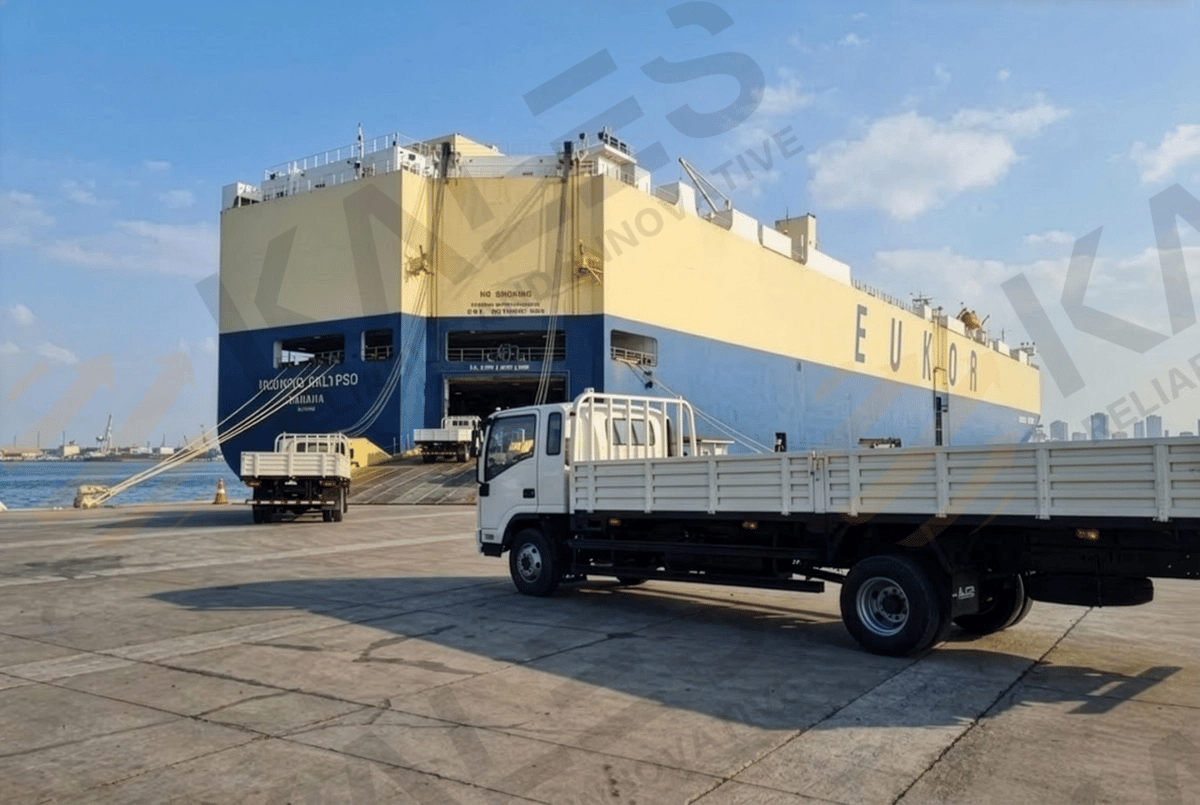
Ro-Ro shipping method for Kales commercial trailers, driving directly onto the vessel for maximum safety.
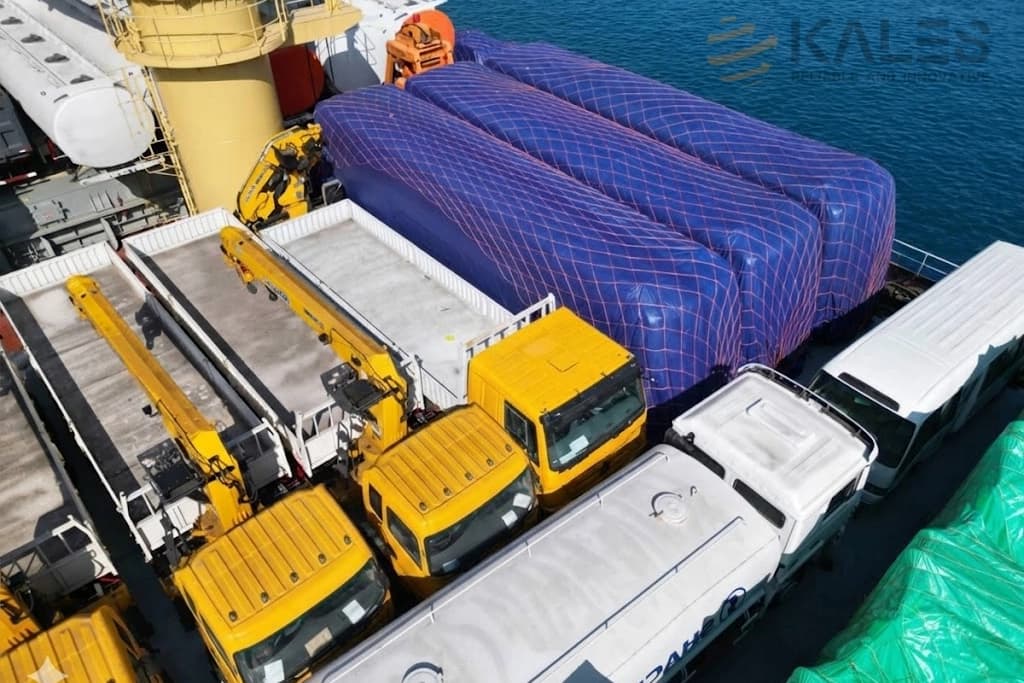
Bulk cargo transport of stacked Kales semi trailers with wax spraying protection against seawater corrosion.
If you need a 54,000L fuel tanker trailer, send your fuel type, route country, compartment requirement, loading standard, and tractor setup. Kales can then confirm whether this fixed 54 CBM steel stock type is right for your fleet or whether your program needs a different tanker configuration.
Factory engineering notes, maintenance protocols, and buyer checklists related to this equipment.
Mobilizing oversized industrial machinery—including hydraulic excavators, crawler bulldozers, rotary drilling rigs, crus…
In African open-pit mining, quarrying, and bulk mineral haulage—from the gold corridors of Geita and Kahama in Tanzania…
Nigeria represents the largest commercial vehicle market in Sub-Saharan Africa, serving as the industrial and trade loco…
54 CBM Fuel Tanker Trailer | 54,000L Steel Petrol Diesel Bowser
Factory Direct · Free Quote