


Disc Brakes vs. Drum Brakes on Semi-Trailers: Which Is Safer, Cheaper, and Better for Your Fleet?
Key Takeaway
Disc brakes are safer than drum brakes for highway logistics trailers. They respond more predictably with ABS/EBS, resist heat fade on long descents, and provide balanced left-right braking force. NHTSA’s FMVSS 121 rulemaking reduced maximum stopping-distance requirements for many heavy truck tractors by about 30%, but that regulatory benchmark should not be read as a guaranteed disc-versus-drum stopping-distance gain for every trailer. The upgrade costs approximately $5,500 USD more for a 3-axle trailer, but most fleet operators recover that investment within 2 to 3 years through weight savings, reduced tire wear, and lower maintenance downtime. However, drum brakes remain the better choice for mining sites, construction off-road, and severely overloaded operations where mud contamination and raw braking torque matter more than response speed.
“Are disc brakes too fragile for heavy loads?”
“Is the upgrade really worth the investment?”
In recent years, disc brakes have become a major topic in the global logistics and heavy transport industry. With stricter international safety regulations such as ECE R13 in Europe and FMVSS 121 in North America, more new trucks and premium trailers now come standard with disc brakes. However, many fleet owners still question whether the upgrade is truly justified.
This guide provides a complete technical breakdown with real cost data to help you make an informed decision.
What Is the Difference Between Disc Brakes and Drum Brakes on a Trailer?
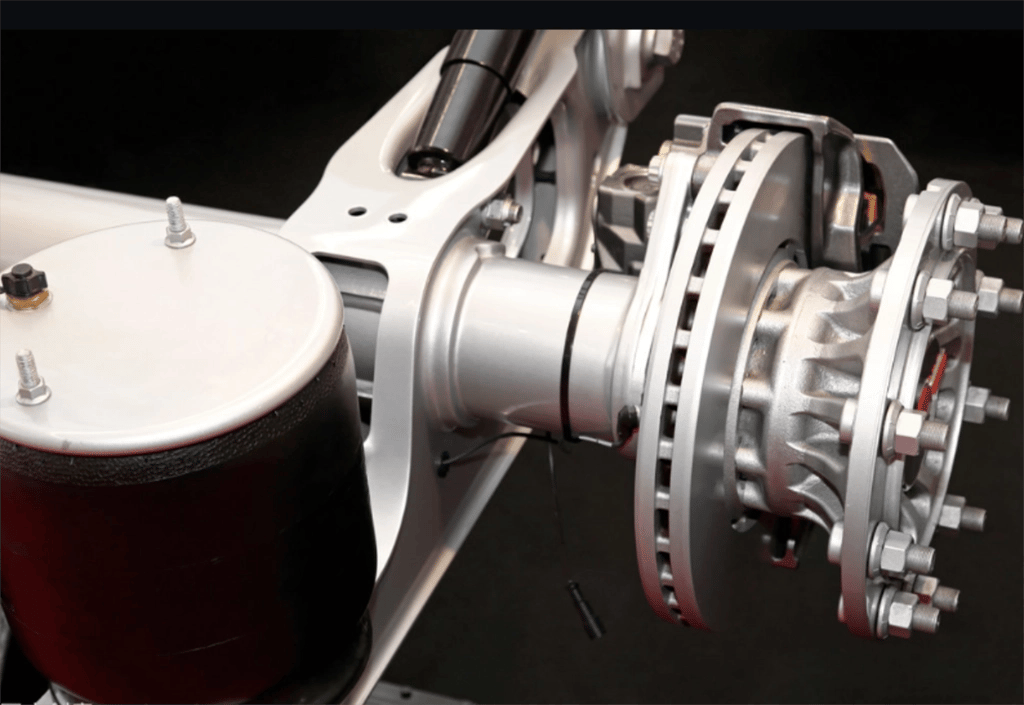
Disc brakes use a caliper to clamp brake pads against a rotating disc (rotor), while drum brakes use internal shoes that expand outward against the inner wall of a rotating drum. The clamping action of disc brakes provides faster response and better heat dissipation. The expanding action of drum brakes generates higher raw torque at the same size, making them better suited for extreme off-road conditions.
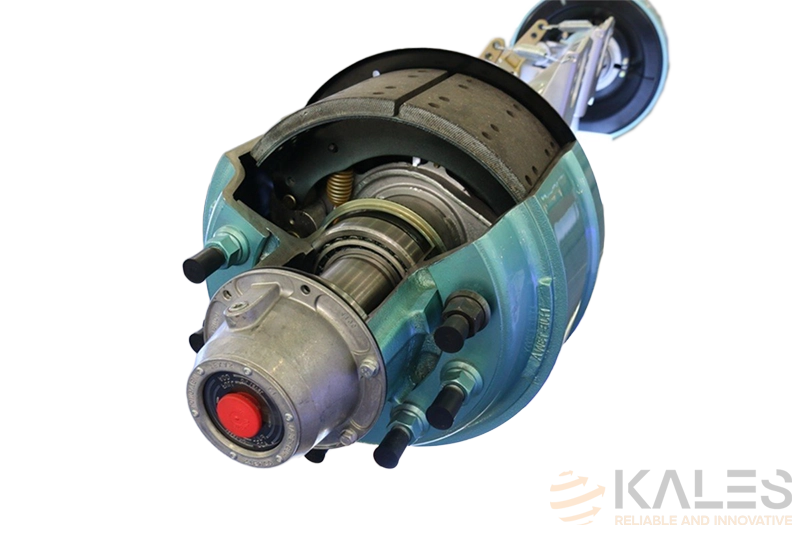
Drum Brakes: How They Work
The brake drum rotates together with the wheel. When the driver applies the brakes, internal pistons push the brake shoes outward against the inner wall of the drum to create friction. Drum brakes offer low initial cost and high braking torque per unit size, which is why they remain the standard choice for heavy-duty off-road and construction transport.
Disc Brakes: How They Work
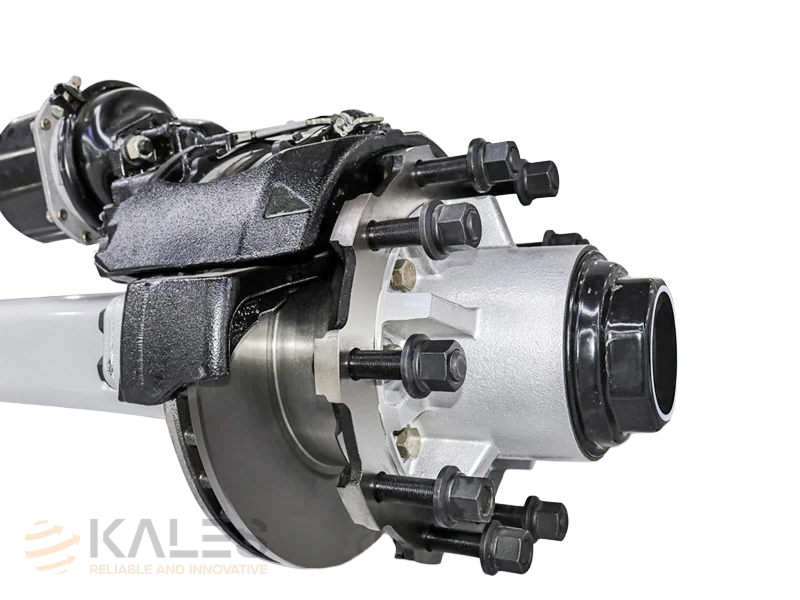
The brake disc (rotor) rotates together with the tire. When the driver applies the brakes, the caliper clamps brake pads against the disc from both sides to generate friction. Disc brakes are now standard on dangerous goods transport vehicles and high-end logistics trailers worldwide, when the trailer is specified as a complete ECE R13 / ABS / EBS brake package.
Why Are Disc Brakes Safer Than Drum Brakes for Trailers?
Disc brakes are safer because they respond faster, resist heat fade, provide equal left-right braking force, and allow visual wear inspection without disassembly. These four advantages make them the preferred choice for ABS/EBS-equipped highway trailers carrying standard or high-value cargo.
1. Faster Braking Response (Critical for ABS and EBS)
Disc brakes respond almost instantly, enabling high-frequency braking adjustments. This makes them fully compatible with ABS (Anti-lock Braking System) and EBS (Electronic Braking System). On wet or icy roads, this rapid response effectively prevents jackknifing and trailer swing, according to testing standards defined in ECE Regulation No. 13.
2. Resistance to Heat Fade on Long Descents
The drum brake problem: Under continuous braking, the drum heats up and its diameter expands outward. The brake shoes lose contact with the drum surface, causing a dangerous loss of braking force known as heat fade.
The disc brake advantage: Disc rotors dissipate heat far more efficiently due to their exposed design. Even when a disc expands due to heat, it expands in thickness — pushing closer to the pads, not away from them. This means braking force remains stable and pedal travel does not increase dangerously.
3. Balanced Left-Right Braking (No Veering)
Drum brakes have a “self-energizing” effect that can produce uneven braking force between left and right wheels, causing the vehicle to pull to one side. Disc brakes deliver linear and equal braking force on both sides, keeping the trailer stable during emergency stops.
4. Visual Wear Inspection Without Disassembly
Disc brakes feature automatic pad-to-disc gap adjustment, reducing manual maintenance labor. Brake pad thickness is visible through the open caliper structure without removing the wheel hub, eliminating the risk of undetected hidden wear that plagues enclosed drum systems.
How Much Do Disc Brakes Cost Compared to Drum Brakes? (TCO Analysis)
Upgrading a 3-axle trailer from drum brakes to disc brakes costs approximately $5,500 USD more upfront, but the total cost of ownership is lower over 3 to 5 years. Weight savings, reduced tire wear, and faster maintenance recover the investment within 2 to 3 years for most highway logistics operations.
Initial Investment
| Upgrade Scope | Converting a 3-axle trailer to disc brakes with air suspension adds approximately $5,500 USD to the purchase price. |
How the Investment Pays for Itself
1. Weight Savings Generate Extra Cargo Revenue
Disc brake axles are lighter than drum brake axles. A 3-axle setup saves approximately 150 kg of dead weight. Based on 150,000 km per year of operation, this extra payload capacity generates approximately $1,000 USD or more in additional revenue per year. Over 3 years, weight savings alone recover roughly $3,000 USD.
2. Maintenance Savings Reduce Downtime
Disc brake pad replacement takes approximately 30 minutes per axle. Drum brake shoe replacement typically requires half a day. Disc brakes combined with air suspension also ensure even tire wear, saving 20% on tire costs across 22 tires per year — equivalent to $800 to $1,200 USD in annual tire savings.
Disc vs. Drum: 5-Year Cost Comparison
| Cost Factor | Drum Brakes | Disc Brakes |
|---|---|---|
| Initial axle cost (3-axle trailer) | Baseline | +$5,500 |
| Extra cargo revenue (5 years) | $0 | +$5,000 |
| Tire savings (5 years) | $0 | +$4,000 – $6,000 |
| Maintenance downtime savings | Baseline | Significantly lower |
| 5-Year Net Result | $0 | +$3,500 – $6,500 net savings |
Estimates based on 150,000 km/year highway operation with standard loads. Actual results vary by route, cargo type, and local labor costs.
When Should You NOT Use Disc Brakes on a Trailer?
Do not use disc brakes on trailers that operate in muddy construction or mining sites, or on vehicles that are routinely overloaded beyond rated capacity. Disc brakes are also unsuitable for fleets where drivers commonly spray water on hot brakes — a practice that causes thermal shock and disc cracking.
Limitation 1: Lower Raw Braking Torque at the Same Size
At the same physical diameter, drum brakes generate higher absolute stopping torque than disc brakes due to the self-energizing shoe effect. For severely overloaded vehicles, this difference matters.
Solution: Always pair disc brakes with auxiliary retarders or engine brakes. Relying solely on service brakes for heavy descents will cause premature wear on any brake system.
Limitation 2: Thermal Shock from Water Cooling Will Crack the Disc
This is the single most common cause of disc brake failure in developing markets.
- The physics: Brake discs are cast iron. If a disc at 400°C or higher is suddenly doused with cold water, the rapid temperature change causes the metal to contract unevenly. The disc will crack or shatter — an effect called quenching.
- Mud and debris: On muddy mining sites, gravel trapped in the open caliper acts like sandpaper against the disc surface. For construction and mining operations, drum brakes are the safer and more durable choice.
Can You Mix Disc Brake Trailers with Drum Brake Tractors?
Mixing a drum brake tractor with a disc brake trailer is not recommended because the different response speeds create braking lag between the two units. The best combination is EBS + disc brakes on both tractor and trailer. If a mixed setup is unavoidable, a professional technician must adjust the relay valve to minimize response timing differences.
Tractor-Trailer Braking Compatibility Table
| Tractor | Trailer | Result |
|---|---|---|
| EBS + Disc | EBS + Disc | Best — Fully synchronized braking |
| ABS + Disc | EBS + Disc | Good — Minor electronic lag only |
| EBS + Disc | ABS + Disc | Acceptable — Trailer responds slower |
| ABS + Drum | ABS + Disc | Poor — Noticeable response lag |
| ABS + Drum | EBS + Disc | Dangerous — Severe braking mismatch |
How Do You Maintain Disc Brakes on a Semi-Trailer?
Maintain disc brakes by performing daily visual inspections of the caliper for debris, never spraying water on hot discs, draining air tank moisture every two weeks, and replacing brake pads when friction material reaches 2mm thickness.
⚠️ SAFETY WARNING
Never spray water on hot brake discs — thermal shock will crack the rotor. Always chock all wheels before working under a trailer. Depressurize the air system before servicing any brake component.
The 3 Rules for Disc Brake Longevity
- Never water-cool hot discs. Allow discs to cool naturally to prevent thermal shock cracking.
- Inspect the caliper daily. Check for debris accumulation, visible cracks, or abnormal wear patterns in the open caliper structure.
- Drain air tanks every 2 weeks. Moisture in the air system corrodes EBS valves and brake actuators, leading to delayed response or failure.
When to Replace Disc Brake Pads
Critical Limit: 2mm Minimum Pad Thickness
Replace brake pads immediately when the friction material wears down to 2mm thickness. Also replace immediately if you observe glazing (shiny hardened surface), visible cracks, or oil contamination on the friction surface.
Annual Axle Hub Maintenance
Grease the axle hubs at least once per year to prevent premature bearing failure. For reduced maintenance intervals, consider Kales 13-Ton Disc Brake Axles with factory-applied long-life lubrication.
Should You Switch to Disc Brakes? Quick Decision Guide
| Your Operation Type | Recommended Brake | Why |
|---|---|---|
| Highway logistics (standard loads) | Disc | Faster response, lower TCO, ABS/EBS compatible |
| Express and time-sensitive delivery | Disc | Faster pad changes minimize downtime |
| Dangerous goods (ADR/DOT) | Disc | Often legally required; heat fade resistance is critical |
| Cold chain and high-value electronics | Disc | Cargo value justifies safety premium |
| Mining and off-road construction | Drum | Mud/debris damages open calipers; higher torque needed |
| Routinely overloaded vehicles | Drum | Higher raw braking torque per unit size |
Duty-Cycle Release Gate: When Disc Brakes Pay Back and When Drums Still Win
Disc brakes are not a universal upgrade; they are a route and maintenance decision. The payback is strongest when the fleet runs long highway corridors, frequent downhill sections, high-value cargo, dangerous goods, cold chain, or EBS/RSS-equipped combinations where fast response and easy visual inspection reduce risk. Drum brakes remain practical where abrasive mud, quarry dust, impact damage, overloading and limited workshop discipline would destroy exposed pads and caliper components.
The decision should start with regulation and inspection evidence, not only purchase price. FMVSS 121 defines air-brake performance requirements, the NHTSA stopping-distance final rule explains the regulatory push for shorter stopping distances, and CVSA Brake Safety Campaign Results show why maintenance discipline still decides whether any brake package works in the real world.
- Choose disc first: fuel tankers, refrigerated cargo, express freight, long-descending highways, high-speed corridors and fleets already using EBS/RSS diagnostics.
- Keep drum first: mining dump, quarry, construction, muddy access roads, chronic overload routes and sites where abrasive debris reaches exposed calipers.
- Do not approve either system blindly: verify tractor-trailer brake balance, ISO 7638 power, ABS/EBS warning lamps, pad or lining inspection access and local spare-part availability.
- Use TCO as a release record: compare pad/lining cost, downtime, payload effect, driver training, heat-fade incidents and roadside inspection failures over the same operating route.
For a complete specification, pair this comparison with the disc brake, EBS and air suspension configuration guide, the ABS/EBS/RSS braking guide, and the semi-trailer brake troubleshooting guide.
Technical References and Related Kales Guides
How to use this comparison: treat the TCO figures as a specification worksheet, then verify the final brake package against your local axle load rules, road gradient, tractor ABS/EBS interface and maintenance capacity.
- 49 CFR 571.121 / FMVSS 121 defines U.S. performance and equipment requirements for air-brake systems on trucks, buses and trailers.
- NHTSA stopping-distance final rule is the basis for the 30% reduced stopping-distance regulatory context for many heavy truck tractors.
- CVSA Brake Safety Day results show why brake inspection and maintenance discipline remain as important as brake type.
- For specification details, read the disc brake trailer configuration guide and the ABS/EBS/RSS braking system guide.
Frequently Asked Questions About Trailer Disc Brakes
How often should disc brake pads be replaced on a semi-trailer?
Replacement frequency depends on operating conditions. For standard highway logistics, front axle pads typically last 100,000 to 150,000 km, and trailer pads last 80,000 to 120,000 km. Fleets that use engine retarders as the primary speed-control device on descents can extend pad life beyond 200,000 km.
Can disc brakes be installed on a trailer with leaf spring suspension?
It is technically possible, but air suspension is strongly recommended and often legally required when using disc brakes. Air suspension reduces the vibration transmitted to the caliper mechanism. Excessive vibration from leaf springs can cause premature wear and alignment issues in the precision caliper components.
Are small cracks on the brake rotor dangerous?
Hairline heat cracks on the rotor surface are a normal result of thermal cycling during braking and are generally not dangerous. However, if any crack extends to the outer edge of the rotor or is deeper than 1.5mm, replace the rotor immediately. A deeply cracked rotor can fracture under braking force, causing complete brake failure on that wheel.
What happens if I mix disc and drum brakes between tractor and trailer?
Mixing disc brake trailers with drum brake tractors creates a braking response mismatch. The disc brakes respond faster than the drums, which can cause the trailer to push the tractor during hard braking. If this combination is unavoidable, have a qualified technician adjust the relay valve timing to reduce the lag between the two systems.
Need a Specific Trailer Configuration or Quote?
Our engineering team can calculate the Total Cost of Ownership for your specific routes and cargo profiles.
Need help applying this guide?
Share your trailer type, payload, routes, operating climate, and photos with Kales. Our team can review the key points from this guide and recommend a practical specification for your fleet.
- Send photos of your tractor, trailer, or current component layout
- Confirm payload, road conditions, gradients, climate, and duty cycle
- Receive a specification or maintenance recommendation within 24 business hours
Email: jennylee@kalestruck.com | WhatsApp: +86 131 5638 8843 | Request a quote