


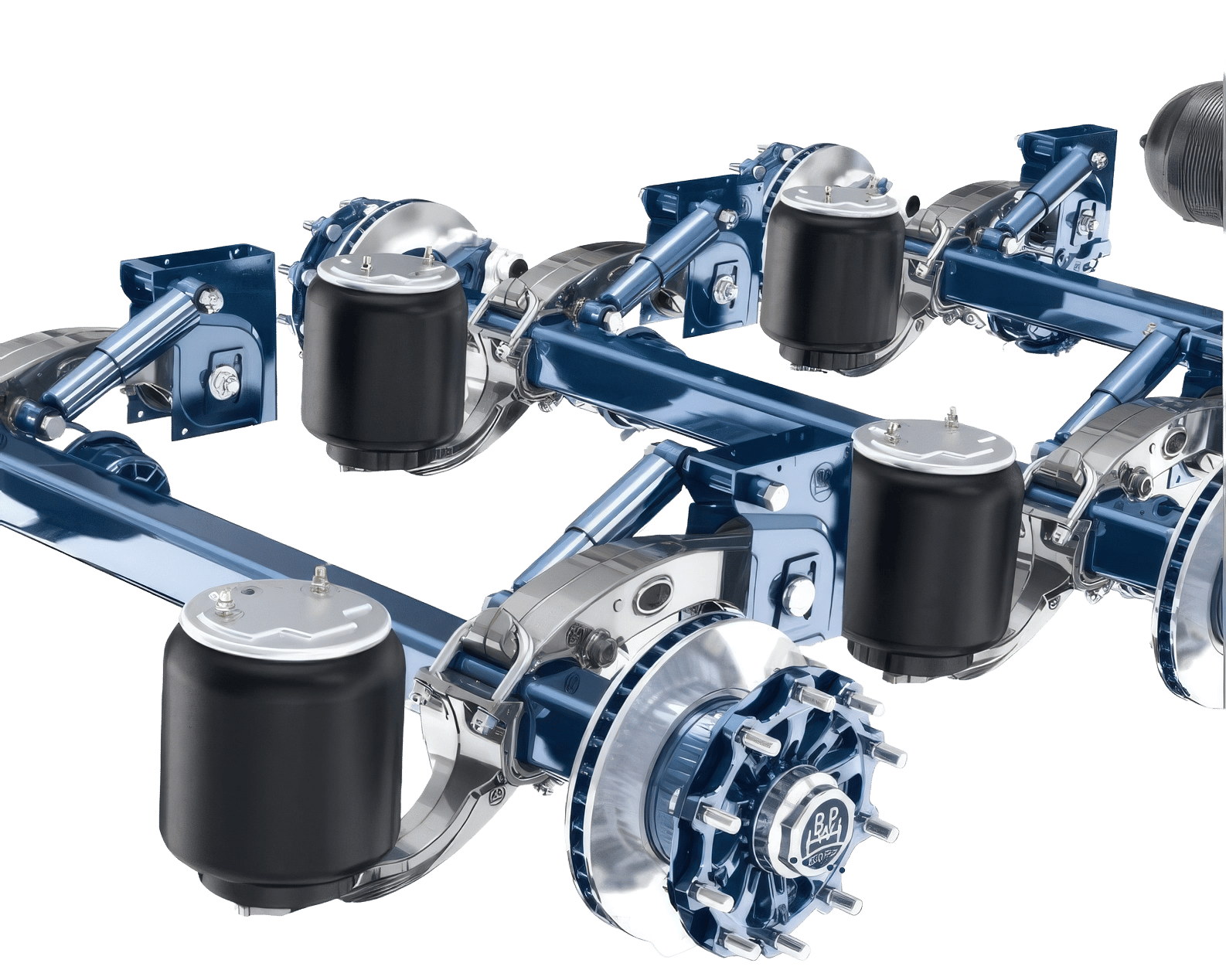
In our previous guide, Disc Brakes vs. Drum Brakes: The Ultimate Guide for Fleets, we discussed the superior safety of disc brakes. But here is the hard truth:
Disc brakes are like high-performance athletes—they need the right equipment to perform. Using them with an outdated suspension or without electronic control is a recipe for premature failure.
For many fleet owners, upgrading the trailer is the smartest, most cost-effective way to improve safety. But if you tick the box for “Disc Brakes,” you must also tick the boxes for EBS and Air Suspension.
This isn’t an upsell. It’s about physics, longevity, and protecting your investment. Here is the technical breakdown from Kales Vehicle experts.
Technical basis and limits
Why disc brakes should be specified as a system
A disc brake semi-trailer is not only an axle option. It is a braking-control package made of the disc axle, trailer EBS ECU, modulator valves, wheel-speed sensors, ISO 7638 power connection, load information and suspension behavior. If one part is missing, the trailer may still move, but it will not deliver the stability, pad life or diagnostic value that buyers expect from a premium spec.
This guide is based on Kales trailer configuration practice, supplier documentation for trailer EBS and air suspension systems, and the electrical interface logic used by ISO 7638 tractor-trailer connections. It is a specification guide, not a legal homologation document. Final selection must still consider local road regulations, tractor compatibility, axle brand, gross combination weight, tire size and route condition.
1. EBS: The “Brain” Your Trailer Needs
🛑 Braking Distance Comparison (EBS Disc vs. Conventional Drum)
| Speed | ✅ Vehicles with EBS and Disc Brakes | ⛔ Vehicles with Conventional Braking & Drum Brakes | Advantage |
|---|---|---|---|
| 50 km/h | 25m | 30m | ↓ 5m shorter |
| 80 km/h | 45m | 65m | ↓ 20m shorter! |
| 90 km/h | 48m | 75m | ↓ 27m shorter! |
Conclusion: The faster the speed, the more obvious the advantage of EBS + Disc Brakes.
At highway speed, the benefit is not only distance; it is earlier, better balanced braking between tractor and trailer. Treat the meter values above as a fleet-spec comparison model, not a universal guarantee.
You might think: “My driver is experienced, and my truck has standard air brakes. Why pay extra for Trailer EBS?”
A. The response-time safety gap
Disc brakes can develop torque quickly, but a pure pneumatic command still has line-fill and valve response delay. EBS reduces that delay by sending an electronic braking request while the air system supplies the force.
The practical point: the faster the combination and the heavier the load, the more valuable synchronized brake timing becomes. The exact stopping-distance gain depends on tractor condition, tires, axle load, road friction, brake temperature and whether the ISO 7638 EBS power cable is connected.
B. Coupling Force Control (Anti-Jackknife)
EBS manages the “Coupling Force” at the kingpin. Ideally, the force between tractor and trailer should be zero.
Through the ISO 11992 protocol, EBS constantly adjusts the trailer’s braking pressure to ensure it neither “pushes” the truck (Jackknife risk) nor “drags” it. This active stability is impossible with standard air brakes.
C. The Hidden Bonus: RSS & Wear Control
- 🛡️ Roll Stability Support (RSS): Automatically brakes specific wheels to prevent rollover on curves.
- 💰 Wear Harmonization: EBS sensors monitor pad thickness. It reduces pressure on worn pads and increases it on new ones, ensuring all pads wear evenly. This means you can replace all pads at once, reducing service downtime.
⚠️ Crucial Warning: The ISO 7638 Cable
EBS is useless if it’s not plugged in!
We often see drivers connect the air hoses but forget the ISO 7638 Power Cable (the thick 5-pin or 7-pin spiral cable). Without this connection, your premium EBS is dead, and your disc brakes revert to “dumb” mechanical mode.
👉 Action Item: Ensure your tractors have this socket functioning and drivers use it.
2. Air Suspension: The “Bodyguard” for Calipers
Some buyers think Air Suspension is just for driver comfort. For Disc Brakes, it is a mechanical necessity.
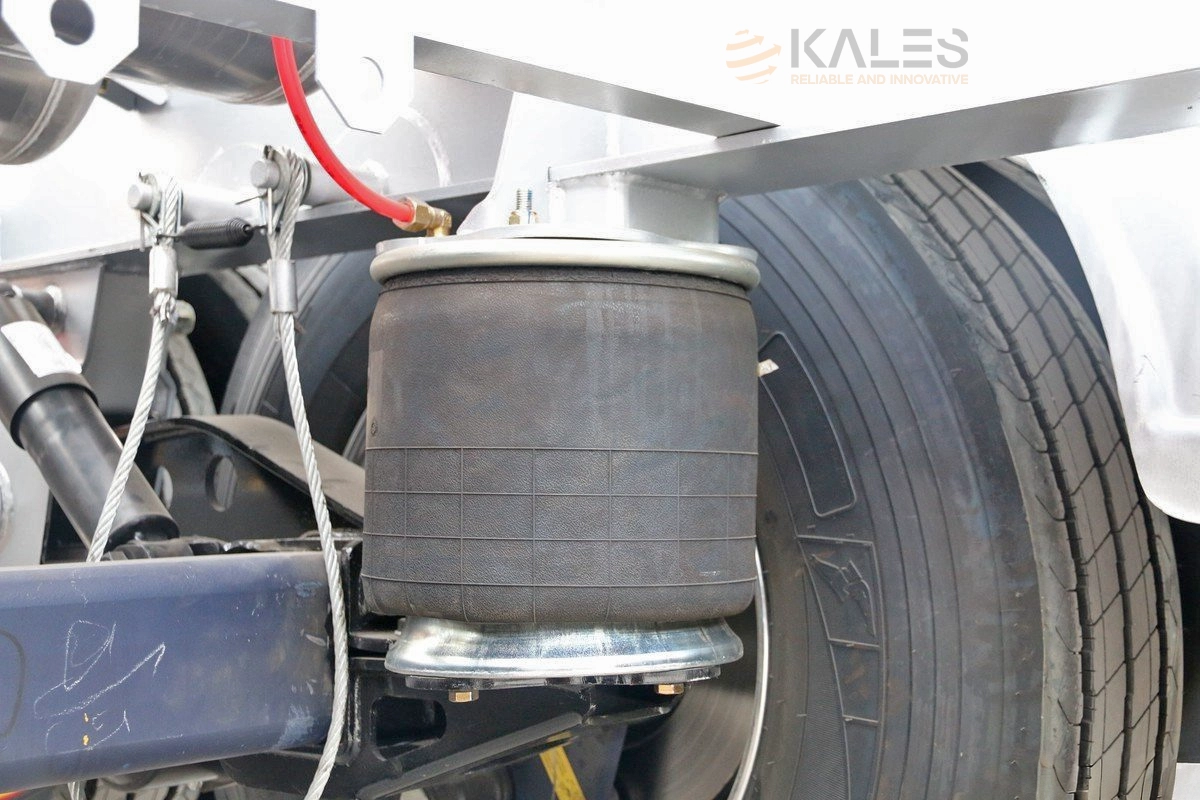
Air suspension filters vibration and ensures constant road contact.
🛡️ 1. Vibration Protection
The Problem: Steel leaf springs transmit harsh road vibrations directly to the axle. This can shake precise caliper mechanisms loose, causing seizing.
The Solution: Air bags act as a damper, filtering out vibrations and extending caliper life.
🛑 2. Eliminating “Wheel Hop”
Physics: When braking hard on a bumpy road, steel springs make the axle “hop.” A bouncing tire has zero friction.
The Solution: Air suspension keeps the tire firmly planted on the asphalt, ensuring 100% braking power.
⚖️ 3. Load Equalization
Air suspension instantly equalizes weight across all axles. This ensures no single disc brake is overloaded, preventing rotor cracking due to heat stress.
3. EBS vs. ABS: What is the Technical Difference?
Many operators confuse ABS (Anti-lock Braking System) and EBS (Electronic Braking System). While both prevent wheel lockup, their architecture, speed, and safety capabilities represent different generations of technology.
ABS is a reactive system. It waits for the wheel to lock up during heavy braking, then reduces pneumatic pressure to that wheel. EBS is a proactive system. It controls the braking process from the millisecond the driver touches the pedal, using digital communication to distribute force before wheels can lock up.
| Feature / System Specification | Standard Pneumatic ABS | WABCO / Kales Electronic EBS | Operational Advantage (ROI) |
|---|---|---|---|
| Braking Signal Method | Pneumatic pressure wave (Air line) | Electronic pulse (CAN-bus signal) | Reduces command delay and gives the trailer ECU a faster, cleaner braking request. |
| Response Time | 450 – 600 milliseconds | 50 – 90 milliseconds | Improves repeatability of loaded stops when tires, tractor EBS and trailer brakes are correctly matched. |
| Braking Force Control | Standard mechanical proportioning valve | Dynamic electronic load sensing (EBL) | Senses exact payload weight instantly; prevents over-braking of empty trailers. |
| Roll Stability Control (RSC) | Not available | Integrated (Active Rollover Prevention) | Senses lateral G-force on curves; applies brakes to prevent rollover. |
| System Diagnostic Interface | Blink codes or external test port | Real-time CAN diagnostics via truck dash | Instant sensor alerts; logs mileage, load cycles, and pad wear. |
| Wear Control / Balancing | Manual adjustment only | Electronic Pad Wear Harmonization | Ensures even wear between tractor and trailer brakes; extends pad life by 30%. |
4. Air Suspension vs. Leaf Spring: Dynamic Compatibility Analysis
Combining high-performance disc brakes with traditional leaf spring suspension leads to mechanical issues. Here is why the structural characteristics of the suspension dictate the survival of the brake calipers.
4.1. The Caliper Vibration Factor (G-Force Acceleration)
A disc brake caliper is a floating assembly weighing approximately 30-35 kg, containing sliding guide pins, internal adjusting mechanisms, and pneumatic chambers. Traditional multi-leaf steel springs exhibit high internal friction. When an empty or partially loaded trailer travels over rough roads, leaf springs transmit high-frequency shockwaves (exceeding 8G of vertical acceleration) directly to the axle beam.
This continuous vibration causes the caliper guide pin bushings to wear oval, resulting in caliper twisting, uneven pad wear, and water intrusion past the seals, which leads to caliper seizure. Air suspension, by contrast, isolates the axle from high-frequency shocks, limiting caliper acceleration to less than 1.8G.
4.2. Brake Torquing & Axle Windup
Disc brakes generate high peak torque instantly compared to drum brakes. Under emergency braking, this rapid torque application causes the axle housing to twist backward (axle windup). Steel leaf springs flex under this twisting force, changing the axle’s steering angle and causing the trailer to drift.
Air suspension assemblies utilize robust, rigid trailing arms (often 100mm wide steel forgings) welded directly to the axle tube, which are anchored to the trailer frame by heavy-duty rubber bushings. This rigid trailing arm layout controls axle windup, ensuring the wheels remain aligned even under maximum braking load.
5. Dynamic Rollover Prevention (Roll Stability Control – RSC)
Roll Stability Support (RSS) or Roll Stability Control (RSC) is the most critical active safety feature of EBS. A semi-trailer has a high center of gravity. When entering a highway exit ramp or negotiating a curve at excessive speed, the lateral G-force can lift the inner wheels off the road, leading to a rollover before the driver realizes the danger.
The EBS ECU constantly monitors two critical variables: the trailer’s lateral acceleration (using an internal accelerometer) and individual wheel speeds. If lateral acceleration exceeds a preset threshold (typically 0.35G to 0.40G depending on model configuration) and the inner wheel speed sensors show a sudden drop in wheel load, the EBS ECU takes control:
- It bypasses the tractor’s service brake signal, sending a high-pressure air pulse directly to the outer trailer brakes.
- It applies heavy braking force to the outer wheels to slow the vehicle down rapidly, reducing lateral force.
- It returns the inner wheels to the pavement, stabilizing the trailer and preventing a rollover.
This automated safety intervention happens in less than 100 milliseconds, often correcting the rollover threat before the driver is aware of the hazard.
Disc brake trailer ordering checklist
When requesting a quotation, do not ask only for “disc brake axles.” Ask the supplier to confirm the whole control chain. This avoids a common problem in export fleets: the trailer has premium hardware, but the tractor or harness cannot power and diagnose it correctly.
| Item | What to confirm | Why it matters |
|---|---|---|
| Trailer EBS | ECU, modulators, wheel-speed sensors and diagnostic interface. | Controls brake timing, load adaptation and fault reporting. |
| ISO 7638 power | 24V socket, 7-pin EBS cable, driver connection procedure. | Without power, the trailer cannot use the full EBS/RSS functions. |
| RSS/RSC | Roll stability support activated and matched to trailer type. | Helps reduce rollover risk in curves, evasive maneuvers and uneven loading. |
| Air suspension | Ride-height valve, air bags, shock absorbers and axle load signal. | Protects calipers from harsh vibration and improves load sensing. |
| Service parts | Pad size, rotor type, caliper repair kit and local stock plan. | A premium brake package fails commercially if pads and diagnostics are unavailable. |
6. Cost-Benefit Analysis of Premium Upgrade Packages
Upgrading a trailer specification with disc brakes, EBS, and air suspension represents a higher initial capital expenditure. However, when evaluating the total cost of ownership (TCO) over a 5-year operating period, the savings in maintenance, tire wear, and accident prevention outweigh the upfront cost.
| Cost Category (5-Year Cycle) | Standard Spec (Drum + ABS + Leaf Springs) | Premium Spec (Disc + EBS + Air Suspension) | Net Savings (USD / Trailer) |
|---|---|---|---|
| Initial Option Price | Baseline ($0) | +$3,200 (Average upcharge) | -$3,200 (Upfront cost) |
| Brake Maintenance Labor | $1,200 (6 drum relines/adjustments) | $350 (2 fast pad replacements) | +$850 |
| Tire Wear Cost | $4,800 (12 tires worn prematurely by hop) | $3,600 (Air suspension preserves tread) | +$1,200 |
| Fuel Consumption ROI | Baseline (High rolling resistance) | 1.5% savings (Constant contact) | +$1,450 |
| Accident Risk Mitigation | $1,500 (Statistical risk premium) | $100 (Rollover/Collision prevented) | +$1,400 |
| Resale Value (5 Years) | Baseline resale value | Premium configuration bonus | +$1,500 |
| Total Life-Cycle Cost | $7,500 | $4,300 (Including initial premium) | +$3,200 Net Savings |
Where the package pays back fastest
Disc brakes, EBS and air suspension make the most sense where the trailer is exposed to heat, speed, mixed loading or frequent inspection. African and Latin American export fleets often see all four: port queues, quarry roads, mine access roads, long paved corridors, wet seasons and mountain descents.
- Long downhill routes: combine EBS diagnostics with driver descent discipline and retarder use; see the Kales downhill braking guide for operational practice.
- Tankers and high-center loads: RSS/RSC is valuable because rollover risk can rise before the driver feels a severe yaw event.
- Mixed empty/loaded trips: electronic load adaptation helps avoid aggressive empty braking and weak loaded braking.
- Dusty corridors: air suspension and proper shocks reduce vibration, while the workshop must still inspect caliper slide pins, ABS sensors and harness clips.
Configuration release gate: approve EBS, ISO 7638 and air suspension together
A disc brake trailer should not be released as “disc brake only.” The safer buying decision is a system release gate: the EBS ECU and modulator, wheel-speed sensors, ISO 7638 power line, RSS/RSC function, air suspension ride-height control, axle/brake package, diagnostic tool access and local spare sensors must be approved in one checklist. This is especially important for fleets that mix highway work with ports, job sites, mines or long descents, because one weak interface can cancel the benefit of the premium brake hardware.
The technical basis is not guesswork. ISO 7638 defines the tractor-trailer electrical connection used by ABS/EBS systems; UNECE Regulation No. 13 sets braking-system expectations for many export markets; and CVSA brake-safety campaign results keep showing why brake condition and diagnostics matter in real fleet inspections. Treat these references as a release framework, then apply the local homologation rules for the country where the trailer will operate.
Approve before production
- EBS brand, ECU, modulator and axle compatibility.
- ISO 7638 socket location, cable route and voltage stability.
- RSS/RSC parameter file matched to axle count, tire size and suspension.
- Air suspension ride height, valve position and shock absorber selection.
Block delivery if found
- No ISO 7638 connection, damaged plug or unstable warning lamp.
- Active ABS/EBS fault code after road test.
- Air suspension cannot hold ride height when loaded.
- Harness, sensor cable or air hose rubs on the caliper, tire or chassis.
For the purchasing team, this release gate also improves ROI discipline. It separates a premium disc brake semi-trailer from a trailer that only has premium-looking components. Ask the supplier to hand over the diagnostic report, sensor and harness part numbers, pad/rotor references and tractor compatibility notes before final payment. Those records help the workshop solve future EBS faults faster and prevent a small connector problem from becoming a roadside brake complaint.
Summary: Calculate Your ROI
Upgrading your trailer configuration is cheaper than buying a new truck, and it pays for itself.
| Feature | The Real Benefit (ROI) |
|---|---|
| Trailer EBS | 1. Shorter, more repeatable stops: especially when tractor and trailer braking are correctly matched. 2. Wear Control: Balances pad wear for single-stop maintenance. 3. Stability: Includes Anti-Rollover (RSS). |
| Air Suspension | Protects sensitive calipers from vibration damage & prevents tire hopping. |
| ISO 7638 Cable | Free but Critical. Ensure your drivers plug it in! |
By choosing Disc Brakes + EBS + Air Suspension, you are building a trailer that is safer, lasts longer, and commands a higher resale value.
Ready to spec your premium trailer?
Don’t guess. Let Kales Vehicle experts configure the perfect axle and suspension package for your specific road conditions.
Need help applying this guide?
Share your trailer type, payload, routes, operating climate, and photos with Kales. Our team can review the key points from this guide and recommend a practical specification for your fleet.
- Send photos of your tractor, trailer, or current component layout
- Confirm payload, road conditions, gradients, climate, and duty cycle
- Receive a specification or maintenance recommendation within 24 business hours
Email: jennylee@kalestruck.com | WhatsApp: +86 131 5638 8843 | Request a quote