




Lead Fleet Maintenance Engineer, Kales Vehicle
💡 Executive Key Takeaways:
- Fuel Cost Impact: Aerodynamic drag represents over 50% of a tractor-trailer’s energy consumption at highway speeds (>50 mph / 80 km/h).
- Tested ROI: Combined deployment of Side Skirts, Boat Tails, and Gap Fairings reduces Cd (drag coefficient) to yield over 10% in fleet fuel savings.
- Durability Engineering: Kales side skirts utilize flexible TPU/PP composite materials that bend up to 90° without cracking on rough terrains.
What are trailer aerodynamic devices? Trailer aerodynamic devices are engineered hardware components designed to reduce wind resistance (drag) on commercial semi-trailers. The five primary devices include Side Skirts, Boat Tails, Gap Fairings, Wheel Covers, and Vented Mud Flaps. By streamlining airflow around the vehicle’s largest flat surfaces, these verified technologies collectively lower overall fuel consumption by 1% to over 10%.
The Data-Driven Savings Comparison
Based on rigorous testing by organizations like the North American Council for Freight Efficiency (NACFE) and EPA SmartWay, here is the proven fuel economy impact of each component:
| Device | Primary Function | Proven Fuel Savings | Source / Evidence |
|---|---|---|---|
| Side Skirts | Smooths under-trailer airflow | 1% – 5% | NACFE Reports |
| Boat Tails | Mitigates rear suction zone | 3% – 5% | NACFE Reports |
| Gap Fairings | Bridges tractor-trailer gap | 2% – 4% | NACFE Reports |
| Wheel Covers | Reduces wheel dish turbulence | 1% – 3% | Fleet Tests |
| Vented Mud Flaps | Allows high-speed air pass-through | 1% – 2.7% | EPA SmartWay |
Deep Dive: The 5 Essential Aero Upgrades
1. Aerodynamic Side Skirts (The Industry Standard)
Side skirts are the foundation of trailer aerodynamics, proven by NACFE to be the most widely adopted and mathematically effective drag-reducing device. By hanging panels on both sides of the chassis, they prevent high-speed wind from rushing underneath the trailer to hit complex axles, brake drums, air lines, and crossmembers.
To withstand harsh operational environments, modern Kales side skirts are engineered using advanced thermoplastic polyurethane (TPU) or glass-reinforced polypropylene (PP) composite panels. These materials possess high impact resistance and structural memory, allowing them to flex up to 90 degrees when scraping over obstacles like railroad crossings, curbs, or unpaved terrain, and snap back to their original shape without cracking.

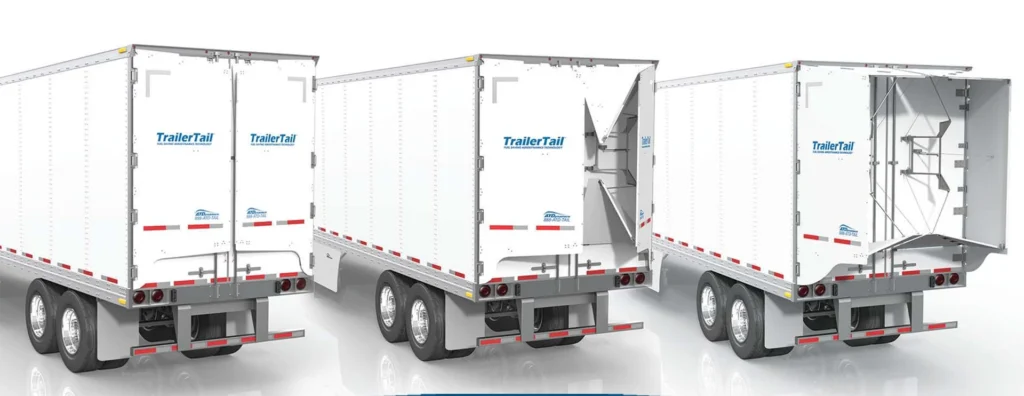
2. Trailer Boat Tails (Rear Fairings)
Boat tails successfully dissolve the massive low-pressure vacuum effect—often called “suction drag”—created at the flat rear of traditional dry vans and boxed trailers. Tapering the exiting airflow significantly curtails this backward pull.
According to aerodynamic physics, air flowing over the trailer boundary layer separates at the rear, creating a low-pressure wake that acts like a physical tether pulling the vehicle backward. Installing high-quality rear fairings or trailer tails stabilizes this wake, reducing the drag coefficient ($C_d$) by up to 5%. Rigorous testing under SAE J1321 Type II fuel consumption procedures confirms that three-sided or four-sided boat tails yield a highly cost-effective fuel economy improvement.
3. Nose Cones & Gap Fairings
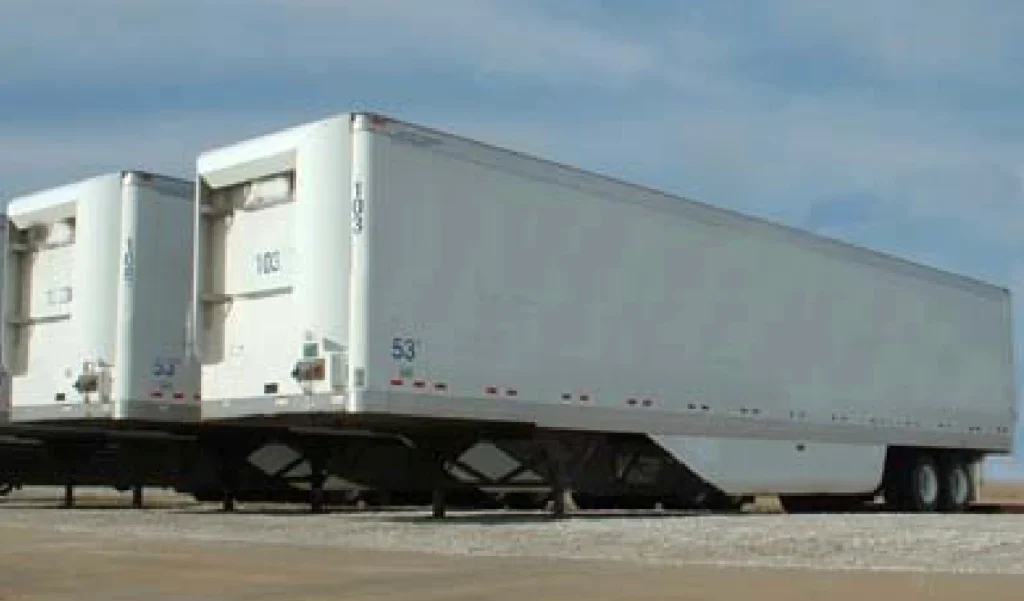
Gap fairings smoothly tackle the highly turbulent open space resting between the truck cab (tractor) and the flat face of the trailer. When wind gets trapped in this gap, it brutally slams into the trailer’s “headboard” (front bulkhead) to act as an invisible brake.
This turbulence is especially severe when the tractor-to-trailer gap exceeds 30 inches (76 cm). Incorporating a three-dimensional dome nose cone or cab side extenders guides the boundary layer airflow smoothly from the tractor roof and sides over the front edges of the trailer, bridging the gap and reducing drag by 2% to 4%.
4. Aerodynamic Wheel Covers
Aerodynamic wheel covers effectively halt the heavy churning turbulence generated inside the deep, irregular metal dishes of commercial rims. By constructing a completely flat rotating surface, these highly cost-effective hubcaps stop wind from becoming trapped altogether.
This suppresses vortex shedding around the dual tire assemblies. To ensure long-term reliability on highway routes, Kales wheel covers feature patented anti-theft, anti-loosening mounting brackets that secure them firmly to the wheel hub, preventing detachment from high rotational forces and vibrations. Independent fleet testing has definitively recorded cumulative fuel savings resting between 1% and 3% when these covers are applied fleet-wide over the various axles.
5. Vented Aerodynamic Mud Flaps
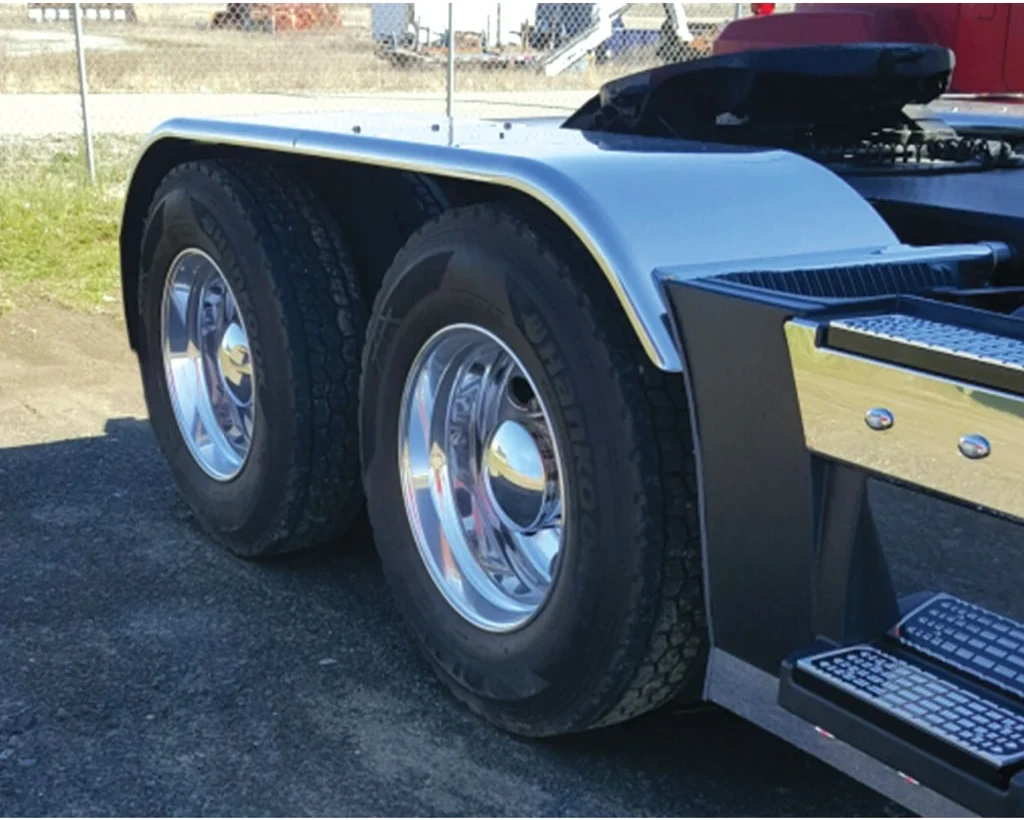
Vented mud flaps are a simple fix to the intense drag penalty caused by standard solid-rectangular flaps that catch headwinds like miniature parachutes at highway speeds.
By using a slotted, open-matrix design, these flaps allow high-speed airflow to pass directly through them, lowering drag without sacrificing debris-shielding and water-spray suppression capabilities. Exhaustive testing by Exa Corporation and official EPA SmartWay verifications confirm a solid fuel economy uptick ranging from 1% to 2.7% natively from this upgrade, making it an extremely quick payback accessory for long-haul operations.
While aerodynamic devices offer proven mathematical savings, actual fuel economy is highly dependent on operational variables. Aerodynamic drag becomes a primary fuel consumer only at highway speeds exceeding 50 mph (80 km/h). Under the aerodynamic drag equation:
F_d = 1/2 * ρ * v2 * C_d * A
where ρ represents air density, v represents vehicle velocity, C_d is the drag coefficient, and A is the frontal area. Because velocity is squared, aerodynamic drag grows exponentially at higher speeds. Conversely, severe crosswinds, aggressive driver acceleration, and improper tire pressure can negate these aerodynamic benefits.
Specification Checklist Before Ordering Aero Devices
Before ordering an aerodynamic package, the fleet should record the tractor model, trailer height, tire size, suspension type, fifth wheel height, typical payload, average cruising speed, and the percentage of loaded versus empty mileage. These inputs decide whether a side skirt, boat tail, nose cone, or gap fairing will work as expected. A device designed for a high-cube van trailer may not fit a flatbed, lowbed, tanker, or dump trailer without changing brackets, ground clearance, and maintenance access.
The second check is damage risk. Export fleets often work across paved highway, gravel yards, construction entrances, border queues, and port loading areas in the same week. If drivers frequently reverse against docks, cross deep ruts, or operate where road debris strikes the lower trailer edge, the aero package should prioritize flexible materials, replaceable panels, reinforced mounts, and easy removal. A small reduction in peak fuel saving is acceptable if it prevents repeated panel damage and keeps the trailer available for work.
The third check is measurement. Fuel savings should be compared before and after installation using the same route, similar payload, similar speed range, and corrected tire pressure. Without this baseline, a fleet may blame the aero device for poor results when the real causes are headwind, underinflated tires, aggressive acceleration, engine idling, or brake drag. A reliable test period normally needs enough trips to average out wind, weather, driver variation, and loading differences.
Finally, specify the aero package together with the maintenance plan. Mechanics need clear access points for brake chambers, ABS wiring, air lines, suspension hangers, tire valves, and landing gear. The best long-term configuration is the one that saves fuel while still allowing fast roadside inspection, because a trailer that cannot be inspected easily will lose more money through downtime than it saves through drag reduction.
Route-Fit ROI: When Aero Upgrades Pay Back
Aerodynamic trailer upgrades should be specified after the route is understood, not only after looking at a catalog photo. They produce the strongest fuel return on steady highway work where the tractor-trailer spends long periods above 50 mph or 80 km/h, because aerodynamic drag rises with the square of speed. In stop-start port shuttle work, short quarry trips, and low-speed urban delivery, the same devices may still improve splash control and fleet image, but the fuel ROI is usually weaker.
For export fleets in Africa, Central Asia, and mixed highway/off-road work, the engineering choice is a balance between drag reduction and service access. A side skirt that saves fuel but blocks daily tire, brake, air-line, and suspension inspection can create a maintenance problem. KALES therefore treats quick-release panels, ground clearance, bracket strength, and mud-resistance as part of the aerodynamic specification, not as secondary details.
Good fit
Long highway mileage, stable cruising speed, high annual fuel spend, trained drivers, and scheduled maintenance that protects the aero devices.
Weak fit
Low-speed routes, frequent dock impact, rough off-road sections, poor tire-pressure discipline, and trailers that need daily underbody access.
Related KALES guides
Fuel efficiency program | Tire cost and retreading | Trailer maintenance manual | ABS/EBS braking guide | KALES trailer categories
Evidence references
- EPA SmartWay verified aerodynamic devices lists tested device categories and verification principles.
- NACFE trailer aerodynamics research supports evaluating aero devices by duty cycle, speed, and fleet application.
- NACFE tractor aerodynamics research explains why tractor-trailer airflow must be treated as a complete system.
Our Final Recommendation
Aerodynamic trailer devices are no longer optional “nice-to-haves” for heavy-duty transportation; they are calculated necessities meticulously designed to expand your hauling margins. Separately, upgrades like side skirts and boat tails offer peak fuel savings upward of 5%. Symmetrically combining the full spectrum of these aerodynamic elements effectively safeguards a compounding fleet-wide fuel reduction well over 10%.
Because side skirts and advanced aerodynamics drastically alter your profitability during highway operations, explore our factory configurations directly. Check out our Kales Semi-Trailers, specifically engineered and custom-fitted for ideal geometric drag-reduction.
Frequently Asked Questions
What is the most effective aerodynamic device for a semi-trailer?
Side skirts are universally regarded as the most effective starting point, independently providing 1% to 5% fuel savings by protecting the highly turbulent undercarriage of the trailer from wind drag.
Are trailer boat tails actually worth the investment?
Yes. NACFE reports indicate that rear wake devices or boat tails systematically deliver a 3% to 5% fuel savings by neutralizing the low-pressure suction zone at the rear doors, affording a very swift return on investment.
Do vented aerodynamic mud flaps save fuel?
Absolutely. While standard mud flaps perform like wind parachutes at highway speeds, EPA-verified vented flaps allow the same air to pass straight through, seamlessly generating an efficiency boost spanning 1% to 2.7%.
Still undecided?
Don’t guess. Let our engineering team simulate the ideal aerodynamic load configuration for your specific operation parameters.
Need help applying this guide?
Share your trailer type, payload, routes, operating climate, and photos with Kales. Our team can review the key points from this guide and recommend a practical specification for your fleet.
- Send photos of your tractor, trailer, or current component layout
- Confirm payload, road conditions, gradients, climate, and duty cycle
- Receive a specification or maintenance recommendation within 24 business hours
Email: jennylee@kalestruck.com | WhatsApp: +86 131 5638 8843 | Request a quote