

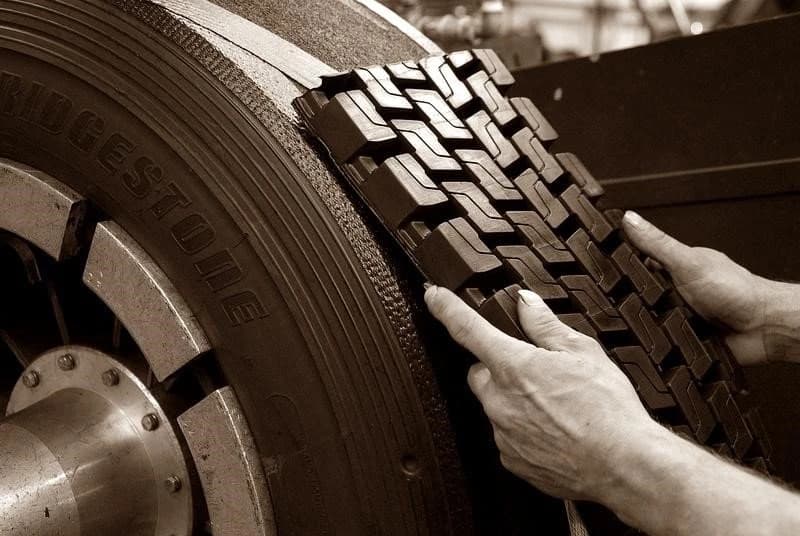
What is commercial truck tire retreading? Retreading (or recapping) is the process of applying a new rubber tread to an inspected, high-quality pre-owned commercial tire casing. Rather than purchasing premium new commercial truck tires, retreading allows fleet operators to slash tire expenses by 30% to 50% while achieving comparable wear-out mileage. According to NHTSA and FMCSA research, properly maintained retread tires offer equal safety and reliability for long-haul trailer and drive axles.
💡 Key Takeaways
- Economic Efficiency: Retreads reduce tire purchase costs by 30% to 50%. A high-quality tier-1 casing (e.g., Michelin, Bridgestone) can be safely retreaded 2 to 3 times, extending casing lifespan to over 300,000 miles.
- Process Quality: Professional facilities use Shearography (non-destructive laser casing inspection) to detect internal belt separations. Fleets can choose between Precure (Cold) retreading for high customization or Mold Cure (Hot) retreading for a clean look.
- Pressure Management: The leading cause of highway tire blowouts is under-inflation, which triggers hysteresis (heat buildup). Implementing ATIS (Automatic Tire Inflation Systems) or TPMS is critical for both new and retreaded tires.
- Chassis Alignment: To maximize retread life, trailers must maintain precise axle alignment (BPW/FUWA specifications) and stable suspension configurations to prevent premature toe-in/toe-out uneven tread wear.
The Data-Driven Comparison: New vs. Retread
Based on fleet performance data, University of Michigan research, and National Highway Traffic Safety Administration (NHTSA) safety studies.
| Feature | New Commercial Tire | Premium Retread Tire | Source / Verification |
|---|---|---|---|
| Average Unit Cost | $250 – $600+ | $150 – $300 | Commercial Market Survey |
| Mileage Lifespan | ~100,000 miles (varies by route) | Comparable (~100k miles on trailer axles) | Fleet Operations Logs |
| Highway Debris Origin | 68% of collected debris | 32% of collected debris | NHTSA / UMTRI Joint Study |
| Casing Lifecycle | 1 Original Tread Life | 2 to 3 Retread Cycles (Tier-1 Casing) | TIBB Retreading Industry Standards |
Key Technical Dynamics of Commercial Retreading

1. Precure (Cold) vs. Mold Cure (Hot) Retreading
Understanding the two primary methods of retreading is essential for B2B procurement:
- Precure (Cold) Retreading: A pre-vulcanized tread strip is wrapped around the buffed casing and cured in a flexible envelope at lower temperatures (~210°F / 100°C). This process prevents thermal stress on the steel belts, making it ideal for extending the lifespan of tier-1 casings (Michelin, Bridgestone) over multiple cycles.
- Mold Cure (Hot) Retreading: Raw rubber is applied to the casing and placed into a rigid, heated tread mold (~300°F / 150°C), similar to how new tires are made. It results in a clean, seamless look but subjects the casing to higher thermal stress.
2. Non-Destructive Casing Integrity: Shearography
To guarantee safety, reputable retreading facilities employ Shearography laser testing. By placing the casing under a vacuum, lasers measure micro-deformations on the tire surface down to the micrometer level. This exposes hidden air pockets, belt separations, and structural flaws that are invisible to the naked eye. Only casings that pass this non-destructive test are approved for retreading.
3. Hysteresis Prevention and Pressure Monitoring (ATIS/TPMS)
The primary cause of highway tire blowouts is under-inflation, not the retread bond. When a tire runs under-inflated, the sidewalls flex excessively, generating severe internal heat. This physical phenomenon—known as hysteresis—breaks down the rubber compounds and steel belt bonds, leading to catastrophic failure. Fleets must integrate Automatic Tire Inflation Systems (ATIS) or Tire Pressure Monitoring Systems (TPMS) to maintain target pressures and protect casings from heat fatigue.
4. Maximize Tire Life: Axle Alignment & Suspension Stability
Even the best retreaded tires will wear out prematurely if the trailer chassis is misaligned or unstable. Ensuring high structural standards in your trailer hardware directly protects your tire investment:
- Precise Axle Alignment (BPW / FUWA Specs): Axles must be aligned to strict tolerances. Even a minor deviation in parallelism or toe-in/toe-out settings forces the tires to scrub sideways against the pavement, scrubbing off tread and generating premature casing wear.
- Suspension Bushing Maintenance: Worn suspension bushings allow the axles to shift dynamically during braking and turning, causing irregular tread wear patterns (such as cupping or feathering). Specify heavy-duty mechanical or air suspensions with reinforced bushings.
- WABCO Roll Stability Support (RSS): EBS systems like WABCO RSS prevent wheel lockup and control trailer lateral acceleration. By preventing slide-induced flat spotting, EBS preserves the tire tread depth and casing life.
When Retreads Make Sense for Export Fleets
For export fleets working in Africa, mining areas, port corridors, or long-distance construction logistics, the retread decision should start with casing condition rather than purchase price. A retread is only economical when the original casing has not been damaged by overload, chronic underinflation, brake heat, curb impact, or axle misalignment.
A practical rule is to treat trailer positions differently from steer positions. Retreads are commonly evaluated for trailer and drive-axle service where local regulations and fleet policy allow them, but steer-axle use needs stricter review because tire failure at the front axle has a higher control risk. The U.S. commercial-vehicle tire rule at 49 CFR 393.75 is a useful reference point because it focuses on tread depth, exposed body ply, sidewall damage, regrooving limits, and other visible unsafe conditions rather than treating every retread as automatically unsafe.
Good retread candidate
Even wear across the tread, no sidewall cuts, no exposed cords, stable inflation records, no repeated overheating, and a trailer that tracks straight under load.
Poor retread candidate
Irregular shoulder wear, impact breaks, casing repairs near the sidewall, repeated low-pressure operation, oil contamination, or a suspension that has not been aligned.
This is also why low rolling resistance retreads should be specified as part of a full trailer program, not as a standalone purchasing shortcut. EPA SmartWay treats low rolling resistance new and retread tire technologies as an efficiency measure for Class 8 tractor-trailers, but those benefits depend on correct inflation, axle loading, and maintenance discipline.
Fleet Retread Approval Workflow
A retread policy should be written as a workflow, not as a simple “new tire versus retread tire” price comparison. In KALES export projects, the tire decision normally sits together with axle load, brake heat, suspension geometry, road surface, and driver inspection discipline. That is why a fleet should approve the casing first, approve the retreader second, and approve the wheel position last.
- Build a casing history file. Record tire brand, original application, mileage, puncture repairs, pressure-loss events, heat exposure, and removal reason. A casing removed because of normal tread wear is very different from a casing removed after overload, severe shoulder wear, or repeated underinflation.
- Inspect before retreading. The casing should pass visual inspection and non-destructive checks where available. Fleets using shearography, pressure testing, or professional retreader inspection reduce the risk of putting a hidden separation or damaged belt package back into service.
- Match the tread to the duty cycle. A port shuttle, a long-haul paved-road trailer, a quarry dump trailer, and a mining-support flatbed do not need the same tread design. Heat resistance, cut resistance, rolling resistance, and stone retention must be balanced against the route.
- Control inflation and alignment after mounting. Retreading does not fix the root cause of irregular wear. If the trailer has misaligned axles, worn bushings, weak suspension equalizers, dragging brakes, or poor inflation discipline, the new tread can fail early even when the retread itself is manufactured correctly.
For long-distance export fleets, maintenance records are part of the E-E-A-T evidence behind a tire recommendation. A buyer can ask for a lower tire price, but the operating cost only improves when the fleet can prove that pressure checks, axle alignment, brake adjustment, and rotation intervals are being followed. Without those records, the safer commercial recommendation is to start with new tires on the most demanding positions and introduce retreads gradually on lower-risk trailer positions.
This workflow also protects the trailer investment. A tire failure on a heavy semitrailer can damage mudguards, brake chambers, air lines, ABS wiring, suspension parts, and the cargo schedule. The real calculation is therefore not only tire purchase price; it is tire cost per kilometer plus downtime risk, roadside repair cost, casing recovery rate, and the ability to keep the trailer legally compliant under tire safety rules such as 49 CFR 393.75.
Our Final Recommendation
Retreading is not about cutting corners—it is a highly calculated cost efficiency strategy. By pairing brand-new steer tires with a rigorous retread casing program for your trailer axles, you maximize fleet uptime while reducing tire cost per mile by up to 50%. The foundation of a successful retread program lies in maintaining casing health through strict tire pressure management and precise axle alignment.
Since tire longevity is closely linked to trailer chassis stability, Kales Vehicle engineers semi-trailers with premium BPW/FUWA axles, heavy-duty suspension systems, and optional ATIS integration to ensure even load distribution, minimize tire wear, and maximize casing life.
Frequently Asked Questions
Are retread tires illegal for commercial trucks?
No, retread tires are 100% legal. The Federal Motor Carrier Safety Administration (FMCSA) only restricts the use of retread tires on the steering (front) axles of passenger-carrying buses. They are widely used and recommended for drive and trailer axles on heavy-duty commercial vehicles.
How many miles do retread trailer tires last?
Premium retreads built on tier-1 casings deliver wear-out mileage comparable to new mid-tier tires. Depending on axle load weights, alignment accuracy, and inflation maintenance, a trailer retread can easily run between 80,000 and 100,000 miles.
Why do truck tires blow out on the highway?
Under-inflation is the leading cause of tire blowout. Running a tire low causes excessive sidewall flexing, which generates destructive heat buildup (hysteresis) that separates the steel belts from the rubber casing. This thermal failure affects brand-new tires just as severely as retreaded ones.
Looking to minimize your fleet’s tire wear?
Don’t guess. Let our engineering team configure the precise suspension and axle parameters for your heavy-haul operations.
Need help applying this guide?
Share your trailer type, payload, routes, operating climate, and photos with Kales. Our team can review the key points from this guide and recommend a practical specification for your fleet.
- Send photos of your tractor, trailer, or current component layout
- Confirm payload, road conditions, gradients, climate, and duty cycle
- Receive a specification or maintenance recommendation within 24 business hours
Email: jennylee@kalestruck.com | WhatsApp: +86 131 5638 8843 | Request a quote