

In the heavy transport industry, efficiency is king. Whether you call it a pneumatic dry bulk trailer, a cement bulker, or a “silobas,” choosing the right equipment and operating it correctly is crucial for profitability. As a leading manufacturer exporting to Africa, Latin America, and Central Asia, Kales Vehicle Co., Ltd. presents this comprehensive guide to mastering your bulk powder tanker semi trailer.
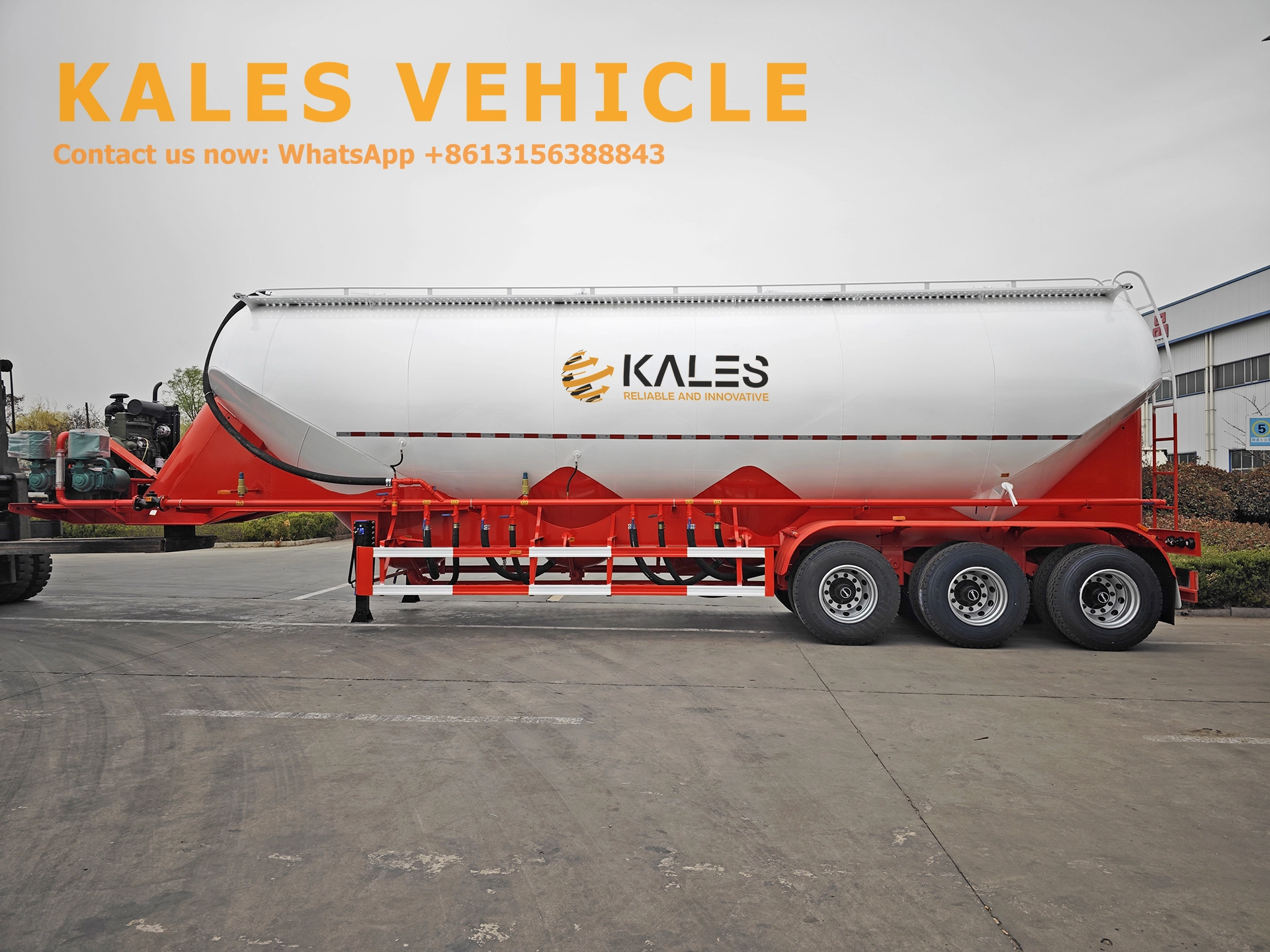
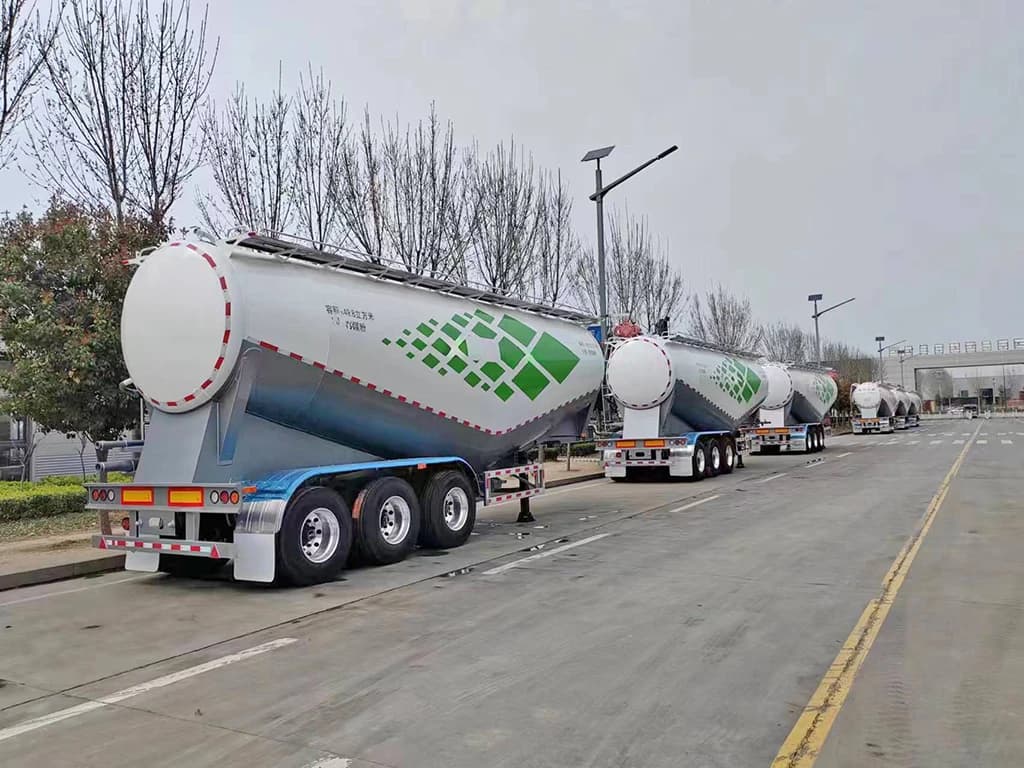
Kales 3-axle bulk powder tanker semi trailer for cement transport ready for export.
Technical basis and scope
How this powder tanker guide is supported
This guide is based on Kales dry bulk tanker specification practice, the operating data already shown in the article, and common pneumatic conveying principles used for cement, fly ash, lime powder and similar dry bulk materials. The key operating references are the Kales working-pressure range around 0.20 MPa, compressor speed range of 850-1000 RPM, fluidization canvas thickness of 6.5-8.0 mm, and typical unloading speed of 1.2-1.5 tons/minute when site conditions are suitable.
The safety basis is wider than trailer specification. Public references such as HSE pressure systems guidance, OSHA compressed-air requirements, NIOSH Portland cement exposure data, and OSHA crystalline silica guidance support the same practical rule: control pressure, dust, moisture and stored energy before any hose is opened or any blockage is cleared.
Use the numbers as ordering and maintenance references, not as permission to exceed the tank nameplate, relief-valve setting, compressor manual or local pressure-vessel rules. Before purchase, confirm cargo type, moisture sensitivity, unloading distance, silo height, local repair capability, tractor PTO compatibility, road condition, operator PPE and spare-parts availability.
1. Why Choose Kales Pneumatic Dry Bulk Trailers?
Designing trailers for rough terrain requires more than just steel; it requires engineering precision. Kales trailers are built to withstand the harsh road conditions of mining regions while delivering high-speed unloading.
- ⚡ Fast Unloading Speed: Achieves 1.2–1.5 tons/minute, significantly reducing waiting time at the construction site.
- 📉 Ultra-Low Residue: Our advanced fluidized bed design ensures a residue rate of <0.1%, saving you material costs on every trip.
- 🛠️ World-Class Components: We use globally trusted brands for easy maintenance:
- Diesel Engines: Reliable Weichai engines for consistent power.
- Air Compressors: High-performance Bohai or Suzhou compressors (12m³ dual-cylinder).
- Braking: Genuine WABCO braking systems for safety.
- 🌍 Reinforced Chassis: Specially strengthened sub-frames and suspension systems designed for African and Central Asian road conditions.
2. Selecting the Right Bulk Tanker Configuration
Choosing between a V-shape, Cone-shape, or Tipper depends entirely on your cargo.
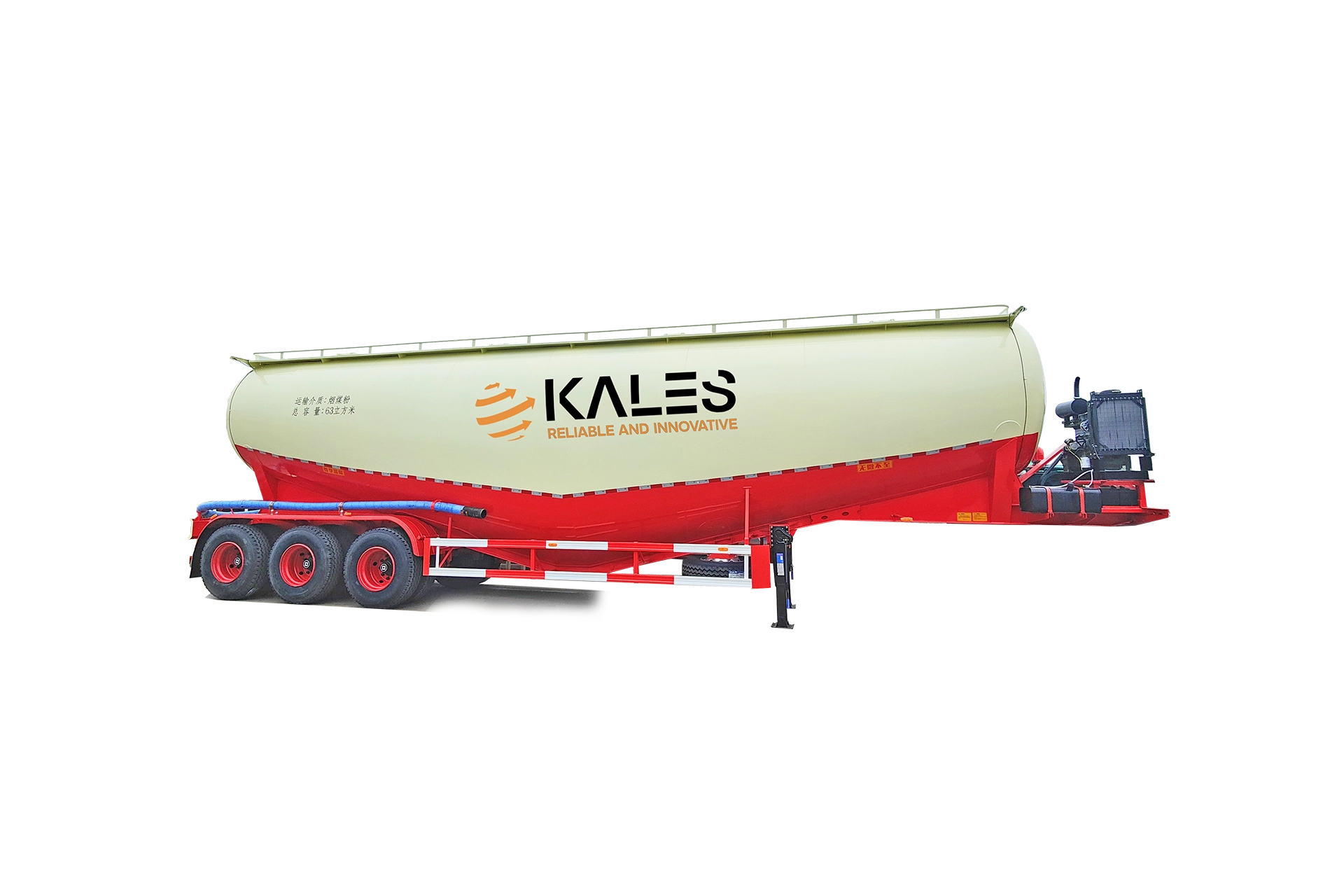
🚛 Type A: Horizontal “V-Shape” Cement Trailer
Best for: Cement, Fly Ash, Lime Powder.
- Pros: Low center of gravity provides superior stability on highways. Simple internal structure allows for large capacity (up to 85m³).
- Cons: Not suitable for coarse materials that don’t fluidize well.
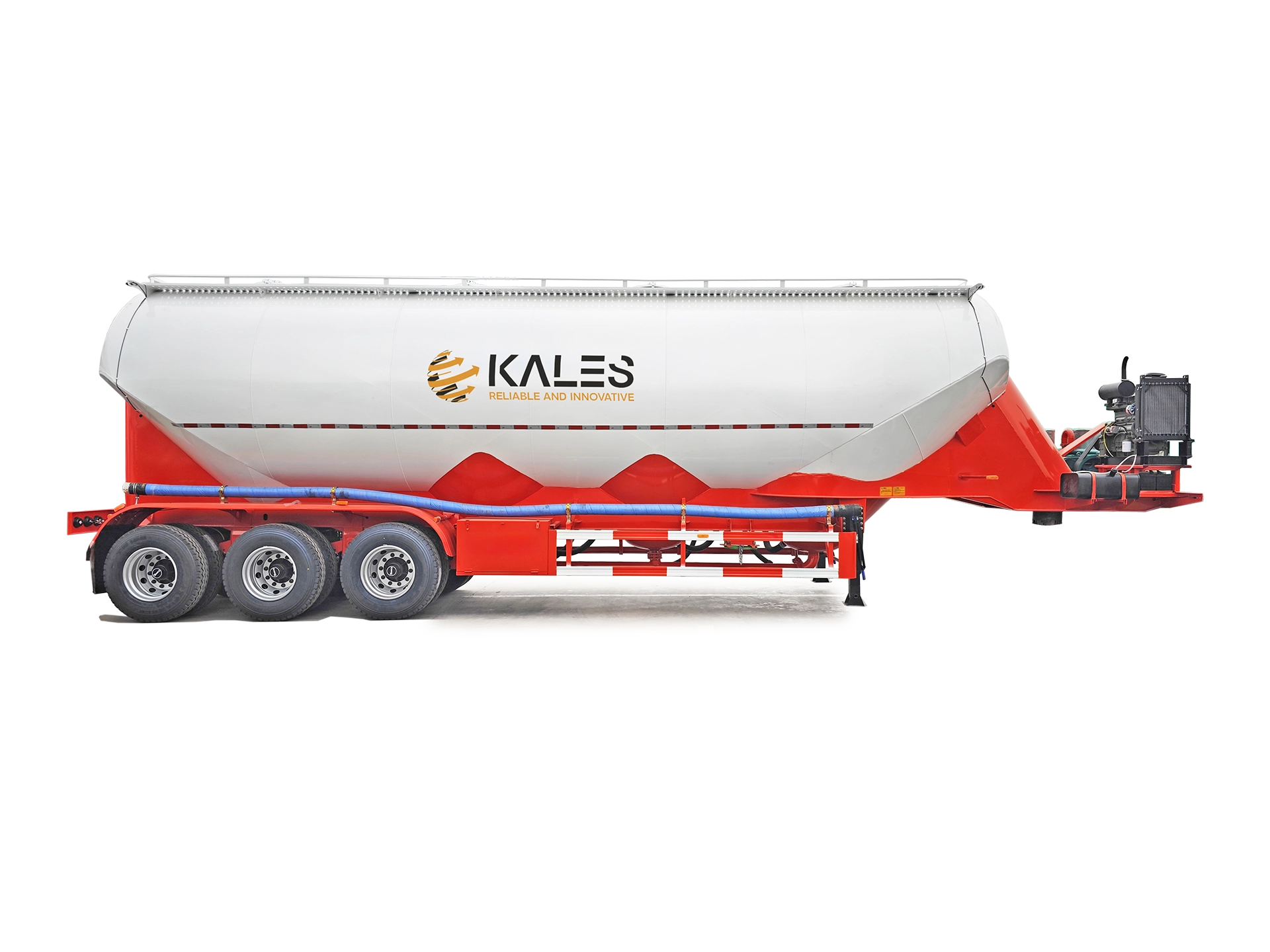
🚀 Type B: Vertical “Cone” Tanker
Best for: Granules, Fertilizer, Coarse materials.
- Pros: Gravity-assisted discharge ensures clean unloading of heavier particles.
- Cons: Higher center of gravity requires careful driving on curves.
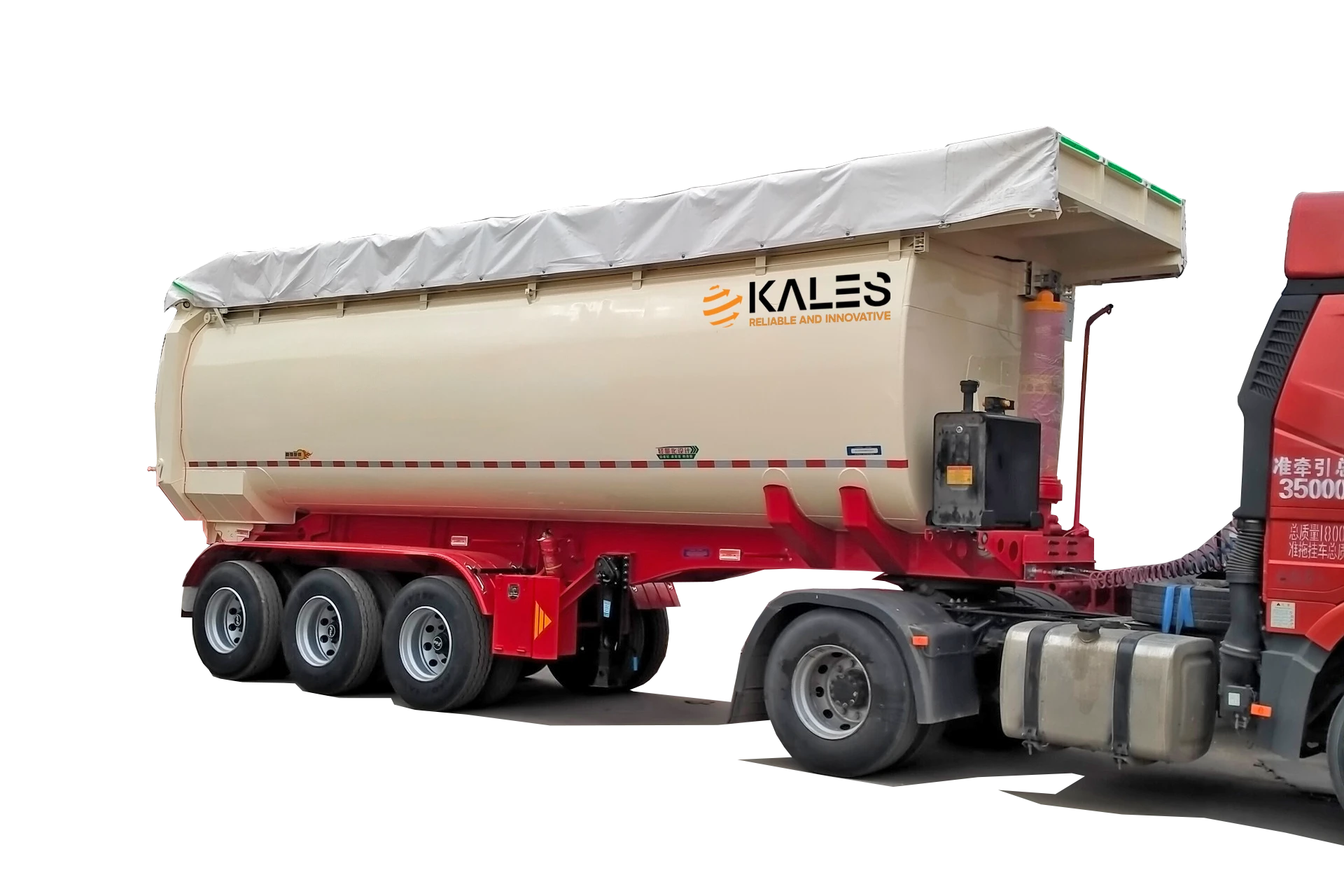
🆙 Type C: Tipper (Lift-Type) Powder Tanker
Best for: Food-grade Flour, PTA, Pharmaceutical Powders.
- Pros: Zero residue makes it ideal for hygiene-sensitive cargo. Easy to clean internally.
- Cons: Requires a flat, stable site for lifting to prevent tipping over.
Buyer selection matrix: match tank design to cargo behavior
The right dry bulk trailer is chosen by how the material flows, not only by cubic capacity. Cement and fly ash usually need a low-residue fluidized bed; fertilizer or granules may need cone discharge; food-grade or chemical powder may need lift-type cleaning access.
- Cement and fly ash: choose a V-shape cement bulker when highway stability, high volume and controlled pneumatic discharge matter most.
- Fertilizer, pellets and coarse powder: consider a cone tanker when gravity-assisted discharge is more important than the lowest possible center of gravity.
- Food-grade flour, PTA or hygiene-sensitive powder: use a lift-type tanker only when the unloading site is flat, stable and trained for tipping operation.
3. Power Source: Diesel Engine vs. PTO
When ordering your Kales cement trailer, you must decide how to power the air compressor.
| Feature | Independent Diesel Engine | PTO (Power Take-Off) |
|---|---|---|
| Flexibility | High. Works with ANY truck head. Ideal for logistics companies with mixed fleets. | Low. Must be paired with a specific truck head equipped with a PTO gearbox. |
| Weight | Heavier (Adds approx. 500kg). | Lighter (Saves fuel during empty return trips). |
| Maintenance | Requires separate engine oil/filter changes. | Low maintenance (uses truck engine power). |
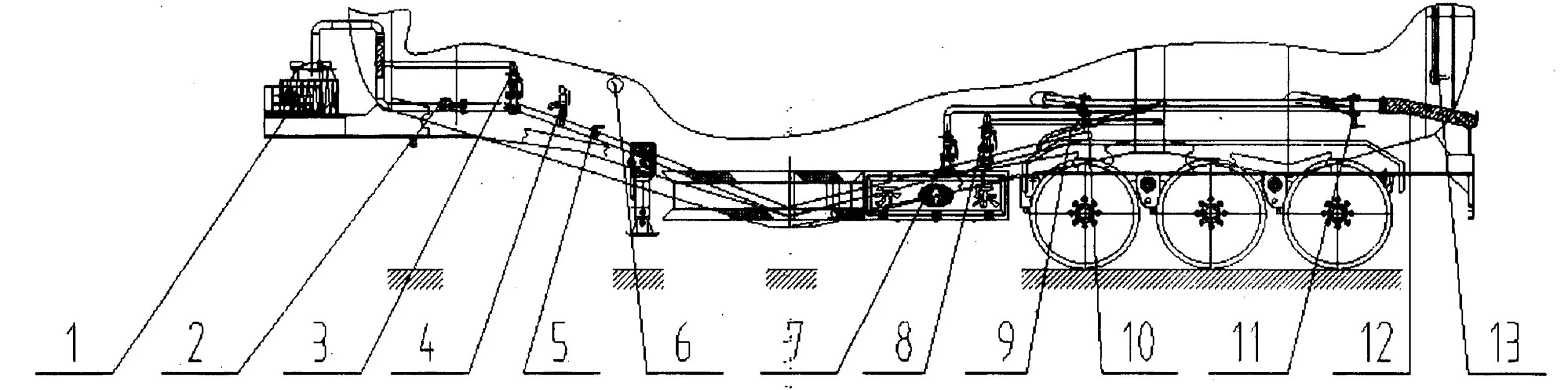
Pneumatic Conveying System Schematic
- Air Compressor、2. Check Valve、3. Front Air Chamber Inlet Valve、4. Safety Valve (0–0.3 MPa)、5. External Air Source、6. Pressure Gauge、7. Middle Air Chamber Inlet Valve、8. Rear Air Chamber Inlet Valve、9. Secondary Blow Valve、10. Front Compartment Discharge Butterfly Valve、11. Rear Compartment Discharge Butterfly Valve、12. Discharge Hose
4. Standard Operating Procedure (SOP) for Safe Unloading
Follow this step-by-step guide to ensure safety and prevent damage to the fluidization canvas.
⚠️ Critical Safety Rules
MOISTURE WARNING: Never allow water into the tank or air lines. Wet cement creates concrete blockages that can ruin the tank.
PRESSURE HAZARD: Never open the manhole cover while the pressure gauge reads above 0 MPa.
Step 1: Start-Up
- Connect the discharge hose to the silo inlet securely.
- Close the Pressure Relief Valve and Discharge Butterfly Valve. Open the Air Inlet Valves.
- Start the Weichai diesel engine.
- Adjust the hand throttle to the rated RPM. (Target: Keep Air Compressor at 850–1000 RPM. Do not over-rev!)
- Wait until tank pressure builds to 0.2 MPa.
Step 2: Unloading
- Open the Secondary Blow Valve (Assist Valve) to clear the discharge pipe.
- Slowly open the main Discharge Butterfly Valve.
- Monitor the pressure. If it drops rapidly, the tank is emptying.
Step 3: Cleaning & Shutdown
- When pressure drops to 0.15–0.10 MPa, alternate opening and closing the front/rear inlet valves. This “sweeping” action clears residue.
- Stop the engine. Open the pressure relief valve to release all remaining air before disconnecting hoses.
5. Troubleshooting: How to Unblock a Cement Tanker Pipe
A clogged discharge hose is a nightmare for drivers. If your pressure gauge spikes (>0.25 MPa) and discharge stops, follow this emergency procedure.
The “Pulse” Technique (Emergency Unblocking)
- STOP: Do not increase the throttle; this will pack the powder tighter.
- CLOSE: Close the main Discharge Butterfly Valve.
- BLAST: Open the Secondary Blow Valve fully to blast air through the hose.
- PULSE: Quickly open and close the Discharge Butterfly Valve. The sudden pressure bursts often dislodge the blockage.
- MANUAL: If this fails, stop the engine, release ALL pressure, and physically check the rubber hose. A hard section indicates the clog.
6. Fluidization Bed System Technical Explanation
The core of a dry bulk tanker is its fluidization bed, which converts solid, static powder into a dynamic, liquid-like state. Without fluidization, dry cement behaves like dense sand, bridging over the outlet and locking inside the hopper. Understanding the mechanical components of this system is essential for troubleshooting discharge speed drop-offs.
6.1. Fluidized Bed Architecture
The interior floor of the V-shape tanker is sloped at a 40-degree angle, converging toward a central discharge trough. The trough is covered by a multi-layer fluidization fabric (commonly referred to as the fluidization canvas or slide belt). Below this canvas is the air chamber plenum box.
The air compressor pumps dry air at 0.2 MPa (2.0 Bar) into this lower plenum. The air forces its way upward through the woven canvas, creating thousands of micro-jets. These air jets penetrate the cement powder, spacing the cement particles apart and reducing their friction coefficient to zero, allowing the fluidized cement to flow down the slope like water.
6.2. Canvas Material and Weave Specifications
Kales utilizes premium polyester-cotton composite slide belts (thickness: 6.5mm to 8.0mm). The fabric must possess exact air permeability specs (typically 2.0 to 3.5 m³/m²·min at 1.0 kPa pressure drop).
If the canvas weave is too loose, the air passes through in big bubbles without fluidizing the cement, and powder can sift backward into the air chamber when the tank depressurizes. If the weave is too tight, it restricts airflow, resulting in slow unloading and increased compressor heat.
7. Tank Operating Pressure Safety & Over-Pressurization Hazards
A pneumatic dry bulk tanker is a certified Class II pressure vessel. Operating a pressurized vessel carries high safety risks, requiring mechanical safety relief valves and pressure gauges to prevent catastrophic tank ruptures.
7.1. Pressure Limits and Relief Valve Calibration
- Standard Working Pressure: 0.20 MPa (2.0 Bar / 29 PSI)
- Max Operating Pressure: 0.22 MPa (2.2 Bar / 32 PSI)
- Hydrostatic Test Pressure: 0.30 MPa (3.0 Bar / 44 PSI)
- Safety Relief Valve Crack Pressure: Calibrated to open at 0.23 MPa to 0.25 MPa.
Cement dust inevitably migrates into the safety relief valve spring mechanism. Over time, this dust reacts with moisture, forming concrete that locks the safety valve shut. Operators must manual-test the safety pull-ring weekly to ensure the spring moves freely. A locked safety valve can cause a catastrophic over-pressure explosion if the compressor limit is exceeded.
8. Moisture Prevention & Air Dryer Maintenance
Moisture is the absolute enemy of pneumatic bulk transport. When high-pressure air is compressed, its relative humidity spikes, leading to condensation. If water droplets enter the tank, they react with cement or fly ash, forming hard lumps of concrete that block the canvas pores, requiring manual chiseling to clean.
8.1. Pre-Loading and Loading Protocols
- Daily Compressor Purge: Before starting the Weichai engine, open the water drain cock at the bottom of the air compressor reservoir tank to purge condensed water.
- Silo Vent Inspections: Ensure the loading hatch seals are clean and the rubber gasket is intact. Worn gaskets allow rainwater to enter the tank during transit.
- Silo Air Supply: Ensure the silo’s receiving pipe is dry. If loading hot cement (above 80°C) during humid weather, condensation will form on the cool steel tank walls. In this case, the tank should be discharged immediately after arrival.
9. Blower (Compressor) Calibration and Maintenance
The air compressor is the engine of the unloading process. Kales tankers use high-performance Bohai or Suzhou 12m³ twin-cylinder reciprocating piston blowers or rotary screw compressors. Proper belt tension, speed calibration, and lubrication are vital to prevent premature wear.
9.1. Speed and Belt Calibration
The compressor must rotate within its target speed range of 850 RPM to 1000 RPM.
- Under-speeding (<800 RPM): Insufficient airflow fails to fluidize the cement, causing pipe blockages and doubling discharge time.
- Over-speeding (>1100 RPM): Generates excessive heat (discharge air temperature exceeding 140°C), which will melt the polyurethane lining of the discharge valves and scorch the fluidization canvas.
- V-Belt Tension: Measure belt deflection. Pressing the belt midway between pulleys should yield 15mm to 20mm of deflection. Loose belts slip, reducing compressor speed and overheating the pulleys.
9.2. Lubrication and Air Filter Maintenance
- Oil Changes: Replace compressor gear oil after the first 50 operating hours, and every 500 hours or 6 months thereafter. Use high-performance ISO VG 150 gear oil.
- Air Filters: Clean the compressor intake air filters weekly. In dusty mining areas, filters clog rapidly, starving the compressor of air and causing the cylinders to overheat.
Export fleet note: Africa, Latin America and mining routes
For export fleets serving cement plants, port terminals, mines and remote construction sites, the main failure pattern is not usually the tank shell. It is moisture entering the air system, clogged fluidization fabric, loose suspension fasteners, worn discharge seals or a compressor running outside its correct RPM range.
If the route includes unpaved roads, steep access roads or long waiting time before unloading, specify spare fluidization canvas, discharge hose, butterfly valve seals, air filters, pressure gauges, safety-relief valve parts and compressor belts with the trailer order. These low-cost parts reduce downtime when the nearest workshop is far from the job site.
Pre-delivery checklist before first loading
- Pressure system: verify gauge reading at zero, safety valve test movement, manhole gasket condition and all air-line clamps.
- Compressor system: check oil level, belt deflection, air filter cleanliness and target 850-1000 RPM under load.
- Fluidization system: confirm canvas is dry, undamaged and evenly fixed before loading cement or fly ash.
- Road readiness: retighten U-bolts after early service, inspect tank-to-frame rubber pads and keep a record of discharge time for each site.
10. Maintenance Guide for Rough Roads
✅ Chassis & Suspension
- U-Bolts: Retighten leaf spring U-bolts every 5,000 km. Loose bolts are the #1 cause of suspension failure on dirt roads.
- Cushion Pads: Inspect the rubber pads between the tank body and chassis. Worn pads lead to metal-on-metal stress cracks.
✅ Fluidization System
- Canvas Life: The breathable belt inside the tank usually lasts 1–2 years. If unloading slows down, replace it.
- Water Separator: Drain the air compressor tank daily. Moisture is the enemy of the fluidization belt.
Receiving-Silo Release: Dust, Pressure and Hose Disconnect Control
Pneumatic unloading is a two-sided operation: the tanker must be ready, and the receiving silo must be able to accept air, powder and displaced dust. Many slow-discharge complaints are not caused by the trailer alone. A blocked silo filter, full bin, closed receiving valve or wet product in the line can raise pressure and push cement dust back toward the operator.
Use a release check that combines pressure-system discipline and dust exposure control. HSE pressure systems guidance supports inspection of pressurized equipment, OSHA compressed-air requirements are relevant to safe air use, and NIOSH Portland cement data plus OSHA crystalline silica guidance explain why dust exposure should be controlled rather than treated as normal site mess.
- Before unloading: confirm silo capacity, open receiving valve, working dust collector, secure hose clamps and a clean path around the discharge zone.
- During unloading: track tank pressure, compressor RPM, hose vibration and dust collector behavior; stop if pressure rises without flow or dust escapes at the silo inlet.
- Before disconnect: close the discharge valve, keep purge air only as specified, let the line drain, then depressurize the tank and hose to zero before loosening any clamp.
- Before dispatch: record discharge time, pressure behavior, site name, product type and any moisture or blockage symptom for the maintenance log.
For fleet control, pair this release record with the Kales semi-trailer maintenance manual and the semi-trailer troubleshooting guide. If discharge time grows at the same site, inspect the silo system before replacing tanker parts.
Related Kales resources
Ready to Upgrade Your Fleet?
Kales Vehicle Co., Ltd. delivers durable, high-performance transport solutions tailored to your market. Contact us today for technical diagrams and a custom quote.
Need help applying this guide?
Share your trailer type, payload, routes, operating climate, and photos with Kales. Our team can review the key points from this guide and recommend a practical specification for your fleet.
- Send photos of your tractor, trailer, or current component layout
- Confirm payload, road conditions, gradients, climate, and duty cycle
- Receive a specification or maintenance recommendation within 24 business hours
Email: jennylee@kalestruck.com | WhatsApp: +86 131 5638 8843 | Request a quote