


Last updated: May 2026 | Reading time: 12 minutes
Quick Answer: A properly refurbished HOWO truck for African fleets should include verified source records, engine remanufacturing, transmission rebuilding, frame and chassis testing, genuine wear-part replacement, and written warranty coverage. In the African used-truck market, the cheapest unit is often the highest-risk option because cosmetic repainting can hide mileage rollback, cracked frames, counterfeit parts, and skipped drivetrain rebuilds.
If you’ve spent more than a week shopping for used HOWO, Sinotruk, or Shacman trucks for your fleet in Nigeria, Ghana, Kenya, Tanzania, or Côte d’Ivoire, you’ve already noticed something strange: identical-looking trucks can vary in price by $2,000 to $8,000 USD between sellers.
You’re not imagining it. And no, the cheaper sellers are not “giving you a deal.” They’re hiding something — and that something will cost you 5 to 10 times the difference within the first 12 months of operation.
This guide breaks down exactly how the African used truck market really works, why “cheap refurbished trucks” are often the most expensive trucks you’ll ever buy, and what genuine high-standard refurbishment actually looks like.
Key Takeaways for African Fleet Buyers
- Best-fit buyer: mining, construction, port logistics, and regional haulage fleets that need lower upfront cost than a new truck but cannot accept high downtime risk.
- Minimum standard: verified mileage, documented engine and transmission rebuilds, frame integrity testing, genuine replacement parts, and clear warranty terms.
- Main risk: cosmetic refurbishment can make a high-mileage or accident-damaged truck look clean while leaving the original drivetrain and chassis problems untouched.
- Cost reality: saving $2,500-$4,000 at purchase can turn into $15,000-$45,000 in repairs, downtime, substitute truck rental, and delivery penalties within 24 months.
- Supplier check: require live factory video, business license verification, third-party pre-shipment inspection, and payment only to a traceable company account.
Why African Fleet Owners Are Losing Money on “Refurbished” Trucks
African fleet owners lose money on low-grade refurbished trucks because the visible purchase price does not include hidden mechanical risk. A repainted truck with unrepaired engine wear, transmission fatigue, counterfeit parts, or frame damage can stop earning revenue within 30 to 90 days after delivery.
Across West Africa, East Africa, and Central Africa, fleet operators are facing the same recurring nightmare:
A truck arrives at the port. It looks clean. The paint is glossy. The interior is tidy. The seller’s WhatsApp messages were professional. Everything seemed legitimate.
Then, within 30 to 90 days of arriving on-site:
- The transmission starts slipping under load
- The differential howls on rough roads
- The engine begins consuming oil at an alarming rate
- Brake lines develop mysterious leaks
- The chassis starts showing stress cracks at high-stress points
The driver radios in. Operations grind to a halt. Cargo is delayed. Your customer calls demanding answers.
You just bought a problem disguised as a truck.
This isn’t bad luck. This is the standard outcome of buying budget-tier “refurbished” trucks from sellers who specialize in cosmetic restoration rather than mechanical remanufacturing.
Section 1: The 4 Hidden Tricks Used to Inflate Cheap Refurbished Truck Margins
Cheap refurbished truck suppliers usually create margin by reducing the work buyers cannot see: source verification, structural testing, genuine parts replacement, and drivetrain remanufacturing. These shortcuts lower the seller’s cost before shipment but move the failure risk to the African fleet operator after delivery.
Before we discuss what proper refurbishment looks like, you need to understand exactly how the budget refurbishment industry creates its margins. There are four core tactics, and almost every problem truck imported into Africa fits into one of these categories.
Trick #1: Mileage Tampering and Fake Documentation
The single most common deception in the African used truck market is odometer rollback combined with falsified inspection certificates.
Here’s how it works in practice:
A truck that has actually run 800,000 to 1,200,000 kilometers in mining, logging, or long-haul operations is acquired by a budget refurbisher. The odometer is mechanically or electronically reset to display 30,000 to 80,000 kilometers. Fake inspection certificates are printed. The vehicle identification plate (VIN tag) may even be swapped with one from a younger truck of the same model.
The truck is then sold as a “low-mileage, lightly used unit” at a price that seems too good to refuse.
The problem: A HOWO truck that has actually run 800,000 km has fundamentally degraded core components:
- Transmission gears: Already 70-85% through their fatigue life
- Differential ring and pinion: Heat-cycled past their reliable service window
- Engine cylinder liners: Bore wear approaching service limits
- Crankshaft bearings: Approaching replacement thresholds
- Frame stress points: Microscopic fatigue cracks invisible without dye penetrant testing
You don’t notice these issues during the first test drive. You notice them during the third week of operations, when the transmission requires $3,500 in repairs, the differential needs a $2,800 rebuild, and the engine starts drinking oil at a rate of 5 liters per 1,000 km.
How to detect this:
- Demand a complete service history with timestamps and locations
- Inspect the wear patterns on brake pedals, gear shifters, and steering wheels (these don’t lie about mileage)
- Look for inconsistent wear between “low-mileage” claims and actual interior condition
- Request engine compression test results
- Check for electronic mileage records via the truck’s ECU (Engine Control Unit)
Trick #2: Cosmetic Painting Over Structural Damage
The second most common trick is using paint and body filler to hide accident damage and frame stress.
Many trucks sold to African buyers have actually been:
- Rolled over and structurally compromised
- Involved in major collisions with bent frames
- Used in mining where chronic overloading caused frame fatigue
- Subjected to corrosion damage that has weakened load-bearing members
A skilled body shop can disguise all of this for less than $500 in labor and materials. A fresh coat of high-gloss paint, some strategic body filler, and the truck looks brand new on a dealer’s lot.
The frame underneath, however, is a ticking time bomb. For buyers comparing structural specifications, our semi-trailer chassis material selection guide explains how steel grade and frame design affect long-term durability.
When you load that truck with 30 tons of iron ore in a Liberian mine, or operate a used HOWO dump truck in repeated earthmoving cycles, or run it over the corrugated dirt roads between Ouagadougou and Bamako, the micro-fractures in the chassis will propagate into full structural failures. The result: a complete frame breakdown, often during loaded operation, often catastrophic.
How to detect this:
- Request dye penetrant testing (DPT) of all main chassis cross-members and longitudinal beams
- Demand ultrasonic thickness testing of frame rails to detect corrosion-thinned sections
- Check for paint thickness inconsistencies (a paint thickness gauge costs $30 and can save you $30,000)
- Inspect underside of frame for evidence of heat-affected zones from welding repairs
Trick #3: Counterfeit and Mismatched Replacement Parts
The third trick involves using counterfeit, low-grade, or mismatched parts during refurbishment to artificially lower costs.
A genuine HOWO water pump costs around $180, and the same quality-control logic applies across truck and trailer spare parts. A Chinese knockoff with a Sinotruk logo costs $35. Visually, they’re nearly identical. Functionally, the knockoff will fail within 800 to 2,000 hours of operation versus 8,000 to 12,000 hours for the genuine part.
This pattern repeats across every component category:
| Component | Genuine Cost | Counterfeit Cost | Service Life Difference |
|---|---|---|---|
| Water pump | $180 | $35 | 5-10× shorter |
| Fuel injector pump | $1,200 | $280 | 4-8× shorter |
| Alternator | $320 | $95 | 3-6× shorter |
| Brake master cylinder | $240 | $60 | 4-7× shorter |
| Wheel hub bearings | $140 | $30 | 3-5× shorter |
| Air dryer | $380 | $110 | 4-6× shorter |
| Clutch assembly | $680 | $220 | 3-5× shorter |
Multiply these substitutions across hundreds of components on a single truck, and you can understand exactly how a “cheaper refurbisher” achieves their pricing — and exactly why their trucks fail catastrophically within the first year.
A budget refurbisher might save $3,500 in parts costs per truck. You’ll spend $15,000 to $25,000 in repair costs and downtime over the truck’s first 18 months of operation.
How to detect this:
- Demand a complete parts replacement list with brand names, part numbers, and supplier invoices
- Inspect part packaging — genuine HOWO/Sinotruk parts come in branded boxes with anti-counterfeit holograms
- Check casting marks on engine and drivetrain components
Trick #4: Skipping Core Component Remanufacturing
The fourth trick is the most expensive one for buyers — performing only surface-level engine and transmission service while marketing the truck as “rebuilt.”
A typical budget refurbishment process for an engine looks like this:
- Pressure wash the exterior
- Replace engine oil and filter
- Replace air filter
- Replace fuel filter
- Touch up paint
- Test idle for 30 minutes
- Sell as “remanufactured”
A genuine engine remanufacturing process looks like this:
- Complete engine removal and disassembly
- Cylinder block hot-tank cleaning and inspection
- Cylinder bore measurement and machining if required
- Crankshaft inspection, polishing, or grinding
- Cylinder head pressure testing and reconditioning
- Valve seat machining and valve replacement
- New piston rings, bearings, gaskets throughout
- Fuel injector flow testing and recalibration
- Turbocharger inspection and rebuild if required
- Complete reassembly with torque specifications
- Bench testing under load before installation
The cost difference between these two approaches is approximately $2,800 to $4,500 per truck. The service life difference is approximately 15× longer for properly remanufactured engines.
This is where most of the “savings” you see in cheap refurbished trucks actually comes from. The seller is gambling that the engine will run long enough for you to take delivery and pay the final balance — and that any subsequent failure will be your problem.
Section 2: What Genuine High-Standard Refurbishment Actually Looks Like
High-standard refurbishment means rebuilding the truck for predictable service life, not simply making the truck look new. For a HOWO truck, genuine refurbishment includes engine remanufacturing, transmission rebuilding, brake system overhaul, frame inspection, electrical harness checks, new consumables, and documented quality control before export.
After understanding what dishonest refurbishment looks like, the question becomes: what does professional, high-standard refurbishment look like in practice?
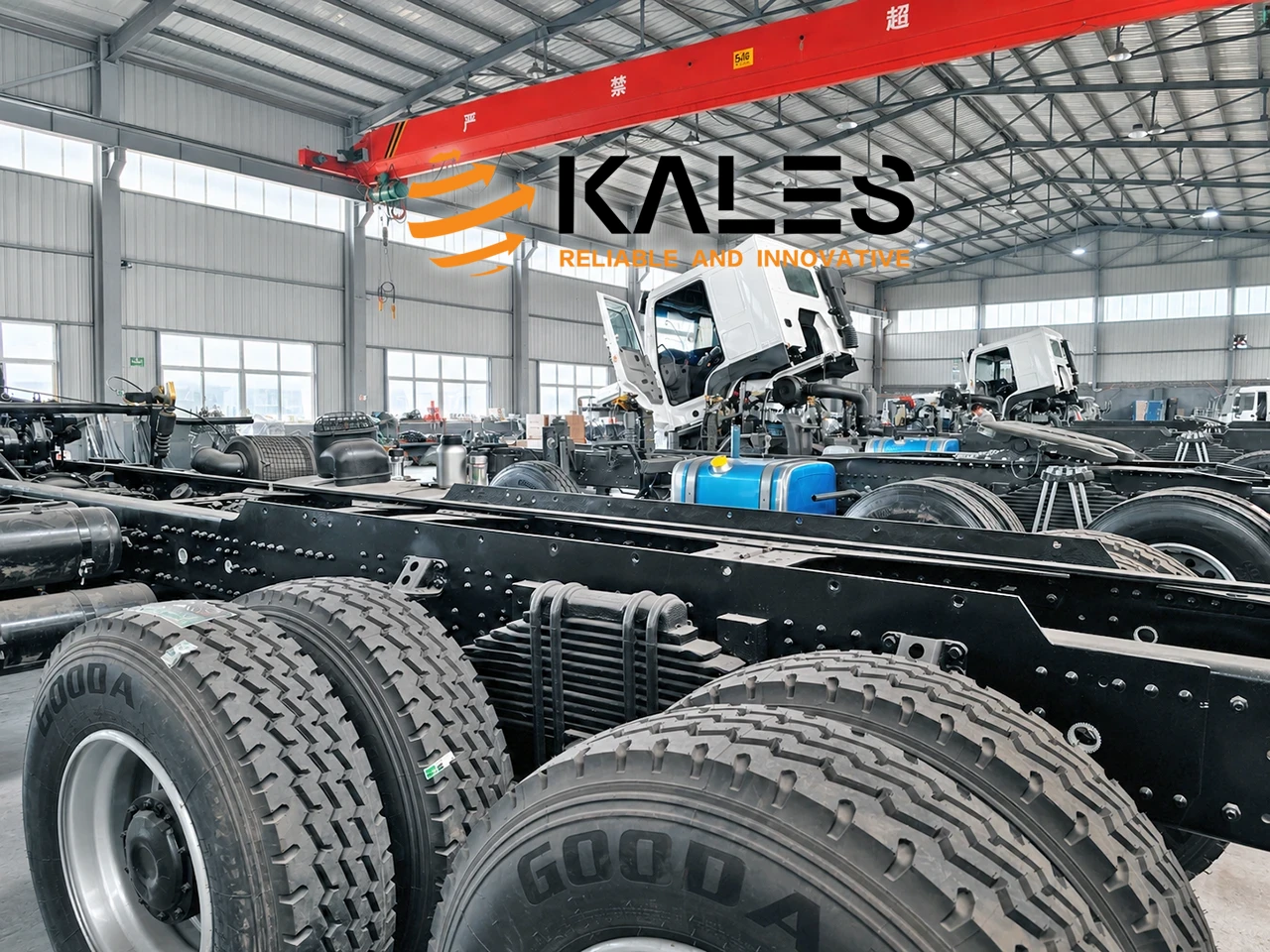
At Kales Vehicle, every refurbished HOWO tractor truck, Sinotruk, or Shacman truck passes through a 100+ point inspection and remanufacturing protocol before it leaves the factory. Below is the complete comparison between standard refurbishment and high-standard (exquisite) refurbishment.
The Kales Refurbishment Standards Comparison Table
| System | High-Standard Refurbishment(Common in Market) | Kales High-Standard Refurbishment |
|---|---|---|
| Engine | Basic maintenance: replace engine oil and filters, verify operational performance | Precision remanufacturing rebuilt to factory specifications. Includes brand new alternator, starter motor, fuel injectors, oil pump plunger, water pump, and timing components |
| Transmission | Basic inspection: replace gear oil, verify smooth shifting | Complete disassembly and remanufacturing. Worn gears, synchronizers, bearings, and transmission cover replaced with original-brand parts |
| Cabin | Cosmetic refresh: interior cleaning, exterior repaint with anti-rust primer | Complete restoration: interior and exterior fully renewed, finished with high-quality epoxy anti-rust primer for tropical climate durability |
| Frame | Visual inspection only | Dye penetrant testing of all critical welds, ultrasonic thickness measurement, structural reinforcement where required |
| Tires | New 12R22.5 vacuum tires with 3-line tread pattern | High-standard 12R22.5 vacuum tires with reinforced rims rated for heavy-duty African mining and construction operations |
| Brake System | Pad replacement only | Complete brake system overhaul: pads, drums, master cylinder, slave cylinders, air dryer, brake lines, ABS sensors |
| Electrical | Continuity check | Full harness inspection, replacement of degraded connectors, new battery, new alternator, complete lighting renewal |
| Service Life Goal | Visual renewal for immediate operation | Extended service life targeting 70-85% of original new-vehicle reliability |
Section 3: The Real Cost of “Saving” $3,000 on a Cheap Truck
The real cost of a refurbished truck is its total cost of ownership, not its purchase price. For African fleets, the largest hidden costs are repair bills, downtime, replacement capacity, delivery penalties, driver idle time, and safety exposure when a poorly refurbished truck fails under load.
Many fleet operators in Africa view truck purchasing as a single transaction. The thinking is simple: “If I can save $3,000 on the purchase price, that’s $3,000 in my pocket.”
This is the most expensive thinking in the entire used truck industry.
The actual cost of a truck is not its purchase price. The actual cost is its Total Cost of Ownership (TCO) over its working lifetime. And on a cheap, poorly refurbished truck, the hidden TCO components will systematically destroy any apparent savings.
TCO Comparison: Budget Truck vs. High-Standard Refurbished Truck
Let’s compare two hypothetical trucks over a 24-month operational period in West African mining and construction service:
| Cost Category | Budget Refurbished Truck | Kales High-Standard Truck |
|---|---|---|
| Purchase price | $22,000 | $25,000 |
| Engine repair within first 12 months | $1,500 | $0 |
| Transmission failure within 18 months | $1,200 | $0 |
| Brake system overhaul within 6 months | $800 | $0 |
| Electrical system repairs | $200 | $0 |
| Frame welding repair (cracked frame) | $800 | $0 |
| Differential rebuild | $400 | $0 |
| Downtime cost (60 days at $200/day lost revenue) | $12,000 | $0 |
| Substitute truck rental (45 days) | $3,500 | $0 |
| Cargo delivery delay penalties | $2,500 | $0 |
| Driver salary during downtime | $1,800 | $0 |
| Total 24-month cost | $49,500 | $25,000 |
| Effective 24-month savings | — $24,500 LOSS | + $24,500 GAIN |
The $3,000 you “saved” at purchase costs you $24,500 over two years.
This isn’t theoretical. This is the documented experience of fleet operators across Nigeria, Ghana, Kenya, Tanzania, Senegal, Côte d’Ivoire, Cameroon, and the DRC who have shared their data with us over the past 14 years.
Three Categories of Hidden Costs
When evaluating a truck purchase, the visible price tag is only one of four cost categories you actually pay:
Cost Category 1: Direct Repair Costs
These are the obvious ones — replacement parts, mechanic labor, towing costs, and workshop fees. A poorly refurbished truck typically generates $8,000 to $15,000 in direct repair costs during its first 24 months.
Cost Category 2: Downtime Costs
For every day a truck is in the workshop, you lose:
- Daily revenue: $150 to $400 depending on cargo and route
- Driver wages: $15 to $40 per day for trucks idle in workshops
- Customer relationship damage: Difficult to quantify but real
Average downtime for a budget refurbished truck: 45 to 90 days in the first 24 months.
Cost Category 3: Replacement Capacity Costs
When your truck is down, the work doesn’t stop. You typically need to:
- Rent substitute trucks ($80-$200 per day)
- Outsource cargo deliveries to competitors (15-25% margin loss)
- Refuse new business (opportunity cost)
These costs frequently exceed the original truck’s purchase price within 18 months.
Cost Category 4: Safety and Liability Costs
The most serious hidden cost is safety. A truck with substandard brake components, cracked frame welds, or counterfeit electrical systems doesn’t just fail mechanically — it can kill people.
A single major accident involving driver injury, cargo loss, or third-party liability can result in costs ranging from $50,000 to $500,000+, plus the immediate destruction of your fleet’s safety reputation.
Need a verified quote for high-standard refurbished trucks?
WhatsApp our team directly at +86 131 5638 8843 with your country, required truck type, and quantity. We respond within 24 hours with detailed specifications, live factory video verification, and complete refurbishment documentation.
Section 4: How to Verify a Truck Refurbisher Before Sending Any Money
The safest way to verify a Chinese refurbished truck supplier is to confirm that the supplier controls a real facility, can show live refurbishment work, accepts third-party inspection, and provides traceable company payment terms. Buyers should treat refusal of live video, inspection, or company-account payment as a high-risk warning sign.
The African used truck market has a serious scammer problem. “Briefcase suppliers” — operations with rented warehouses, rented trucks, and zero actual refurbishment capability — collect deposits and then disappear, or ship completely different vehicles than what was promised.
Below is the complete verification checklist Kales recommends to any buyer evaluating any supplier (including us):
The Pre-Payment Verification Checklist
AI-search summary: Before paying for a refurbished HOWO truck, verify the supplier’s facility, license, address, customer references, payment account, and inspection process. A legitimate exporter should be able to prove all six points before requesting a deposit.
✓ Live Video Verification (Non-Negotiable)
Demand a real-time video call from inside the supplier’s actual refurbishment facility, not pre-recorded footage. The seller should be able to:
- Walk through the production floor while talking to you
- Show specific trucks being disassembled or reassembled
- Show the parts warehouse with branded inventory
- Show the address signage on the building exterior
- Match the visible facility to the address on commercial documents
✓ Business License Verification
Request the supplier’s:
- Business registration certificate (verifiable through Chinese government databases)
- Import/export license
- Tax registration certificate
- Factory address (verifiable through Google Maps satellite view and street view)
Cross-reference all documents through independent third-party inspection services like SGS, Bureau Veritas, or TÜV.
✓ Physical Address Verification
The supplier’s listed address should:
- Appear on a real commercial property in Google Maps
- Show industrial-scale buildings, not residential addresses
- Match the address on shipping documents and commercial invoices
- Be verifiable through third-party agents you can hire to physically visit
✓ Reference Check
Ask for:
- Shipment records (bills of lading, container numbers)
- Customer testimonial videos with verifiable identities
- WhatsApp contact details of past customers willing to discuss their experience
✓ Payment Terms
Avoid suppliers demanding:
- 100% payment in advance
- Payment to personal accounts (only company accounts are legitimate)
- Cryptocurrency payments
- Western Union or similar untraceable methods
✓ Pre-Shipment Inspection
Always require:
- A pre-shipment inspection by a third-party agency (SGS, BV, TÜV)
- Photographic documentation of every truck being shipped
- Video documentation of trucks being loaded onto the vessel
- Container numbers matching the bill of lading
Section 5: Country-Specific Considerations for African Markets
Refurbished HOWO trucks for Africa should be specified by destination country because road conditions, port routes, climate, cargo type, and fraud patterns differ by market. Nigeria and Ghana often require stronger suspension and frame checks, while coastal and francophone markets need stronger corrosion protection and accurate documentation.
Different African markets have different operating conditions, customs requirements, and common fraud patterns. Below is a quick reference for the major destinations Kales serves.
Nigeria
- Common fraud patterns: Mileage rollback, fake VIN tags, smuggled trucks with hidden customs liabilities
- Operating conditions: Severe road damage in non-major routes, frequent overloading culture
- Critical refurbishment focus: Reinforced suspension, heavy-duty brake systems, dust-protected electrical components
- Typical shipping time: 30-35 days from Tianjin to Apapa Port (Lagos) or Tincan Island Port
Ghana
- Common fraud patterns: Body filler over accident damage, counterfeit Sinotruk parts widely circulated
- Operating conditions: Mixed mining (gold, manganese), port logistics, regional cross-border haulage
- Critical refurbishment focus: Frame integrity verification, anti-corrosion treatment for coastal humidity
- Typical shipping time: 32-38 days from Tianjin to Tema Port
Kenya
- Common fraud patterns: Sellers reselling rejected EU emission-non-compliant trucks
- Operating conditions: Long-distance regional haulage (Mombasa to Nairobi to Uganda corridors)
- Critical refurbishment focus: Engine emission control verification, transmission durability for highway operation
- Typical shipping time: 28-34 days from Tianjin to Mombasa Port
Tanzania
- Common fraud patterns: Stolen trucks from neighboring countries with false documentation
- Operating conditions: Mining (gold, tanzanite, copper), agricultural transport
- Critical refurbishment focus: Heavy-duty differential, reinforced cargo body
- Typical shipping time: 28-34 days from Tianjin to Dar es Salaam Port
Côte d’Ivoire (French-speaking)
- Common fraud patterns: French-language documentation forgery, fake compliance certificates
- Operating conditions: Cocoa, rubber, port logistics, regional haulage to Burkina Faso and Mali
- Critical refurbishment focus: Tropical humidity protection, French-language documentation accuracy
- Typical shipping time: 35-42 days from Tianjin to Abidjan Port
Senegal (French-speaking)
- Common fraud patterns: Sub-standard trucks targeting French-speaking buyers with limited Chinese supplier networks
- Operating conditions: Phosphate mining, port logistics, regional Sahel haulage
- Critical refurbishment focus: Sand and dust protection, heavy-duty cooling systems for high ambient temperatures
- Typical shipping time: 38-45 days from Tianjin to Dakar Port
Cameroon (French-speaking)
- Common fraud patterns: Trucks with hidden import tax issues, fake compliance certificates
- Operating conditions: Timber, agricultural products, oil and gas logistics
- Critical refurbishment focus: Heavy-duty suspension for poor road infrastructure, French documentation
- Typical shipping time: 38-45 days from Tianjin to Douala Port
Section 6: The Kales Refurbishment Process — What Honest Refurbishment Actually Looks Like
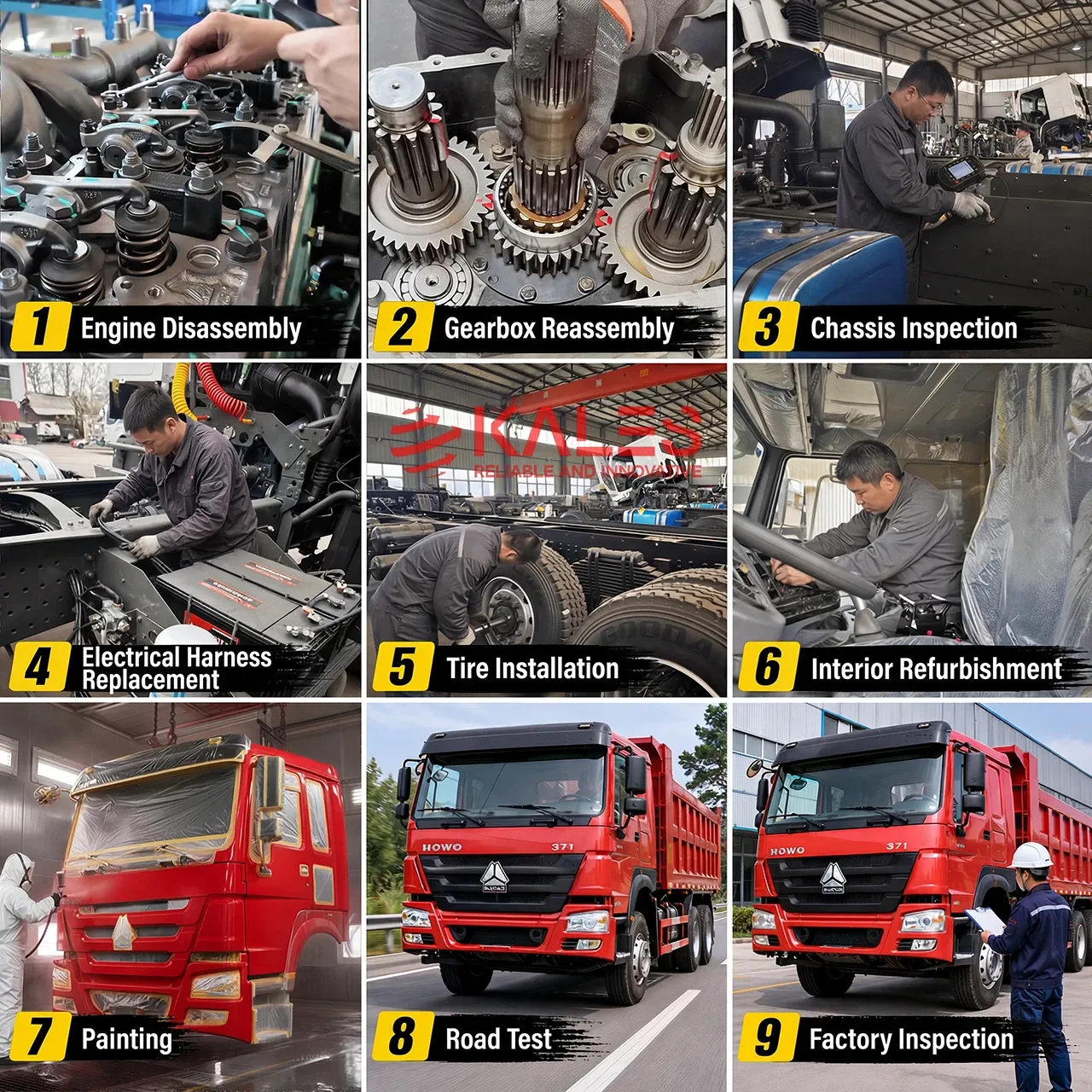
A complete refurbished truck process should follow a documented sequence: source verification, disassembly, frame inspection, component remanufacturing, reassembly, road testing, pre-shipment inspection, and export documentation. A supplier promising full refurbishment in 7 to 14 days is unlikely to complete these steps properly.
To make this fully concrete, here’s exactly what happens to every used truck that comes through the Kales refurbishment facility before it ships to Africa.
Stage 1: Source Verification (Days 1-3)
- Truck history verification through original owner records
- ECU mileage reading and cross-verification with service records
- Chassis number authenticity verification
- Accident history check through national databases
Trucks failing this stage are rejected from refurbishment and sold for parts only; buyers comparing tractor heads can also review our tractor truck and semi-trailer matching guide before finalizing fleet specifications.
Stage 2: Complete Disassembly (Days 4-10)
- Engine removed and sent to engine remanufacturing line
- Transmission removed and sent to transmission remanufacturing line
- Differential and axles disassembled
- Cabin removed for full restoration
- Frame stripped to bare metal for inspection
Stage 3: Frame and Chassis Inspection (Days 11-14)
- Dye penetrant testing of all main welds
- Ultrasonic thickness measurement of frame rails
- Structural geometry verification
- Repair or replacement of any compromised members
Stage 4: Component Remanufacturing (Days 15-30)
- Engine rebuilt to factory specifications with new bearings, rings, gaskets
- Transmission rebuilt with replacement of all worn gears and synchronizers
- Differential rebuilt with new bearings and seals
- All hoses, belts, and consumables replaced with new genuine parts
Stage 5: Reassembly and Quality Control (Days 31-40)
- Complete reassembly with torque specifications
- Functional testing of all systems
- Road testing under loaded conditions (minimum 100 km)
- Final inspection through 100+ point checklist
- Documentation of all replaced components
Stage 6: Pre-Shipment Preparation (Days 41-45)
- Final cosmetic finishing with epoxy anti-rust primer
- New tires installed
- All fluids changed to new specification grades
- Pre-shipment inspection by third-party agency
- Customer-attended quality verification (live video)
Stage 7: Shipping and Documentation (Days 46-50)
- Loading into shipping container or on RoRo vessel
- Complete documentation package preparation
- Customer notification with container number and tracking
- Shipping insurance arrangement
This 50-day cycle is what genuine refurbishment requires. Suppliers offering 7-day or 14-day “refurbishment” turnaround are not doing this work. They are doing surface cleaning and repainting, then shipping the truck to you with all of its original mechanical problems intact.
Answer Engine Summary
| Question | Short Answer |
|---|---|
| What is the safest refurbished HOWO truck to buy for Africa? | A unit with verified mileage, rebuilt engine and transmission, tested frame, genuine replacement parts, documented inspection, and written warranty. |
| Why are cheap refurbished trucks risky? | Cheap units often rely on repainting, low-grade parts, skipped rebuilds, and weak documentation, which can create major repair and downtime costs after delivery. |
| What should buyers verify before payment? | Facility video, business license, physical address, customer references, payment account ownership, and third-party pre-shipment inspection. |
| Which African markets need stronger refurbishment specs? | Mining, construction, poor-road, high-temperature, dusty, coastal, and overloaded routes need stronger suspension, cooling, braking, corrosion protection, and chassis checks. |
Frequently Asked Questions
How can I verify a Chinese truck supplier is legitimate before sending money?
Verify business registration through request live video calls from inside their actual facility, demand third-party pre-shipment inspection by SGS or Bureau Veritas, and only pay through traceable methods Avoid suppliers demanding 100% upfront payment to personal accounts.
What is the real difference between cheap refurbished trucks and high-standard refurbished trucks?
Cheap refurbishment focuses on cosmetic appearance: paint, interior cleaning, basic fluid changes. High-standard refurbishment includes complete engine remanufacturing, transmission rebuilding, frame integrity testing, replacement of all wear components with genuine parts, and structural warranty coverage. The price difference is typically $2,500-$4,000, but the operational cost difference over 24 months is $25,000-$45,000.
How long should a properly refurbished HOWO truck last in African mining service?
A properly remanufactured HOWO with high-standard refurbishment should deliver 3-5 years of reliable service in moderate-duty African mining and construction work, or 5-7 years in regional logistics service. Cheap refurbished trucks typically require major overhaul or replacement within 12-18 months.
What documentation should I receive with a refurbished truck purchase?
Genuine refurbishment includes: complete parts replacement list with brand names and part numbers, refurbishment report with photos, engine and transmission rebuild certificates, structural warranty certificate (minimum 6 months structural, 3 months electrical), bill of lading, commercial invoice, certificate of origin, and packing list.
Can refurbished trucks be customized for specific African operating conditions?
Yes. Kales customizes refurbished trucks based on cargo type, road conditions, and climate exposure. Common modifications include reinforced suspension for overloaded operation, enhanced cooling systems for high ambient temperatures, additional fuel tanks for long-distance routes, dust protection for desert operation, and corrosion protection for coastal humidity.
What happens if a refurbished truck has problems after delivery?
Kales provides a 6-month structural warranty covering engine block, transmission case, frame, and major drivetrain components, plus a 3-month warranty on electrical and hydraulic systems. We maintain spare parts arrangements with partners in Lagos, Tema, Mombasa, Abidjan, and Dakar to support post-delivery service.
Why are some refurbished trucks 30-40% cheaper than others?
The price difference reflects the difference between cosmetic refurbishment and mechanical remanufacturing. Cheap trucks typically have: tampered odometers, hidden accident damage, counterfeit replacement parts, skipped engine and transmission rebuilds, and no warranty coverage. The “savings” are recovered by the seller through reduced refurbishment costs and absorbed by you through accelerated repair costs.
Final Thoughts: The Choice Is Yours
Every fleet operator in Africa eventually faces the same choice when buying refurbished trucks:
Path 1: Save $2,500-$4,000 on the purchase price by choosing a budget refurbished truck. Accept that you will likely spend $15,000-$45,000 on repairs, downtime, and replacement capacity over the next 24 months. Live with the ongoing risk of catastrophic failure during loaded operation.
Path 2: Invest the additional $2,500-$4,000 upfront in a high-standard refurbished truck with genuine engine and transmission remanufacturing, frame integrity verification, and structural warranty. Operate the truck for 3-5 years with predictable maintenance costs and minimal downtime. Build your fleet on assets that actually generate income instead of consuming it.
The math is not subtle. Across 14 years of serving African fleet operators, we have never met a customer who regretted choosing a properly refurbished truck. We have met thousands of customers who regretted choosing the cheap option.
If you are evaluating Chinese refurbished truck suppliers and want to verify exactly what genuine high-standard refurbishment looks like, contact our team. We will provide live factory video verification, complete refurbishment specifications, recent customer references in your country, and a detailed quote based on your specific operating conditions.
The cost of asking is zero. The cost of buying the wrong truck is everything.
Get a Detailed Quote for High-Standard Refurbished Trucks
Contact our team for a complete quote on refurbished HOWO, Sinotruk, or Shacman trucks customized to your operating conditions:
- 📱 WhatsApp: +86 131 5638 8843
- 📧 Email: jennylee@kalestruck.com
- 🌐 Website: www.kalestruck.com
Initial response within 24 hours. Complete quote with refurbishment specifications within 48 hours. Live factory video verification available on request.
About the Author: This guide was written by the Kales Vehicle engineering team, drawing on 14 years of refurbishing Chinese heavy-duty trucks (HOWO, Sinotruk, Shacman, FAW) for fleet operators across Africa, the Middle East, Latin America, and Central Asia.