


Ultimate Guide to Semi-Trailer Landing Gear: Mechanical vs. Hydraulic, Payload Specs, and Brand Selection

Lead Engineer, Kales Vehicle
The landing gear is the only load-bearing support when a semi-trailer is uncoupled from the tractor. If the configuration is wrong, the result is not just slower trailer handling. It can lead to gear stripping, bent support legs, unstable coupling on uneven ground, and expensive downtime in markets where replacement parts are difficult to source quickly.
3-Minute Quick Read
- Mechanical vs. hydraulic: for most African, South American, and Southeast Asian export fleets, mechanical landing gear remains the best choice because it is field-repairable and does not depend on hydraulic support hardware.
- Do not buy by the 28T label alone: you must check lift capacity, static load, and side load together. Weak side load performance is one of the most common causes of landing gear failure on rough routes.
- Brand choice is a spare-parts decision: JOST and SAF-Holland fit premium markets well, but FUWA or Kales OEM often make more commercial sense where aftermarket parts density matters more than brand prestige.
- Operational rule: when lifting a loaded trailer, always use low gear. High-gear lifting under load destroys the internal transmission much faster than most operators expect.
Quick answer: choose mechanical landing gear for most general freight, mixed-road, and long-haul export operations where serviceability and spare-part access matter most. Move to hydraulic landing gear only when coupling frequency is high enough that labor savings and turnaround speed justify the added maintenance complexity.
Why Landing Gear Selection Matters More Than Many Buyers Assume
Many buyers treat landing gear as a minor accessory because it sits at the front of the trailer and looks simple. In practice, it is one of the most abused support systems on a semi-trailer. It has to carry front-end load when the tractor is detached, tolerate imperfect ground conditions, survive repeated coupling impact, and keep working in dust, rain, and low-maintenance environments.
That is why brand selection is not really about asking which manufacturer has the best catalog reputation. The real procurement question is which landing gear setup is least likely to fail under your payload band, your route conditions, and your local repair ecosystem. For a fleet operating in Lagos, Mombasa, or inland Peru, the answer is often different from the answer for a fleet operating in Rotterdam or Texas.
1. What a Semi-Trailer Landing Gear Actually Does
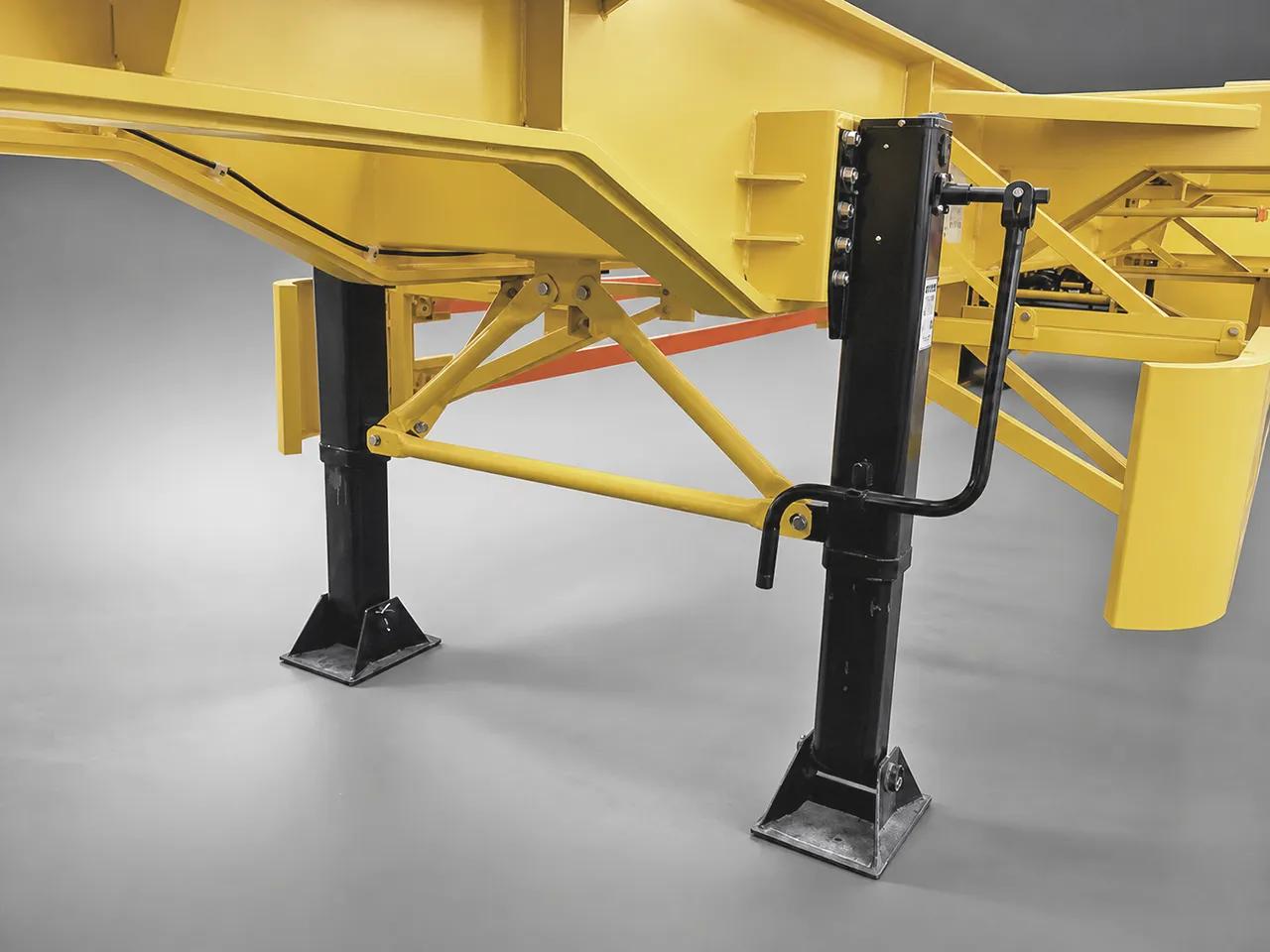
Landing gear, also called landing legs, sits near the kingpin and supports the front of the semi-trailer whenever the prime mover is detached. The system normally consists of one drive leg with the gearbox and crank handle, one driven leg, and a cross shaft that keeps both sides synchronized so the trailer stays level.
It sounds simple, but this assembly does three different jobs at once: it lifts the trailer during coupling and uncoupling, holds the front-end load while the trailer is parked, and resists side shock when the tractor backs in imperfectly or the trailer is parked on uneven ground. That is why buyers must think beyond the common shorthand of “28-ton legs.”
2. The Three Load Metrics You Must Never Confuse
When buyers ask for “28T landing gear,” they usually mean the lift rating. That is only one of three separate load metrics that matter in real use.
| Metric | What it means | Why it matters |
|---|---|---|
| Lift capacity | The maximum weight the landing gear can raise during coupling or uncoupling | This is the value most often referenced by 24T, 28T, or 32T product labels |
| Static load capacity | The maximum parked front-end load the support legs can hold safely over time | This determines whether a loaded trailer can remain uncoupled without overstressing the support structure |
| Side load capacity | The ability to resist lateral impact and uneven-ground shock | This is often the hidden weak point on rough roads, mining yards, and low-discipline coupling environments |
In Kales export experience, side load is the metric buyers ignore most often. A landing gear can look correctly rated on paper for lift and static support, but still fail early if the trailer regularly sees rough shoulders, potholes, uneven dirt surfaces, or off-angle tractor coupling.
3. Mechanical vs. Hydraulic Landing Gear
| Feature | Mechanical landing gear | Hydraulic landing gear |
|---|---|---|
| Drive mechanism | Manual crank and internal gearbox | Hydraulic cylinder with pump support |
| Typical operation time | About 5 to 10 minutes | Often under 2 minutes |
| Maintenance complexity | Low | High |
| Failure pattern | Gear wear, operator misuse, bent support shoes | Seal leakage, hose issues, pump or hydraulic control faults |
| Power dependency | None | Requires working hydraulic or auxiliary power support |
| Best-fit mission | General freight, export fleets, rough routes, service-limited regions | High-frequency coupling environments such as ports and distribution hubs |

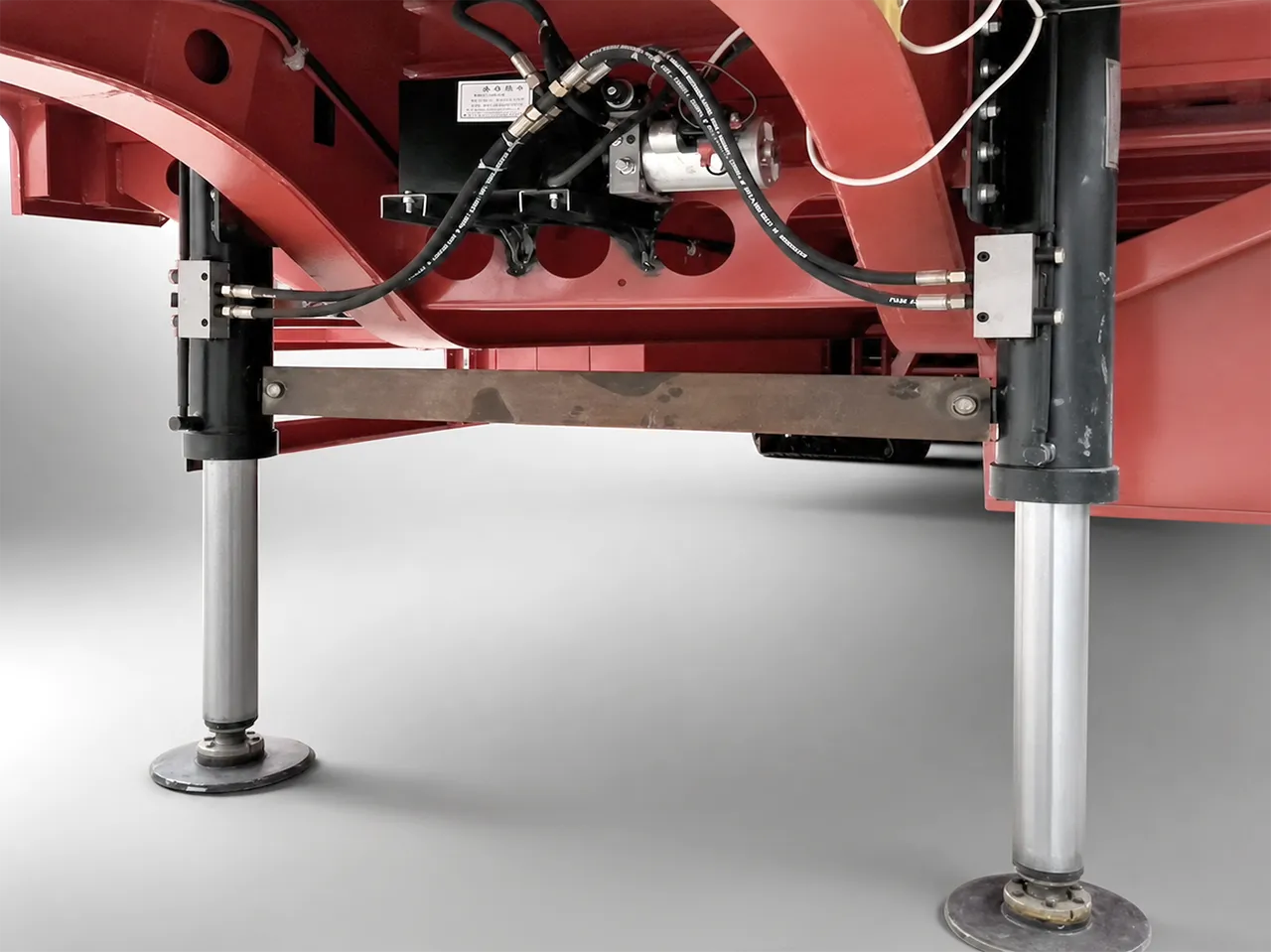
Across Kales export deliveries into Africa and South America, mechanical landing gear still dominates because it solves the fleet owner’s real problem: staying serviceable when the trailer is far from a premium workshop. A roadside mechanic can usually troubleshoot and repair a manual gearbox faster than a remote fleet can source hydraulic seals, pumps, or system-specific hardware.
When mechanical is the right answer
- Long-haul operations where uncoupling happens only occasionally
- Mixed-road routes where parts access is more important than operator convenience
- Emerging-market fleets that must keep maintenance simple and workshop-friendly
- Cost-sensitive buyers who value reliability over cycle-speed convenience
When hydraulic is justified
- Port or yard operations with 5 or more coupling cycles per day
- Heavy-haul applications where repeated manual cranking creates major labor loss
- Operations with trained technicians and dependable hydraulic service support
- High-frequency distribution fleets where time saved at each uncoupling adds up materially
Linked landing gear vs. independent landing gear
Buyers also need to separate linked landing gear from independent landing gear. A linked setup uses a cross shaft so the drive leg and the driven leg travel together. This is still the normal road-trailer solution because it keeps both sides level during daily coupling and uncoupling, reduces twisting at the front frame, and stays easy for workshop mechanics to understand.
Independent landing gear removes that synchronized cross-shaft logic and lets each side move separately, usually through hydraulic control or a more specialized support layout. It is useful when chassis packaging, special heavy-haul arrangements, or controlled hydraulic actuation make synchronized manual travel less important. The tradeoff is that setup accuracy, synchronization discipline, and maintenance quality become much more important than they are on a mainstream linked mechanical system.
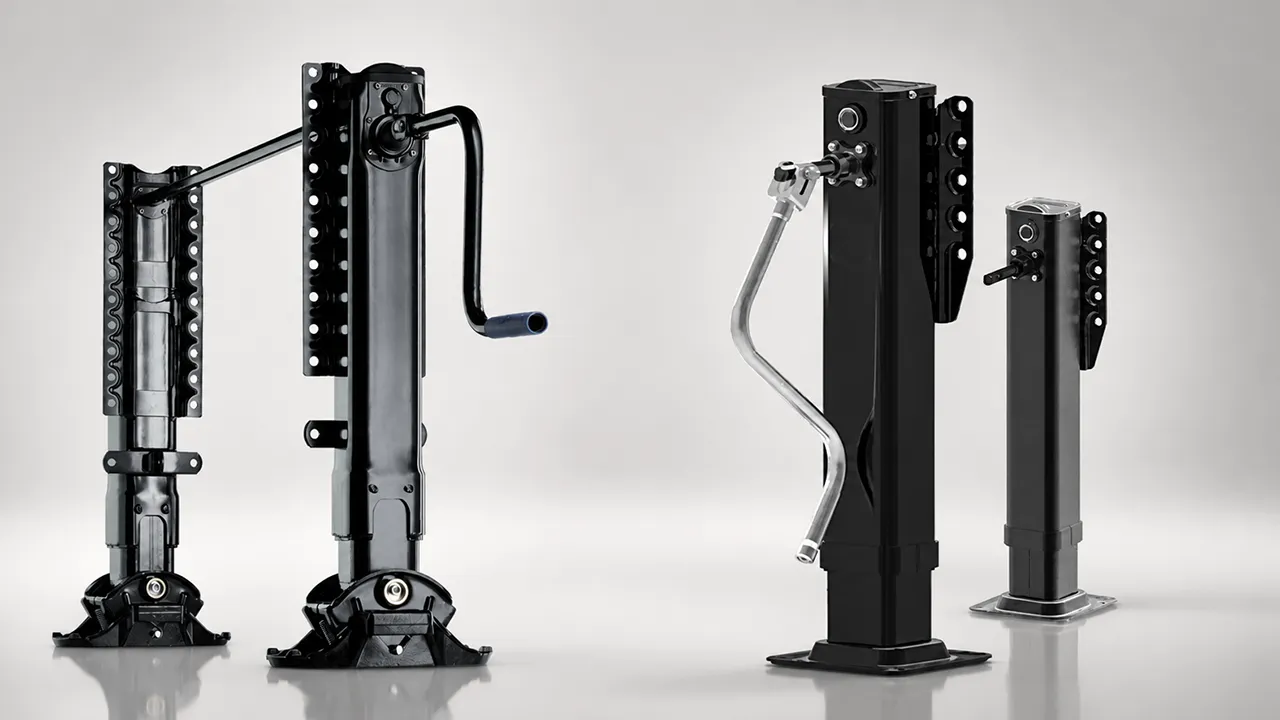
- Choose linked landing gear for standard semi-trailers, general freight, tankers, flatbeds, and most export fleets that need level support and easy roadside service.
- Choose independent landing gear only when the trailer layout or operating cycle truly needs separate leg actuation and the workshop can keep the system synchronized.
4. How to Choose the Right Payload Rating
The best procurement shortcut is to estimate the front-end load the landing gear must actually support when the trailer is uncoupled. In many practical trailer layouts, the front-end static requirement lands roughly in the 30% to 45% range of total trailer-plus-cargo weight, depending on chassis geometry and load distribution.
For example, an 80-ton lowbed trailer carrying a 70-ton payload does not put the full 82 tons on the landing gear. But the front-end support load can still be large enough that buying too light a support set becomes risky very quickly. This is why a mainstream heavy-duty 28T system with strong static support and proper bracing often remains the commercial baseline for export lowbeds.
Mainstream decision bands
- 24T class: suitable for lighter dry van, curtainsider, and standard flatbed missions where front-end load is moderate
- 28T class: the international mainstream standard and usually the default starting point for lowbeds, tankers, heavy flatbeds, and export general-freight trailers
- 32T and above: reserved for more extreme heavy-haul and specialized applications where front-end load and dynamic stress move outside mainstream operating bands
5. Why Side Load Is the Failure Metric Too Many Buyers Miss
In markets with rough roads, side load matters almost as much as lift capacity. A trailer parked on a crowned dirt shoulder, a tractor coupling slightly off-angle, or repeated lateral shock in a quarry yard can damage landing gear faster than normal vertical lifting load.
That is why Kales recommends heavy-duty 28T support sets with stronger side-load resistance when the trailer is headed for mining, agriculture logistics, road construction support, or inland routes with frequent potholes and uneven surfaces. On paper the price difference may look small, but over years of operation it is often the cheapest insurance on the whole front support assembly.
6. Brand Selection: JOST, SAF-Holland, FUWA, or Kales OEM
Brand selection is really the meeting point between budget, reliability expectations, and the spare-parts ecosystem where the trailer will actually work.
JOST
JOST remains one of the benchmark premium options. It is a strong fit for buyers serving Europe, North America, or premium export programs where long-term durability and sealed gearbox protection carry clear commercial value.
SAF-Holland
SAF-Holland is especially strong in North American and premium industrial service contexts. It fits fleets that value corrosion resistance, higher-spec component systems, and dependable long-life hardware in formal maintenance environments.
FUWA
FUWA is often the most practical answer for mainstream African and South American operations because aftermarket parts are widely distributed and familiar to local workshops. That spare-parts density often matters more to uptime than paying extra for a higher-tier nameplate.
Kales OEM
Kales OEM support legs are optimized around export chassis integration, emerging-market cost discipline, and practical interchange with international mounting logic. For buyers sourcing a complete trailer rather than retrofitting support legs later, this often creates the cleanest balance between budget, compatibility, and reinforced installation quality.
7. Three Operating Mistakes That Destroy Landing Gear Early
Using high gear to lift a loaded trailer
This is one of the fastest ways to destroy the internal transmission. High gear is for fast travel with low resistance, not for lifting under real front-end weight. Under heavy load, use low gear and keep the force path controlled.
Buying by brand prestige while ignoring local repair conditions
A famous brand is not automatically the right choice if replacement parts take 60 days to arrive and the trailer must sit idle while waiting. Uptime economics matter more than logo prestige once the trailer is in service.
Ignoring travel length and chassis integration
The gear may be strong enough, but if the travel range does not match the fifth-wheel height of the tractor, daily coupling becomes inefficient or impossible. The mounting and chassis bracing are just as important as the gear unit itself.
8. Why Factory Installation and Bracing Matter
Even a premium landing gear assembly can perform badly if the installation is weak. Proper heavy-duty V- or W-bracing, correct welding sequence, and synchronized integration with the chassis structure are what preserve the rated performance in real service.
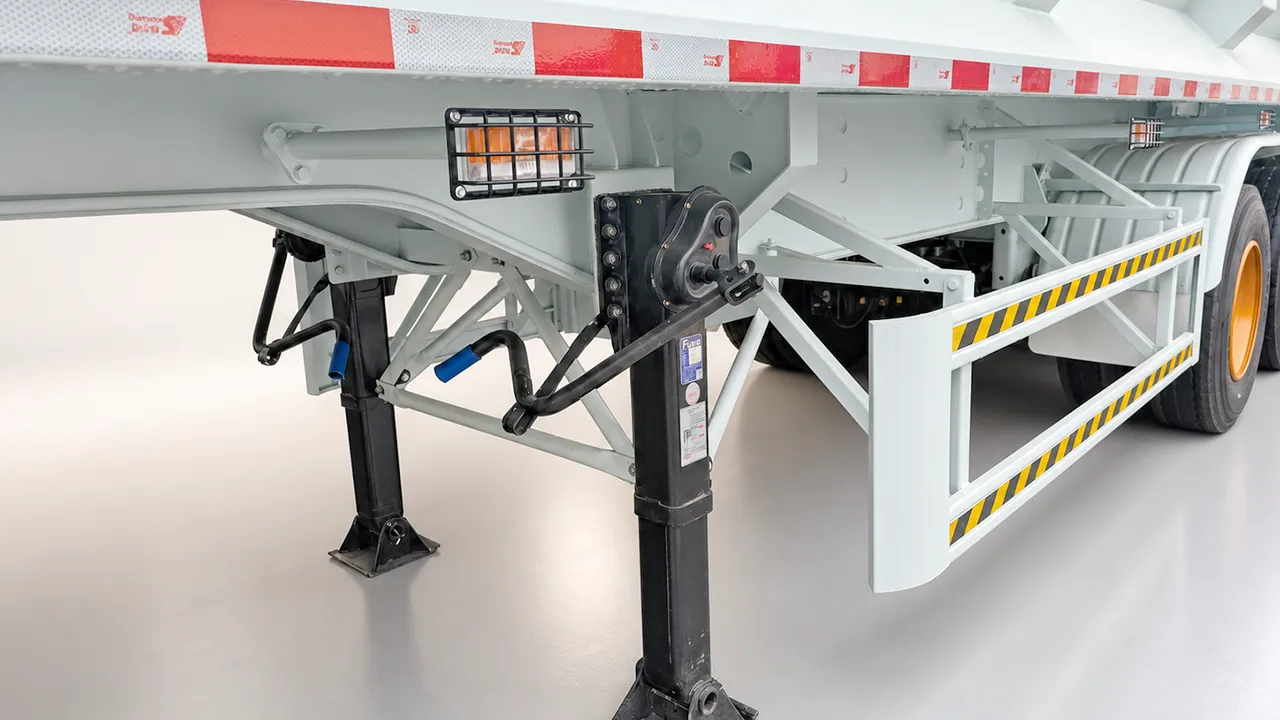
This is where many budget comparisons go wrong. Buyers see two support-leg sets with similar lift ratings and assume they will behave the same in service. They do not. A stronger V-shaped brace improves how impact loads travel back into the chassis, reduces front-frame twist, and helps the support legs stay aligned after repeated coupling on uneven surfaces.
This is one reason factory-installed support legs on complete trailers usually outperform aftermarket retrofits. The front structure, kingpin area, and landing gear supports are designed together instead of treated as separate workshop tasks.
9. Landing Gear Shoe Base Selection: G, A, S, T, and R
The landing gear leg itself is only half the decision. The shoe base determines how the support load meets the ground. Choosing the wrong foot for the route or yard condition is one reason otherwise strong landing gear sinks, skids, or wears prematurely.
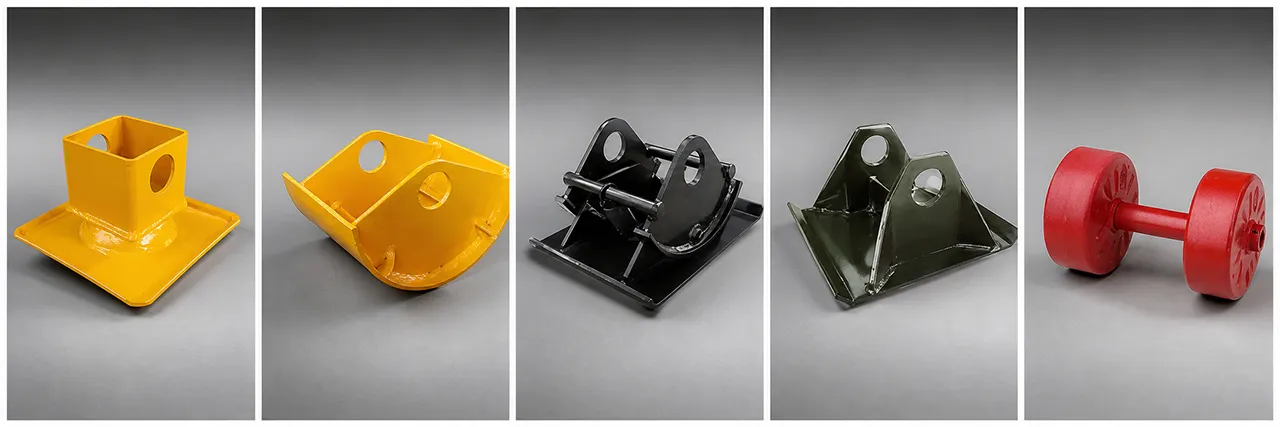
| Code | Base type | Best-fit condition | Procurement logic |
|---|---|---|---|
| G | Pivot | General paved yards and mixed standard trailer parking | A practical mainstream choice where the support foot needs moderate self-adjustment on ordinary ground. |
| A | Rocking | Uneven parking surfaces with more fore-aft movement | Useful when the support foot must follow slight pitch changes without concentrating load on one edge. |
| S | Air suspension foot | Trailers whose operating profile emphasizes smoother yard contact and reduced shock transfer | Chosen where the fleet wants a foot style better matched to higher-spec trailer running gear and cleaner support conditions. |
| T | Sand shoe | Soft shoulders, mine yards, dirt surfaces, and loose ground | The larger footprint helps reduce sink-in risk and is often the right answer for African construction, quarry, and rural freight routes. |
| R | Wheel base | Specialized maneuvering or support arrangements where rolling contact is operationally useful | Best reserved for special applications rather than normal highway trailer parking logic. |
For most export buyers, the practical decision usually comes down to pivot or rocking feet for standard yard work and sand shoes for soft-ground service. Wheel-type and more specialized foot arrangements should be selected only when the operating scenario clearly justifies them.
10. Frequently Asked Questions
Is hydraulic landing gear worth the extra cost?
It is worth the cost only when coupling frequency is high enough that labor savings and faster turnaround offset the extra maintenance complexity. For low-frequency long-haul work, mechanical systems remain the more economical answer.
What do TTMA and AAR standards change for export buyers?
They improve interchangeability and physical compatibility across more mature markets. Even where they are not legally required, they help future parts replacement and reduce long-term sourcing risk.
When should I choose a sand shoe instead of a cushion foot?
Choose a sand shoe for dirt roads, soft shoulders, mine yards, and unstable surfaces. Choose a cushion foot where operations are mainly on paved concrete yards and the goal is shock moderation on cleaner surfaces.
Is 28T still the mainstream safe starting point for export lowbeds and heavy flatbeds?
Yes. For many export lowbeds, tankers, and heavy-duty flatbeds, 28T remains the most practical baseline because it gives strong lift performance, broad aftermarket support, and a familiar maintenance profile.
What information should I send before requesting a landing gear recommendation?
Send the trailer type, target payload, prime mover fifth-wheel height, destination country, and route condition. Those details determine whether the correct answer is a standard mechanical set, a heavier-duty upgrade, or a hydraulic system.
Our Final Recommendation
The right landing gear choice comes down to payload class, local repair conditions, and operating frequency. For most export fleets, the safest default is still a properly braced heavy-duty mechanical 28T-class system from a brand whose replacement parts can actually be sourced in the destination market. Hydraulic support legs make sense only when speed and cycle frequency are high enough to justify the added service burden.
Need Help Matching Landing Gear to Your Trailer?
Send your trailer specs, prime mover model, destination country, and expected operating route. The Kales engineering team will recommend a landing gear configuration that fits your payload class, workshop reality, and long-term operating budget.
Email: jennylee@kalestruck.com
WhatsApp: +86 131 5638 8843
View Kales 80-Ton 3-Axle Lowbed Trailer Specs