

Published: September 9, 2026 · Word count: 2615 · Reading time: 15 minutes
In African open-pit mining, quarrying, and bulk mineral haulage—from the gold corridors of Geita and Kahama in Tanzania to the Katanga copper belt in the DRC and Guinea’s bauxite plateau—choosing the wrong tipper trailer configuration can cripple fleet profitability. Transport contractors frequently face a high-stakes capital expenditure dilemma: Should we invest in lateral side tipper semi-trailers or dedicated U-shape rear dump semi-trailers?
While marketing brochures often promote side tippers for their fast discharge cycle and rear tippers for sheer brute payload, the real-world operational truth depends on four non-negotiable engineering factors: ground rollover stability on uncompacted discharge pads, ore lump size and excavator drop impact, return-leg freight economics, and five-year total cost of ownership (TCO). This engineering analysis provides fleet directors with an objective, data-backed comparison to select the exact right tipper platform for their mine haulage contracts.
Executive Comparison: Side Tipper vs. Rear Dump at a Glance
- Discharge Stability & Rollover Hazard: Rear dump trailers lift their payload 5 to 7 meters high at a 50-degree tipping angle, creating severe tip-over risks on soft or sloping ground (cross-slope >3°). Side tippers tilt sideways with a center of gravity remaining below 2.5 meters, eliminating high-lift wind and soft-ground rollover hazards.
- Material & Impact Tolerance: U-shape rear tippers built with 10–12mm T700 or Hardox wear plate easily absorb massive blasted boulders (600mm–1,200mm) dropped by 50-ton excavators. Side tippers are engineered for fine-to-medium bulk materials (sand, coal, bauxite, gravel, crushed ore fines <150mm); large rocks will buckle side doors, damage hinges, and bend lateral hydraulic cylinders.
- Discharge Cycle & Infrastructure: Side tippers discharge in 30 to 45 seconds along linear windrows or train loading sidings without uncoupling the tractor or risking overhead power line contact. Rear tippers require 90 to 180 seconds to reverse to a tipping edge, hoist, shake sticky ore loose, and lower completely.
- Return-Leg Economics (Backhaul Versatility): Dropside side tippers can lower their side panels to carry palletized cargo, bagged cement, or timber on the return trip. Rear dumpers are strictly single-purpose containers resulting in 100% empty deadhead mileage.
- 5-Year TCO Verdict: For open-pit ore blasting and severe mine pit overburden, the U-shape rear tipper yields a 15–20% lower 5-year maintenance cost due to its simple single-cylinder HYVA hoist and indestructible curved tub. For regional highway mineral transit, smelter supply, and two-way commercial cargo routes, the side tipper delivers a 22–28% higher annual return on investment (ROI) by eliminating empty return runs.
Quick Answer: Which tipper trailer should you choose for African mining operations?
Choose a U-shape rear dump semi-trailer if your fleet operates inside open-pit mines hauling blasted rock, massive ore boulders, or abrasive overburden directly from excavator benches to primary crushers, where dumping berms are prepared and maximum structural impact resistance is required.
Choose a side tipper semi-trailer if your operation involves hauling crushed aggregate, coal, bauxite, sand, or mineral concentrates over public highways or regional corridors where you can utilize rapid windrow dumping and haul revenue-generating bagged freight, cement, or timber on the return journey.
Key Decision Takeaways for Mining Transport Contractors
- Rock Lump Size Rule: If cargo includes blasted rocks exceeding 200 mm diameter, side tippers are disqualified due to hinge and door damage. U-shape rear dumpers are mandatory.
- Soft Ground Stability: Dumping on uncompacted tailings or soft mud pads without a bulldozer-maintained berm makes rear dumping extremely dangerous. Side tippers distribute lateral discharge loads without elevating the vehicle center of gravity.
- Two-Way Freight Potential: A rear dumper burns fuel on empty return legs. If a backhaul market exists (e.g. bagged lime, fertilizer, cement, or grain), a dropside side tipper pays for itself within 14 months through dual-revenue trips.
- Hydraulic System Maintenance: Side tippers rely on 4 to 6 smaller multi-stage lateral cylinders and complex mechanical door linkages requiring daily lubrication. Rear dumpers use a single heavy-duty HYVA front telescopic cylinder with far simpler hydraulic plumbing.
1. Discharge Physics & Dynamic Rollover Mechanics
The most catastrophic hazard in heavy bulk transport is a tipper trailer rollover. Understanding the physical difference between lateral and longitudinal discharge explains why each machine belongs in a distinct operational environment:
Rear Dump Semi-Trailer: Longitudinal High-Elevation Physics
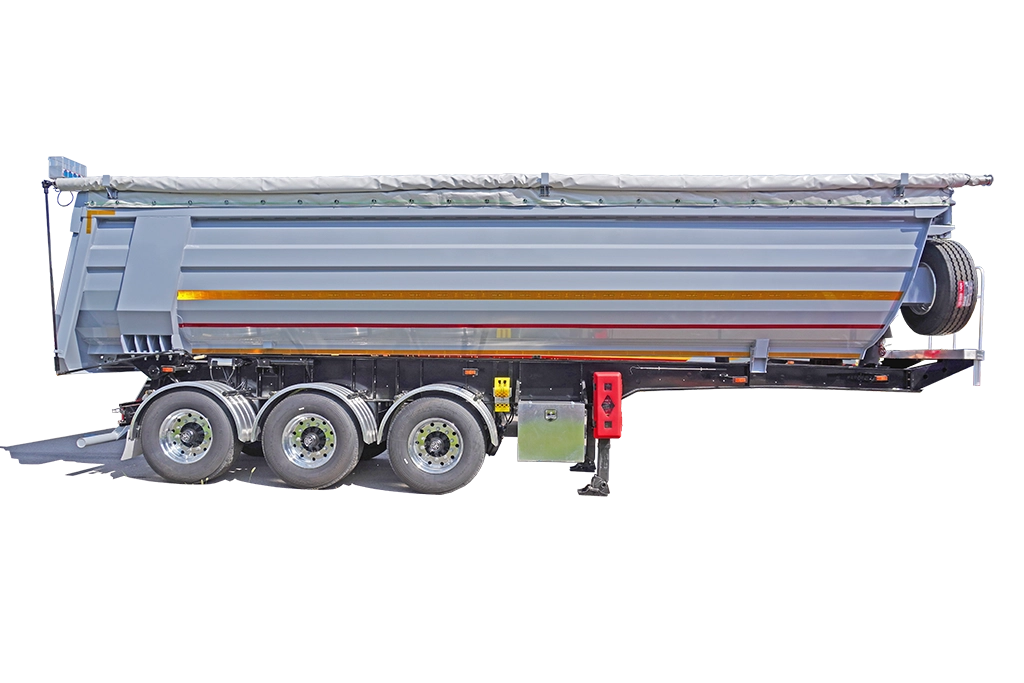
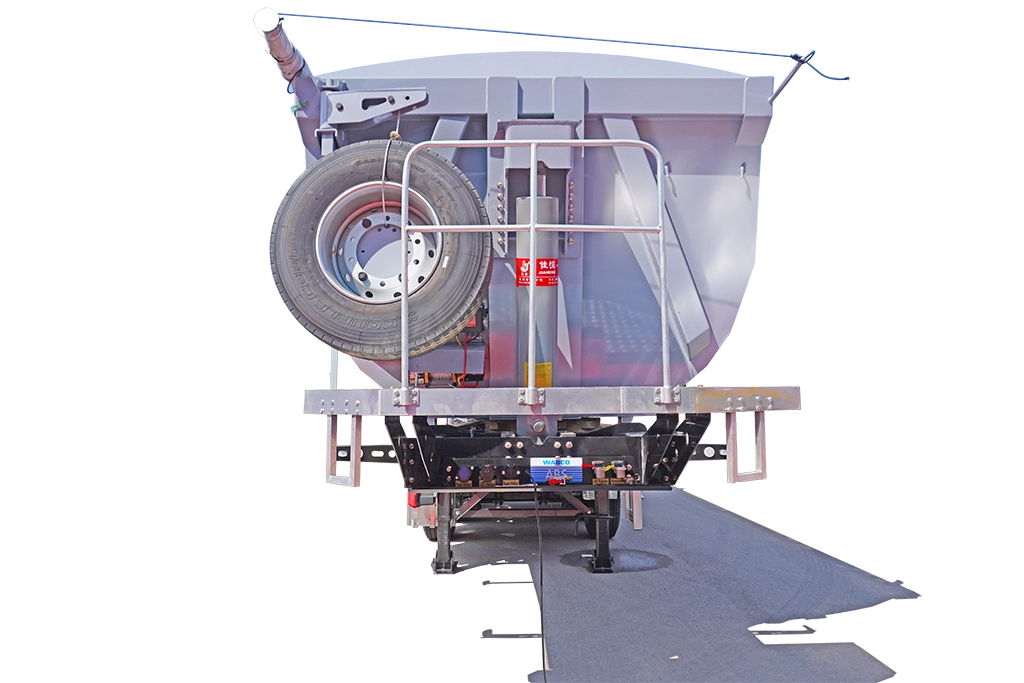
A rear tipper discharges by raising the front of a 9 to 11-meter body using a front-mounted telescopic hydraulic hoist (such as a HYVA 191/214 series cylinder). At full 45° to 50° tipping elevation, the top of the body reaches 7 to 8.5 meters above ground level. This creates several severe operational vulnerabilities:
- Cross-Slope Instability: If the rear tires are resting on a transverse slope of just 3.5 degrees (common on soft, muddy mine dumps), the elevated center of gravity shifts outside the trailer’s track width, producing an instantaneous rollover that crushes the tractor chassis.
- Ore Sticking (Top-Heavy Load Hang-Up): During rainy seasons, cohesive clay-rich overburden or wet bauxite often sticks to the upper front corners of rectangular boxes. When the body hoists, the payload hangs at the top rather than sliding out, causing catastrophic torsional twisting of the main beam. Kales solves this on its rear tippers by using a curved U-shape body that eliminates internal corner seams and accelerates material slide-off.
- Overhead Obstruction Hazards: Rear tippers cannot operate beneath overhead conveyor gantries, structural pipeline bridges, or high-voltage power lines commonly found in industrial processing plants and smelters.
Side Tipper Semi-Trailer: Low Center-of-Gravity Lateral Tilt
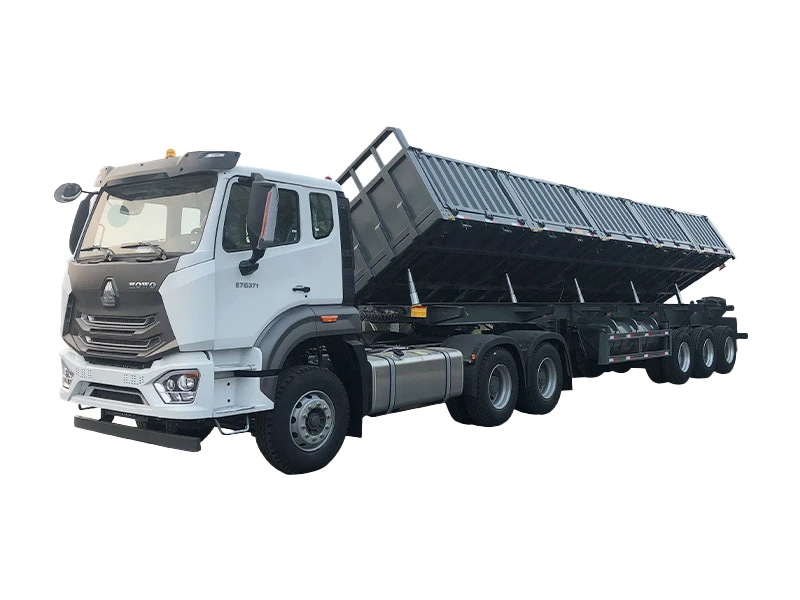
A side tipper discharges by tilting the cargo body to the left or right side using 4 to 6 synchronized hydraulic cylinders mounted along the chassis. Key physical advantages include:
- Ultra-Low Center of Gravity: The maximum elevation of the body during tipping never exceeds 2.8 meters. Because the mass never rises into the air, side tippers can discharge safely in high crosswinds and on uneven road shoulders where a rear tipper would immediately tip over.
- Zero Reversing Requirement: In road construction, aggregate stockpiling, and railhead transshipment, a side tipper pulls parallel to the dumping zone, discharges its 40-ton payload in 30 seconds while creeping forward (creating an even windrow), and continues moving forward without ever having to reverse.
- Ground Bearing Pressure: Discharging sideways deposits the material away from the vehicle’s tires, preventing the drive axles from sinking into the loose discharged pile.
2. Material Compatibility: Blasted Rock vs. Granular Bulk
The single greatest operational cause of premature tipper failure in Africa is misallocating a side tipper to blasted rock mining:
- Blasted Hard Ore & Boulders (>200 mm): In open-pit gold, copper, and iron ore mines, excavators drop sharp, high-density rocks directly into the trailer bed. A side tipper features hinged side doors, locking latches, and rubber seals. When a 5-ton boulder strikes a side door, it warps the door frame, shears latch pins, and misaligns hydraulic locking mechanisms. For this duty, only a U-shape rear dump trailer built with 10mm–12mm high-tensile T700 or NM450 wear plate can absorb the kinetic impact shock.
- Aggregates, Coal, Sand & Concentrates (<100 mm): For granular materials, sand, gravel, bauxite, washed coal, and semi-smelted mineral concentrates, side tippers excel. The entire length of the side wall drops open, allowing the entire 45-ton payload to slide out instantaneously without material bridging or choking.
3. Return-Leg Freight Economics: The Backhaul Advantage
In African cross-border corridors—such as the Dar es Salaam to Zambia Copperbelt route (1,900 km) or the Mombasa to Uganda/DRC route—fuel and driver costs make empty return trips commercially devastating:
- Rear Dump Semi-Trailer: A rear dump bucket has high rigid walls and an enclosed tailgate. It cannot load palletized cargo, bulk bagged goods, or shipping containers. On every return trip from a mine or smelter, it travels 100% empty. The haulage contractor earns zero revenue while burning 32–36 liters of diesel per 100 km.
- Dropside Side Tipper Semi-Trailer: Kales builds dropside side tippers with fold-down side doors. After dumping a load of copper concentrate or bauxite at the coastal port or railhead, the trailer’s side walls fold down completely flat. The trailer is then loaded with 40 tons of bagged cement, chemical fertilizer, steel rebar, or crated equipment for the return journey to inland commercial centers. Over a 100,000 km annual operating cycle, this two-way freight capability generates an additional $45,000 to $75,000 in net profit per vehicle.
Direct Technical Specification Comparison
| Engineering Parameter | Kales 3-Axle Dropside Side Tipper (13.5m) | Kales 3-Axle U-Shape Rear Dump Trailer (60T) |
|---|---|---|
| Primary Application | Aggregates, Coal, Bauxite, Dual-Way Freight | Blasted Hard Rock, Overburden, Quarry Boulders |
| Rated Payload Capacity | 50,000–60,000 kg | 60,000 kg (Severe-Duty Mining Spec) |
| Body Material | T700 High-Strength Steel (4mm side / 6mm floor) | T700 / NM450 Hardox Wear Plate (8mm side / 12mm floor) |
| Tipping Geometry | Lateral Tilt (Left or Right, 45° angle) | Longitudinal Front-Lift Rear Dump (50° angle) |
| Max Elevation Height During Dump | 2,650 mm (Extremely Stable) | 7,850 mm (High Center of Gravity) |
| Hydraulic Hoisting System | 4 to 6 Multi-Stage Double-Acting Lateral Cylinders | 1 Heavy-Duty Front HYVA Telescopic Cylinder |
| Discharge Cycle Time | 30–45 Seconds (Windrow Dumping Capable) | 90–150 Seconds (Requires Berm Reversing) |
| Return Freight Capability | Yes (Pallets, Bagged Cargo, Timber, Pipes) | No (100% Empty Deadhead Return) |
| Max Lump Size Tolerance | <150 mm (Fine to Medium Bulk) | >800 mm (Large Blasted Mine Rocks) |
| Tare Weight (Unladen) | ~9,200 kg | ~9,800 kg (Heavy Impact Armor) |
5-Year Total Cost of Ownership (TCO) & Financial Model (100,000 km/yr)
| Cost Component (USD per Unit) | Dropside Side Tipper (Two-Way Haulage) | U-Shape Rear Dumper (Dedicated Pit Haulage) | Financial & Operating Rationale |
|---|---|---|---|
| Initial Acquisition Capital Cost | $32,000–$35,000 | $33,000–$37,000 | Comparable initial capital outlay. |
| 5-Year Hydraulic Maintenance | $4,500 (Multi-cylinder seals & hoses) | $2,200 (Single HYVA cylinder reliability) | Rear dumper has simpler hydraulic plumbing. |
| Body Wear & Hinge Maintenance | $3,800 (Side door latches, hinge pins) | $1,800 (Curved tub, zero side door hinges) | Rear dumper has fewer moving structural parts. |
| Rollover Damage Risk & Insurance | Low ($1,200/yr insurance baseline) | Moderate-High ($2,800/yr due to tip-overs) | Side tipper virtually eliminates catastrophic rollovers. |
| Annual Backhaul Revenue Generated | +$48,000/yr (Bagged goods, cement) | $0 (Zero return revenue) | Side tipper generates over $240,000 in 5 years. |
| 5-Year Net Operating Contribution | +$185,000 Net Margin Advantage | Baseline (Mining Pit Haulage Tariff) | Side tipper wins on highways; rear dumper wins in pits. |
4. Fleet Selection Matrix: Match the Trailer to Your Mining Contract
To assist fleet managers in finalizing procurement tenders, Kales engineers recommend applying the following rule-based selection criteria:
Deploy the U-Shape Rear Dump Semi-Trailer When:
- The contract takes place entirely within an open-pit mine concession, quarry, or overburden disposal area.
- Cargo consists of uncrushed blasted rock, heavy granite boulders, or abrasive mineral ores loaded by large excavators (>40 tons).
- Dumping takes place into heavy stationary primary crushers or over compacted, bulldozer-maintained rock berms.
- Haul distances are short to medium (<30 km round-trip) where backhaul freight is commercially irrelevant.
Deploy the Dropside Side Tipper Semi-Trailer When:
- Haulage operates over regional highways or long-distance corridors (>50 km) connecting mines to railheads, smelters, or sea ports.
- Cargo consists of crushed mineral fines, bauxite, coal, sand, river gravel, or industrial lime.
- Dumping areas are unpaved, soft, or narrow, where tractor-trailer jackknifing or high-lift tipping introduces severe rollover hazards.
- A viable return-leg market exists for palletized building materials, agricultural produce, or bagged goods.
Engineering Procurement Checklist for African Tipper Fleets
- Mandate T700 High-Yield Steel: Commercial Q235 steel boxes tear open after weeks of boulder loading. Insist on T700 or NM450 wear plate on all impact surfaces.
- Inspect Hydraulic Cylinder Provenance: Ensure rear dumpers use genuine HYVA or equivalent internationally warranted telescopic cylinders. Counterfeit hoists flex and fail under full payload extension.
- Verify Automatic Door Release Linkages: For side tippers, verify that lower side doors unlock automatically when the body reaches a 5-degree tilt. Manual or delayed door unlocking traps 40 tons on one side, causing an instant rollover.
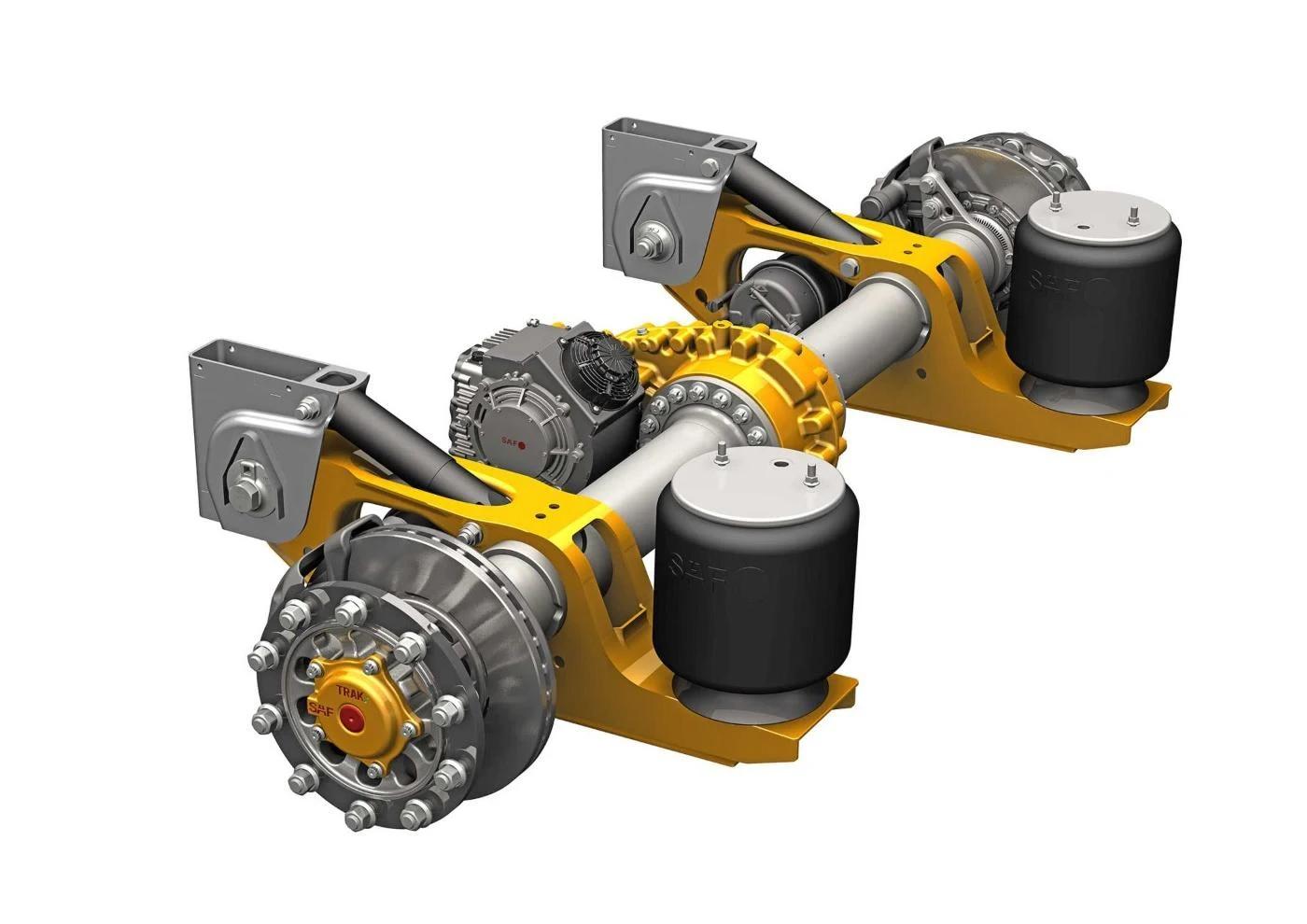
- Specify Heavy Mechanical Suspension: Ensure tridem bogies utilize 10-leaf heavy spring packs (13mm or 16mm leaf thickness, 90mm width) and greasable bronze equalizer bushings to withstand severe washboard road corrugations.
Explore Kales Specialized Mining Tipper Solutions
Compare detailed engineering blueprints and real-world delivery reports from our export projects:
Frequently Asked Questions: Side Tipper vs Rear Dump Trailers
- Why do rear dump semi-trailers roll over on mine dumping pads?
- When a rear dump trailer hoists to its 50-degree tipping angle, its center of gravity rises up to 8 meters into the air. If the rear tires rest on uneven or uncompacted ground with more than a 3-degree lateral slope, or if sticky ore adheres to one side of the front box, the lateral gravitational vector moves outside the wheel track, pulling the entire trailer and tractor over on its side.
- Can a side tipper haul large blasted rocks from an open-pit mine?
- No. Side tippers have hinged side walls, latches, and hydraulic release linkages designed for materials smaller than 150–200 mm. Dropping massive blasted boulders (500mm+) will warp side doors, bend hydraulic cylinders, and destroy door hinges. Blasted rock haulage requires a heavy armored U-shape rear dump trailer.
- How much faster does a side tipper discharge compared to a rear tipper?
- A side tipper discharges in 30 to 45 seconds while moving forward parallel to a windrow or rail siding without uncoupling or reversing. A rear tipper requires 90 to 180 seconds to reverse up to a berm, lock brakes, hoist, shake material loose, and lower completely.
- How does a dropside side tipper carry general cargo on return trips?
- The side doors of a dropside side tipper fold down completely, creating a wide, flat loading platform. This allows forklifts to load palletized cargo, bagged cement, structural steel, or timber, transforming an empty return trip into a revenue-generating freight journey.
- What is the maintenance difference between side tippers and rear dumpers?
- Rear dumpers use a single heavy-duty front telescopic cylinder (such as HYVA) with very few moving parts, resulting in lower hydraulic maintenance. Side tippers utilize 4 to 6 hydraulic cylinders, multiple high-pressure flexible hoses, and automatic mechanical door release linkages that require regular lubrication and seal inspections.
Conclusion: The Strategic Engineering Choice
There is no universal “winner” between side tippers and rear dump trailers—only the right engineering match for your specific haulage contract. For severe in-pit open-cast mining, blasted ore transport, and heavy rock quarrying, the Kales U-Shape Rear Dump Semi-Trailer delivers unbeatable structural durability and low hydraulic maintenance. For regional highway mineral transport, aggregate stockpiling, and routes where two-way freight can be captured, the Kales Dropside Side Tipper Semi-Trailer delivers superior operational stability and dramatically higher return on investment.
Consult with Kales Mining Fleet Application Engineers
Need assistance modeling the optimal tipper configuration, payload capacity, and hydraulic specification for your African mining or infrastructure project? Contact Kales Vehicle export engineers for custom payload simulations, CAD drawings, and factory-direct pricing.
Contact Kales Mining Engineering Desk | WhatsApp / Phone: Direct Export Department