Container Shipping
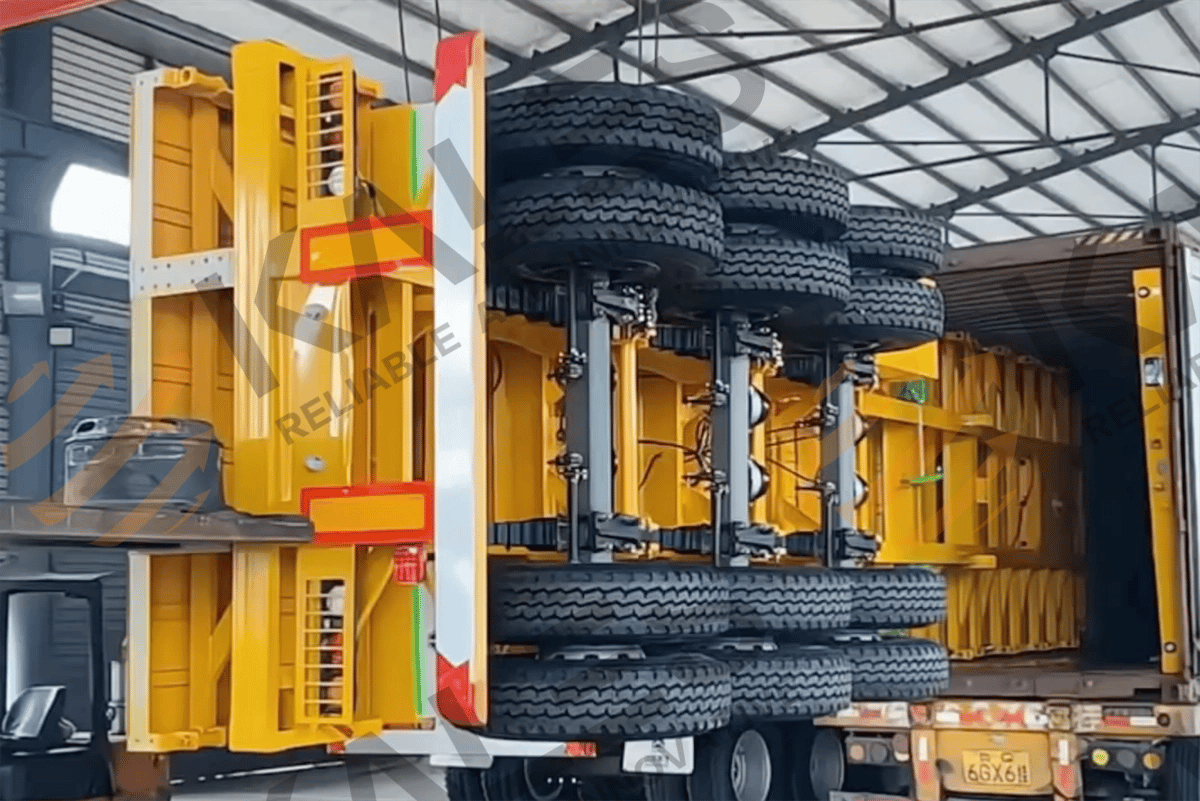
Container loading of Kales semi trailer for export, ensuring secure fastening and space optimization.



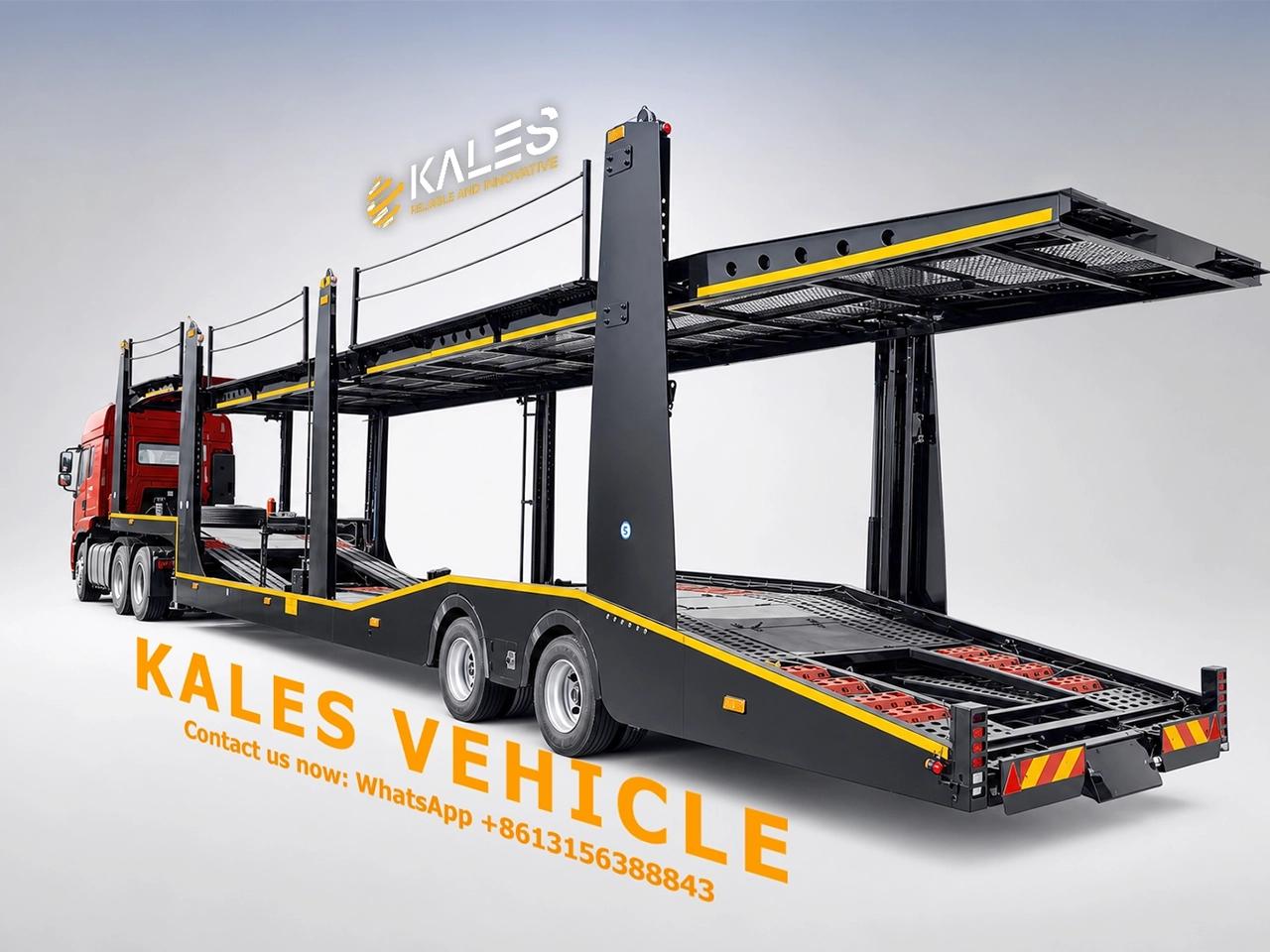
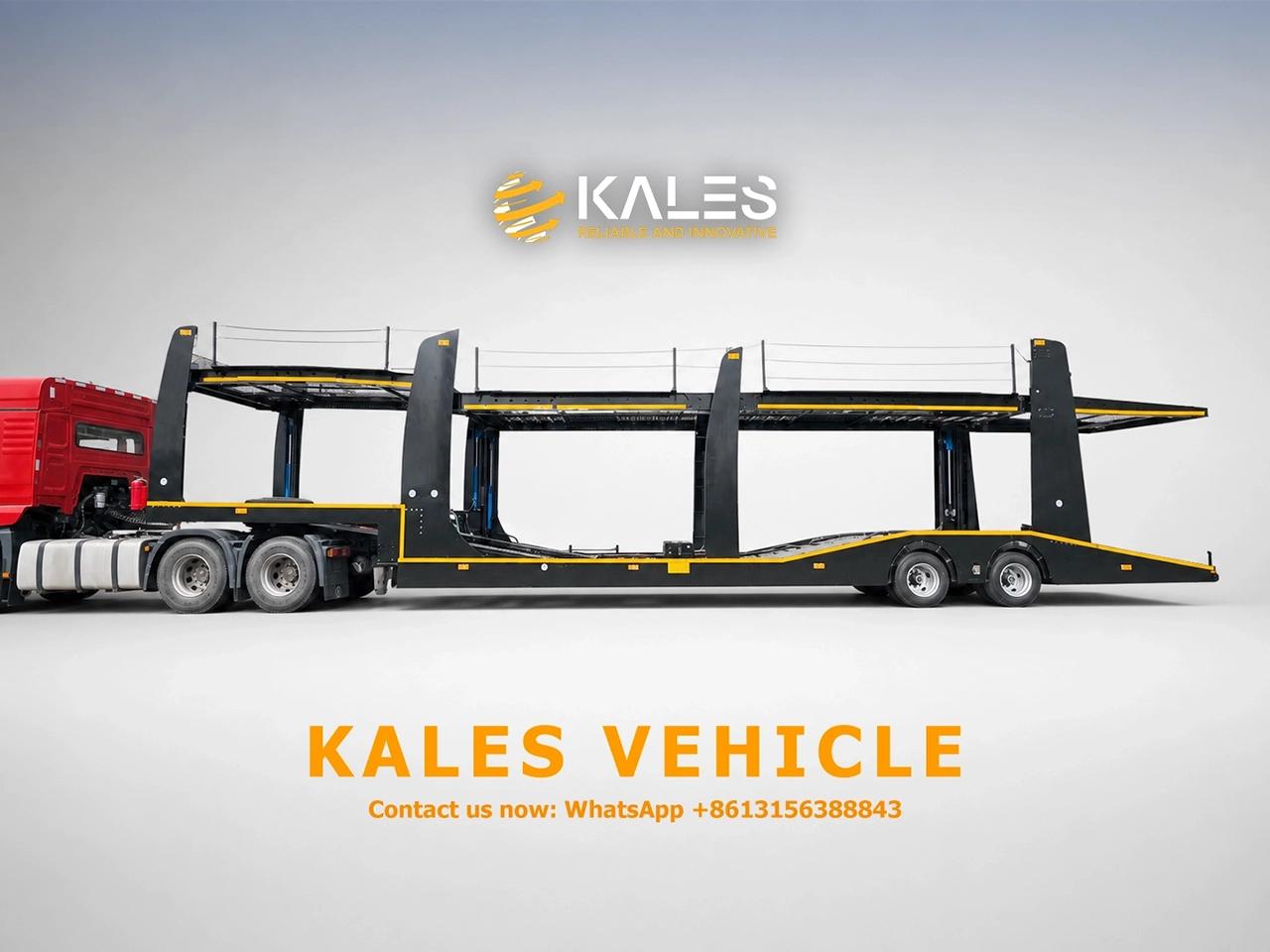
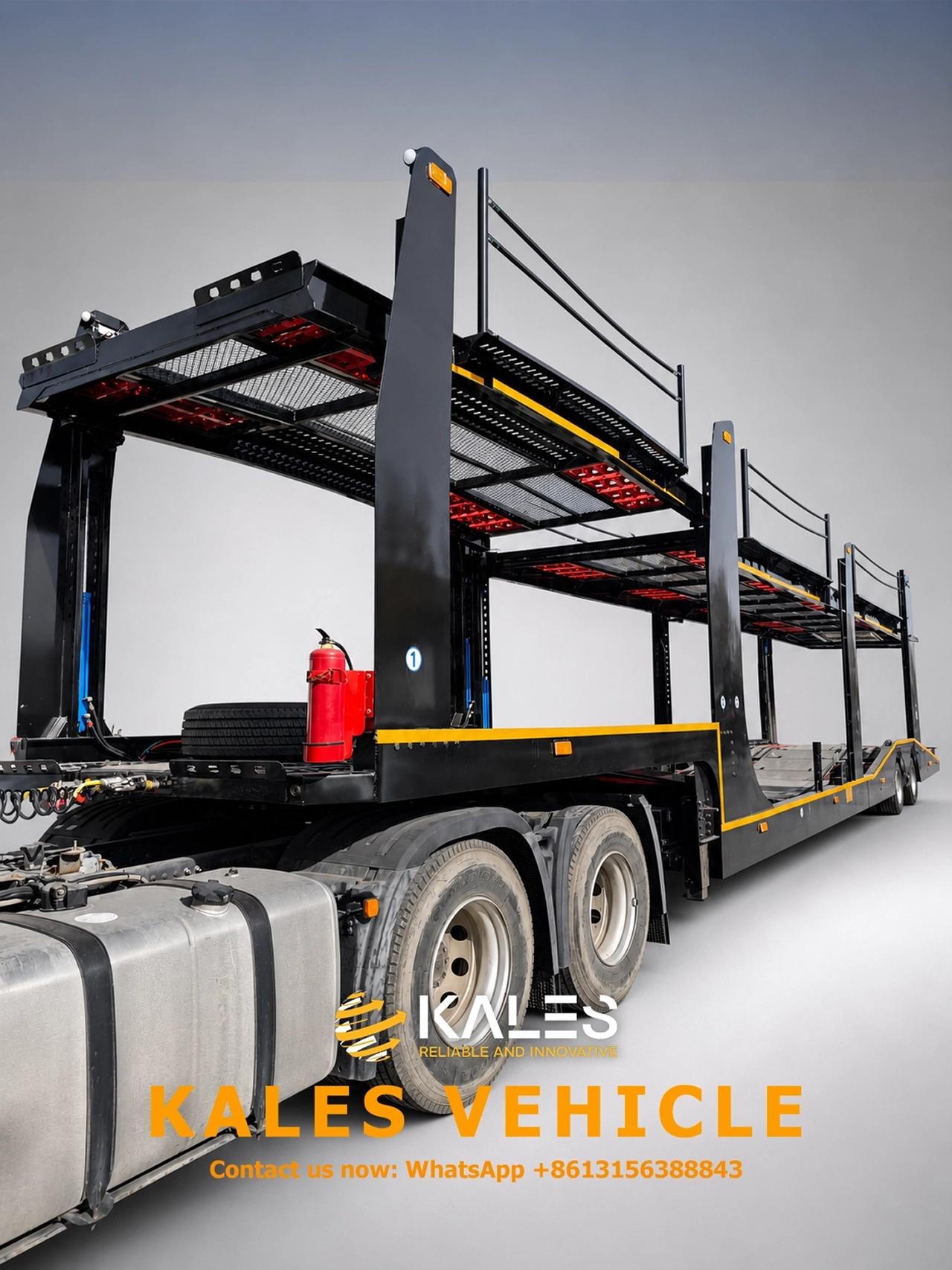
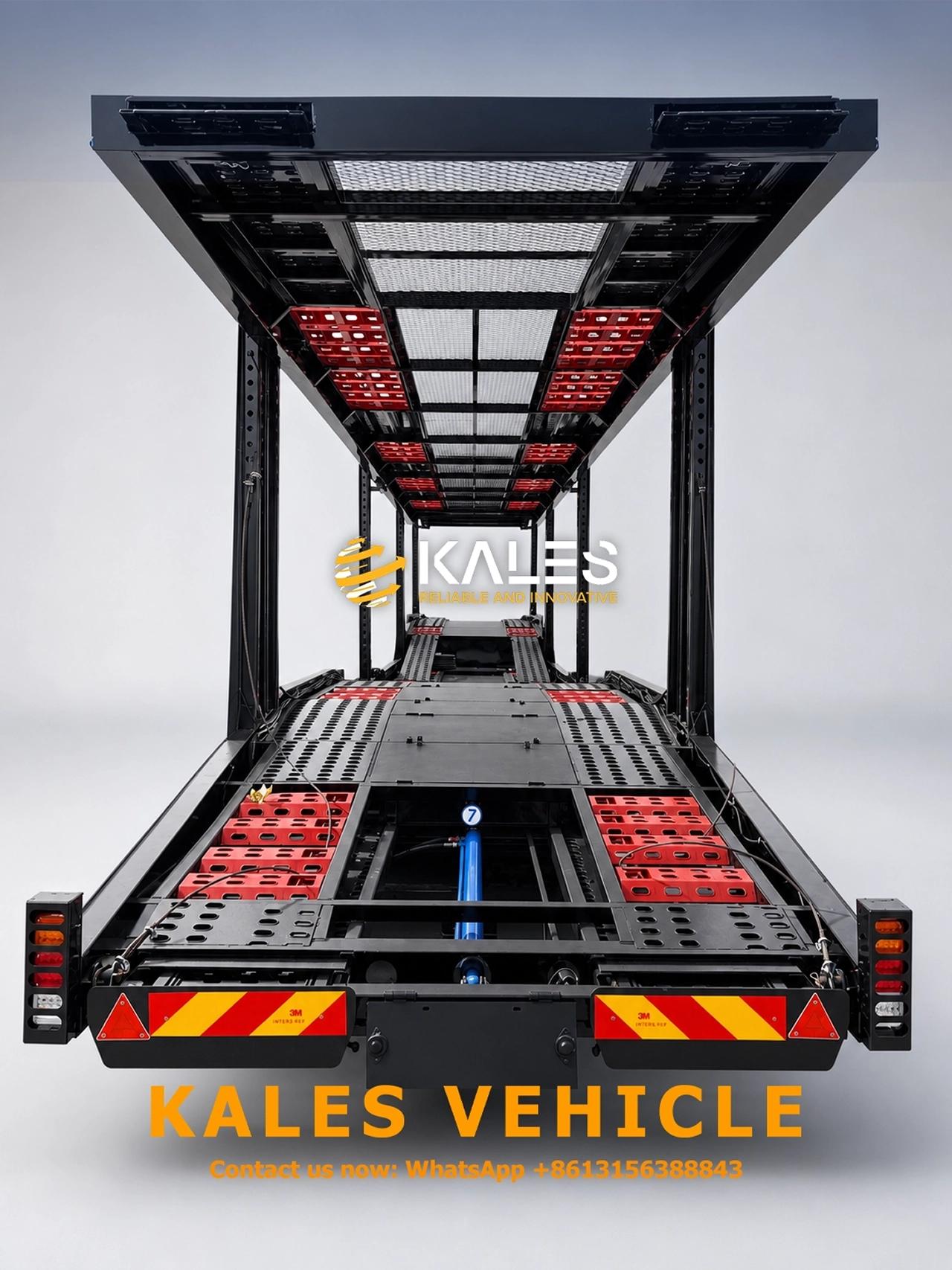
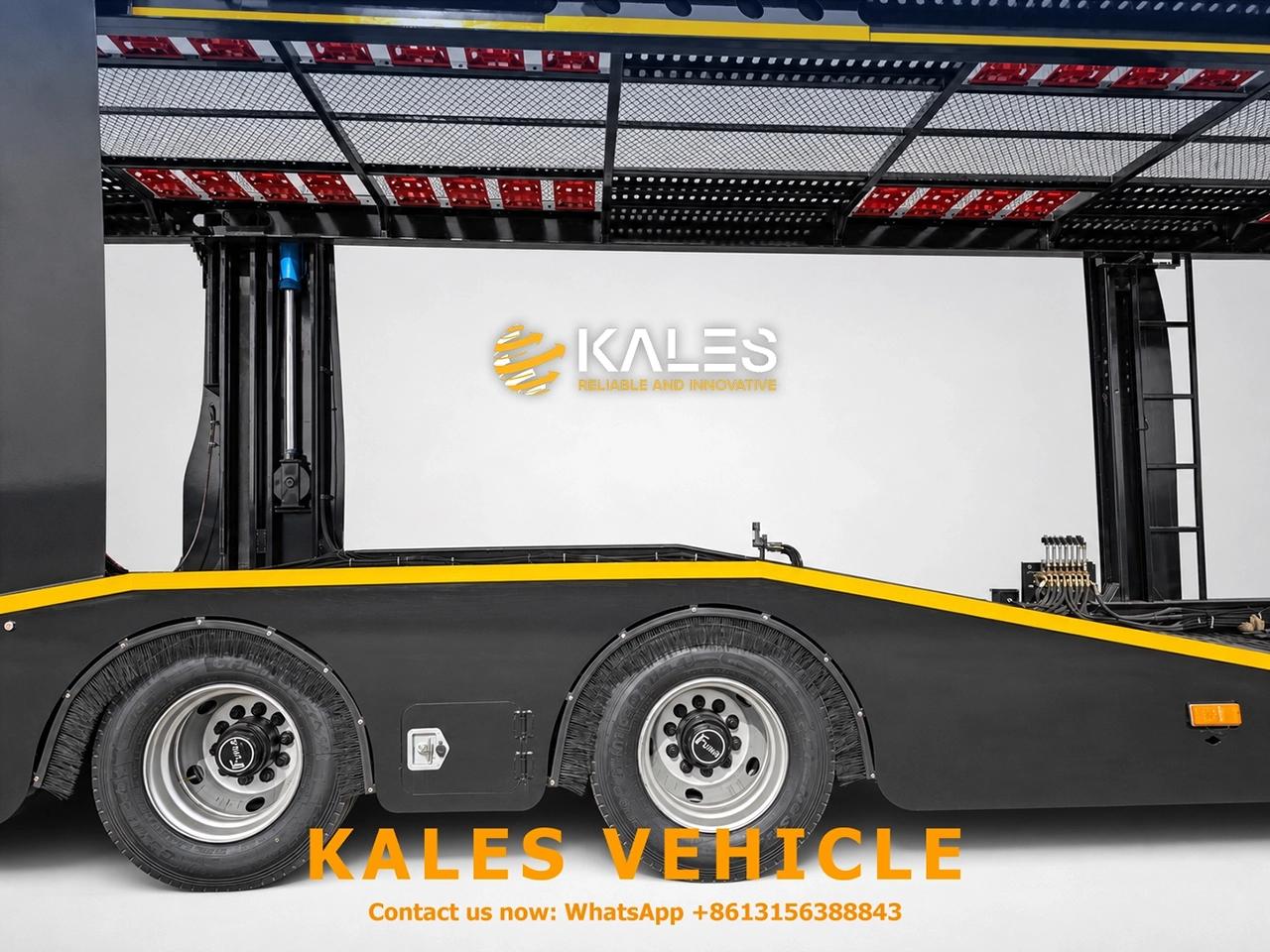
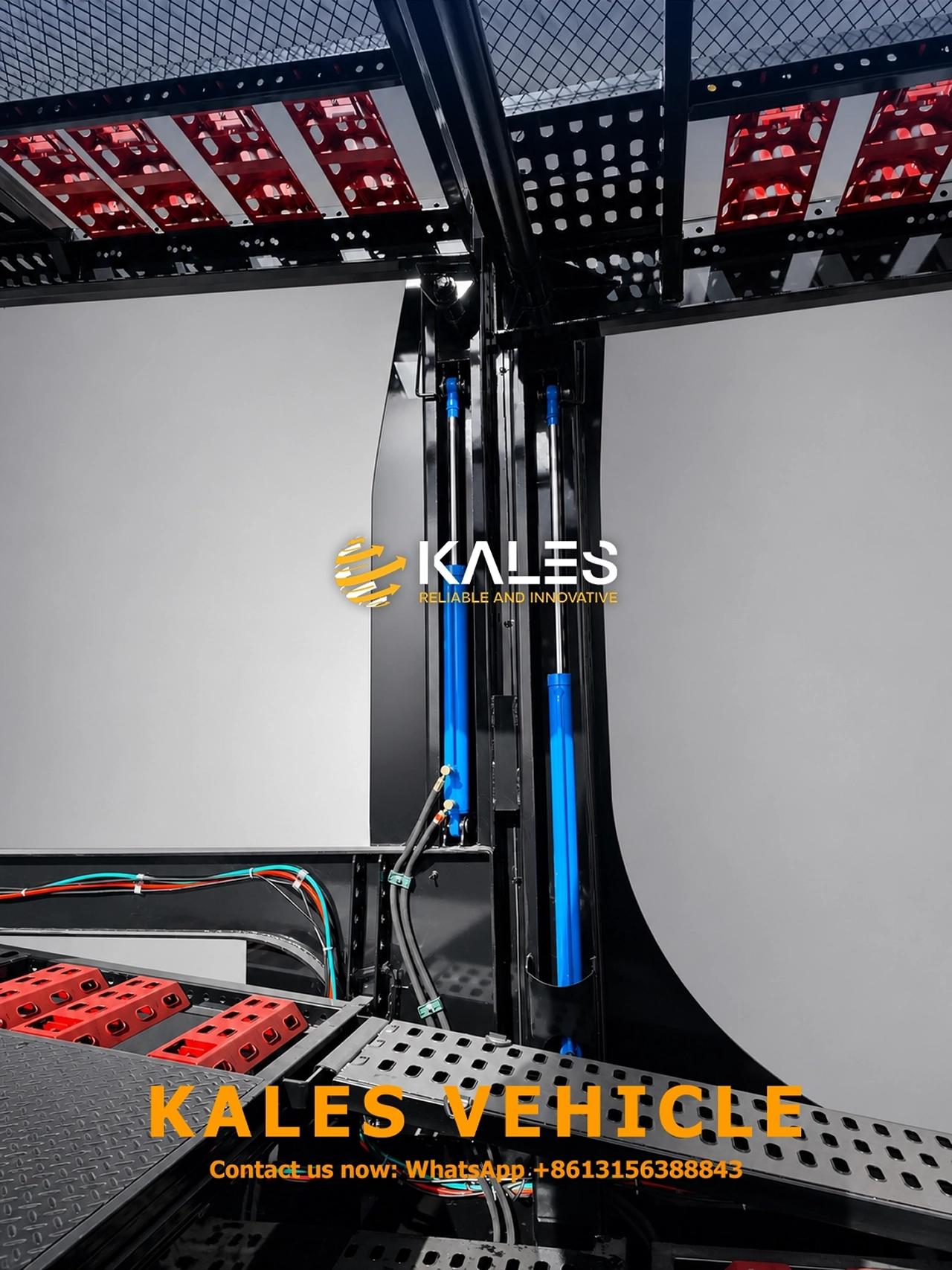
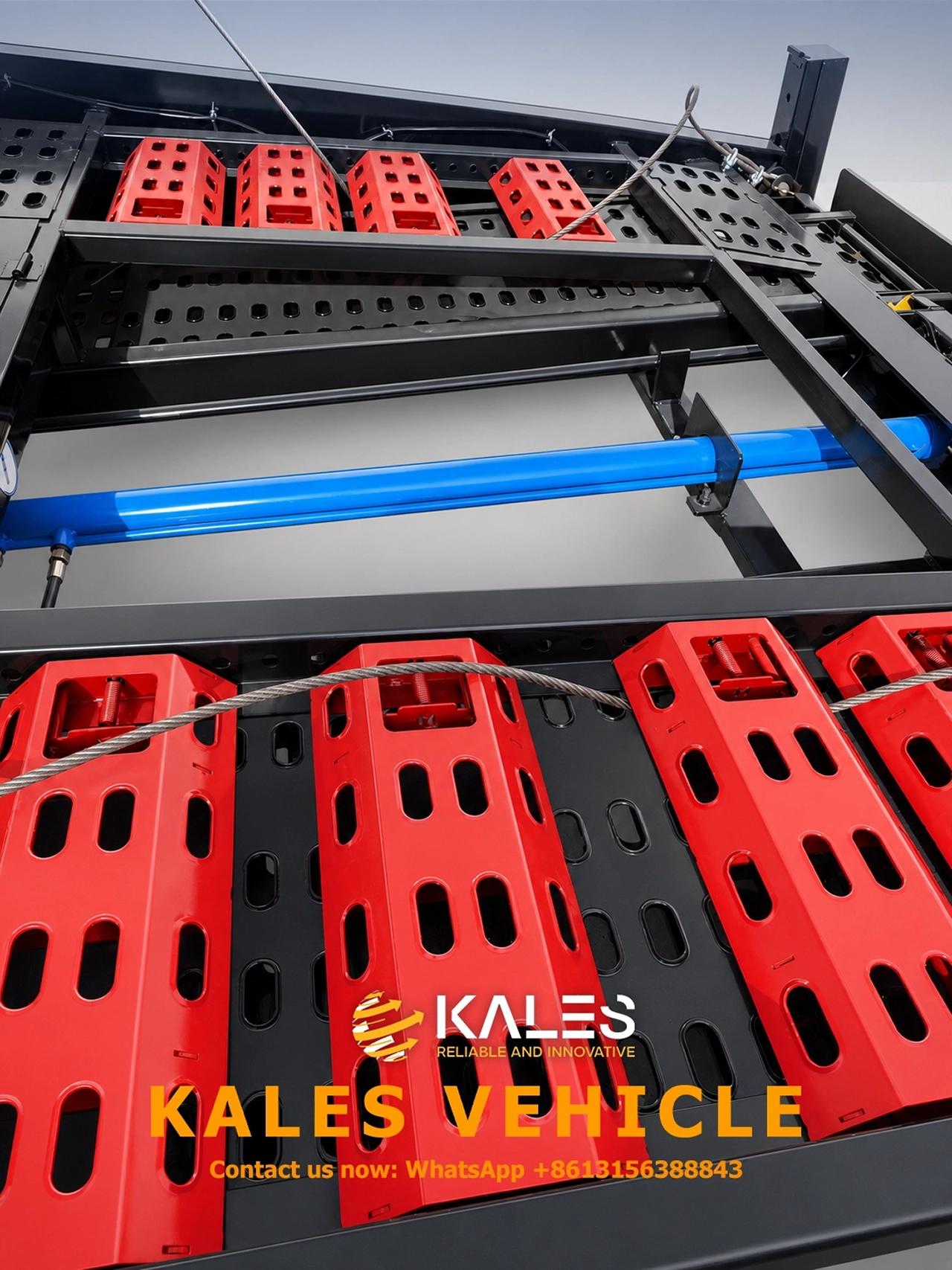
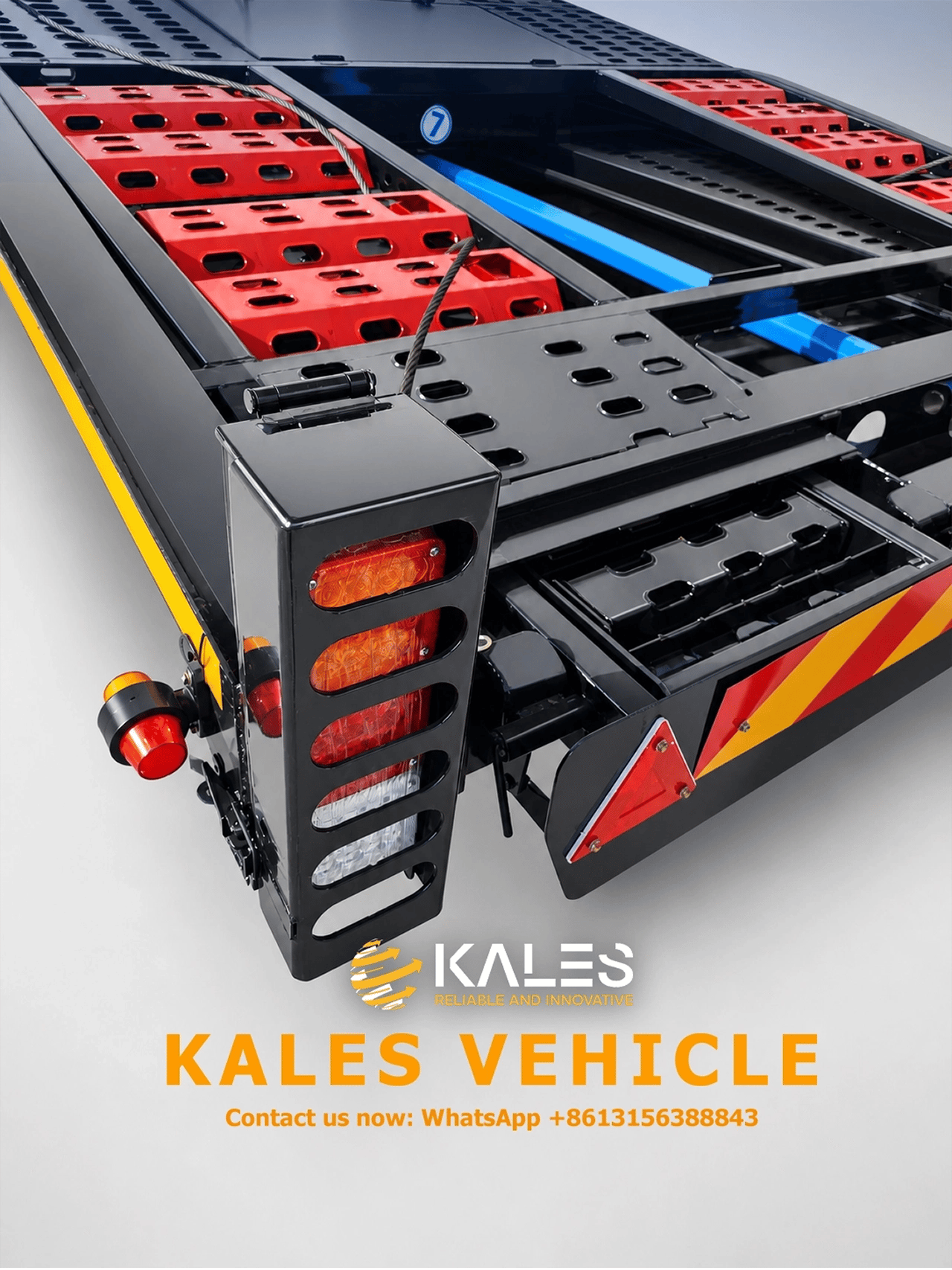
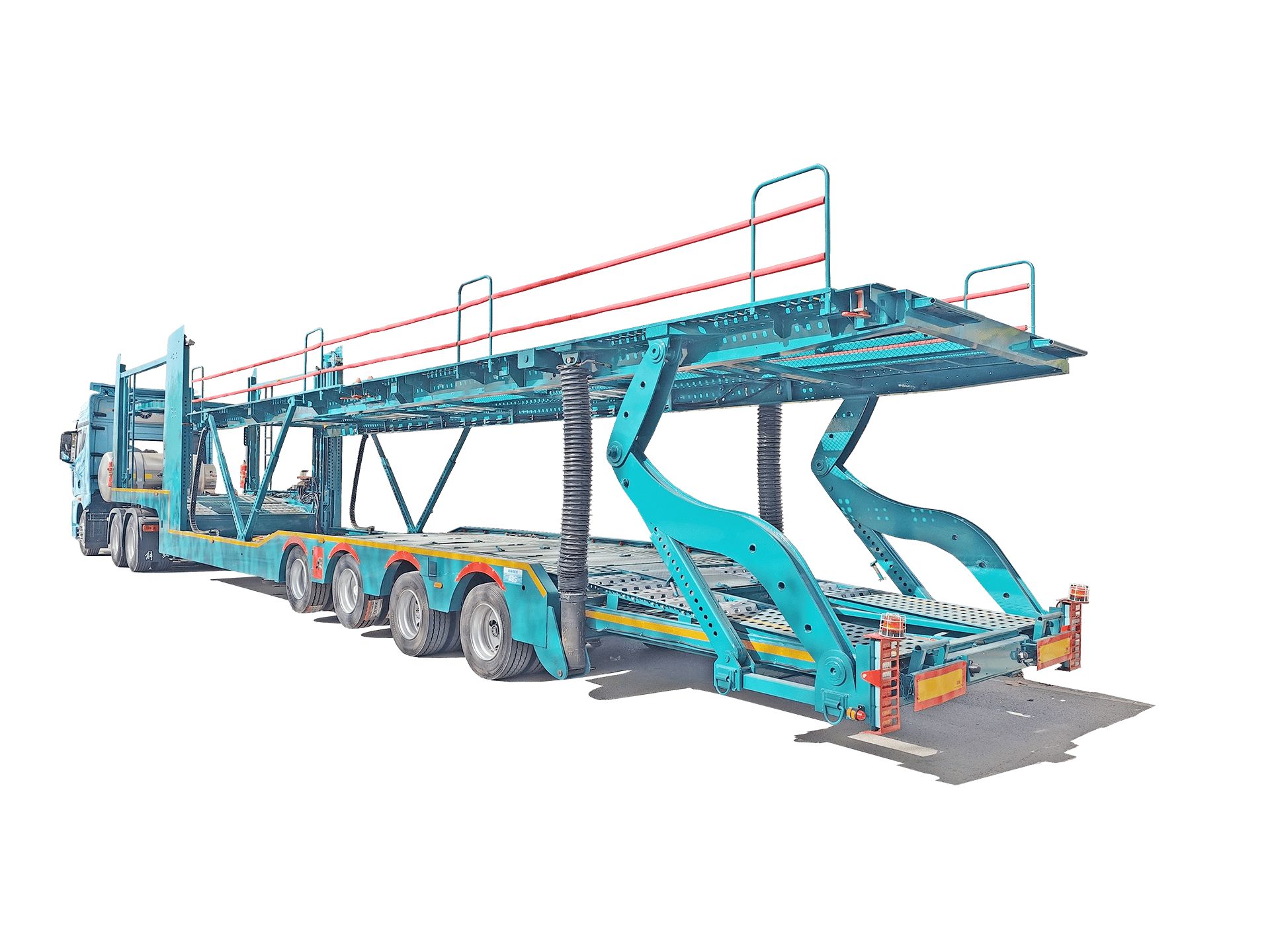
17m open cage-frame 8-car carrier trailer (Автовоз) for CIS with double-deck loading, hydraulic platform, FUWA axles, air suspension and 8 tyres.
Reference priceUSD 12,500Final quote depends on configuration, quantity, and destination.
Direct technical consultation from factory engineers · No trader markup
Factory Direct Export
Zero trader markup
Heavy-Duty Certified
ISO9001 / CCC / CIQ
Global Sea Freight
Container / Ro-Ro / Bulk
Custom Engineering
Tailored configurations
Kales European 8-car carrier trailer: a 17.1 m double-deck finished-vehicle transport semi-trailer for dealers, vehicle logistics operators, and cross-border fleets in Central Asia and Russia. The Russian market commonly calls this equipment an Автовоз or полуприцеп-автовоз.
The product combines an open cage-type loading body, hydraulic upper-platform lifting, a rear pull-out loading ramp, double-axle dual-tyre running gear, and wheel restraint equipment for carrying approximately 6-8 passenger cars. The final count depends on the dimensions, wheelbase, height, and legal loading limits of the vehicles being transported.
| Product type | European open cage-frame car carrier semi-trailer / Автовоз |
|---|---|
| Overall dimensions (L × W × H) | 17,100 × 2,550 × 3,880 mm reference configuration |
| Vehicle loading capacity | Approximately 6-8 passenger cars in a double-deck arrangement, subject to vehicle dimensions and legal limits |
| Longitudinal beam | 420 mm I-beam reference height |
| I-beam plates | 12 mm upper flange / 12 mm lower flange / 8 mm web |
| Axles | FUWA 13T × 2, forming a two-axle rear group |
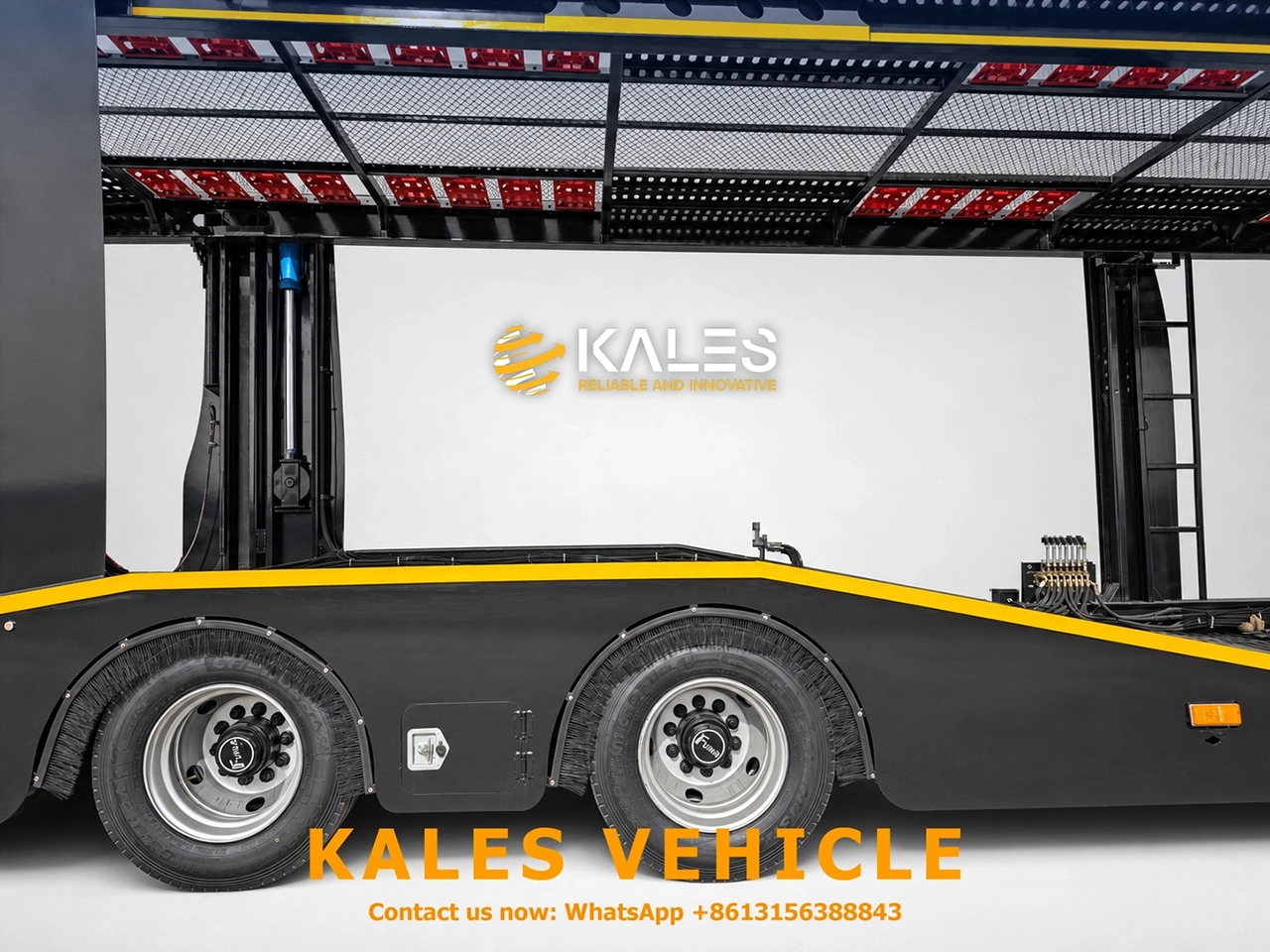
| Tyres | 235 Linglong tyres; four tyres per axle and eight tyres in total in the dual-axle dual-tyre layout |
| Suspension | Air suspension with reverse-mounted suspension arrangement in the reference configuration |
| Reference perforated-deck height | Approximately 1,250 mm from ground in the reverse-mounted axle/suspension layout; confirm against final deck and tyre specification |
| Fifth-wheel imposed-load design | 18,000 kg reference fifth-wheel capacity; final tractor combination requires imposed-load and legal-mass calculation |
| King pins | Interchangeable 90# and 50# king pins; three-piece supply direction as specified |
| Brake chambers | Four large brake chambers |
| Brake control | WABCO relay valve and Komi/Ruili ABS reference package |
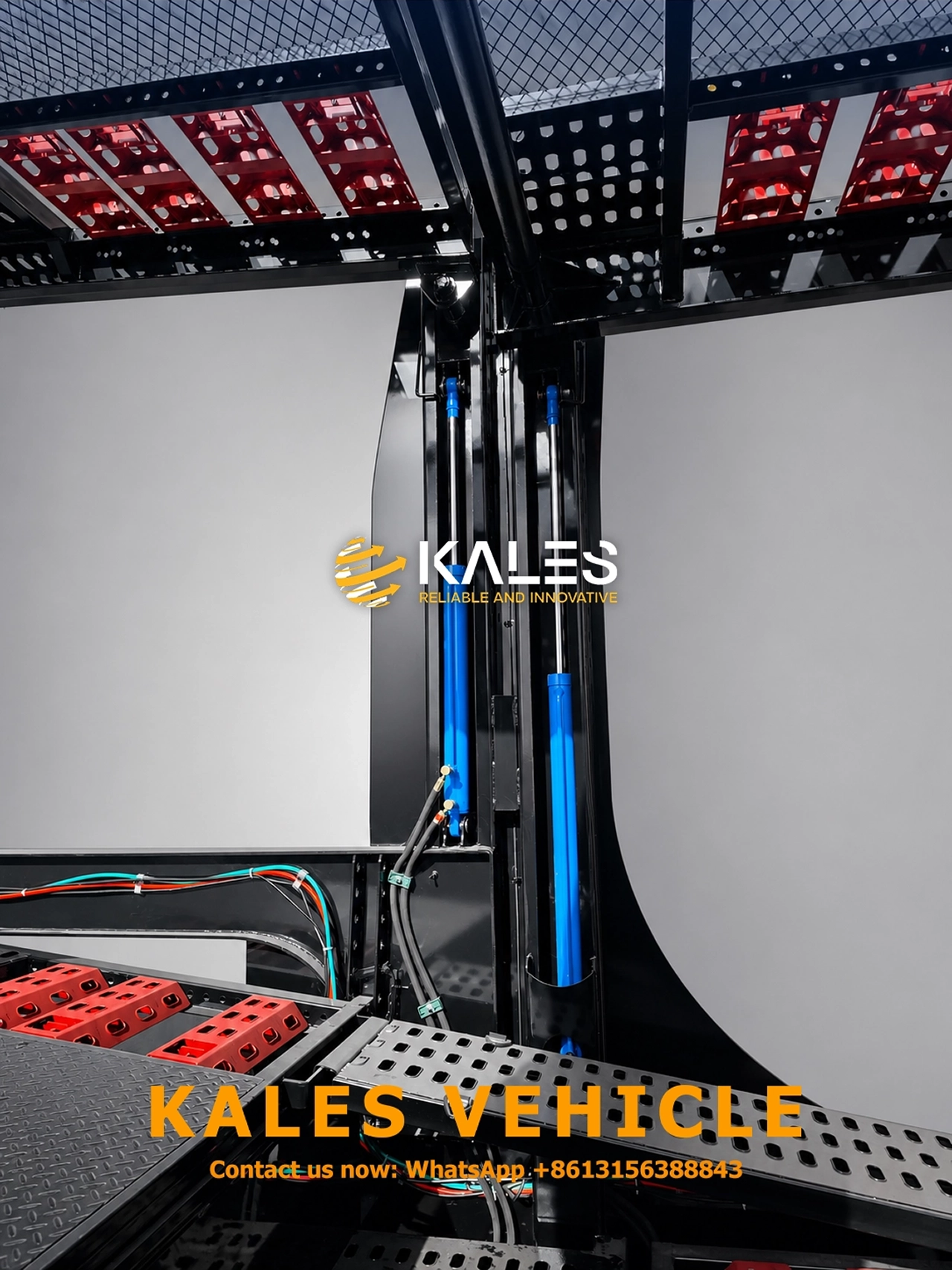
| Hydraulic lifting system | Electric-pump hydraulic system with hydraulic cylinders and pulley-wire-rope lifting; reference package includes 11 cylinders, four at the front |
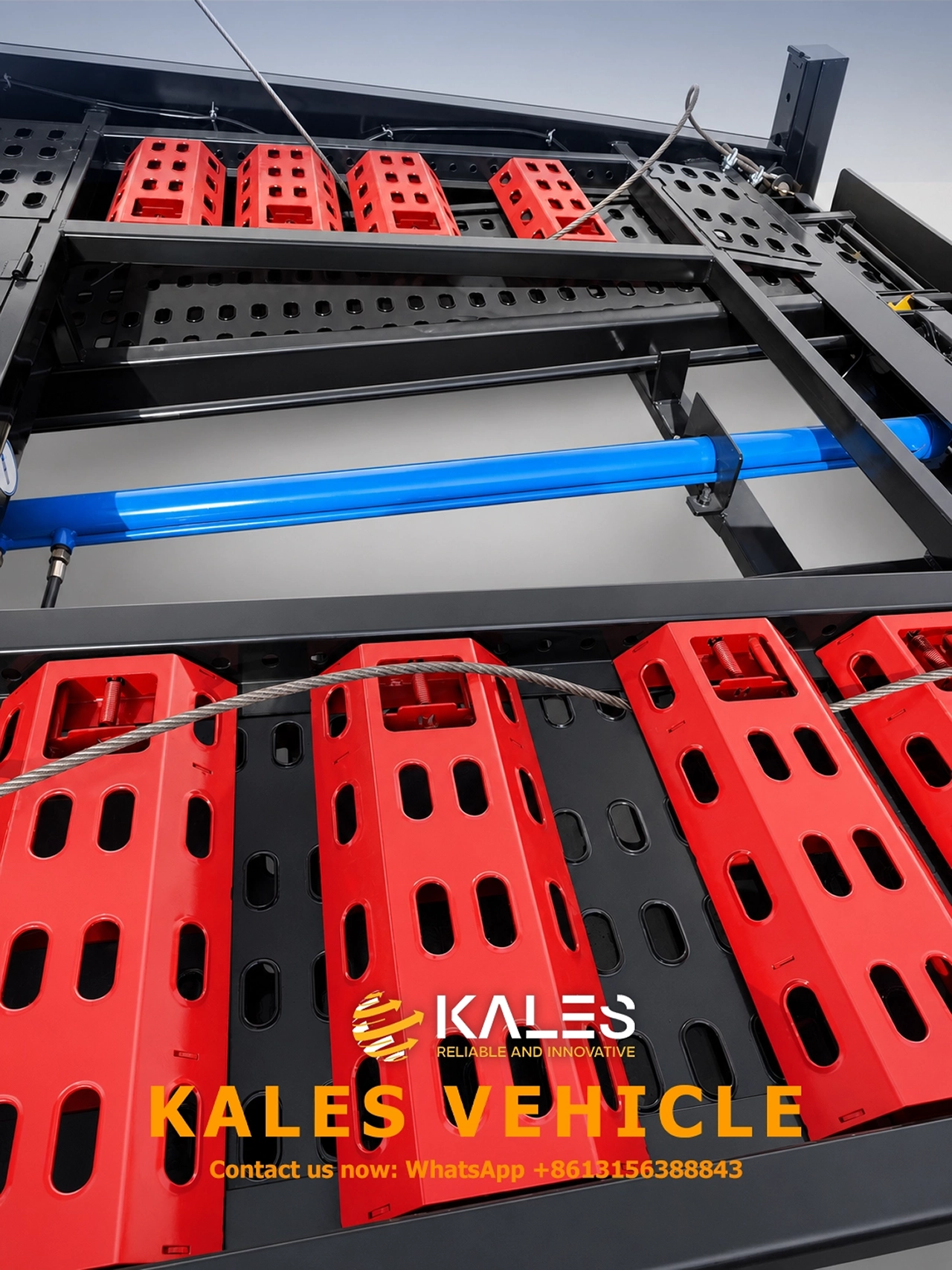
| Vehicle restraint | Standard tubular tyre-limit frames and passenger-car tyre tensioners; plate-style limit frames optional |
| Spare-tyre carriers | Two standard gate-type carriers, each securing a spare tyre with two bolts |
| Deck flooring | 4 mm high-strength anti-slip perforated steel plate for tyre friction, upper-body weight control, drainage, and anti-pooling performance |
| Fire safety | Two fire extinguishers in the reference safety package |
The Kales European 8-car carrier is intended for finished-vehicle movement between assembly plants, ports, dealer compounds, border terminals, and regional distribution centres. It is especially suitable for fleets that value low tare and straightforward loading over the weather protection of a fully enclosed vehicle transporter.
| Buyer priority | Technical implementation | Practical value and trade-off |
|---|---|---|
| Low tare and operating cost | Open skeleton body made from vertical posts, with no side sheeting, front panel, rear door, or roof panel | Reduces structural weight, purchase cost, and aerodynamic drag. The open body offers less weather and impact protection than an enclosed transporter. |
| Double-deck productivity | Two loading decks with an upper platform that raises and lowers hydraulically | Supports approximately 6-8 cars per trip when vehicle dimensions and route law allow the planned arrangement. |
| Load-bearing running gear | Two FUWA 13T axles, four tyres per axle, eight tyres total, and reverse-mounted air suspension | Provides a conventional two-axle dual-tyre load base. The raised deck height improves under-structure clearance but reduces loading space for taller vehicles. |
| Anti-slip and drainage deck | 4 mm high-strength perforated steel plates on the loading platforms | Improves tyre friction and anti-slip contact, reduces upper-body weight compared with a solid plate, and lets rain or wash water drain away to limit standing water. |
| Ground-level hydraulic handling | Hydraulic cylinders and pulley-wire-rope lifting for the upper platform, plus rear hydraulic pull-out ramp | Reduces the need to manually lift deck sections and supports more controlled loading and unloading at compounds. |
| Vehicle restraint | Tubular tyre-limit frames, optional plate-style stops, and passenger-car tyre tensioners | Blocks forward/rearward tyre movement and limits vehicle bounce when correctly positioned and tensioned. |
| Long-haul braking and coupling | WABCO relay valve, Komi/Ruili ABS, four large brake chambers, and 18,000 kg reference fifth-wheel design | Creates a familiar heavy-duty pneumatic braking and tractor-coupling basis; final EAEU and destination requirements must be checked. |
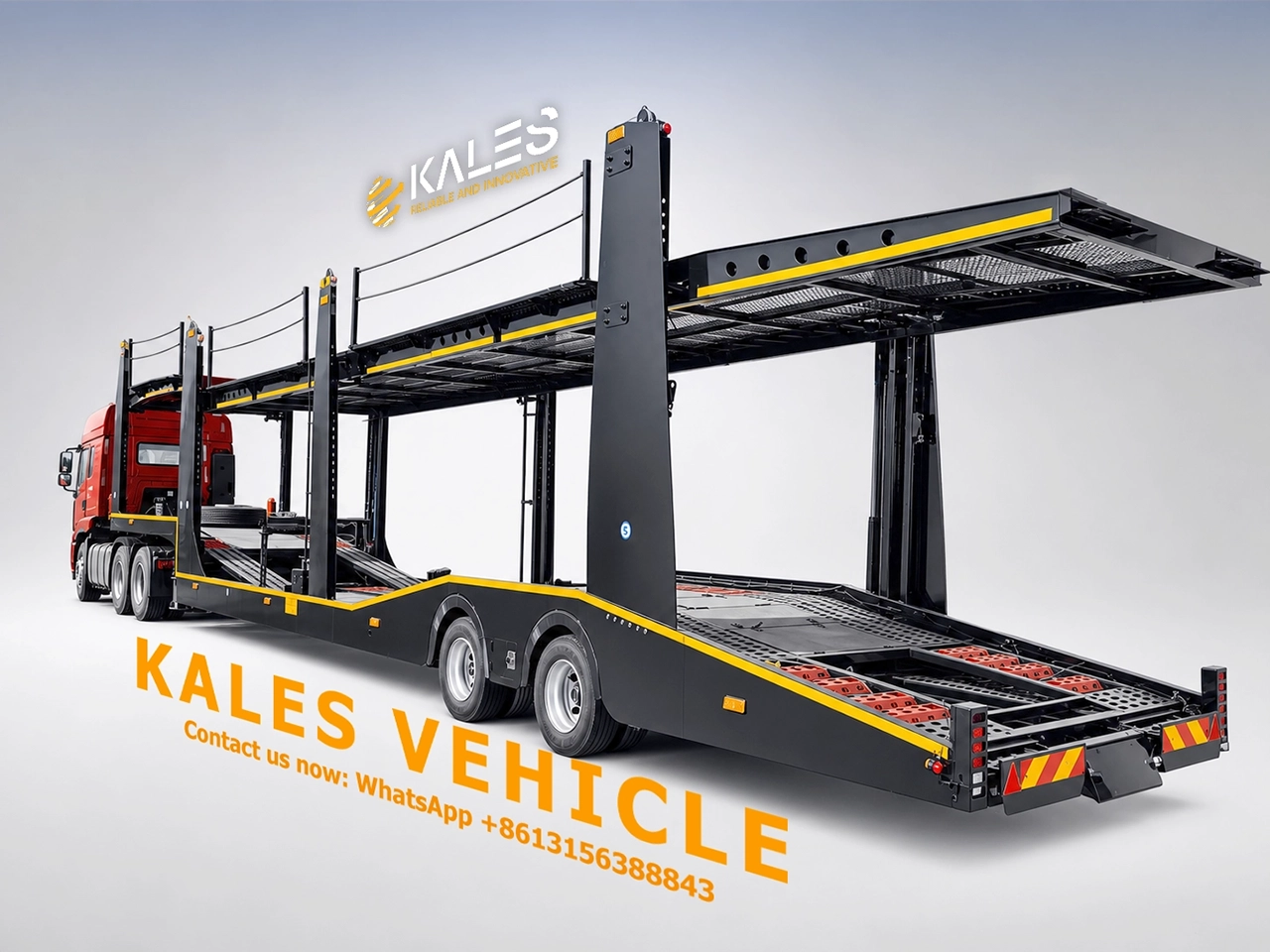
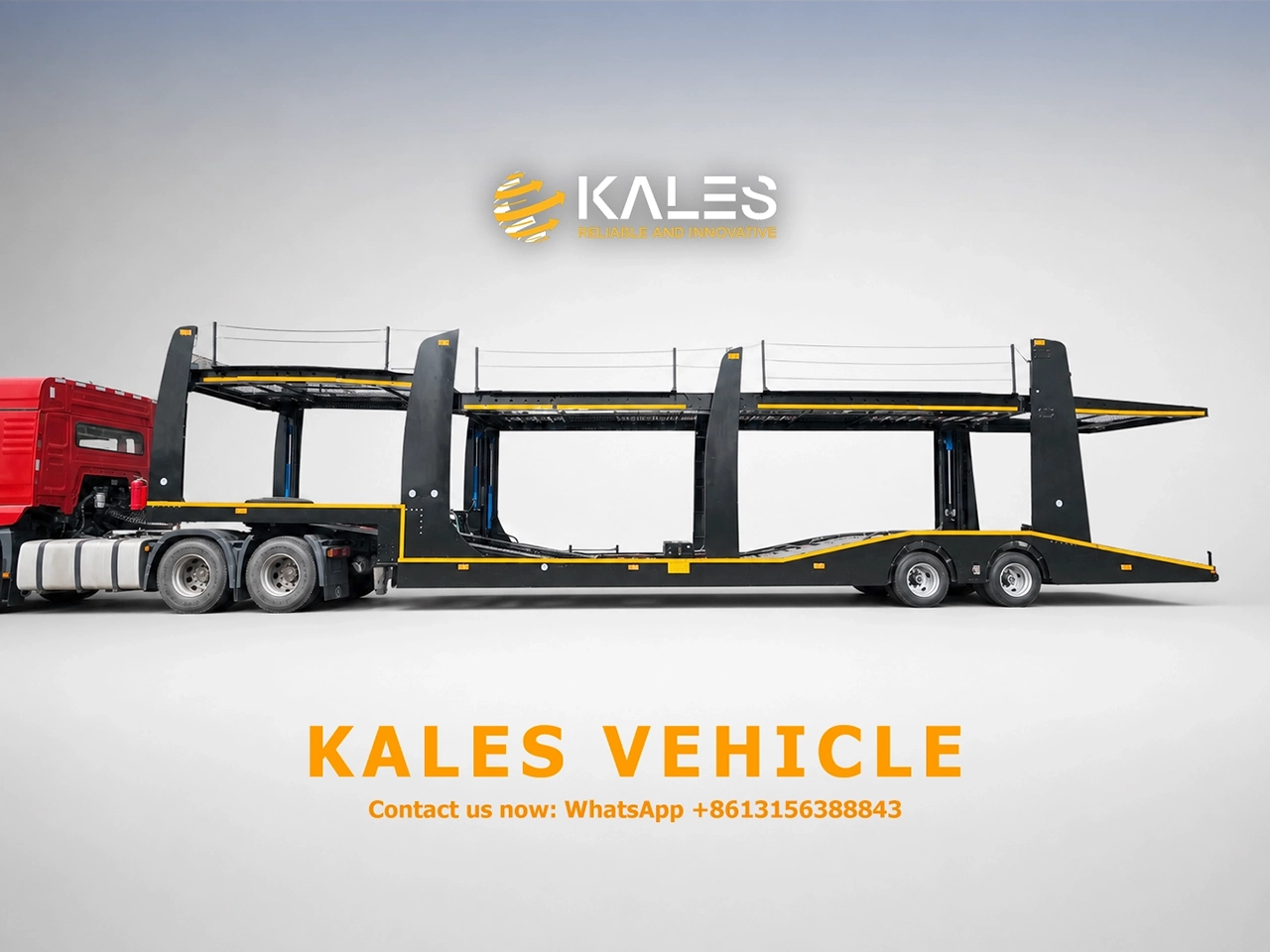
This Автовоз uses a skeleton-style body. The side sections are formed by upright posts and supporting members; there is no side sheeting, front panel, rear door, or roof panel. The result is a lighter and lower-cost body with lower aerodynamic resistance than a closed transporter. It also means the finished vehicles remain exposed to rain, dust, road spray, and side impact from loose objects, so route suitability, vehicle covers, and pre-departure inspection should be addressed in the fleet procedure.
The 420 mm I-beam longitudinal members form the main chassis backbone. The reference 12 mm upper flange, 12 mm lower flange, and 8 mm web provide a defined steel section for engineering review. Final steel grade, weld details, deck arrangement, local safety equipment, and any market-specific reinforcement belong in the approved technical drawing rather than being inferred from the body appearance.
The reference running gear uses two FUWA 13T axles in the rear group. Each axle has four tyres, giving eight tyres in total. This is a dual-axle, dual-tyre arrangement rather than a single-axle or super-single layout, and the final tyre load index must be checked against the loaded car combination, legal axle limit, inflation pressure, and destination-country rules.
The reverse-mounted suspension arrangement places the perforated loading deck relatively high. The reference clearance is approximately 1,250 mm above ground. That height can support a stronger under-structure and load-bearing layout, but it also affects the usable loading space, approach angle, ramp length, and the maximum height of vehicles on the lower deck. Buyers should supply representative vehicle dimensions before the deck geometry is frozen.
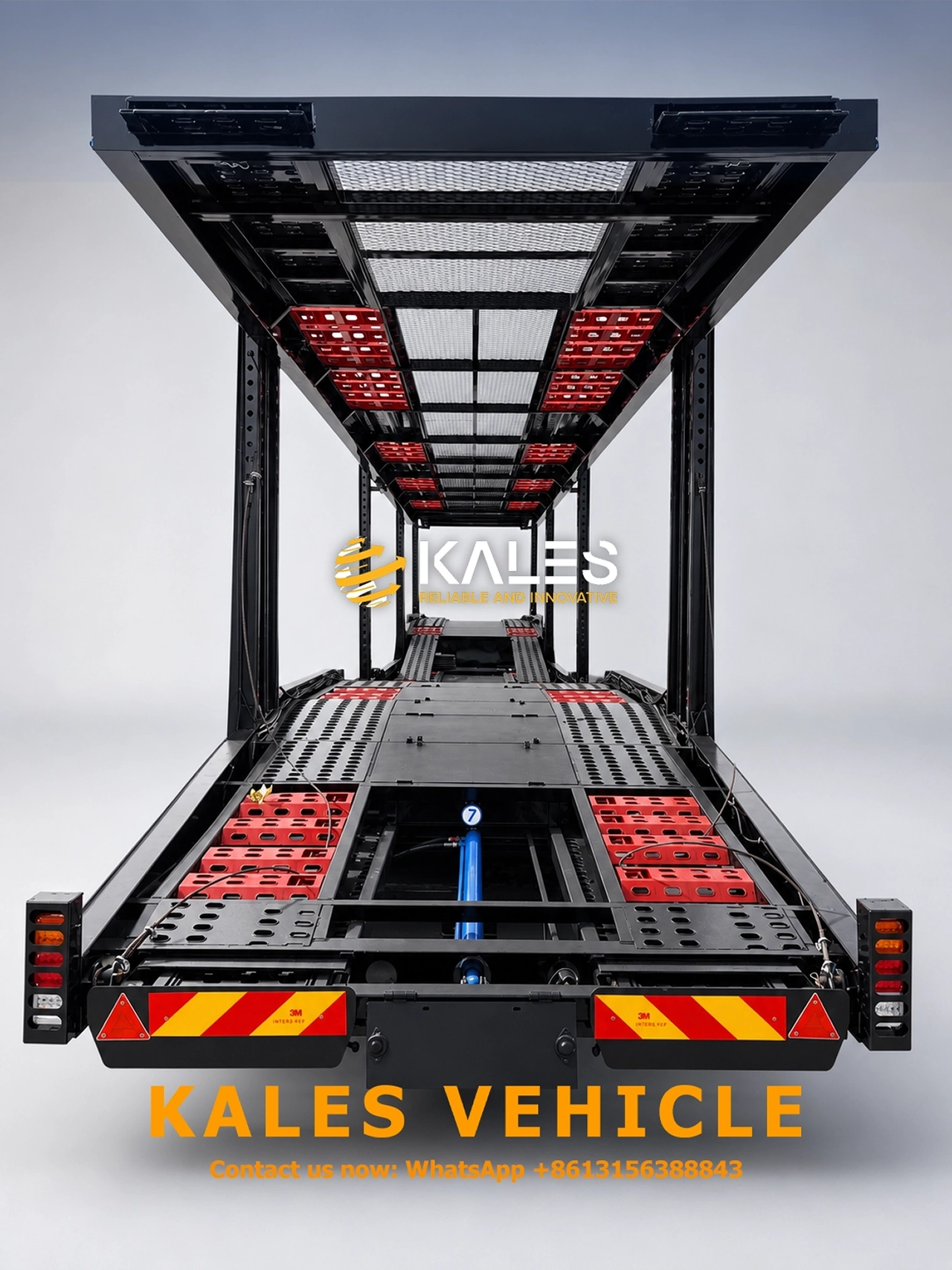
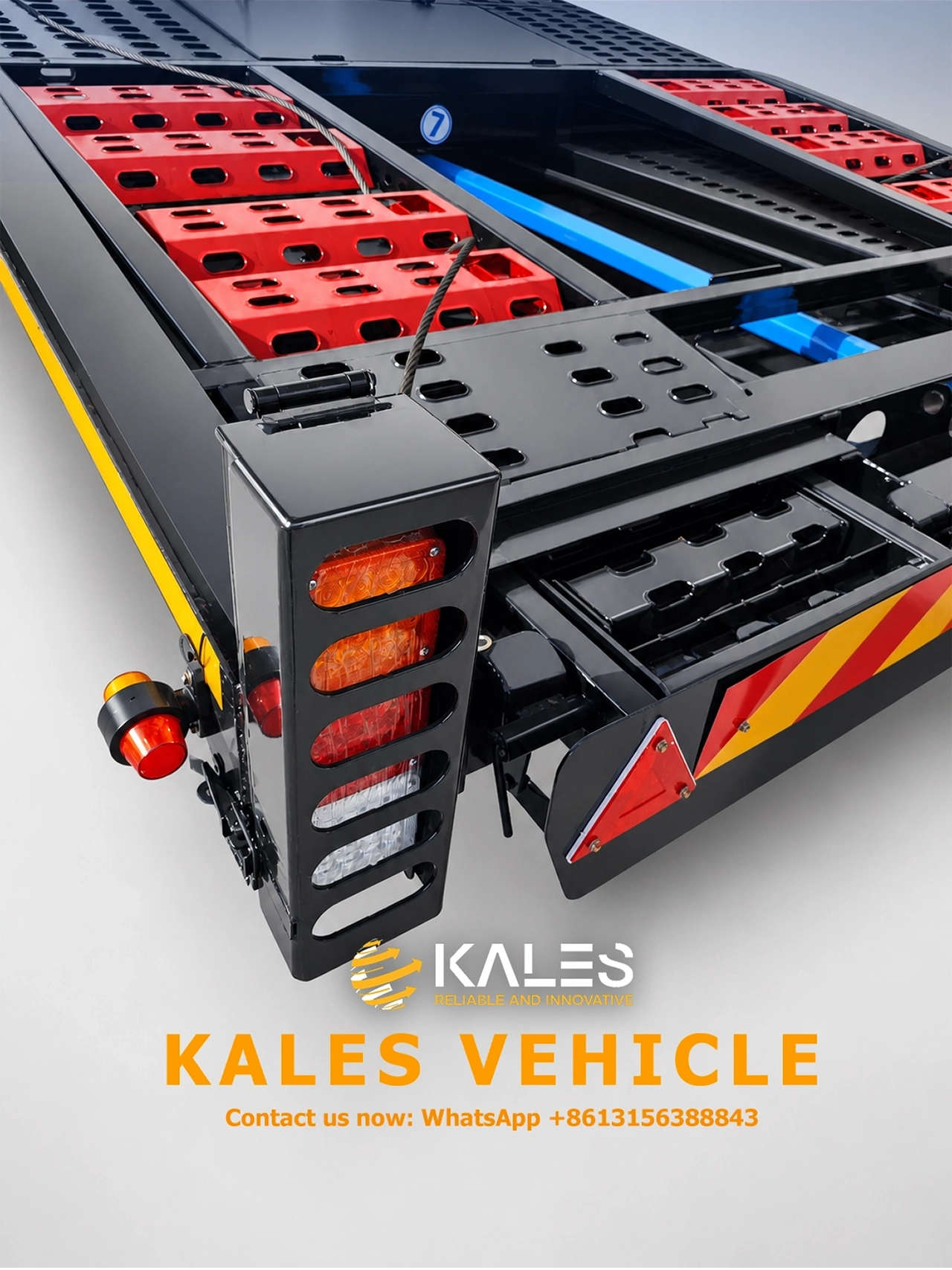
The loading platforms are covered with 4 mm high-strength anti-slip perforated steel plates. The perforations increase tyre friction and reduce sliding risk, remove unnecessary solid-plate weight from the upper body, and provide drainage so rainwater or wash water does not remain trapped on the deck. The approved plate grade, hole pattern, welds, and local edge treatment should be checked against the vehicle restraint and load plan.
For a broader comparison of suspension behaviour, route quality, and maintenance priorities, review the semi-trailer leaf spring versus air suspension guide.
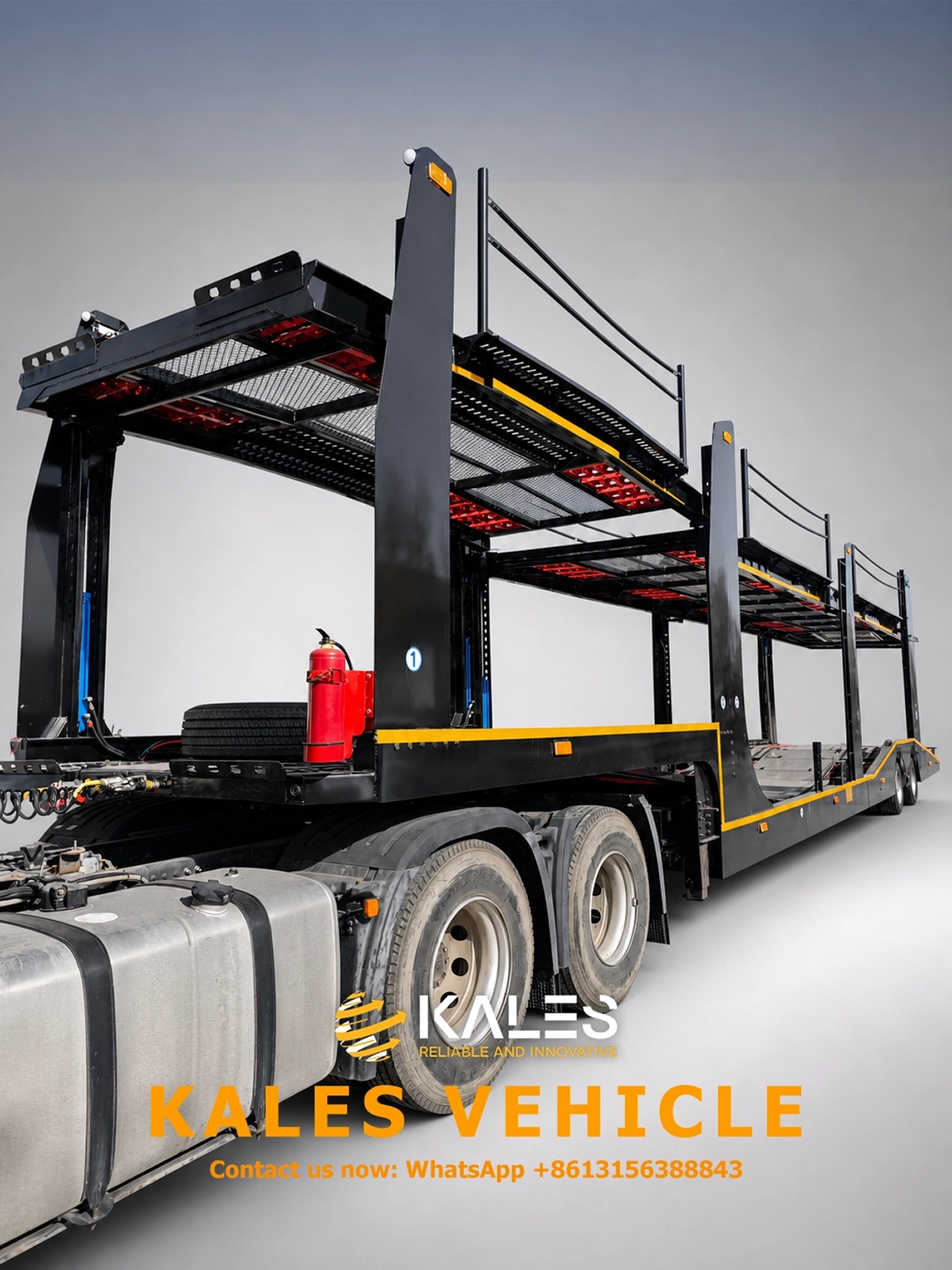
The carrier uses an upper and lower loading platform. The upper platform raises and lowers to create the access space needed for loading and unloading. In this model, hydraulic cylinders work with a pulley and wire-rope pulling system. The reference hydraulic package contains 11 cylinders, including four cylinders at the front; the final cylinder arrangement is confirmed by the approved hydraulic drawing.
The rear hydraulic pull-out ramp lowers to the ground to form the loading path. The operator must confirm that the ramp is fully supported, the hydraulic system is isolated as required, the deck is at the approved height, and the vehicle’s approach angle clears the ramp transition. The gooseneck lifting area has its own adjustment function so the front loading position can be matched to the car wheelbase and underbody clearance.
Vehicle restraint is a primary safety system on an open car carrier. Standard tubular tyre-limit frames locate the tyres; the lower hooks drop into adjacent holes in the perforated deck. Plate-style limit frames are available as an option when the fleet’s loading procedure or vehicle mix calls for a different contact shape.
Passenger-car tyre tensioners are used with the limit frames to hold the loaded vehicle in position and reduce forward/rearward movement. Restraints must be placed against the correct tyres, tightened to the approved procedure, and rechecked after the first movement. A restraint system cannot compensate for an overloaded deck, an unsuitable vehicle dimension, or incorrect platform height.
The standard spare-tyre arrangement uses two gate-type carriers. Each spare tyre is fixed to the gate with two bolts, giving the crew a defined inspection point for bolt torque, bracket condition, and tyre security. The final spare-tyre position must maintain clearance from the ramp, hydraulic cylinders, vehicle bodywork, and road envelope.
The reference supply also includes an aluminium-alloy toolbox, two fire extinguishers, and 4 mm perforated deck plates for anti-slip contact, drainage, and weight control. Spare parts, tie-down equipment, wheel chocks, hydraulic hose kits, and winter lubricants should be listed separately in the commercial quotation for Central Asian routes.
The reference braking package uses a WABCO relay valve, Komi/Ruili ABS, and four large brake chambers. Buyers should confirm whether the destination requires a specific ABS/EBS variant, diagnostics connector, air-dryer arrangement, or cold-weather component rating. The carrier’s 18,000 kg fifth-wheel design and interchangeable 90#/50# king-pin direction must be matched to the tractor’s fifth-wheel size, height, imposed load, and national registration data.
For coupling-part selection, compare the Kales 50 mm and 90 mm king-pin options. The final tractor and trailer combination should be checked as one system; a compatible king pin alone does not confirm legal gross mass, turning clearance, brake balance, or fifth-wheel load.
The Kales semi-trailer maintenance guide provides a broader schedule for tyres, brakes, axles, suspension, landing gear, coupling, and inspection records.
For Kazakhstan, Uzbekistan, Kyrgyzstan, Tajikistan, and Russia, the final technical agreement should state dimensions, vehicle loading plan, axle and tyre ratings, fifth-wheel load, brake equipment, hydraulic safety controls, restraint equipment, spare-tyre carriers, and fire-safety provisions. Kales can provide factory technical drawings, conformity documents, VIN information, and component data for the buyer’s customs broker and accredited certification body.
Delivery can be quoted to Chinese border points such as Khorgos, Alashankou, Bakhtu, or Kashgar, with onward TIR road transport to inland destinations evaluated separately. DAP scope, border handover, customs responsibility, registration, and any ОТТС/ЭПТС or national approval requirements must be confirmed before production. Certification is controlled by the applicable authority and assessment body, not by a factory page alone.
The following inspection views show the open cage frame, double-deck layout, hydraulic equipment, restraint hardware, and 4 mm perforated loading plates. Ask the Kales Central Asia Business Department for the latest loading photos and approved drawing before placing an order.
Share your target market, usage scenario, and preferred configuration.
Receive our model recommendation, specification review, and factory quotation.
Confirm production, inspection, shipment route, and export documents.
Stay supported after delivery with spare parts and remote assistance.
At Kales Vehicle, we keep freight planning practical so your trailer or truck reaches the destination with the right balance of protection, speed, and cost.
Container Shipping, Ro-Ro (Roll-on/Roll-off), and Bulk Cargo each serve different export needs, and we choose the safest route, loading method, and packing approach for the order.
Container loading of Kales semi trailer for export, ensuring secure fastening and space optimization.
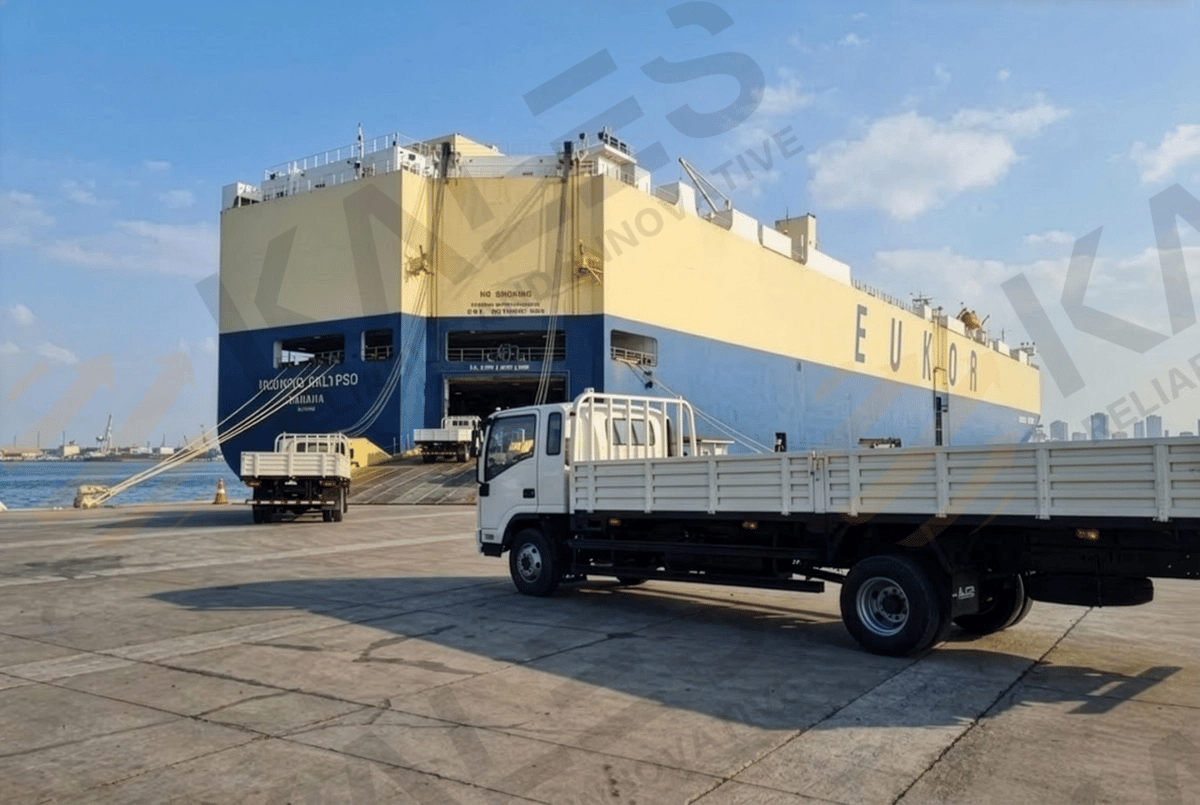
Ro-Ro shipping method for Kales commercial trailers, driving directly onto the vessel for maximum safety.
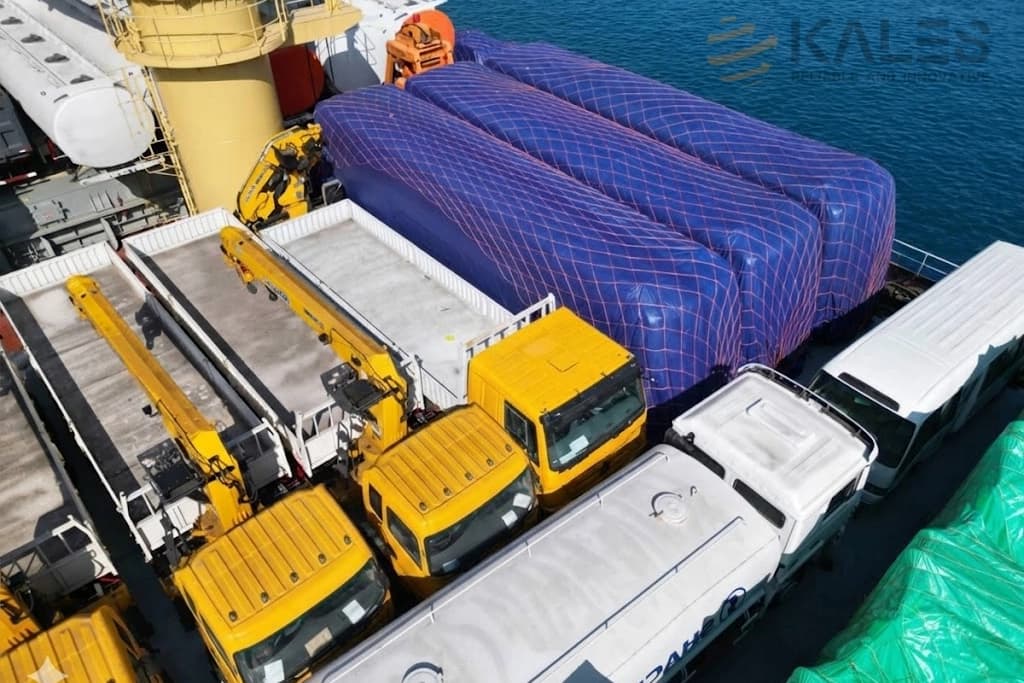
Bulk cargo transport of stacked Kales semi trailers with wax spraying protection against seawater corrosion.
Send your car dimensions, target loading count, tractor information, destination, and preferred delivery term. The Kales Central Asia Business Department will prepare a configuration review, loading and restraint checklist, technical document scope, and quotation for Khorgos, Alashankou, or onward TIR delivery.
Actual dimensions, loading count, components, certification, and delivery are governed by the technical agreement and commercial contract confirmed by both parties. Manufacturing tolerances and optional-component positions may vary.
Factory engineering notes, maintenance protocols, and buyer checklists related to this equipment.
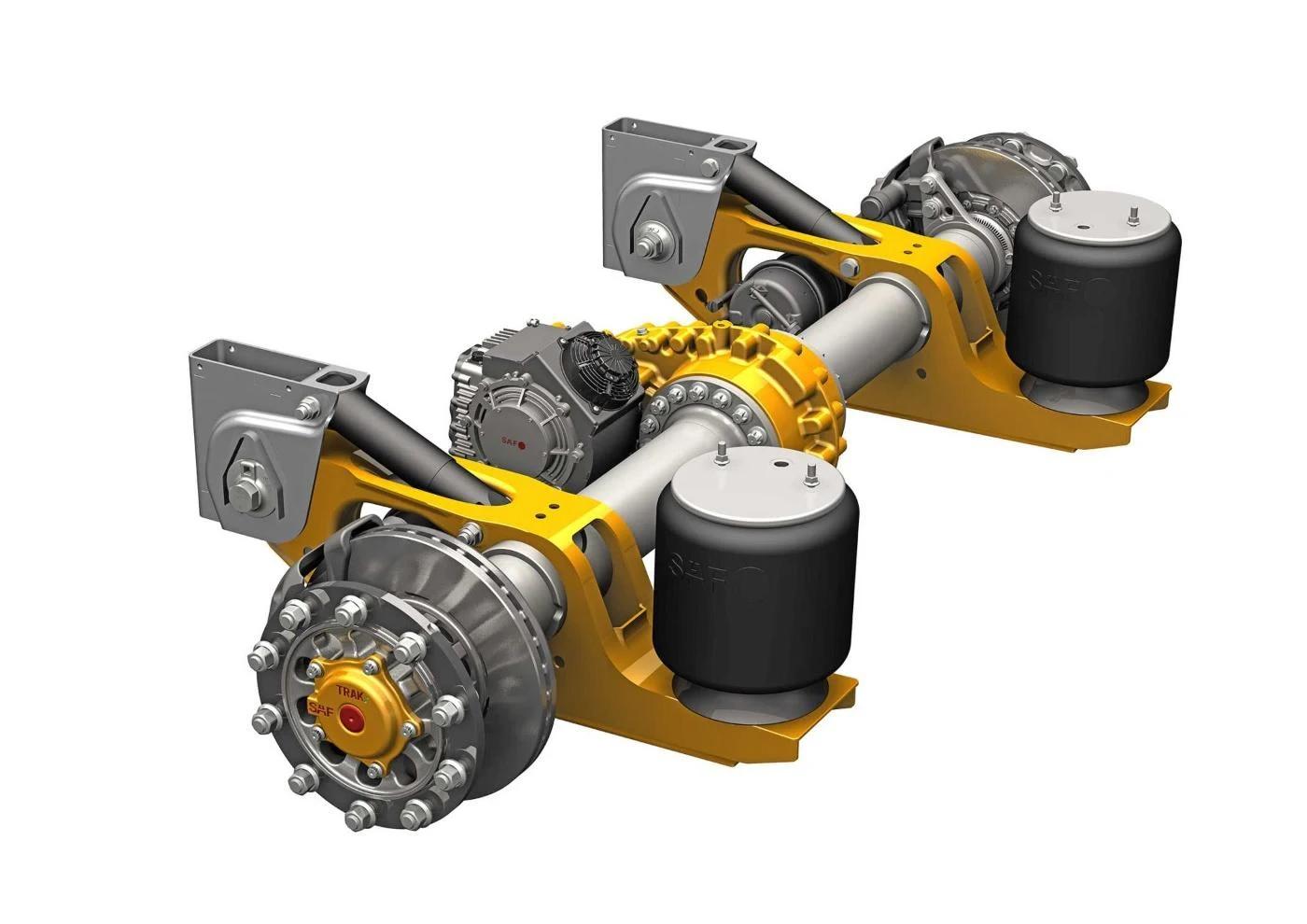
The semi-trailer axle is the critical load-bearing backbone connecting the wheels, braking system, and suspension. Beyon…
Mobilizing oversized industrial machinery—including hydraulic excavators, crawler bulldozers, rotary drilling rigs, crus…
In African open-pit mining, quarrying, and bulk mineral haulage—from the gold corridors of Geita and Kahama in Tanzania…