Container Shipping
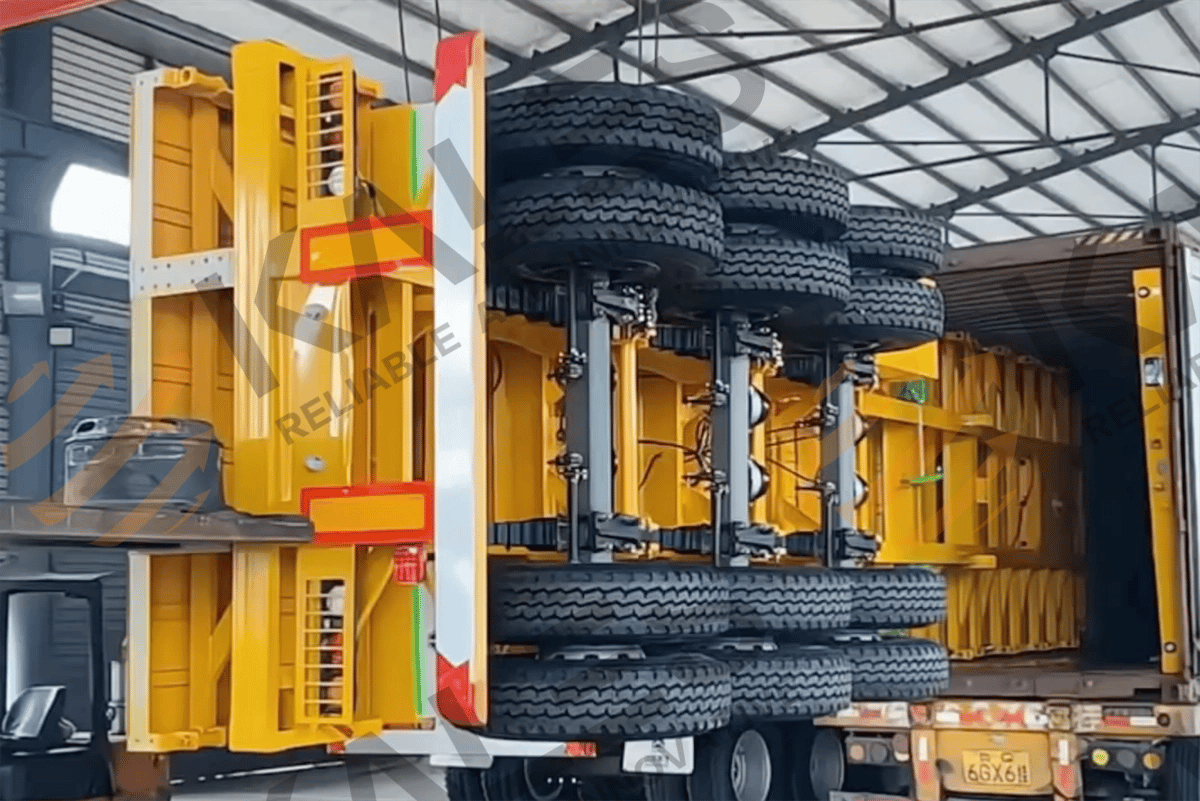
Container loading of Kales semi trailer for export, ensuring secure fastening and space optimization.



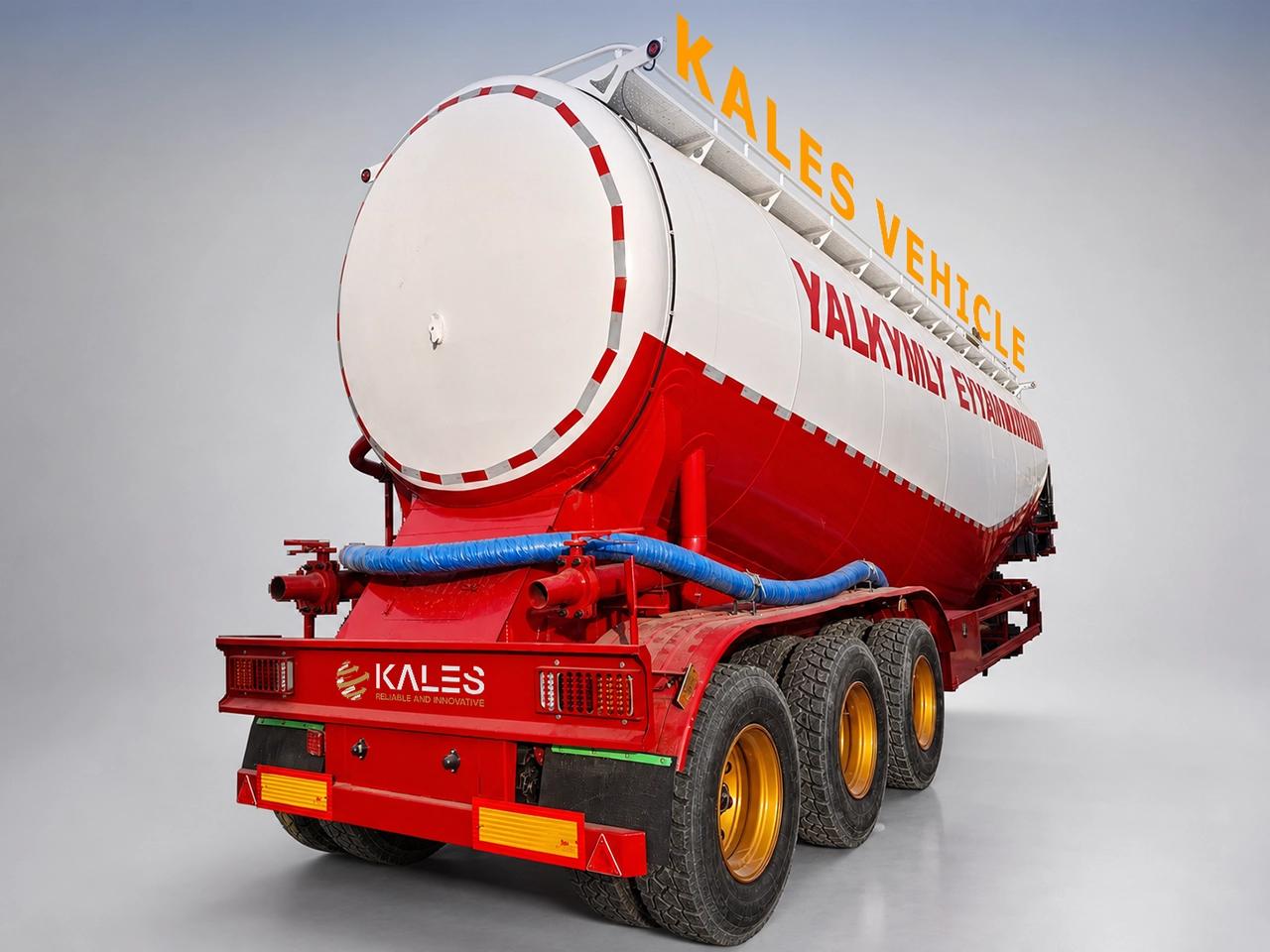
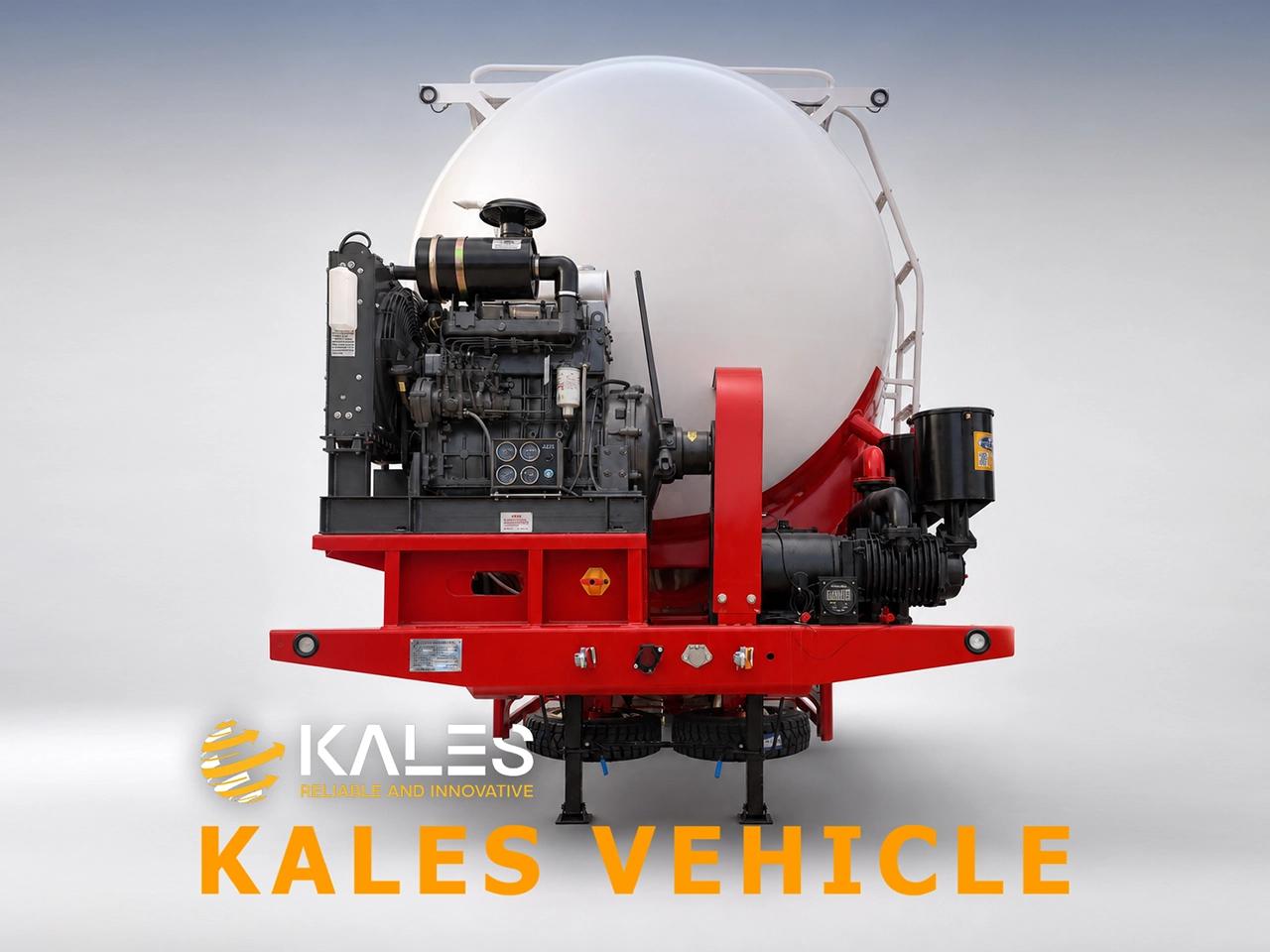
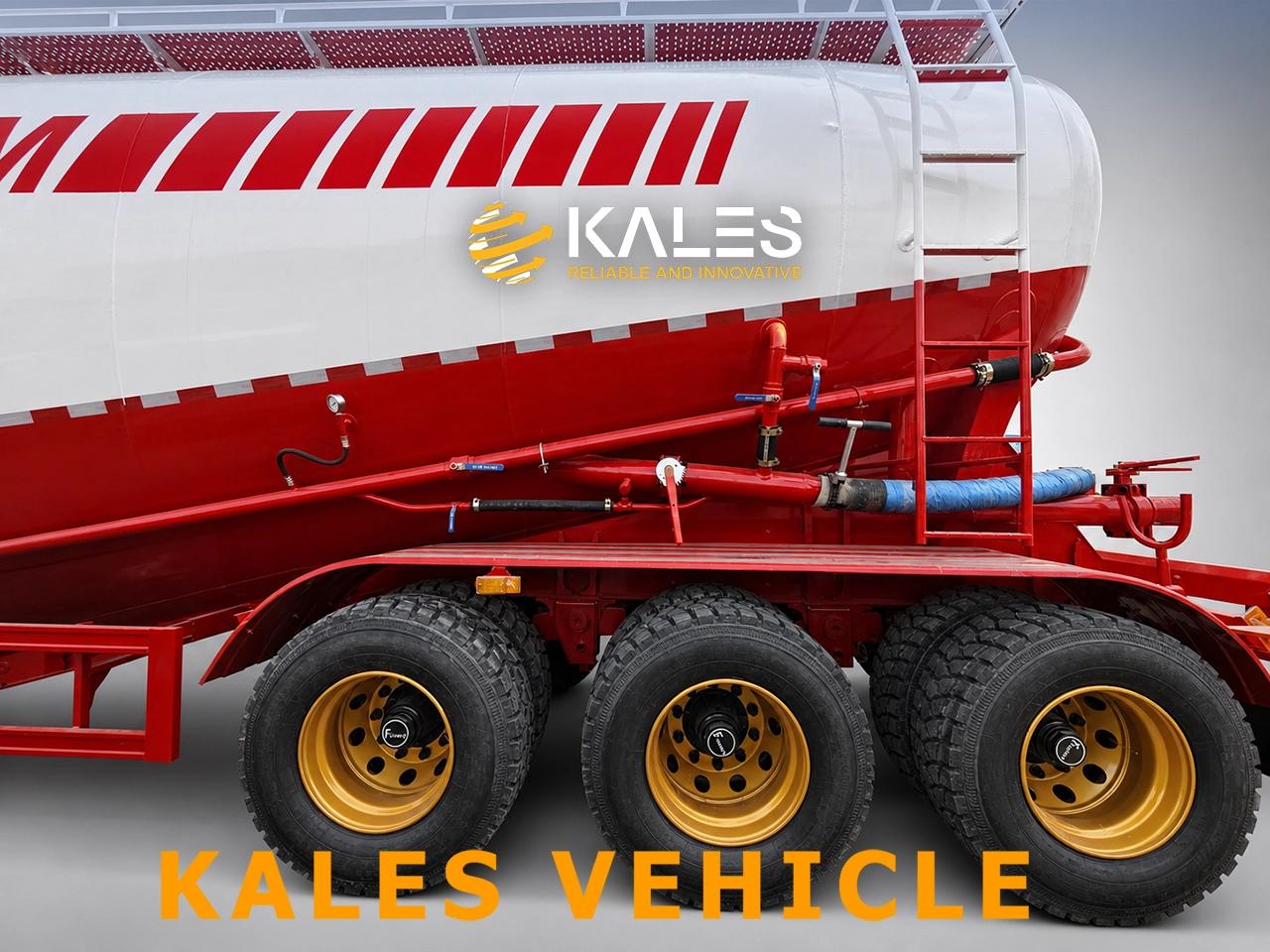
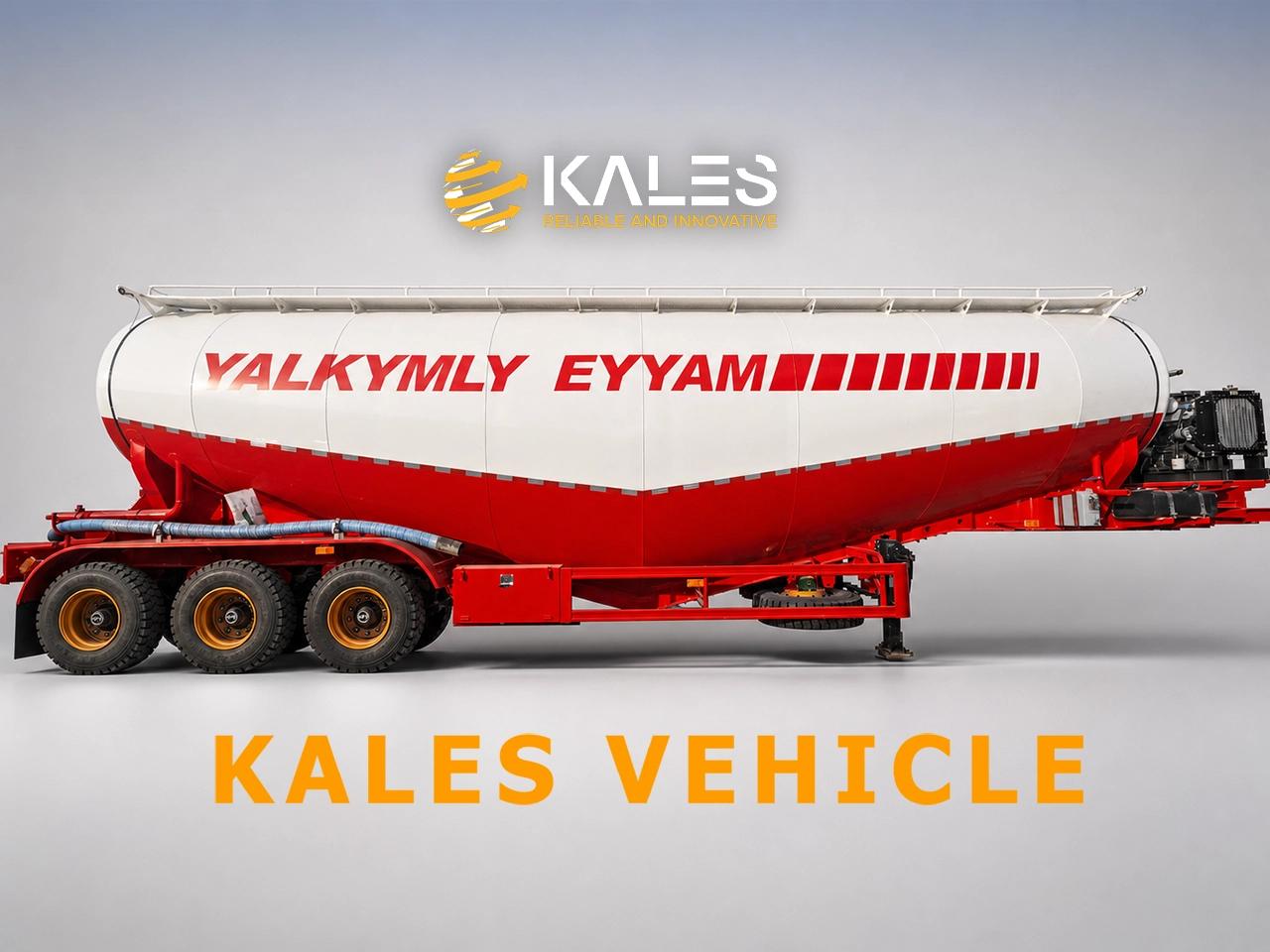
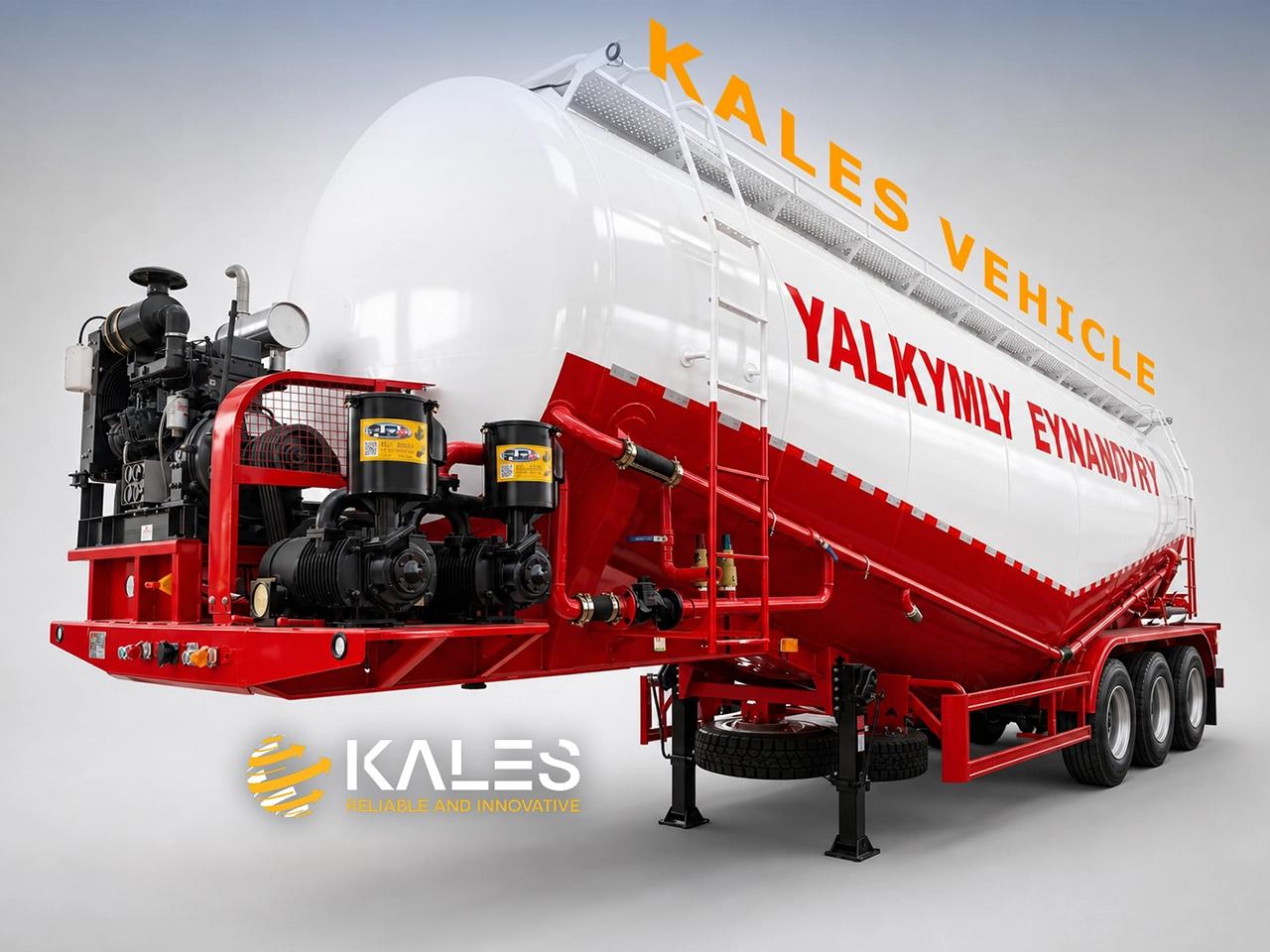
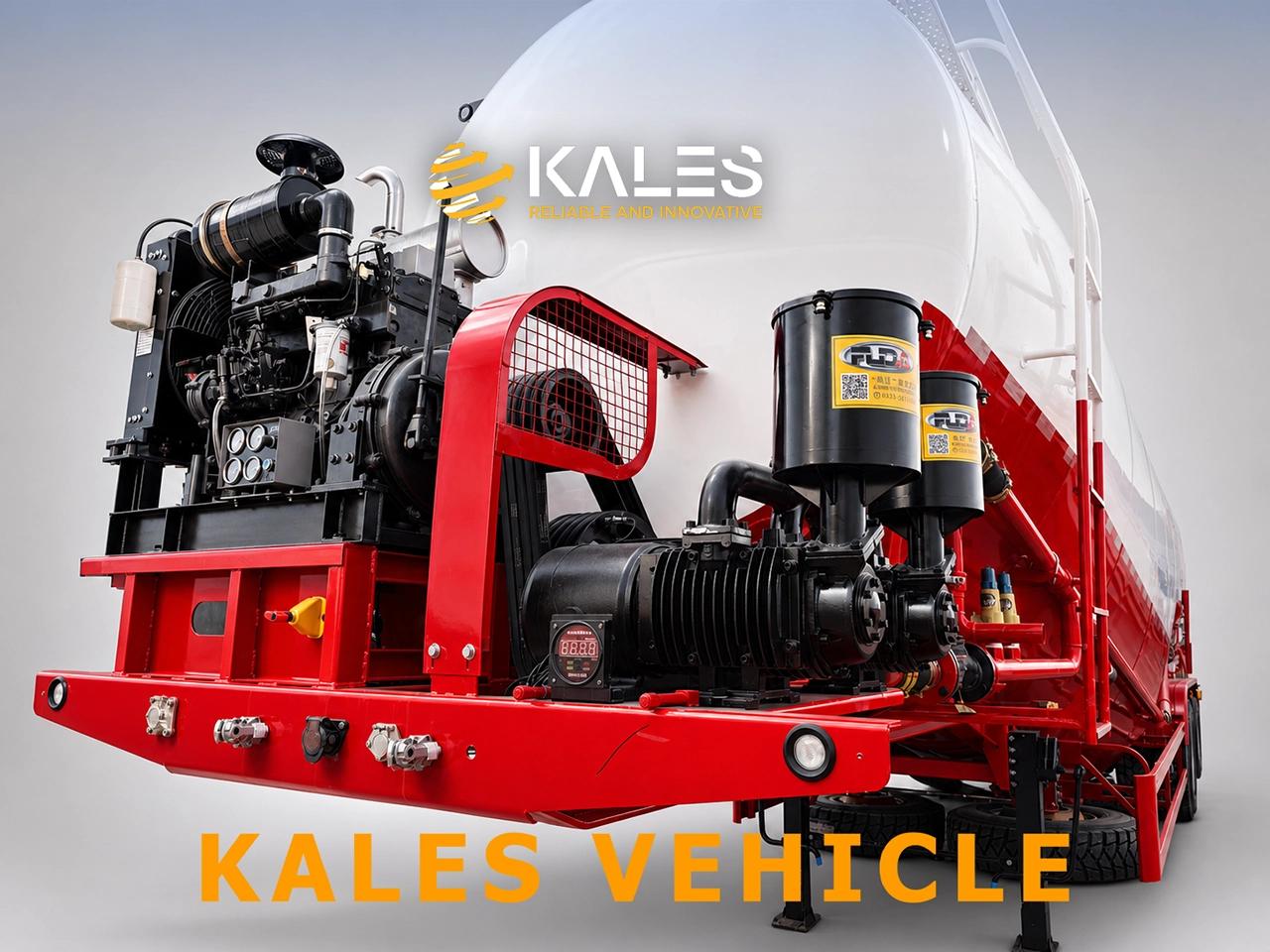
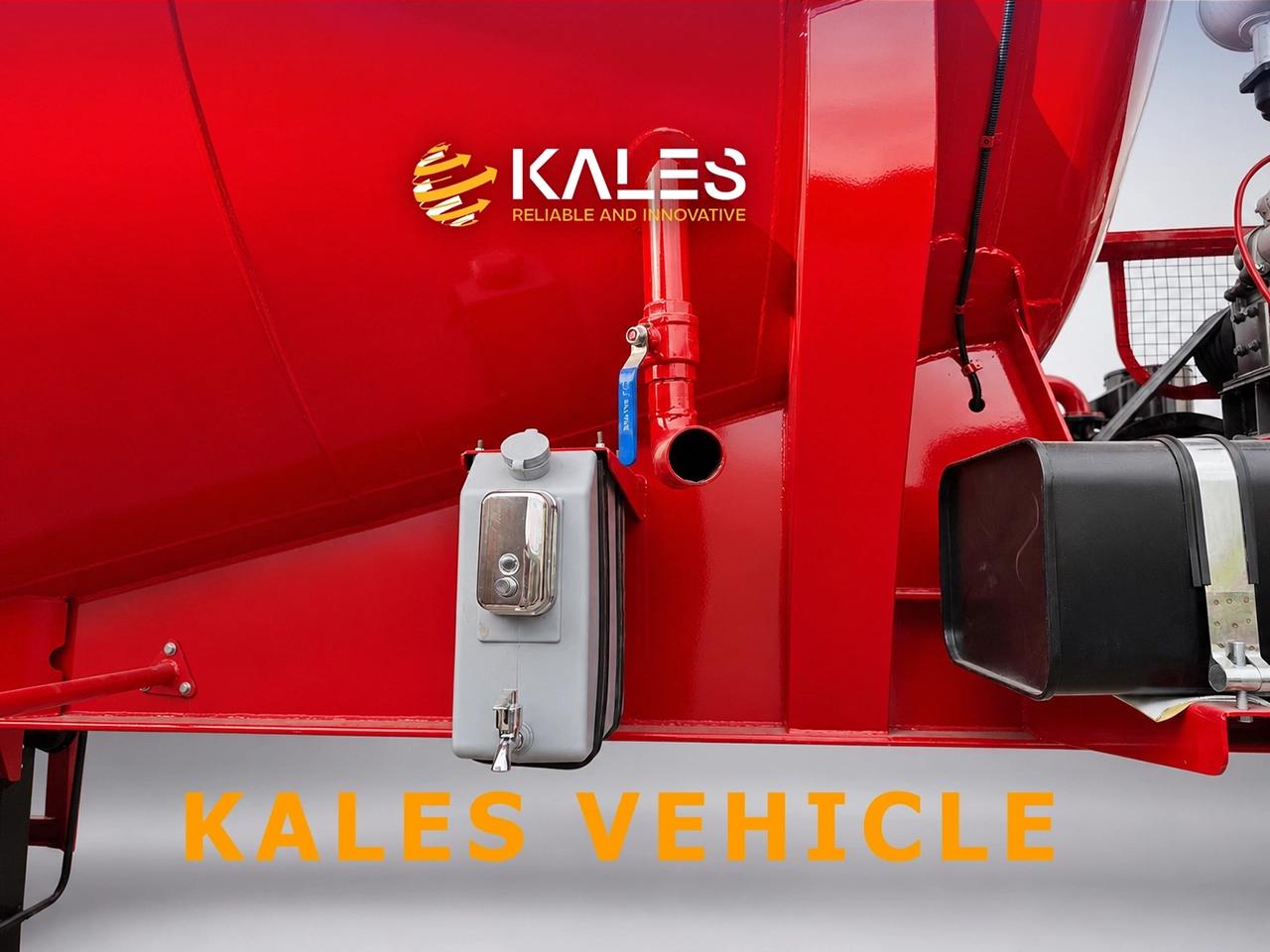
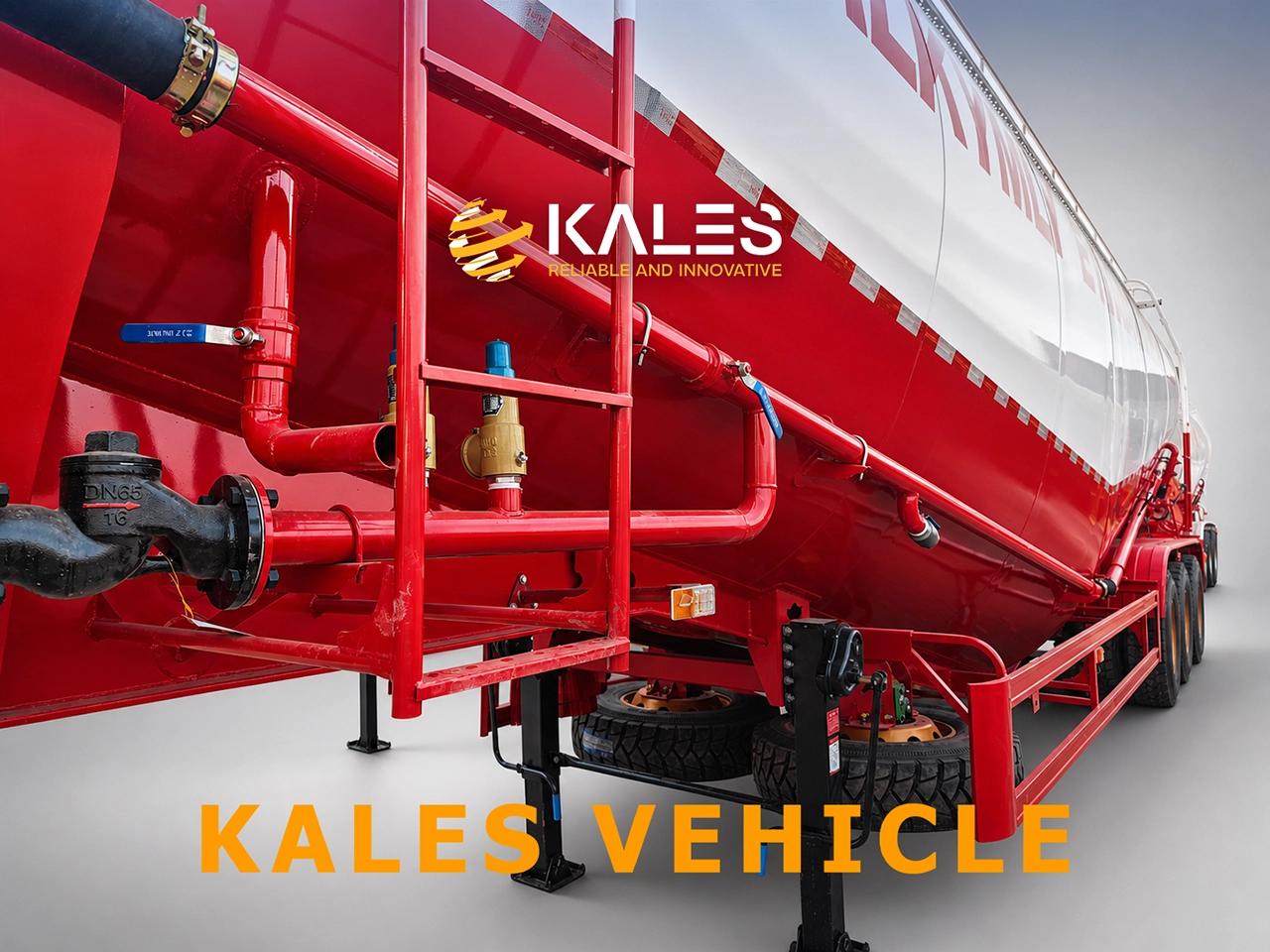
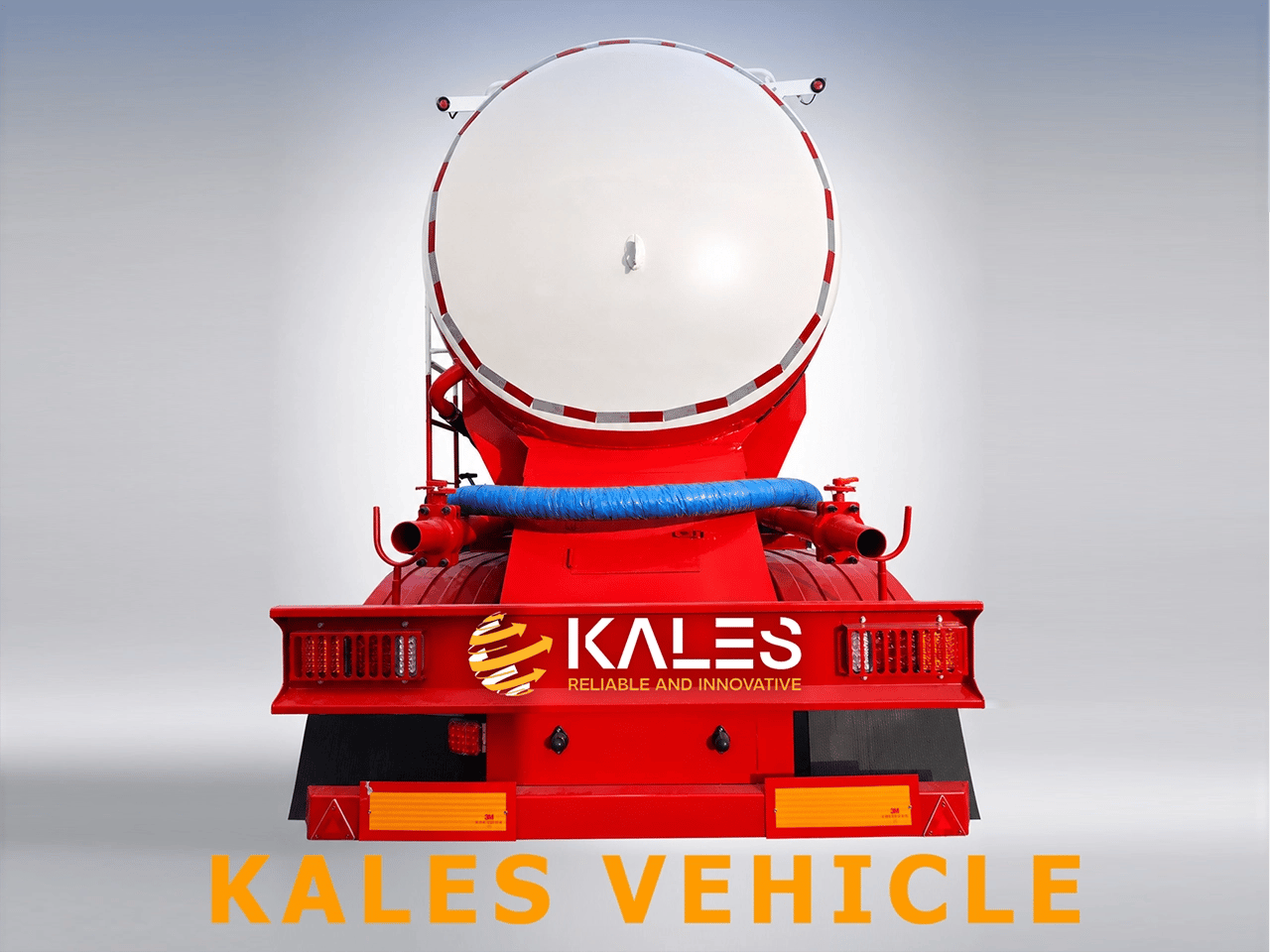
35m³ CIS cement tanker trailer with a 12,500 mm chassis, cold-climate options, 12m³/min compressor, EAEU document support and DAP border delivery.
Reference priceUSD 19,500Final quote depends on configuration, quantity, and destination.
Direct technical consultation from factory engineers · No trader markup
Factory Direct Export
Zero trader markup
Heavy-Duty Certified
ISO9001 / CCC / CIQ
Global Sea Freight
Container / Ro-Ro / Bulk
Custom Engineering
Tailored configurations
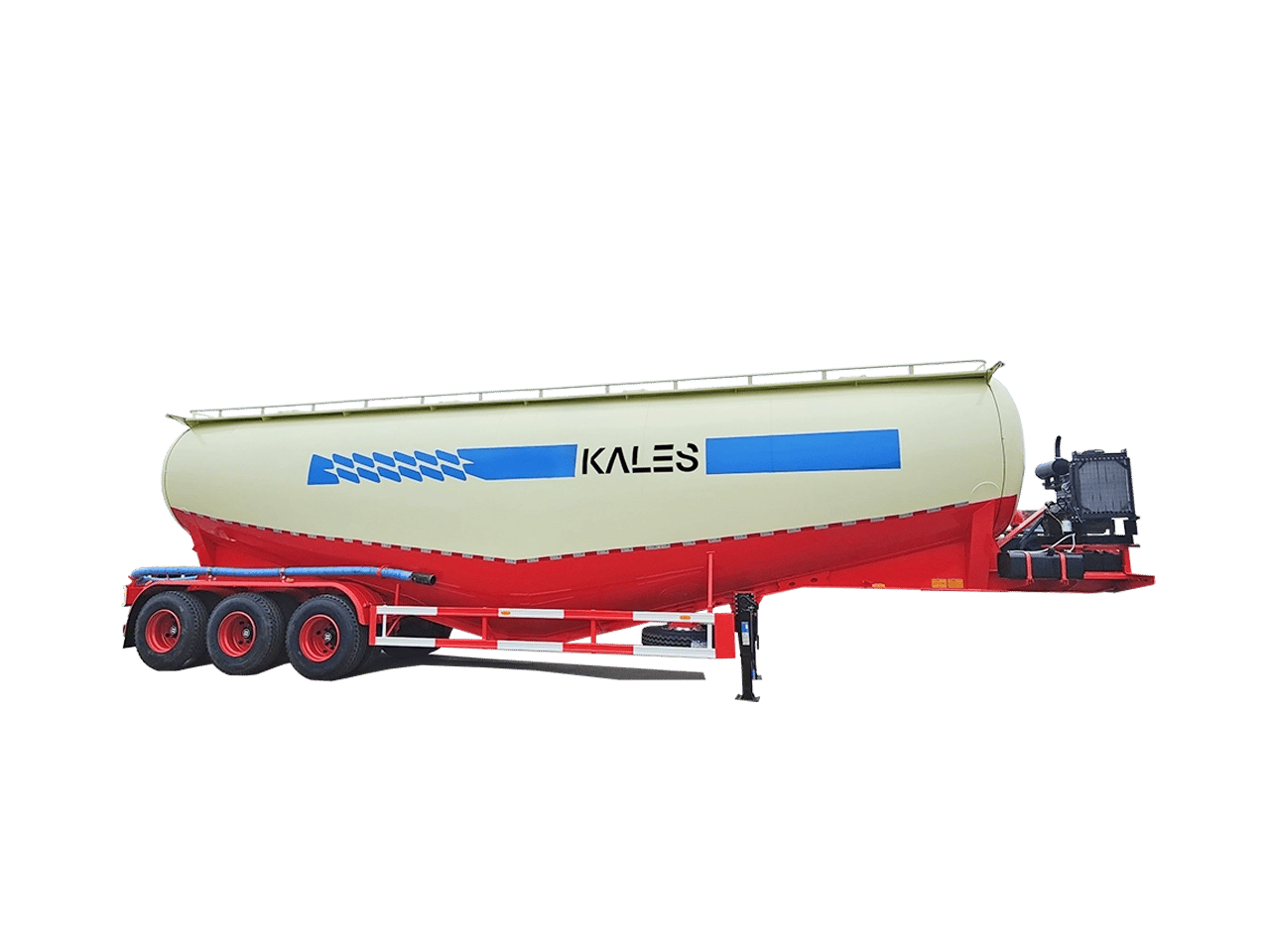
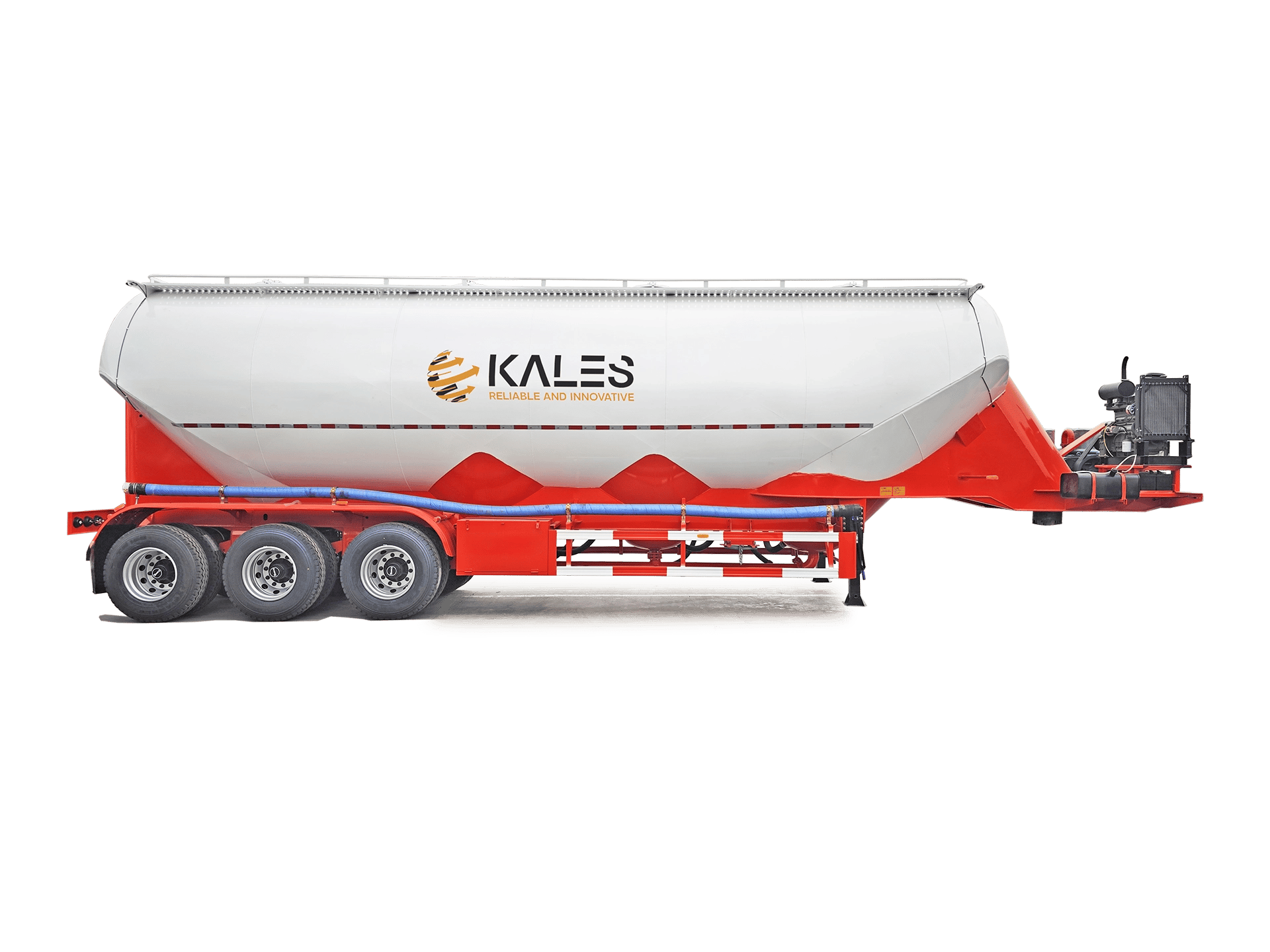
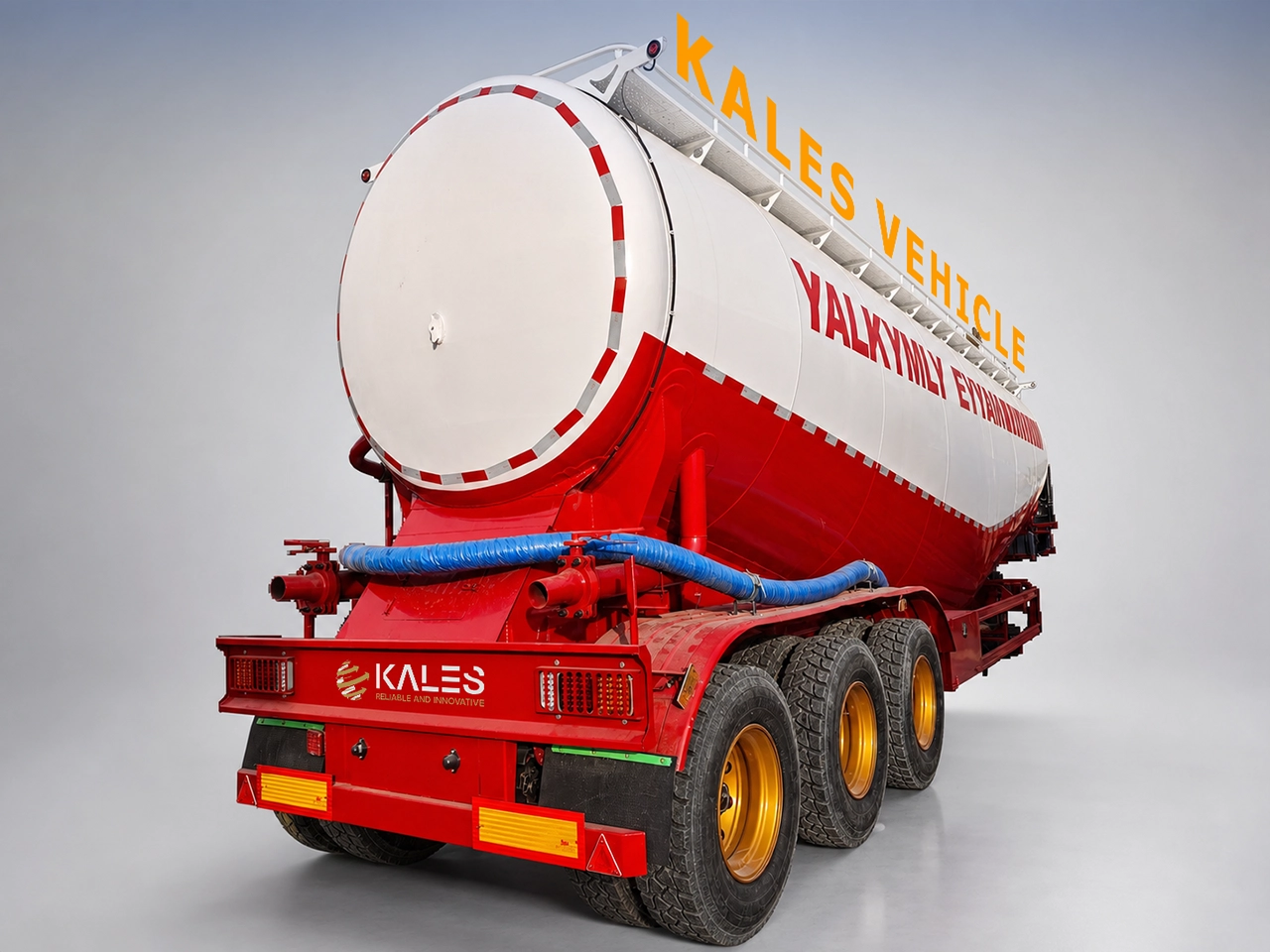
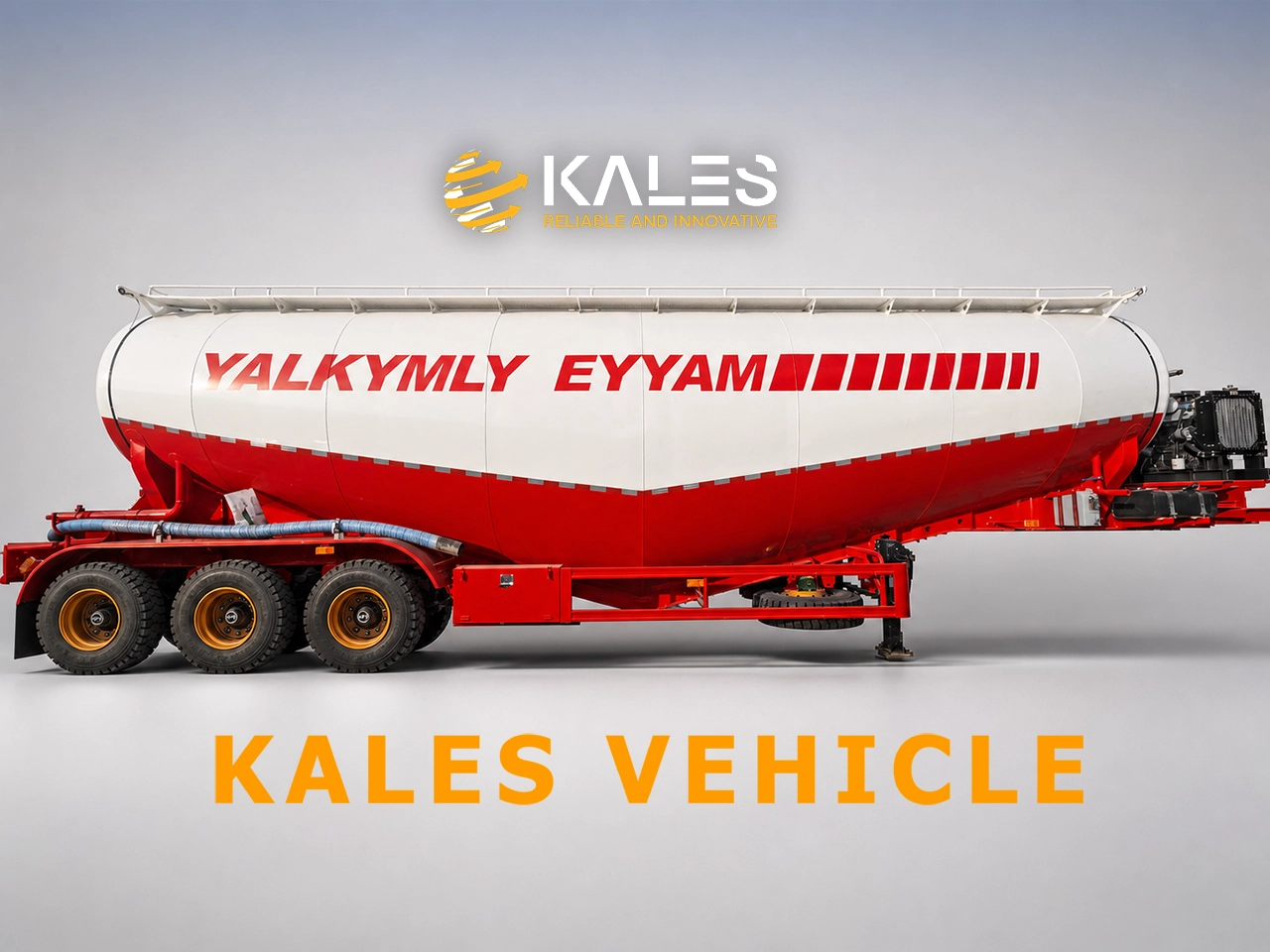
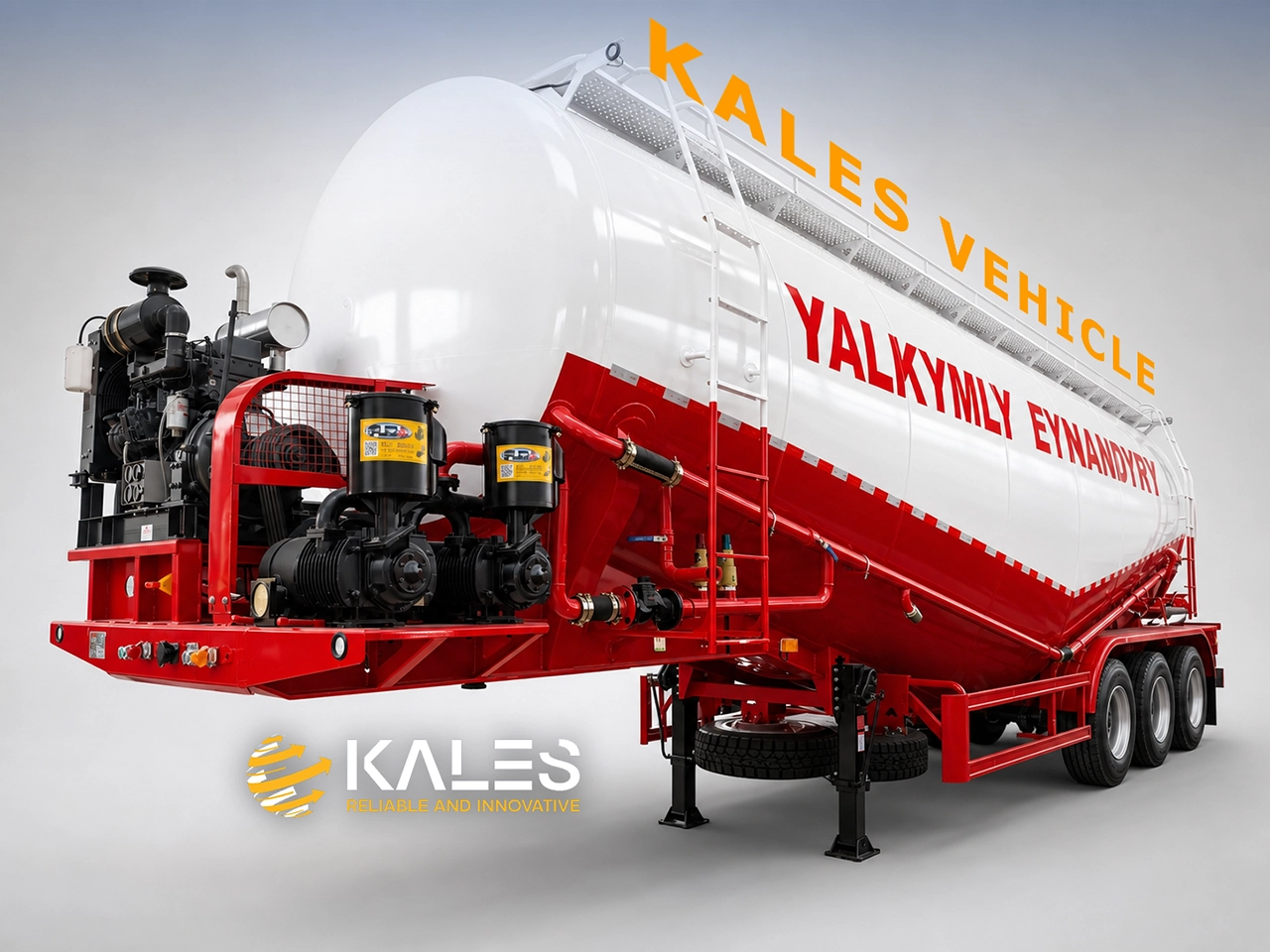
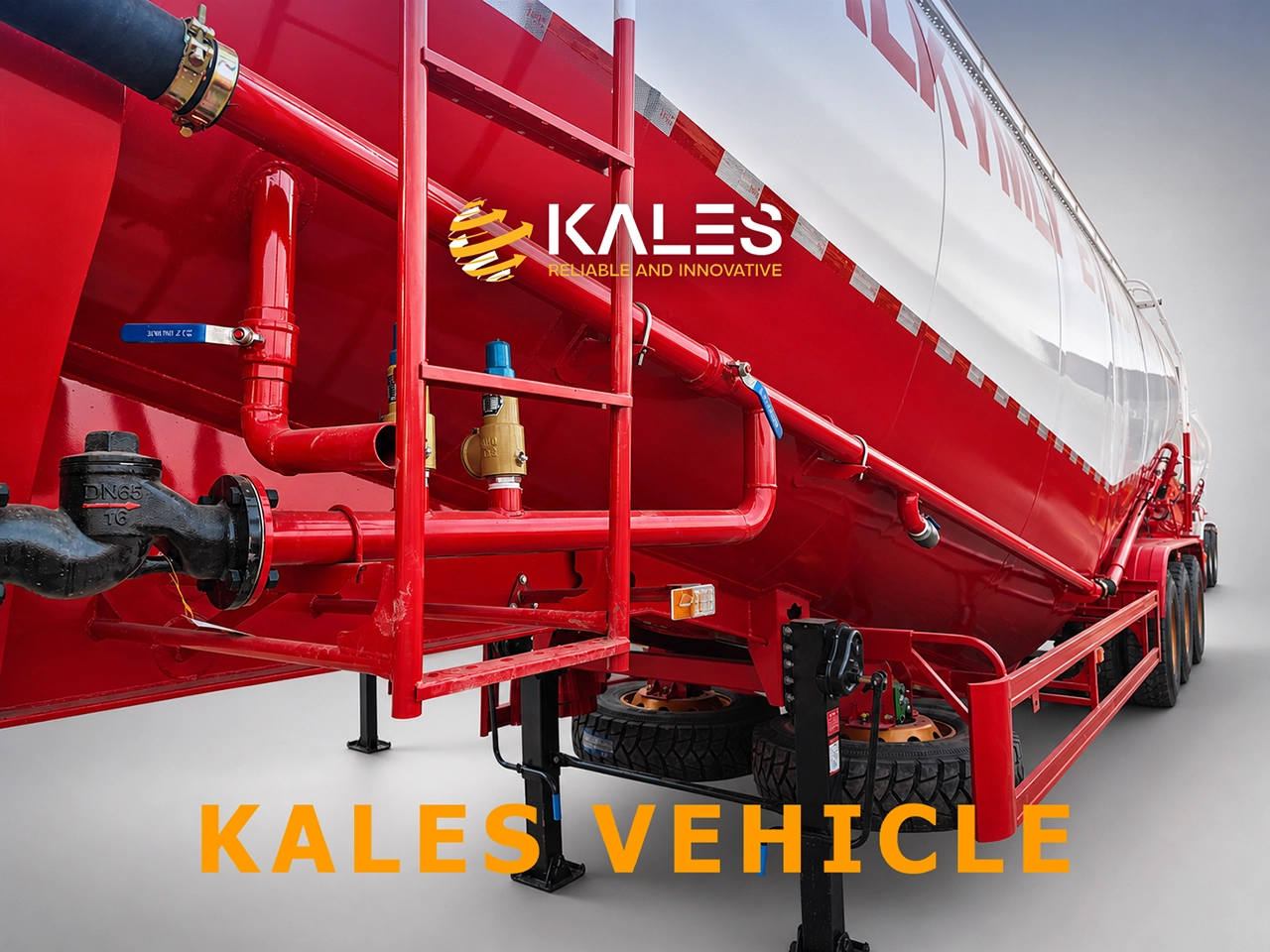
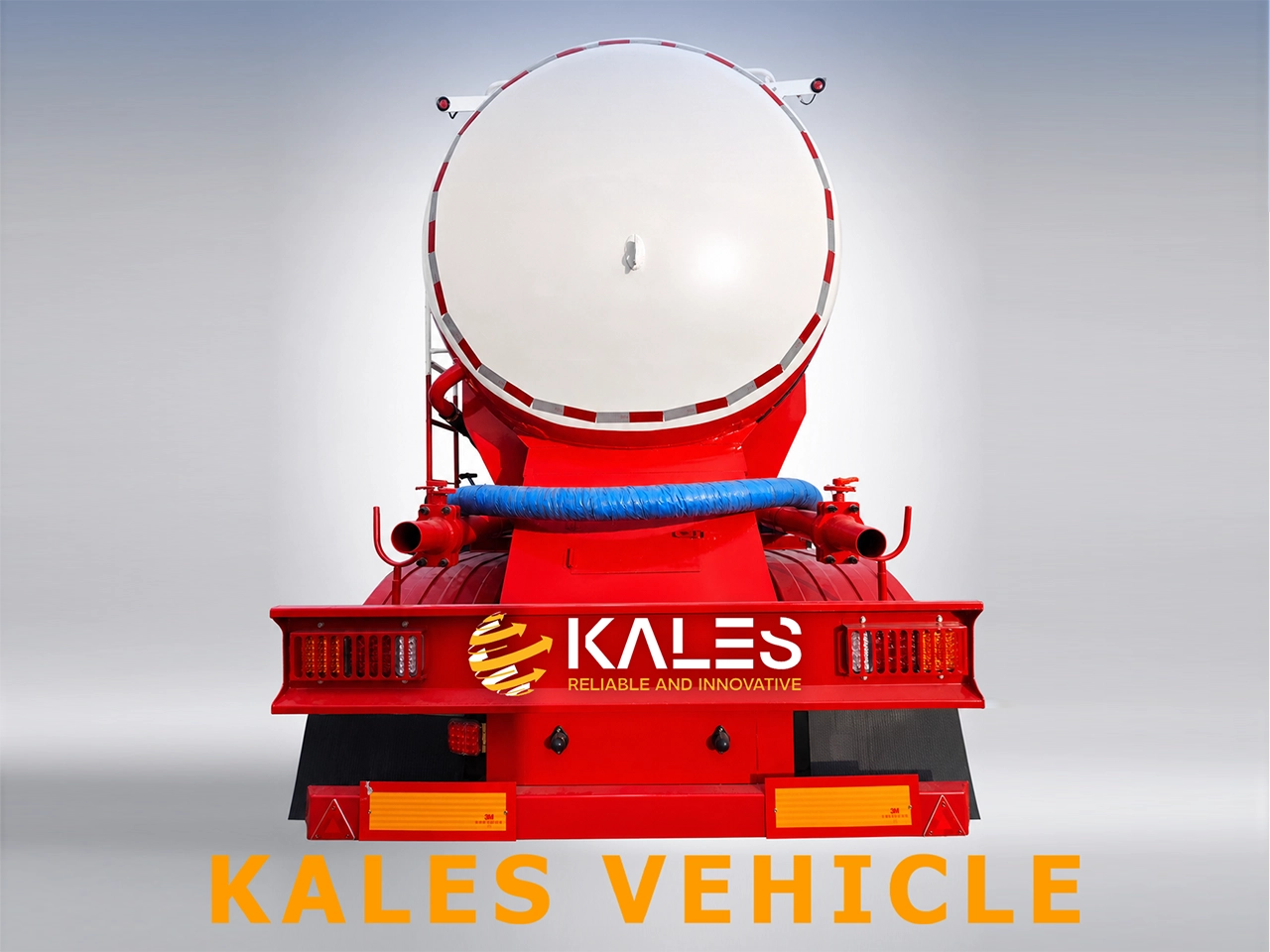
Kales 35m³ bulk cement tanker trailer: a 12,500 mm, three-axle pneumatic powder semi-trailer developed for long-distance cement logistics in Central Asia and Russian-speaking markets. In regional procurement searches, this vehicle is commonly called a Полуприцеп-цементовоз, цементовоз полуприцеп, or cement tank semi-trailer.
The configuration combines a Q355 high-strength steel tank, approximately 34m³ effective volume, an independent diesel-driven 12m³/min compressor, and selectable cold-weather braking components. Final material grade, homologation package, axle loading, and winter equipment are confirmed in the signed technical agreement for the destination country.
| Product type | Three-axle pneumatic bulk cement tanker semi-trailer / Полуприцеп-цементовоз |
|---|---|
| Overall dimensions (L × W × H) | 12,500 × 2,550 × 4,000 mm reference configuration |
| Gross vehicle mass | 40,000 kg reference value; legal combination mass and axle limits must be confirmed locally |
| Curb weight options | Approximately 7,100 / 6,800 / 6,500 kg, depending on tank, running gear, tyres, and power-unit configuration |
| Reference rated payload | Approximately 32,900 / 33,200 / 33,500 kg, calculated against the corresponding curb weight |
| Tank volume | 35m³ total / approximately 34m³ effective |
| Tank material | Q355 high-strength low-alloy steel; low-temperature impact grade and certificate to be specified for the minimum design temperature |
| Tank shell / end plates | 5 mm shell / 6 mm end plates in the reference design |
| Axles / axle-group load | 3 axles / 24,000 kg reference tri-axle-group load |
| Wheelbase options | 4,600 + 1,310 + 1,310 mm; 4,480 + 1,310 + 1,310 mm; or 4,300 + 1,310 + 1,310 mm |
| Leaf springs | 10/10/10, 8/8/8, or 4/4/4; air suspension optional |
| Tyre options | 11.00R20 12PR, 12R22.5 12PR, or 11R22.5 14PR; dual or super-single layout by load plan |
| Diesel power unit | Huafeng 4105 or Weichai, with optional low-temperature starting aid |
| Air compressor | 12m³/min Suzhou or Fuda twin-cylinder compressor |
| Reference discharge rate | Approximately 1.2-1.8 tonnes/min under suitable material, hose, pressure, and site conditions |
| Reference residual target | ≤0.3% under suitable cement condition, fluidisation setup, and operating procedure |
| Compatible media | Bulk cement, fly ash, and compatible mineral powders; density and fluidisation behaviour must be confirmed before production |
| Delivery directions | DAP Khorgos, Alashankou, Bakhtu, or Kashgar; TIR delivery to inland destinations subject to route and carrier confirmation |
The 35m³ Kales cement tanker is intended for cement producers, dry-bulk carriers, batching-plant supply fleets, and infrastructure contractors operating between plants, border terminals, depots, and remote construction sites. It is configured for Kazakhstan, Uzbekistan, Kyrgyzstan, Tajikistan, and comparable Russian-speaking procurement programs, subject to each country’s registration and mass limits.
| Procurement priority | Technical direction | Operational value |
|---|---|---|
| Cold-climate preparation | Specified low-temperature Q355 grade, certified impact properties, WABCO-compatible anti-freezing valve, air dryer, low-temperature seals and lubricants | Reduces brittle-fracture, condensate icing, and frozen-control risk when the complete package is correctly selected and maintained. |
| Long-route stability | 12,500 mm overall platform with selectable 4,300-4,600 mm front wheelbase and engineered axle-load distribution | Supports predictable tracking and load distribution on high-speed cross-border routes. Stability still depends on tank geometry, suspension, tyres, speed, wind, and loading practice. |
| Low-residue unloading | Large-area fluidisation bed (Аэрационная система), 1.2-1.8 t/min reference rate, and ≤0.3% residual target | Reduces unloading time and retained product when cement condition, pressure, hose arrangement, and operator procedure meet the design basis. |
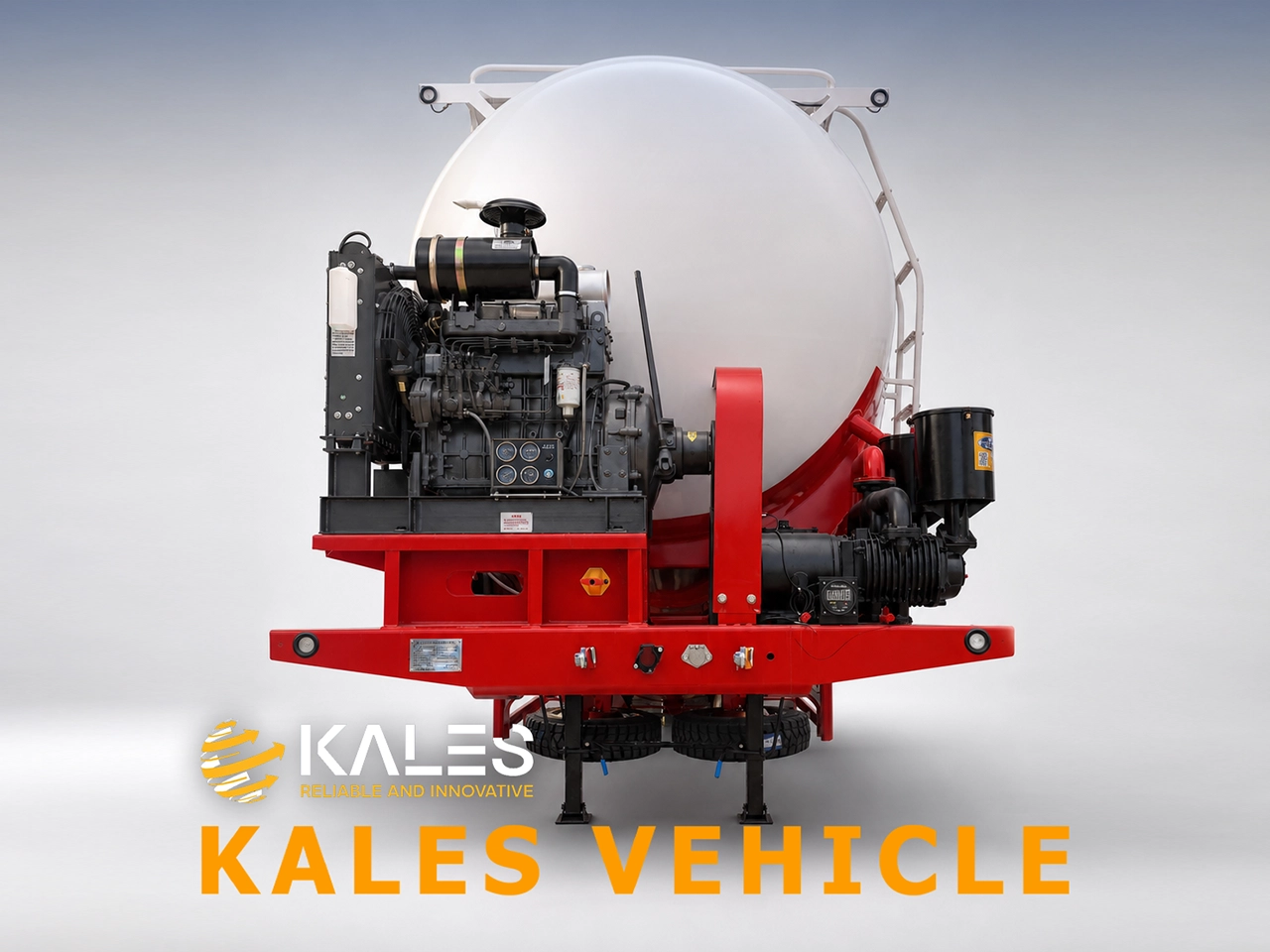
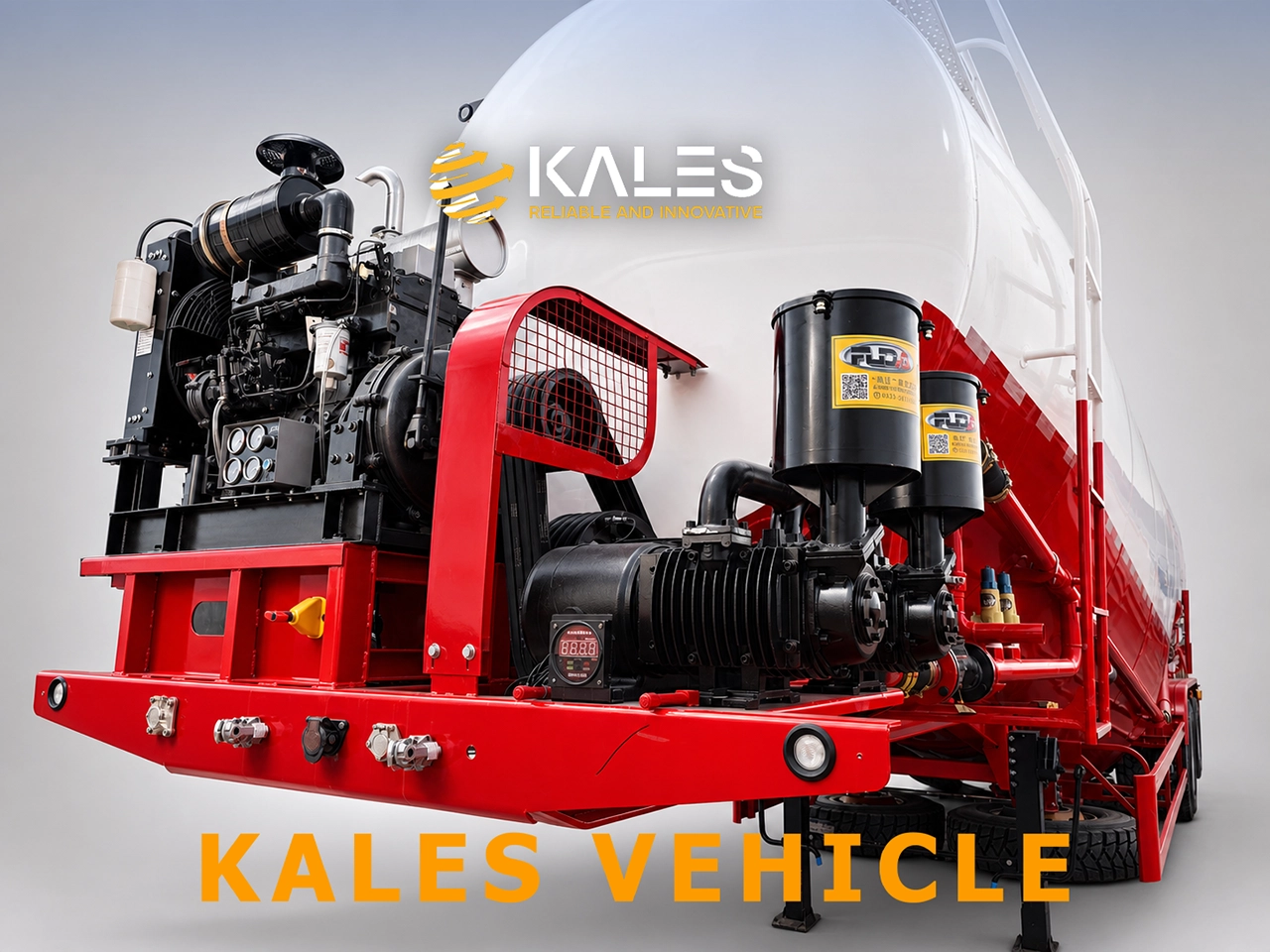
| Independent power station | Huafeng 4105 or Weichai diesel engine with 12m³/min twin-cylinder compressor | Allows pneumatic unloading at remote infrastructure sites without relying on plant electricity or a stationary compressor. |
| Tractor compatibility | 50 mm (2 inch) or 90 mm (3.5 inch) king pin | Supports specification matching for Shacman, Sitrak, HOWO, KAMAZ, MAZ, and other tractors after fifth-wheel height and load checks. |
| Homologation support | Technical drawings, VIN data, conformity documents, component details, and liaison with the buyer’s broker/certification body | Provides the evidence needed for the applicable EAEU TR CU 018/2011, ОТТС, and ЭПТС process without claiming automatic approval. |
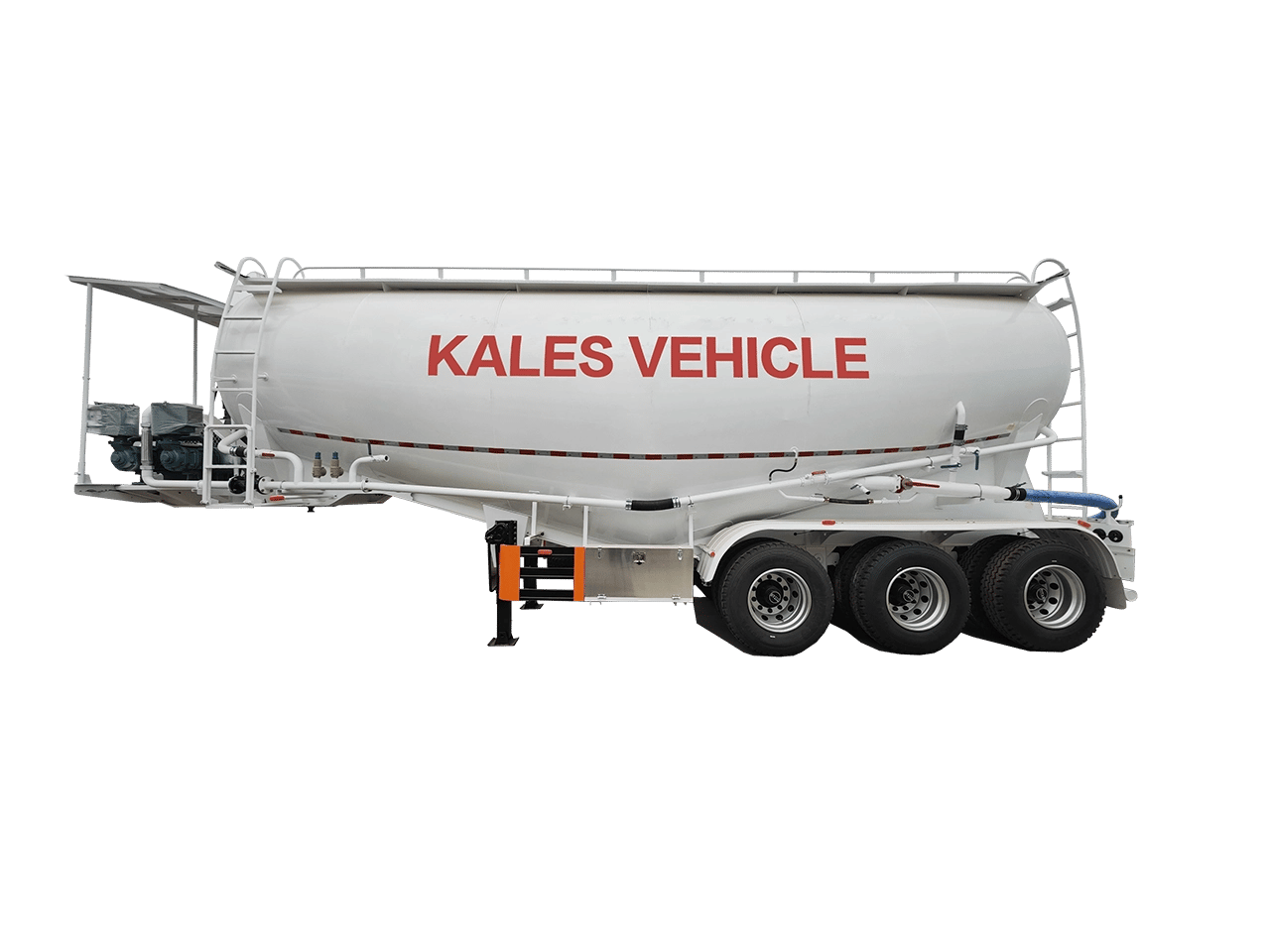
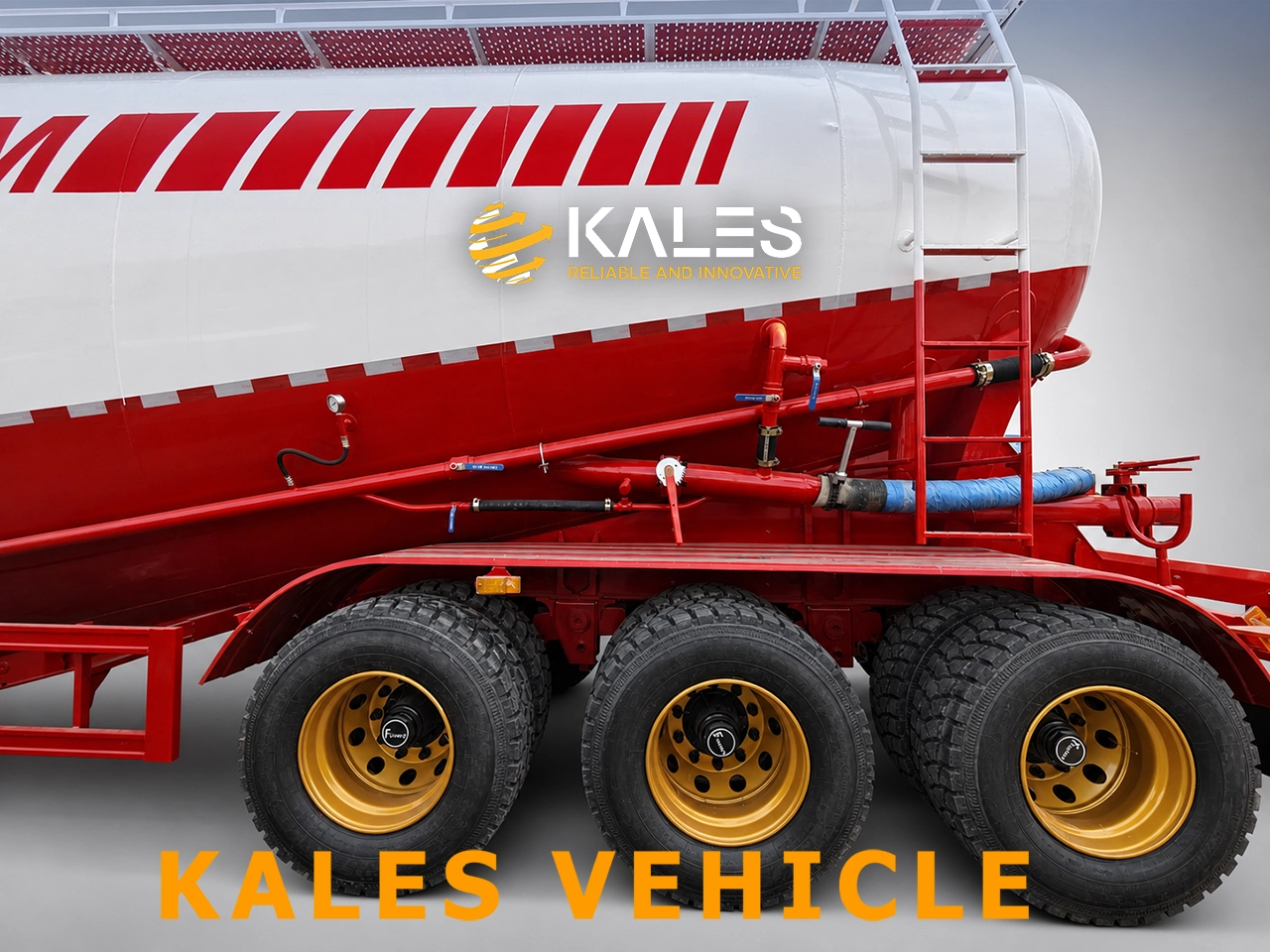
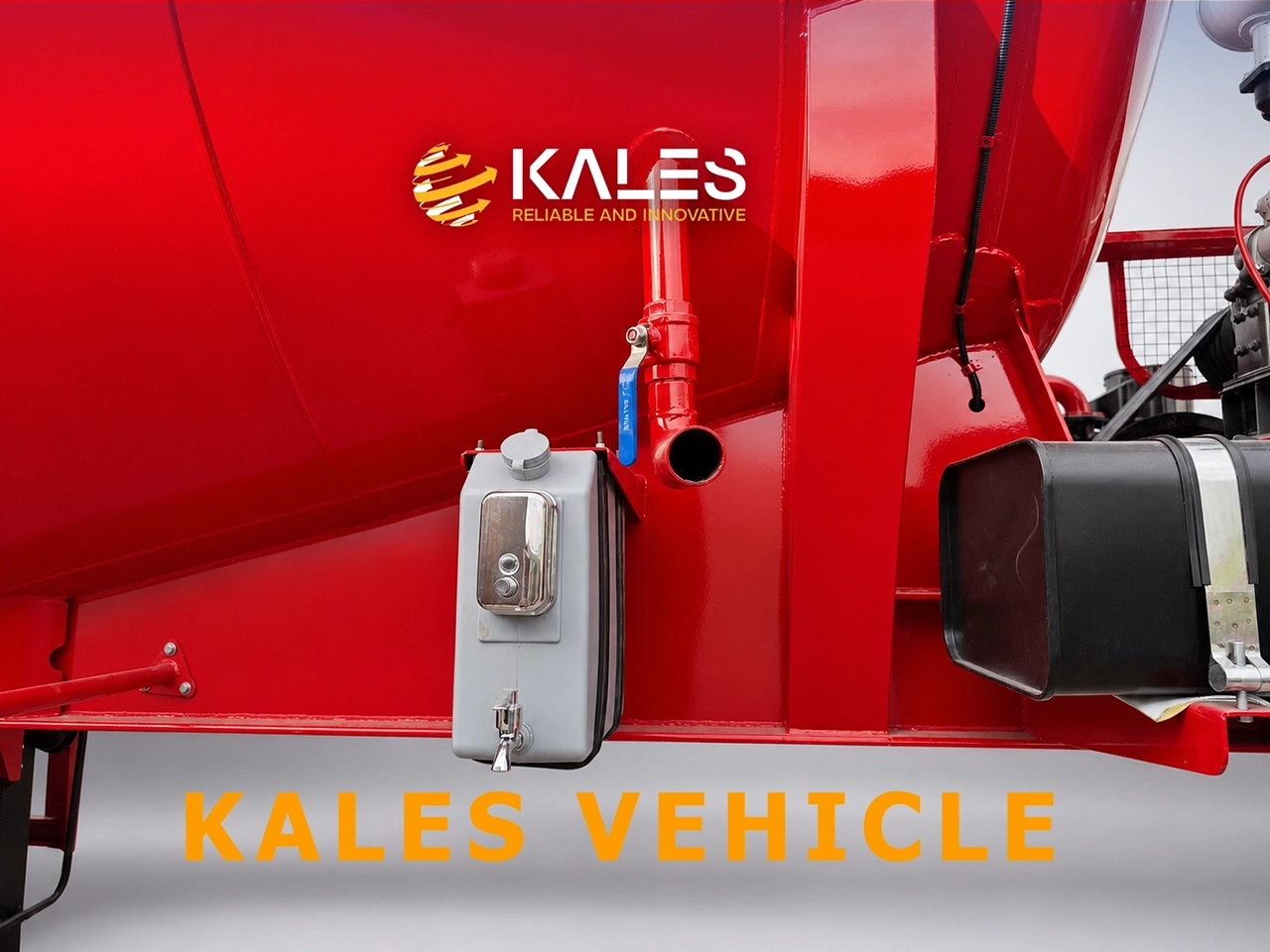
The Kales 35m³ cement tanker uses a pressure tank, internal fluidisation bed, intake piping, safety controls, discharge piping, and an onboard compressor. Compressed air passes through the fluidisation material and suspends the cement particles so pressure can move the powder towards the outlet. The related bulk powder tanker operation and maintenance guide explains loading, pressure control, discharge, depressurisation, cleaning, and inspection in more detail.
The stated 1.2-1.8 tonnes/min discharge rate and ≤0.3% residual are engineering reference values, not unconditional guarantees. Cement moisture, particle size, ambient temperature, air-slide condition, hose length and lift, system pressure, receiving-silo back pressure, and operator sequence all affect actual performance.
| Dimension | Scheme 1 | Scheme 2 |
|---|---|---|
| Tank length including end plates | 8,200 mm | 8,080 mm |
| Maximum tank width | 2,500 mm | 2,550 mm |
| Maximum cross-section height | 3,050 mm | 3,170 mm |
| Buyer selection basis | Narrower envelope and route-clearance preference | Wider section where national width and registration rules permit |
Kales confirms tank section, overall height, axle layout, and tractor coupling geometry together. A longer 12,500 mm platform can improve longitudinal load distribution and directional tracking, but length alone does not lower the centre of gravity; rollover resistance also depends on tank cross-section, loaded centre height, suspension, tyre behaviour, speed, steering input, and crosswind.
A trailer should only be described as suitable for -40°C after the minimum design temperature is tied to verified material and component data. For the tank and structural parts, the technical agreement should identify the exact Q355 grade, low-temperature impact requirement, heat numbers, and mill certificates. Welding procedures, consumables, and inspection records must match that material selection.
The standard independent unloading package combines a Huafeng 4105 or Weichai diesel engine with a 12m³/min Suzhou or Fuda twin-cylinder compressor. Weichai is widely used across Central Asian heavy-vehicle fleets, which can simplify access to routine filters and service knowledge; the buyer should still verify the exact model’s local parts coverage.
If every receiving site has a verified stationary air source, Kales can quote a no-compressor configuration. Removing the front power package can shorten the trailer to approximately 8,400 mm and reduce curb weight, but the external source’s pressure, flow, air quality, coupling, hose route, and operating responsibility must be approved before the order is frozen.
| System | Available configuration | CIS buyer check |
|---|---|---|
| Braking | Aluminium air tanks, dual brake chambers, emergency relay valve, Ruili/Kormee ABS; WABCO ABS/EBS and air dryer upgrade | Confirm cold-temperature rating, EAEU documentation, diagnostics access, and local service support. |
| Axles | FUWA, Kales, BPW, or SAF; front lift axle optional | Match legal axle loads, empty-running strategy, bearing/brake parts availability, and workshop capability. |
| Suspension | Mechanical leaf spring or air suspension | Mechanical suspension favours rugged sites and simple repair; air suspension favours highway ride and weld-load protection. Compare both in the leaf spring vs air suspension guide. |
| Landing gear | FUWA, Kales, or JOST | Confirm parked load, shoe type, low-temperature grease, and fleet standardisation. See the semi-trailer landing gear selection guide. |
| Tyres | Dual tyres or super singles with route-matched size and load index | Review cold inflation pressure, casing supply, spare strategy, rolling resistance, and legal rating using the semi-trailer tyre and wheel guide. |
| King pin | 50 mm or 90 mm | Confirm fifth-wheel size, coupling height, imposed load, and tractor compatibility; compare the Kales 50 mm and 90 mm king pin options. |
For an EAEU-market vehicle, the applicable approval path should be confirmed before production with the buyer’s accredited certification body and customs broker. Kales can design the agreed configuration with reference to applicable requirements of TR CU 018/2011 and provide factory conformity documents, technical specifications, drawings, component information, and VIN data for the ОТТС and ЭПТС workflow.
ОТТС issuance is controlled by the authorised conformity-assessment process, not by the manufacturer alone. The importing party remains responsible for confirming national registration, customs, recycling-fee, dimensional, mass, lighting, braking, and electronic-passport requirements. The signed technical agreement and pro forma invoice should list every certification-sensitive component before production starts.
Share your target market, usage scenario, and preferred configuration.
Receive our model recommendation, specification review, and factory quotation.
Confirm production, inspection, shipment route, and export documents.
Stay supported after delivery with spare parts and remote assistance.
At Kales Vehicle, we keep freight planning practical so your trailer or truck reaches the destination with the right balance of protection, speed, and cost.
Container Shipping, Ro-Ro (Roll-on/Roll-off), and Bulk Cargo each serve different export needs, and we choose the safest route, loading method, and packing approach for the order.
Container loading of Kales semi trailer for export, ensuring secure fastening and space optimization.
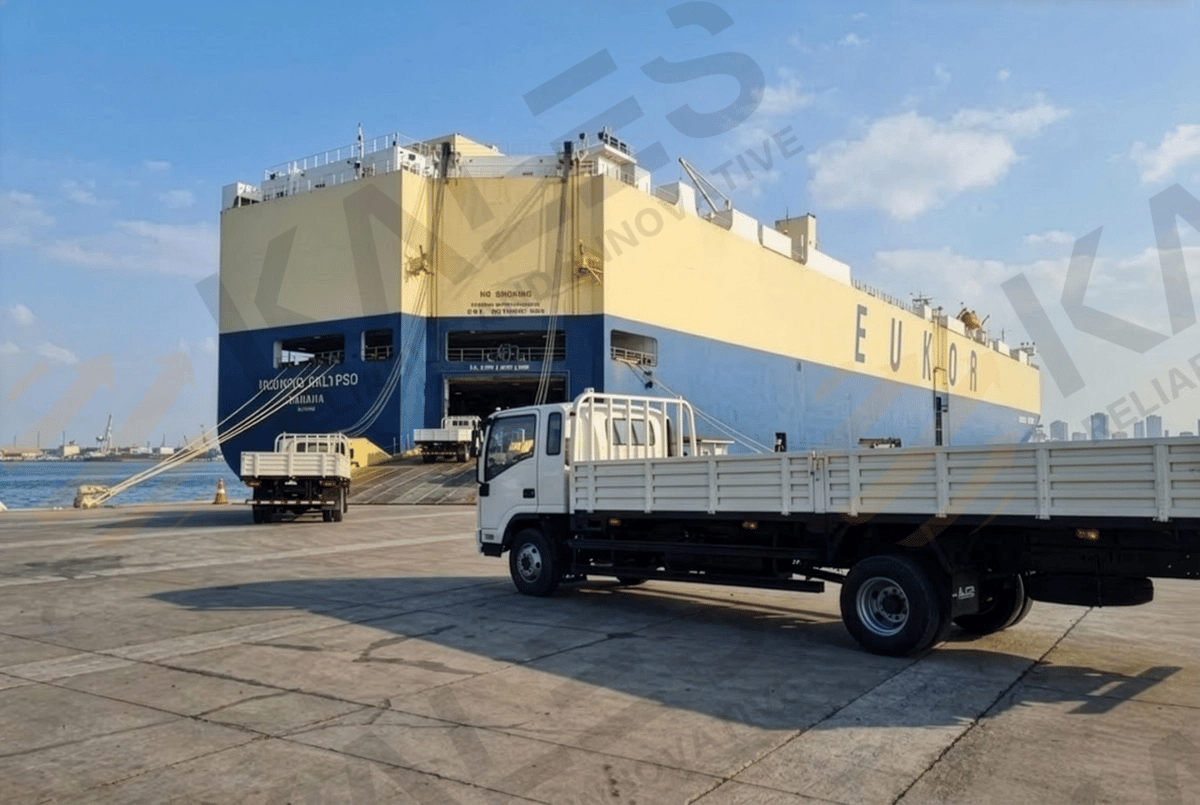
Ro-Ro shipping method for Kales commercial trailers, driving directly onto the vessel for maximum safety.
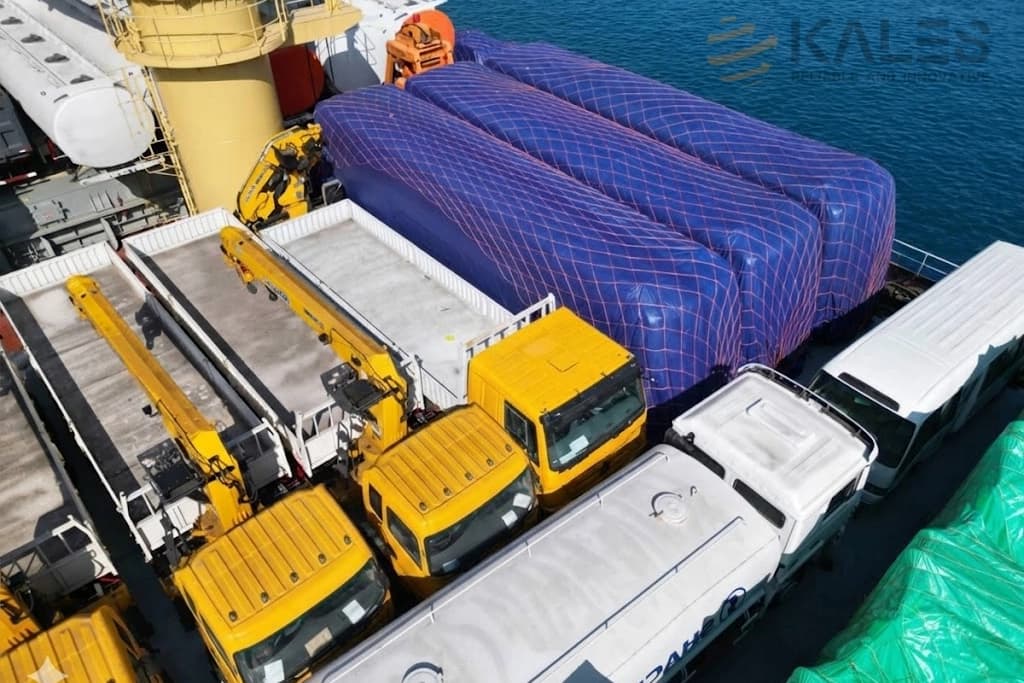
Bulk cargo transport of stacked Kales semi trailers with wax spraying protection against seawater corrosion.
Send your destination country and city, cargo density, target payload, minimum operating temperature, tractor model and fifth-wheel height, preferred axle and suspension, unloading-site air-source details, order quantity, and requested delivery term. The Kales Central Asia team will prepare a USD or RMB quotation, technical configuration, and document-scope checklist.
Actual delivery is governed by the technical agreement and commercial contract confirmed by both parties. Manufacturing tolerances and optional-component positions may vary. Registration, certification, customs, and route legality remain subject to the destination authority’s requirements.
Factory engineering notes, maintenance protocols, and buyer checklists related to this equipment.
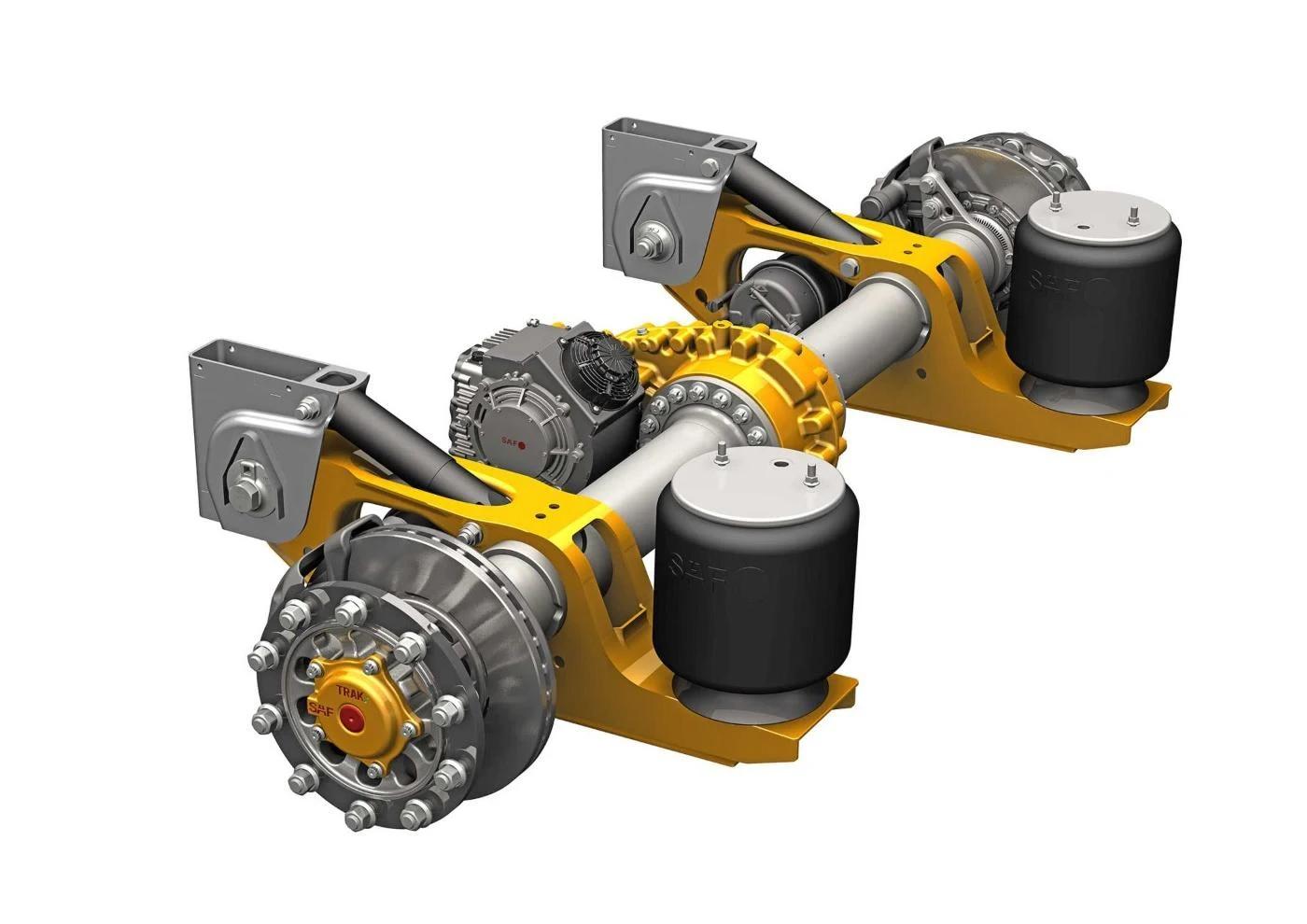
The semi-trailer axle is the critical load-bearing backbone connecting the wheels, braking system, and suspension. Beyon…
Mobilizing oversized industrial machinery—including hydraulic excavators, crawler bulldozers, rotary drilling rigs, crus…
In African open-pit mining, quarrying, and bulk mineral haulage—from the gold corridors of Geita and Kahama in Tanzania…
Kales 35m³ Bulk Cement Tanker Trailer for CIS & Central Asia
Factory Direct · Free Quote