

How to Choose the Right Semi-Trailer for Cross-Border Road Freight: Dimensions, Payloads & Spec Guide
 Reviewed by Jason
Lead Engineer, Kales Vehicle
Quick Summary: Specifying Trailers for Cross-Border Corridors
- Standard 13.6m Curtainsider (~82–86 CBM usable): Fits 33 EUR-pallets (1200 × 800 mm) at 0.4 LDM each; best all-around option for mixed palletized industrial freight under 40t GVW rules.
- High-Cube & Mega Curtainsiders (90–100+ CBM): Gain 2.75m–3.00m interior height via low-profile tires and low-neck chassis geometry without increasing legal payload above standard curtainsiders—and require matching low fifth-wheel tractors (~950–1,050 mm).
- Eurasian 17.5m / 120 CBM & Road Trains: Built for low-density, high-volume corridors across Central Asia and CIS; check corridor length caps (e.g., 15.65m EU road-train loading length vs. 17.5m Eurasian semi-trailer permits) before ordering.
- Reefers vs. Reefer Skeletons: European Directive 96/53/EC allows 2.60m exterior width for insulated bodies (~2.46m interior width); fleets running 40ft ISO reefer containers intermodally can pair a lightweight refrigerated skeleton chassis instead of a dedicated box reefer.
- Lowbed & RGN Heavy-Haul Trailers: Separate 40–80t structural design ratings from public-road axle limits; heavy machinery crossing borders requires route surveys, bridge-load checks, and abnormal-load permits.
1. The 6 Core Semi-Trailer Configurations in Cross-Border Road Freight
1.1 Standard 13.6m Curtainsider (Tautliner): ~82–86 CBM Usable
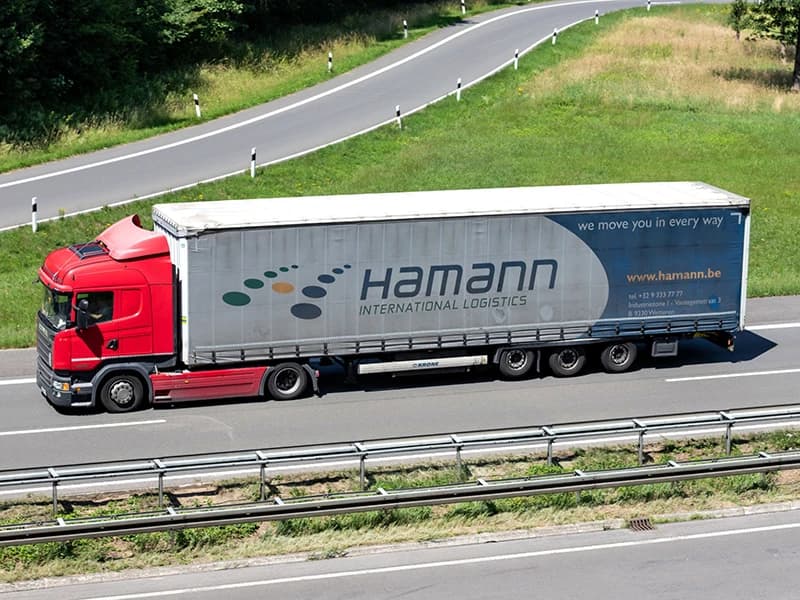
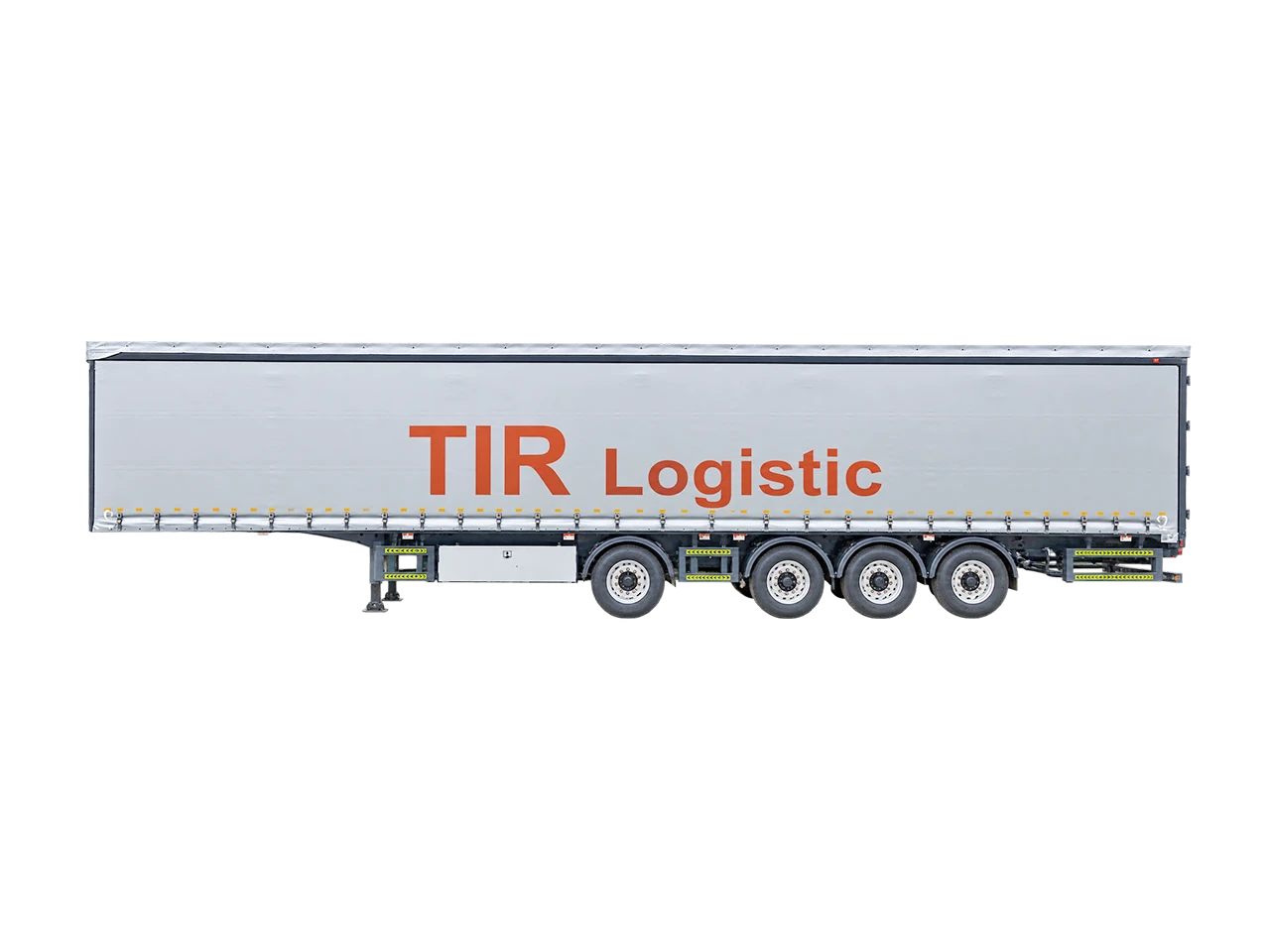
The 13.6m (or 13.75m export) three-axle curtainsider is the baseline workhorse for general palletized trade across Europe and China–Central Asia hubs. With an external width of 2.55m, standard European curtainsiders provide roughly 2.48m of clear interior width (2.45m minimum between side posts and rub rails) and 2.60m interior height—yielding 87.7 m³ geometrically and ~82–86 CBM of practical usable cargo space once pallet bases and loading clearances are factored in.
- Reference Internal Dimensions: 13.60m (L) × 2.45–2.48m (W) × 2.60m (H)
- Legal Payload Band (40t GVW): ~22–24 metric tons with a standard 4×2 European highway tractor (~14–15t combined tare), or ~20–22 metric tons when coupled to heavier 6×4 cross-border tractors used on Central Asian routes.
- Pallet Capacity: 33 EUR-pallets (1200 × 800 mm) or 26 Industrial/UK pallets (1200 × 1000 mm) on a single floor tier.
- Fleet Procurement Fit: Ideal for hardware, machinery components, FMCG, building materials, and boxed cargo that requires fast dual-side forklift loading or overhead crane access through a sliding roof. When specifying for export corridors, verify a 900 gsm waterproof PVC curtain with continuous steel-core TIR customs sealing cable and a 28 mm composite timber or checkered steel floor rated for forklift axle loads, as on the Kales 13M Curtainsider Semi-Trailer.
1.2 High-Cube Curtainsider: ~90–92 CBM
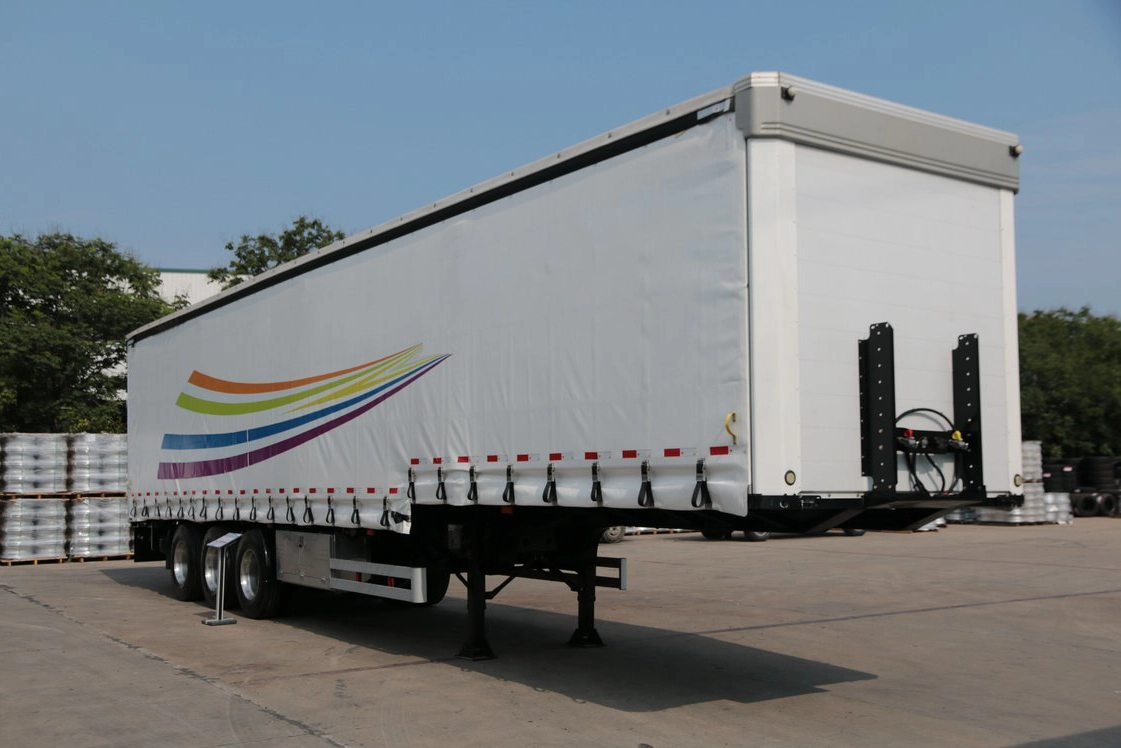
When your customers haul light, tall pallet stacks between 2.55m and 2.70m high, a standard 2.60m internal height forces shippers to leave upper layers behind or break down tall pallets. A high-cube curtainsider raises internal clearance to 2.70m–2.75m (up to 2.80m on low-profile tires) while keeping the same 13.60m floor footprint.
- Reference Internal Dimensions: 13.60m (L) × 2.45–2.48m (W) × 2.75m (H) (~92.7 m³ geometric; ~90 CBM usable)
- Legal Payload Band (40t GVW): ~22–24 metric tons (essentially identical to a standard curtainsider; taller posts add slight tare weight).
- Pallet Capacity: 33 EUR-pallets with extra vertical stacking headroom.
- Fleet Procurement Fit: Furniture, home textiles, apparel, retail display units, and tall industrial cartons. Check overall combination height (≤ 4.00m in most EU and CIS jurisdictions) against your tractor’s fifth-wheel height before locking 2.75m+ internal clearance.
1.3 Mega / Jumbo Semi-Trailer: ~100 CBM
Mega trailers deliver a full 3.00m of interior height inside the standard 4.00m overall road height envelope by pairing a thinner gooseneck/chassis neck with smaller-diameter low-profile tires (such as 385/55R22.5 or 435/50R19.5). Note the geometry: 13.60m × 2.48m × 3.00m equals 101.2 m³ (~100 CBM nominal; figures around 105 CBM require extended body length or 3.10m clearance).
- Reference Internal Dimensions: 13.60m (L) × 2.48m (W) × 3.00m (H)
- Legal Payload Band (40t GVW): ~21–23 metric tons (never higher than a standard curtainsider under the same GVW limit, because reinforced low-neck steel and lifting roof gear slightly increase trailer tare).
- Pallet Capacity: 33 EUR-pallets on the floor (34 only with tight mixed-orientation loading at near-zero clearance), or up to 66 EUR-pallets when cargo is double-stacked below 1.45m per tier.
- Engineering & Dock Warning: A Mega trailer deck sits roughly 0.95m–1.05m off the ground compared with 1.20m–1.30m on a standard trailer. Confirm that warehouse dock levelers can bridge that drop and that your fleet runs low-fifth-wheel 4×2 tractors (~950–1,050 mm); coupling a Mega trailer to a standard 1,250 mm 6×4 tractor tilts the front end upward and breaches 4.00m bridge height limits.
1.4 High-Volume 17.5m Curtainsider & Road Train Combinations: ~115–120 CBM
Operators moving ultra-light e-commerce parcels, appliances, and flat-pack furniture across long Eurasian trunk lines frequently need more floor length than a 13.60m box provides. Two distinct vehicle architectures serve this segment depending on regional road law:
- European Road Train (Rigid + Drawbar Trailer): Under EU Directive 96/53/EC, overall combination length is capped at 18.75m with a maximum combined cargo loading length of 15.65m (commonly 7.7m + 7.7m = 15.4m or 7.82m + 7.82m = 15.64m). At 2.48m width and 2.90m–3.00m height, usable volume reaches ~110–116 CBM (38 single-tier EUR-pallets). Net payload stays around ~20–22 tons in 40t GVW countries due to the second chassis tare, rising to 24–28 tons only in corridors permitting 44+ tons GVW.
- Eurasian 17.5m / 120m³ Semi-Trailer: On China–Central Asia–Russia corridors (via Khorgos, Alashankou, or Irkeshtam), specialized single-unit 17.5m high-cube semi-trailers—such as the Kales 120m³ 4-Axle 17.5m Curtain-Side Semi-Trailer (up to 38 EUR-pallets, 40-ton distributed structural rating, center-mounted mid-bogie, front two lift axles for empty backhauls, and Q355 steel rated to -40°C)—deliver 120 CBM without drawbar articulation complexity. Always verify exact national length allowances along your planned transit route before ordering 17.5m units.
1.5 Refrigerated Trailers (Reefers) & Reefer Container Chassis: ~82–90 CBM
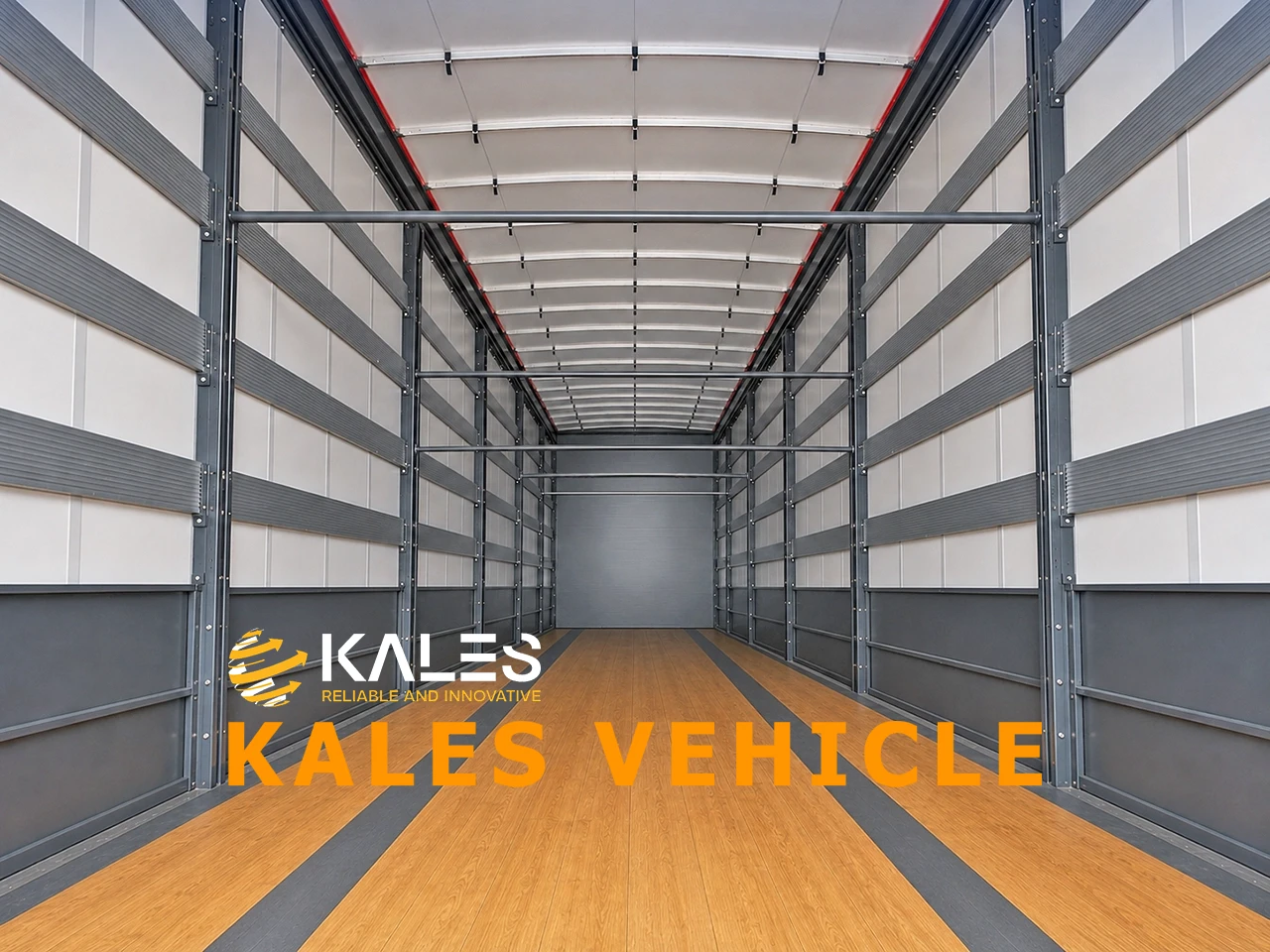
Cold-chain trailers rely on closed-cell polyurethane insulation certified under the UNECE ATP Agreement, continuous floor T-channels for return airflow, and calibrated multi-point temperature recording. Because EU Directive 96/53/EC permits insulated vehicles an exterior width of 2.60m (instead of the standard 2.55m), thick 60–65 mm foam walls still leave roughly 2.46m of internal width—slightly narrower than a standard 2.48m curtainsider, alongside a slightly shorter ~13.35m interior length due to the front evaporator unit and rear insulated doors.
- Reference Internal Dimensions: 13.35m (L) × 2.46m (W) × 2.50m–2.70m (H) (~82 CBM standard; ~89–90 CBM high-cube, typically engineered on low-profile chassis/tires to remain within 4.00m exterior height).
- Operating Range & Cargo: -25°C to +25°C (including dual-evaporator multi-temp bulkheads) for frozen meat, seafood, fresh produce, GDP-compliant pharmaceuticals, and sensitive electronics.
- Three Cold-Chain Execution Rules: Always pre-cool the insulated box to setpoint before loading (reefer units maintain cargo temperature rather than blast-chilling warm freight); seal dock shelters tightly and log door-open intervals; and verify valid ATP inspection plates, health certificates, certificates of origin, and CMR/TIR paperwork before dispatch.
- Intermodal Alternative: Fleets moving 40ft high-cube ISO reefer containers between rail/maritime ports and inland corridors often avoid dedicated insulated box trailers and instead specify a lightweight 40ft Refrigerated Skeleton Trailer with lift axles and disc brakes.
1.6 Lowbed / Low-Loader & RGN Heavy-Haul Trailers: 40–80+ Tons Design Rating
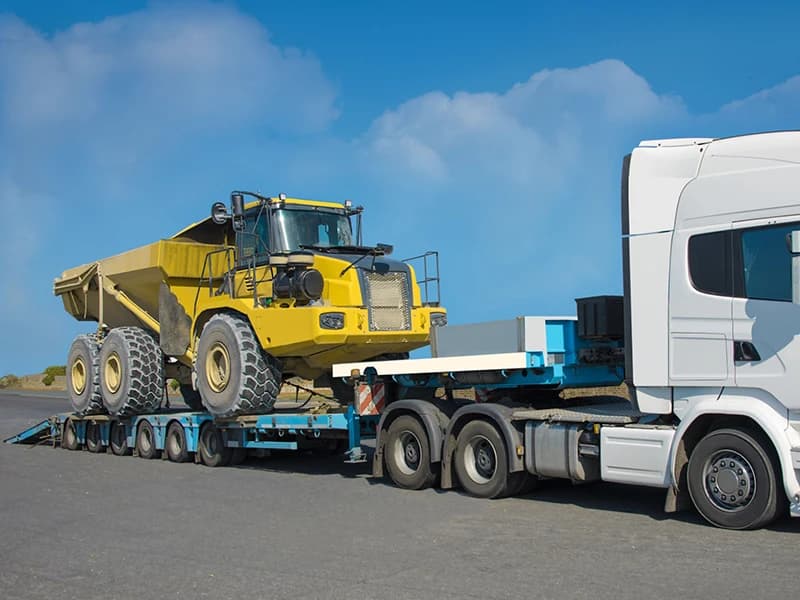
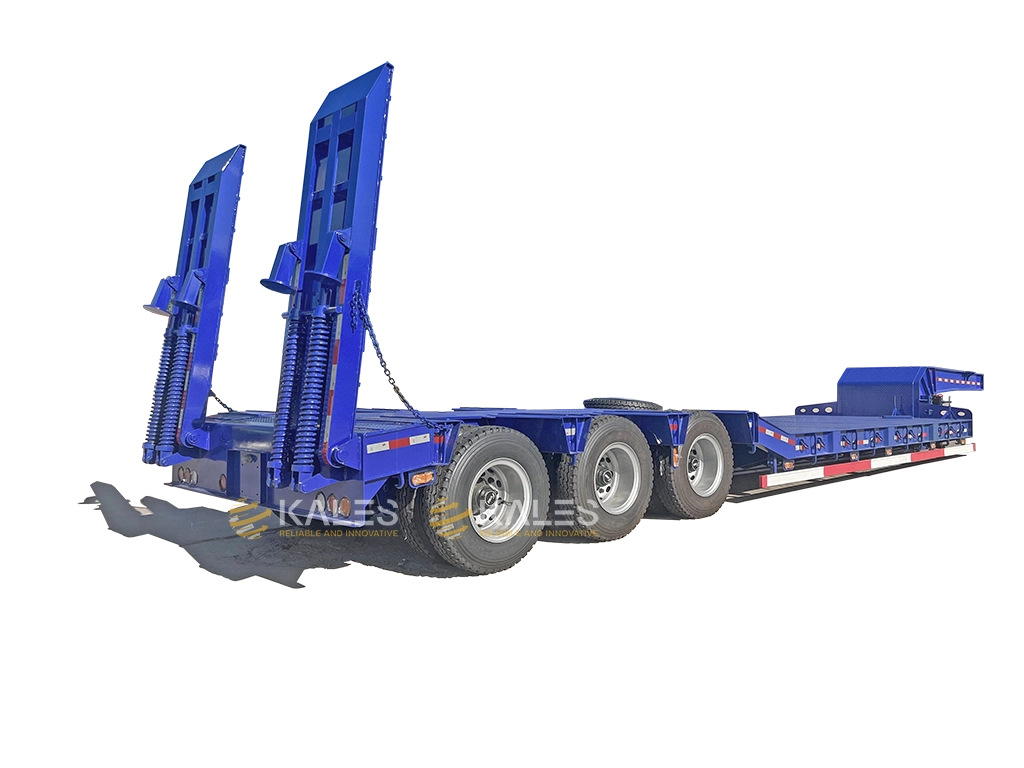
When excavators, transformers, tunnel-boring parts, or structural steel exceed 2.48m width or 24 tons single-piece weight, enclosed curtainsiders are structurally unusable. You need a dedicated lowbed or removable-gooseneck (RGN) trailer.
- Working Well Dimensions: Typically 9.00m–10.00m well length (extendable on telescopic models such as the Kales 5-Axle Extendable Lowbed Trailer), 2.50m–3.00m base width (expandable via swing-out outriggers), and 0.80m–0.90m deck height (~0.50m–0.65m on drop-well/vessel beds).
- Structural Capacity vs. Legal Road Limits: Standard 3-axle to 5-axle export lowbeds carry 40 to 80 metric tons of structural design payload (for example, the Kales 50 Ton Lowbed Trailer or 8-Axle Detachable Gooseneck Lowboy), whereas extreme 100–400+ ton industrial moves require multi-axle hydraulic modular platforms such as the Kales 16-Axle Hydraulic Modular Trailer. On public cross-border highways, any combination exceeding 40–44 tons GVW requires abnormal-load permits, route surveys (bridge load ratings, overhead lines, turning radii), and escort pilot cars in every transit country.
2. Quick Specification Comparison: 6 Cross-Border Semi-Trailer Types
| Trailer Configuration | Reference Internal Size (L × W × H) | Usable Volume | Typical Net Payload | EUR-Pallets (1.2 × 0.8m) | Loading Access | Primary Cargo Fit |
|---|---|---|---|---|---|---|
| Standard Curtainsider | 13.60 × 2.45–2.48 × 2.60m | ~82–86 CBM | 20–24 t (40t GVW)* | 33 (single tier) | Rear / Dual Sides / Sliding Roof | General palletized cargo, hardware, machinery parts |
| High-Cube Curtainsider | 13.60 × 2.45–2.48 × 2.75m | ~90–92 CBM | 20–24 t (40t GVW)* | 33 (tall stacks) | Rear / Dual Sides / Sliding Roof | Furniture, apparel, tall boxed consumer goods |
| Mega / Jumbo Trailer | 13.60 × 2.48 × 3.00m | ~100 CBM | 21–23 t (40t GVW)* | 33 (up to 66 double-stacked) | Rear / Dual Sides / Lift Roof | Low-density freight, mattresses, auto body panels |
| Road Train / 17.5m High-Cube | 15.4–15.65m combo or 17.5m Eurasian semi | ~112–120 CBM | 20–28 t (corridor-dependent)** | 38–40 (single tier) | Rear / Dual Sides | High-volume e-commerce, appliances, light supply chains |
| Refrigerated (Reefer) | 13.35 × 2.46 × 2.50–2.70m | ~82–90 CBM | 20–22 t (40t GVW) | 33 | Rear (sealed dock) | Frozen food, produce, GDP pharma, sensitive chemicals |
| Lowbed / RGN Trailer | Well 9–10 × 2.50–3.00m | Open deck | 40–80 t design (permits required) | Non-palletized heavy cargo | Rear ramps / Front RGN / Crane | Excavators, transformers, out-of-gauge machinery |
*Under a 40t GVW cap, net payload depends heavily on tractor configuration (4×2 highway vs. heavier 6×4 Eurasian tractors) and steel vs. aluminum trailer spec. **Road trains carry ~20–22t net under 40t GVW and 24–28t only where 44+ tons GVW is permitted; Eurasian 17.5m 4-axle curtainsiders offer up to 40t structural rating where national axle limits allow.
3. Fleet Math: Volumetric Ratios & Loading Meters (LDM)
Fleet buyers who evaluate trailer ROI using ocean (1 CBM = 1,000 kg) or air (1 CBM = 167 kg) conversion rules often mis-spec their trailers. Cross-border road transport operates on its own volumetric density baseline.
3.1 Road Freight Chargeable Ratio & Why Internal Height Matters
Across European and Eurasian road freight, the standard volumetric conversion is 1 CBM = 333 kg (or 1 LDM = 1,750–1,850 kg). That means a 13.6m trailer only “weights out” before “cubing out” once cargo density exceeds roughly 260–280 kg/CBM.
Capacity Calculation Example: Consider a fleet contracted to haul 11 metric tons of upholstered furniture packed to 92 CBM (density ~120 kg/CBM) in 2.65m-tall stacks:
- On an 82–86 CBM Standard Curtainsider (2.60m height): After subtracting ~14.4 cm for standard EPAL wooden pallet deck height and top loading clearance, a 2.60m interior height cannot fit 2.65m stacks safely without re-palletizing. Even if broken down, usable volume tops out around 75–78 CBM, leaving 14–17 CBM on the dock for a second dispatch or overflow LTL consolidation.
- On a 100 CBM Mega or 90+ CBM High-Cube Curtainsider: At 11 metric tons, the load sits comfortably below half the legal 22t payload ceiling, and all 92 CBM fits inside a single trailer dispatch—eliminating split-load customs declarations and duplicate tractor linehaul costs.
3.2 How to Calculate Loading Meters (LDM)
Loading Meters (LDM) measure the linear floor length a cargo lot occupies inside a standard 2.45–2.48m wide trailer:
- Full 13.6m Curtainsider = 13.6 LDM
- 1 EUR-Pallet (1.2m × 0.8m) = 0.4 LDM: Placing three 0.8m sides across the 2.48m width (3 × 0.8m = 2.40m) occupies 1.2m of trailer length (1.2 ÷ 3 = 0.4 LDM). Eleven rows yield 33 EUR-pallets (13.20m length, over 95% floor utilization).
- 1 Industrial / UK Pallet (1.2m × 1.0m) = 0.5 LDM (optimal orientation): Placing two 1.2m lengths across the 2.48m trailer width (2 × 1.2m = 2.40m) occupies 1.0m of trailer length (1.0 ÷ 2 = 0.5 LDM), fitting 13 rows (26 pallets). If two 1.0m sides are placed across the width instead (2 × 1.0m = 2.00m), each pair consumes 1.2m of trailer length (1.2 ÷ 2 = 0.6 LDM), dropping total floor capacity to just 22 pallets.
Fleet Dispatch Benchmark: Once non-stackable shipments reach 9 to 10 LDM (~23–25 EUR-pallets), operating a dedicated FTL curtainsider generally avoids hub cross-docking damage and beats consolidated LTL rates.
4. Four Engineering Checks Before Finalizing a Cross-Border Trailer Order
- Usable Cube vs. Geometric Box Volume: Always subtract ~15 cm of vertical height for wooden pallet decks and forklift roof clearance (~5–8% total volume). If routine loads exceed 76 CBM, specify a 90+ CBM high-cube curtainsider rather than an 82 CBM standard body.
- Kingpin-to-Bogie Axle Load Distribution: Even when total freight is 20 tons, concentrating heavy machinery at the front bulkhead overloads the tractor drive axle. Specify center-mounted bogie positions or multiple tie-down points (34+ recessed lashing rings) and train drivers on centered loading to avoid weighbridge fines.
- Border Transshipment vs. Direct TIR Transit Compatibility: At China–Central Asia land ports (Khorgos, Alashankou, Irkeshtam, or Manzhouli), freight either cross-docks at bonded terminals or runs through under TIR Carnet customs sealing. If you operate direct TIR through-transit, verify tamper-proof continuous steel TIR cables, intact curtain eyelets, and cold-resistant -40°C PVC curtains; if your clients cross-dock into foreign trailers, ensure matched deck capacity on the connecting leg.
- Tractor Coupling, Braking & Unloading Hardware: Confirm fifth-wheel height compatibility (especially for low-deck Mega trailers), WABCO EBS/ABS with Roll Stability Support (RSS) for icy mountain grades, ADR compliance if hauling regulated chemicals, or 1.5–2.0 ton tail-lifts for urban retail drops without loading docks.
Frequently Asked Questions
Why do European and Eurasian fleets standardize on EUR-pallets (1200 × 800 mm)?
A 2.45–2.48m internal curtainsider width fits three 800 mm-wide EUR-pallets side-by-side (2,400 mm, leaving 50–80 mm for forklift maneuvering). Eleven rows fit 33 pallets cleanly inside 13.20m. Switching to 1200 × 1000 mm pallets limits capacity to 26 pallets (1.2m side across) or 22 pallets (1.0m side across), leaving valuable floor area underutilized.
Does a Mega curtainsider carry more legal weight than a standard curtainsider?
No. Under a 40-ton GVW highway limit, a 100 CBM Mega trailer typically has roughly the same—or slightly lower (~21–23t)—net payload than a standard 13.6m curtainsider (~22–24t) because reinforced low-neck chassis sections and roof-lifting hardware add tare weight. Choose a Mega trailer strictly for cubic volume and 3.00m internal height, not heavier freight.
Can thermal blankets inside a curtainsider replace an ATP-certified reefer trailer?
No. A curtainsider uses a single layer of 900 gsm PVC tarpaulin without closed-cell foam insulation or active cooling. Across wide temperature swings—such as Central Asian summer heat or winter steppe crossings—cargo temperatures drift rapidly within hours. Temperature-controlled food, pharmaceuticals, and electronics require an ATP-certified reefer trailer or an insulated ISO reefer container on a skeletal chassis.
What tractor fifth-wheel height is required for a Mega vs. a standard curtainsider?
Standard 13.6m export curtainsiders typically pair with 1,150–1,250 mm fifth-wheel heights (4×2 or 6×4 tractors). A 3.00m-internal-height Mega trailer requires a low-deck tractor (~950–1,050 mm fifth-wheel height) to keep overall roof height at or below the 4.00m legal ceiling.
Technical & Regulatory Reference Points
- EU Council Directive 96/53/EC (and amendments): Maximum authorized dimensions and weights in national and international road transport (40t 5-axle GVW baseline, 4.00m height, 2.55m standard width, 2.60m insulated/reefer superstructure width, 18.75m road-train length / 15.65m max loading length).
- UNECE ATP Agreement: International carriage of perishable foodstuffs and special equipment standards for insulated and mechanically refrigerated trailer bodies.
- UNECE TIR Convention (1975) / IRU: Customs sealing specifications for tarpaulin/curtain-side load compartments, continuous TIR cables, and secure eyelet spacing.
- EPAL / UIC 435-2 & ISO 6780: Standard EUR 1 (1200 × 800 × 144 mm) and Industrial (1200 × 1000 mm) pallet geometry used in LDM floor calculations.
- EAEU TR CU 018/2011 & Kales Engineering Data: Vehicle safety approval framework for Russia, Kazakhstan, Belarus, and Kyrgyzstan, alongside Kales factory CAD tolerances for 13m and 17.5m curtainsiders and 50–150t lowbed platforms.
Final Specification Recommendation
Lock your cross-border semi-trailer architecture around real freight density, pallet height, and corridor road laws before comparing factory prices. Standard 13.6m curtainsiders cover balanced 20–24t palletized freight; high-cube, Mega, and 17.5m Eurasian curtainsiders unlock volumetric efficiency without raising legal weight ceilings; ATP reefers or refrigerated container chassis protect temperature-sensitive cargo; and lowbed/RGN platforms handle over-dimensional machinery under proper route permits. Getting the dimensions, kingpin height, and axle spacing right at the CAD stage eliminates dock bottlenecks and border fines across the entire service life of your fleet.
Configure Your Cross-Border Semi-Trailer with KALES Engineering
Planning a fleet order for China–Central Asia, Eurasian TIR corridors, Africa, or Latin America? Share four operating details with our export engineering team—cargo type and average density (CBM vs. tons), target corridor and national axle limits, tractor fifth-wheel height, and preferred loading access—and we will prepare a custom CAD layout, axle-load distribution check, and factory-direct FOB/CIF/DAP trailer quotation within 24 hours.