

From GB to ASTM Standards: Building a Defense Line for Safety, Cost-Reduction, and Compliance
Based on the latest GB/T 1591-2018 standards and real-world failure analysis, this guide provides a complete technical framework for international fleet managers to procure high-quality semi-trailers from China.
📖 Technical Index
- 1. Industry Evolution: High-Tensile Steel
- 2. Steel Selection Radar: Key KPIs
- 3. Risk Mitigation: 5 Major Failures
- 4. Aluminum & Stainless Steel Specs
- 5. Non-Metal: Flooring & Composites
- 6. Joints: Welding, Huck Bolts & Sealants
- 7. Global Standards (GB/ASTM/EN)
- 8. ROI Analysis: Total Cost of Ownership
I. Introduction: Material Breakthroughs in Manufacturing
Selecting the right semi-trailer is a system engineering challenge that combines mechanics, metallurgy, and economics. The manufacturing sector is undergoing a profound transformation:
- Steel Upgrades: A complete transition from older Q345 to Q355 High-Strength Low-Alloy (HSLA) steel; Q700 (700MPa) is standard for lightweighting, while BST1500 dominates the wear-resistant sector.
- Material Diversification: Aluminum alloy extends beyond tankers to fuel and food-grade transport; Stainless steel expands to corrosive solid transport.
- Globalization: Designs are now strictly benchmarked against ASTM (USA) and EN (Europe) standards for export compliance.
II. Core Material Systems: The Chassis Foundation
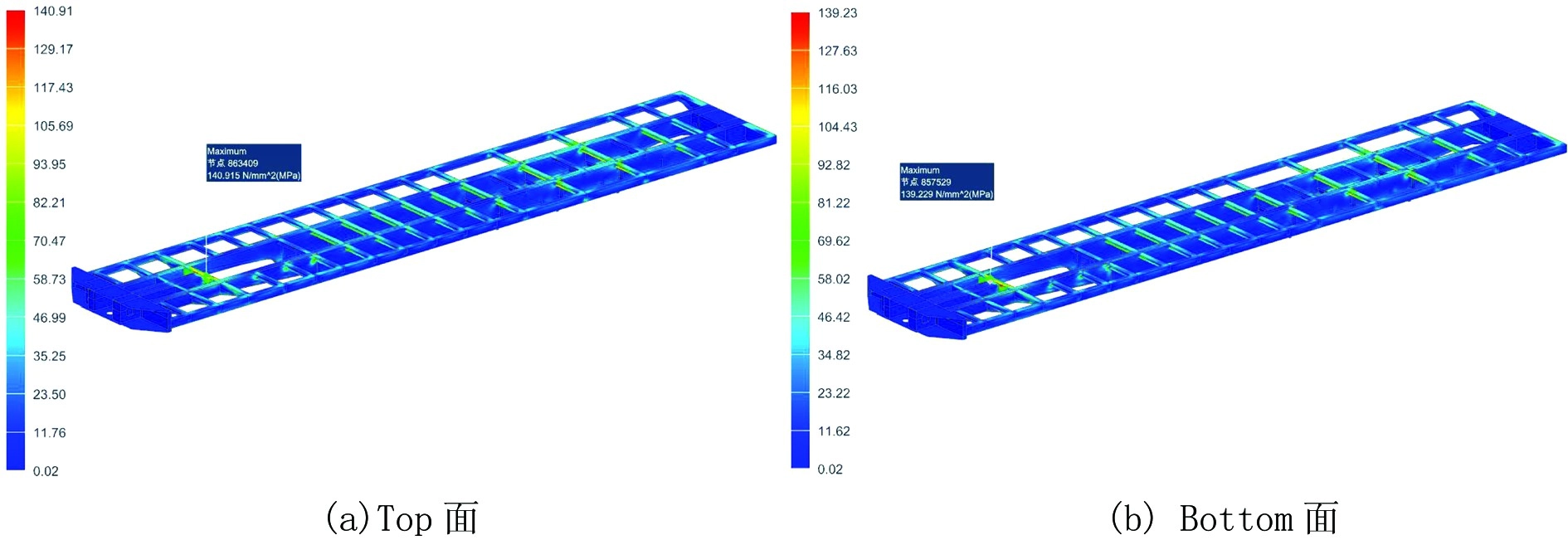
Diagram of Semi-Trailer Chassis Structure (Finite Element Analysis Stress Map)
1. Steel: The Backbone of Your Trailer
| Category | Grade | Application & Notes |
|---|---|---|
| Mild Carbon Steel | Q235B (ASTM A36) | Toolboxes, Mudguards. Lowest cost, strictly prohibited for main load-bearing structures. |
| HSLA Steel | Q355B/C/D/E | Main Beams, Cross Members. The industry standard, replacing Q345. Equivalent to S355JR or A572 Gr.50. |
| High-Tensile Steel | Q700L/E (T700) | Lightweight Main Beams (15-30% weight reduction). Superior tensile strength. |
| Wear-Resistant Steel | BST1500 / NM450 | Dump Trailer floors. Hardox equivalent. BST1500 offers ≥1500MPa tensile strength. |
III. Key Technical Indicators for Steel Selection
The Selection Mantra: “L for Forming, X for Welding; E for Cold Climates, Preheat for 1500.”
| Grade | Yield Strength | Carbon Equiv. (CEV) | Impact Energy (-40℃) | Best Use Case |
|---|---|---|---|---|
| Q355E | ≥355 MPa | ≤0.42 | ≥34 J | Mining & Off-Road. High toughness. |
| Q700E | ≥700 MPa | ≤0.50 | ≥34 J | Cold Climates (Russia/Canada). |
| BST1500 | ≥1300 MPa | >0.60 | Available @ -20℃ | Extreme Wear Resistance. |
IV. 5 Major Failure Risks & Prevention Strategies
Based on real-world failure analysis cases.
🔴 Risk 1: Cold Brittleness (Brittle Fracture)
Case Study: A dump trailer using standard BST700L (no impact rating) suffered a main beam fracture at -32°C. Tests revealed impact energy of only 8J (Safe threshold ≥27J).
Prevention:
- Grade Selection: For cold regions, strictly specify Q355E or Q700E.
- Contract Clauses: Mandate “Charpy V-Notch Impact Energy ≥27J @ -40°C”.
🔴 Risk 2: Welding Cold Cracks
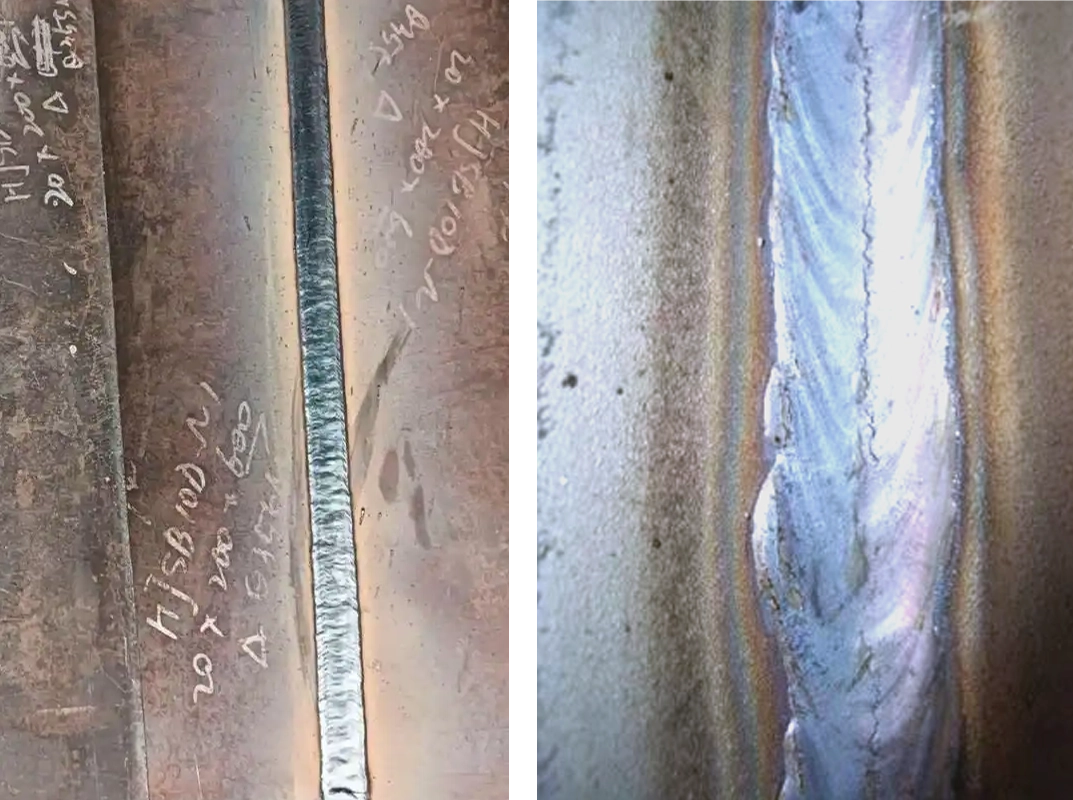
Microscopic comparison of Healthy Weld vs. Cold Crack in High Tensile Steel
Root Cause: High tensile steels have high carbon equivalents, leading to hydrogen-induced cracking.
Prevention:
- Pre-heating: Q700 requires 150–200°C; BST1500 requires 200–250°C.
- Post-Weld Heat Treatment: Essential for releasing hydrogen.
- Inspection: 100% MT/UT testing is non-negotiable.
🔴 Risk 3: Structural Buckling (Over-Lightweighting)
Symptom: Chassis distortion on rough roads; “Wavy” buckling of the web plate.
Prevention:
- Minimum Thickness: Web plate thickness should never go below 5mm, even when using Q700.
- Design Check: FEA Verification must show first-order modal frequency ≥8 Hz and a safety factor ≥2.0.
- Avoid: Do not blindly replace 6mm Q355 with 4mm Q700.
🔴 Risk 4: Corrosion & Rust
Prevention:
- Surface Prep: Mandatory Sa2.5 Sandblasting (Roughness Rz=40–70 μm).
- Coating System: Epoxy Zinc-Rich Primer (≥60μm) + Polyurethane Topcoat.
- Coastal Areas: Use Polyurea chassis armor.
🔴 Risk 5: Counterfeit Materials
Case: A factory used “HQ700” which turned out to be Q420. The chassis bent within 6 months.
Prevention:
- Source: Buy only from mills with IATF 16949 certification (e.g., Baosteel, Ansteel).
- Verification: Request the original MTC (Mill Test Certificate) and cross-check Heat Numbers.
- On-Site Test: Perform spectral component analysis + tensile testing upon material arrival.
V. Aluminum & Stainless Steel: Applications
1. Aluminum Alloy (5083/6061)
- Applications: Tanker bodies (5083-H116), Aviation Fuel (Non-sparking).
- ⚠️ Galvanic Corrosion: Aluminum and Steel create a battery effect. Solution: Use Rubber/PTFE isolation gaskets; never bolt directly metal-to-metal.
- ⚠️ Fatigue: Promote Friction Stir Welding (FSW) for 90% joint strength retention.
2. Stainless Steel (304/316L)
- Applications: Chemical tankers (316L for acid resistance).
- ⚠️ Intergranular Corrosion: Always choose Low-Carbon grades (304L/316L).
- ⚠️ Pickling: Post-weld acid washing (passivation) is mandatory.
VI. Non-Metal Components: Flooring
1. Composite Materials (FRP/GRP)
Top choice for Reefer Trailers. No thermal bridging.
- Selection Key: The Gel Coat must be UV-Resistant to prevent yellowing. Glass fiber content should be ≥25%.
2. Flooring Materials
| Container Grade Bamboo | China’s Competitive Edge. High strength, water-resistant, and more durable than plywood. Standard thickness: 28-30mm. |
| Hardwood (Apitong) | The standard for US/European markets. Extreme nail-holding power for securing heavy machinery. |
VII. Joint Technology: Welding vs. Mechanical
Structural integrity depends 30% on material and 70% on connection technology.
1. Welding Process
| Material | Consumables (AWS) | Critical Process |
|---|---|---|
| HSLA (Q355) | ER70S-6 | Standard MAG welding. |
| High-Tensile (Q700) | ER70-G | Must Preheat 100-150℃! |
| Wear-Resistant | ER50-6 (Base) + ER70-G | Preheat 200℃ + Soft wire base layer. |
| Aluminum (5083) | ER5356 / ER5183 | Indoor welding only (Wind protection). |
| Stainless (304) | ER308L | Must be Pickled & Passivated. |
2. Mechanical Fastening: The Huck Bolt
✅ The Solution for Steel-Aluminum Joints
- Why: Steel and Aluminum cannot be welded together due to different melting points.
- Benefit: Vibration resistance is 5x that of standard nuts/bolts. Permanent locking.
- Anti-Corrosion: Must use Dacromet coated collars.
3. Sealing Process (Waterproofing)
The final defense for keeping cargo dry.
- ❌ Acidic Silicone: Cheap but releases acetic acid, corroding metal and peeling paint.
- ✅ MS Polymer Sealant: The industry standard. Solvent-free, UV resistant (10+ years), and paintable.
VIII. Global Standards Comparison Table
| China GB | Europe EN | USA ASTM | Note |
|---|---|---|---|
| Q235B | S235JR | A36 | Mild Steel |
| Q355B | S355JR | A572 Gr.50 | HSLA Steel |
| Q700 | S700MC | A514 Gr.B | High Tensile |
| 5083-H116 | EN AW-5083 | AA 5083 | Marine Alum. |
IX. Total Cost of Ownership (TCO) & Recommendations
💡 ROI Case Study
An Aluminum Alloy Box Trailer is 2.2 tons lighter than a steel one. Based on 100,000 km/year, this weight saving translates to significant fuel savings or additional payload revenue. The Payback Period is typically under 6 months.
| Operational Scenario | Chassis Material | Body Material | Tech Requirement |
|---|---|---|---|
| General Cargo | Q355B | Corrugated Steel | Standard Painting |
| Long-Haul Logistics | Q700E | 5083 Aluminum | Huck Bolt Connections |
| Fuel/Hazardous | Q550 | 5083 Aluminum | Anti-static, Air-tightness |
| Mining/Off-Road | Q700E | BST1500 (Hardox) | Pre-heat weld, Chassis Armor |
Conclusion: The “Safety-Longevity-ROI” Trinity
Modern semi-trailer sourcing is no longer just about price. Q355 offers the best baseline value, Q700 dominates lightweighting, and Aluminum is essential for specialized ROI. Our Advice: Don’t just buy “Steel”—buy the right steel for your specific terrain.