

Last updated: March 2026

Lead Fleet Maintenance Engineer, Kales Vehicle
What is semi-trailer brake fade? Brake fade is the dangerous loss of a commercial truck’s stopping power during long mountain descents. It occurs when aggressive, continuous braking pushes drum or rotor temperatures past 600°F (325°C), burning away friction limits. By 1,000°F (538°C), linings vaporize and mechanical fade expands the drums outward, resulting in catastrophic failure without warning.
The Standardized Safety Process for Mountain Grades
Step 1: The “Pre-Trip Inspection” (PTI) Is Non-Negotiable 🔧
Before cresting a mountain pass, you must verify the thermal capacity and active tolerance of your foundational components. Vehicles suffering from continuous operation wear are severely jeopardized on 6%+ grades.
- Brake Clearances: Visually inspect slack adjusters. Brakes slightly out of adjustment heat up faster because other axles must absorb the stopping burden.
- Air Systems: Bleed the air dryer to ensure zero moisture. Frozen or damp lines severely delay air transfer to the trailer relay valves.
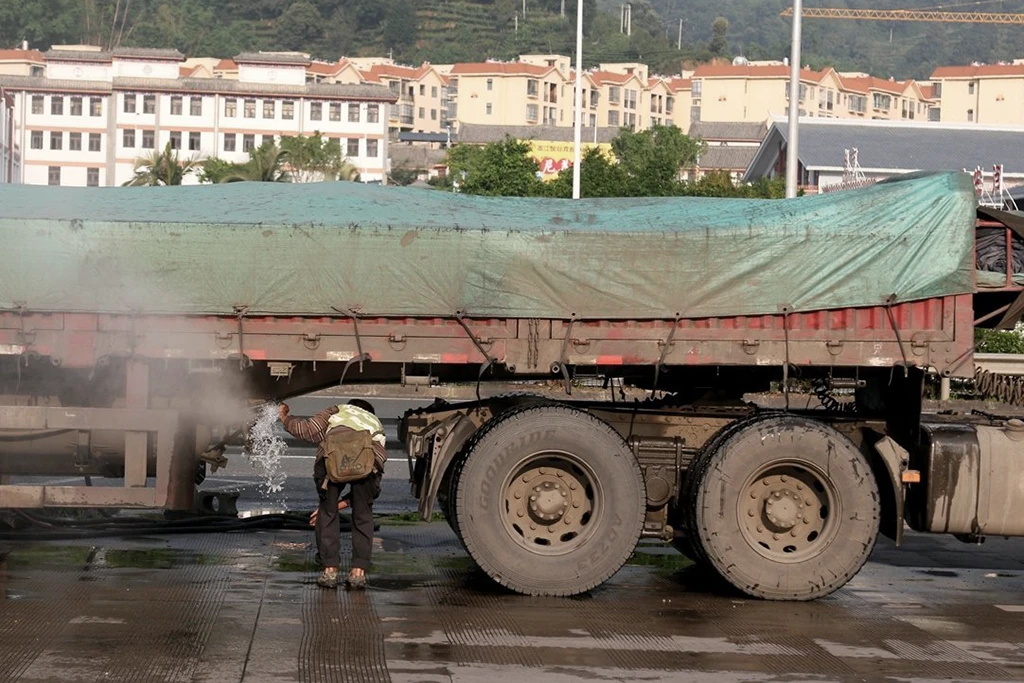
- Cooling Upgrades: In mining sectors using “brake water spray” cooling systems, ensure maximum water levels and clear nozzles.
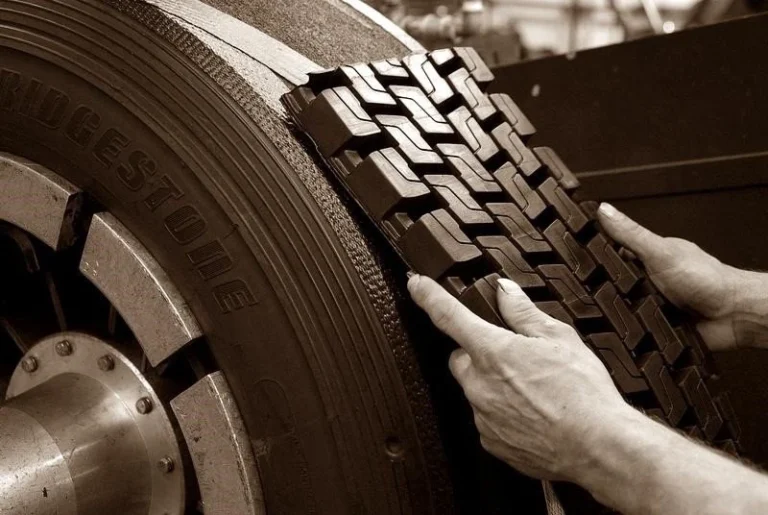
- Tire Degradation: 1,000°F brake heat bleeds directly into wheel rims and tires, elevating blowout risks on defective rubber.
Step 2: Securing the “Right Gear” Strategy ⚙️
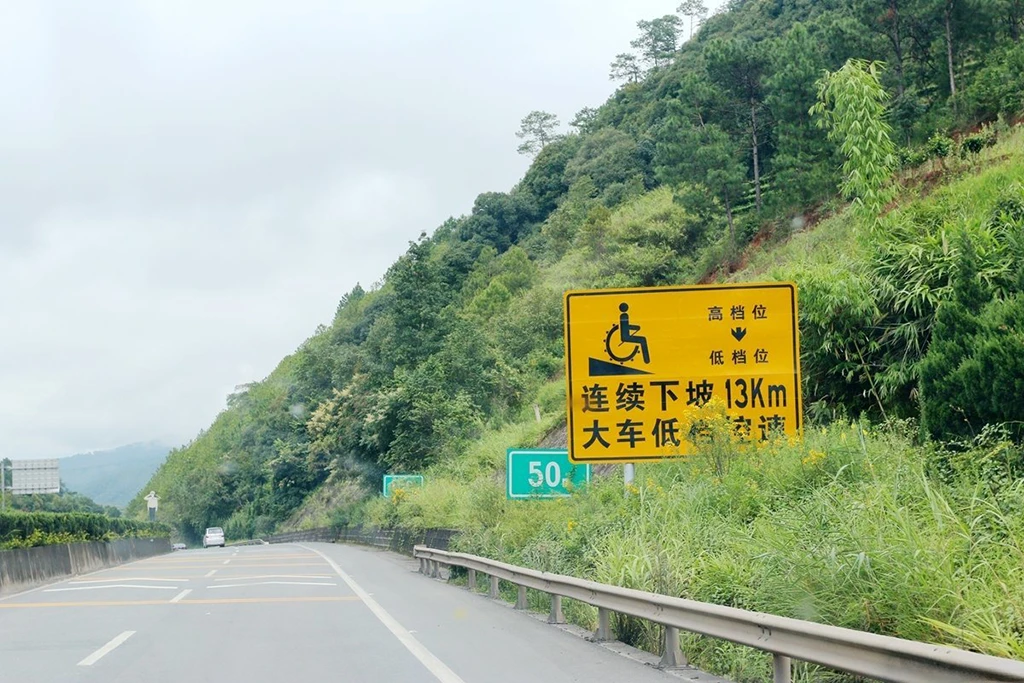
Defensive thermal management begins with the transmission, not the foot pedal. The golden rule for long grades is utilizing lower gears before crossing the peak.
🛑 The Danger of Neutral Coasting
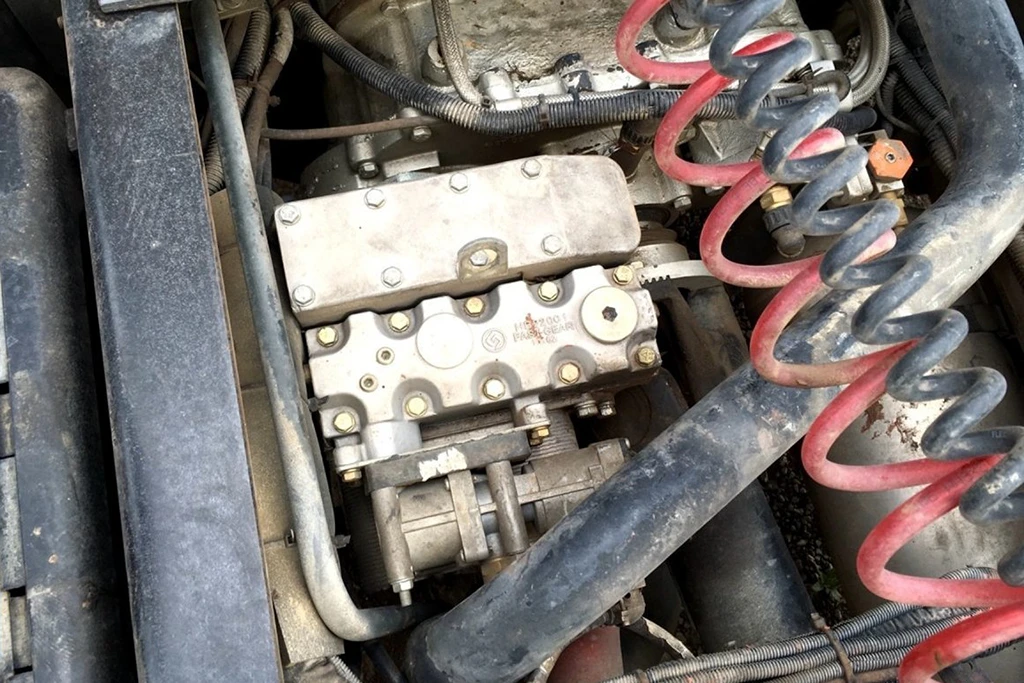
Coasting a semi-trailer in neutral is illegal and eliminates critical engine compression resistance. Furthermore, idling RPMs fail to power the air compressor fast enough to replace the massive air volume lost during continuous downhill braking.
Step 3: Mastering “Snub Braking”
“Riding” the brakes with light, continuous pressure acts as an immediate catalyst for glaze and drum expansion. Instead, the official CDL Guidelines mandate the Snub Braking cycle to force intermittent cooling intervals.
- Allow the vehicle speed to drift up to your established “safe control speed” (e.g., 40 mph).
- Apply service brakes firmly to cut the speed by 5-6 mph in approximately 3 seconds.
- Release the pedal completely. This flushes the friction zone with air, bleeding heat off the drum.
- Leverage the engine brake/retarder to hold the vehicle until it inevitably creeps back up, then repeat.
Step 4: Weather Adaptation Formulas 🌧️
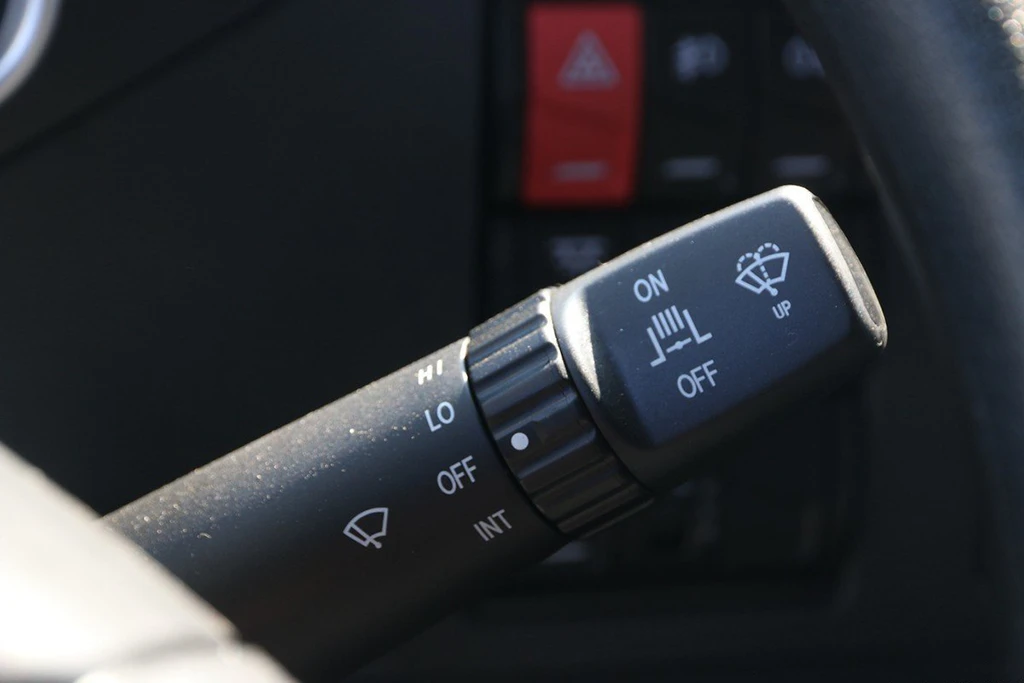
Weather severely restricts the braking coefficient of friction on the asphalt. Search data warns that wet roads or icy conditions mandate an immediate drop in baseline downhill speed by at least 1/3 (or 33%). When pairing wet conditions with the “Jake Brake” (engine brake), monitor your drive axles—aggressive engine braking on slick surfaces can trigger a dangerous trailer jackknife.
While mastering Snub Braking drastically reduces the risk of overheating, downhill safety is never absolute. Extreme payload overloading beyond the trailer’s rated capacity, undetected mechanical flaws in slack adjusters, or severe black ice can compromise even the best driving techniques. Drivers must always prioritize their company’s specific safety manual and the manufacturer’s load limits.
Our Final Recommendation
Downhill trailer safety relies entirely on avoiding extreme temperatures. A driver using Snub Braking essentially prevents the foundation brakes from breaching the 600°F (325°C) threshold where mechanical friction drop-off begins. Do not ride the pedal, remain in a lowered gear, and maintain your pneumatic lines impeccably.
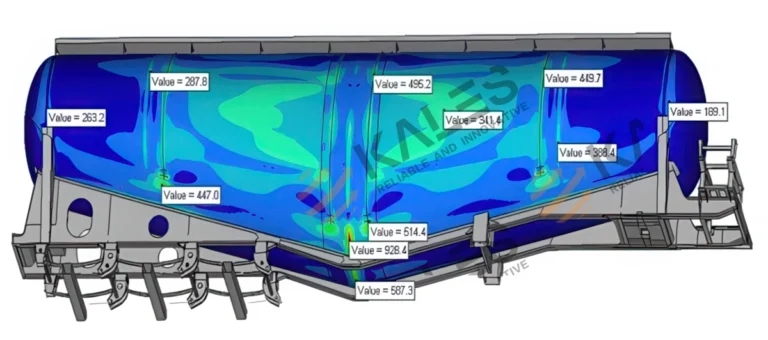
Since long-haul safety starts from the ground up, explore our KALES Heavy-Duty Semi-Trailers. Our units are structurally optimized to accommodate integrated high-performance axles and advanced auxiliary braking configurations specifically engineered for safe, loaded mountain descents.
Frequently Asked Questions
At what temperature does semi-truck brake fade occur?
Brake fade initiates as drum temperatures surpass 600°F (325°C), burning away crucial friction lubricants. By the time temperatures escalate to 1,000°F (538°C) or higher, physical expansion forces (mechanical fade) push the drum dangerously out of the brake shoe’s reach, leading to total failure.
What is the “Snub Braking” technique?
Snub braking is a commercial driving method for descents. Instead of resting a foot on the brake constantly, a driver firmly applies the brakes for about 3 seconds to shave off 5-6 mph from their top safe speed, then completely releases them to allow immediate airflow and cooling before repeating the cycle.
What percentage of truck crashes involve brake problems?
FMCSA analyses reveal that brake system issues or failures contribute to approximately 29% to 33% of all large truck accidents, stressing the vital importance of proper downhill heat management and pre-trip inspections.
Still undecided on the safest trailer configuration?
Don’t guess. Let our engineering team configure the precise braking load parameters for your fleet’s mountain operations.