

Chief Structural Engineer, Kales Vehicle
What is a pneumatic dry bulk trailer? A pneumatic dry bulk trailer (also known as a cement bulker) is a specialized heavy-duty commercial vehicle designed to transport dry powder materials with a particle size of ≤ 0.1mm, such as bulk cement, fly ash, lime, mineral powder, and flour. Achieving fast discharge speeds and structural durability requires precision engineering, including CAE design, T700 high-strength steel, and robotic welding.
About Kales Vehicle: A Premier Powder Tanker Manufacturer
Founded in 2012 and headquartered in Shandong, China, Kales Vehicle possesses over a decade of specialized experience in semi-trailer R&D and manufacturing according to ISO 9001 quality management standards. We have successfully delivered 12,000+ units globally, including over 2,000 pneumatic dry bulk trailers, serving heavy industry clients across East Asia, Southeast Asia, Central Asia, the Middle East, and Africa.
Why High-Quality Cement Bulkers Are Difficult to Perfect
A common misconception in the logistics industry is that a powder tanker is simply “a steel tank welded onto a chassis.” In reality, achieving fast discharge speeds, minimal residue rates, stable handling, and long-term chassis durability depends entirely on precision engineering. A poorly built tanker inevitably leads to clogged pipes, structural cracks, and severe profit loss.
Follow us as we walk you through the 7-step manufacturing journey of a premium Kales bulk powder transport trailer.
🔧 Step 1: Design – CAE Simulation for Maximum Structural Integrity
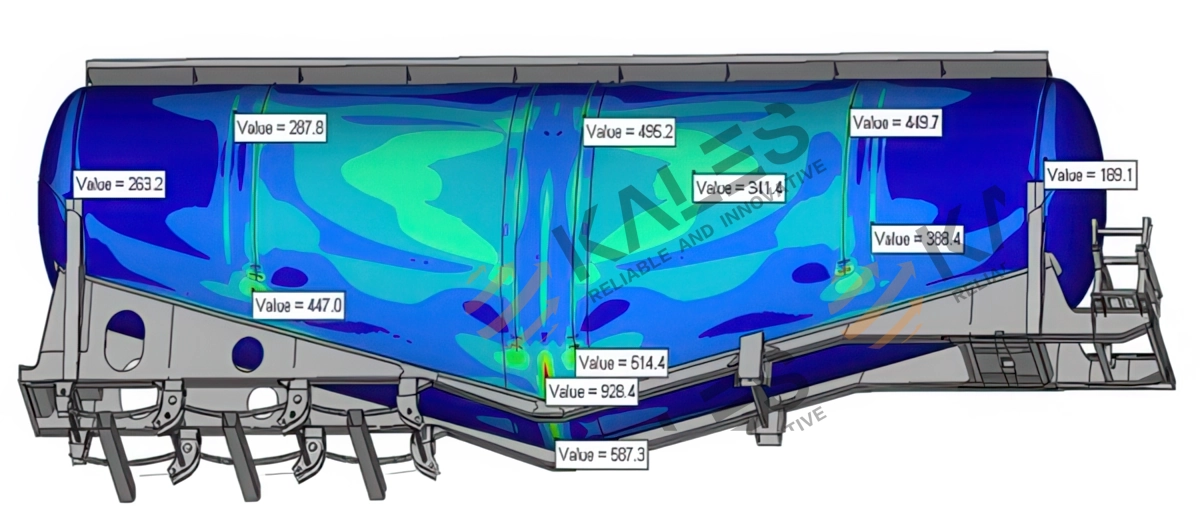
We do not rely on empirical estimates; instead, we utilize advanced 3D modeling and CAE (Computer-Aided Engineering) mechanical simulations to validate every structural component before production begins.
- We utilize a steeper tank angle design that exceeds standard industry benchmarks by 2–3° to ensure smoother material flow and significantly faster discharge rates.
- We rely on rigorous stress analysis to inform the skeletal layout, effectively preventing cracking and deformation under heavy payloads.
- We engineer a refined chassis structure that deliberately lowers the center of gravity (C.G.), providing superior anti-rollover stability on rough mining terrain.
✂️ Step 2: CNC Cutting & Forming – Precision Defines Lifespan
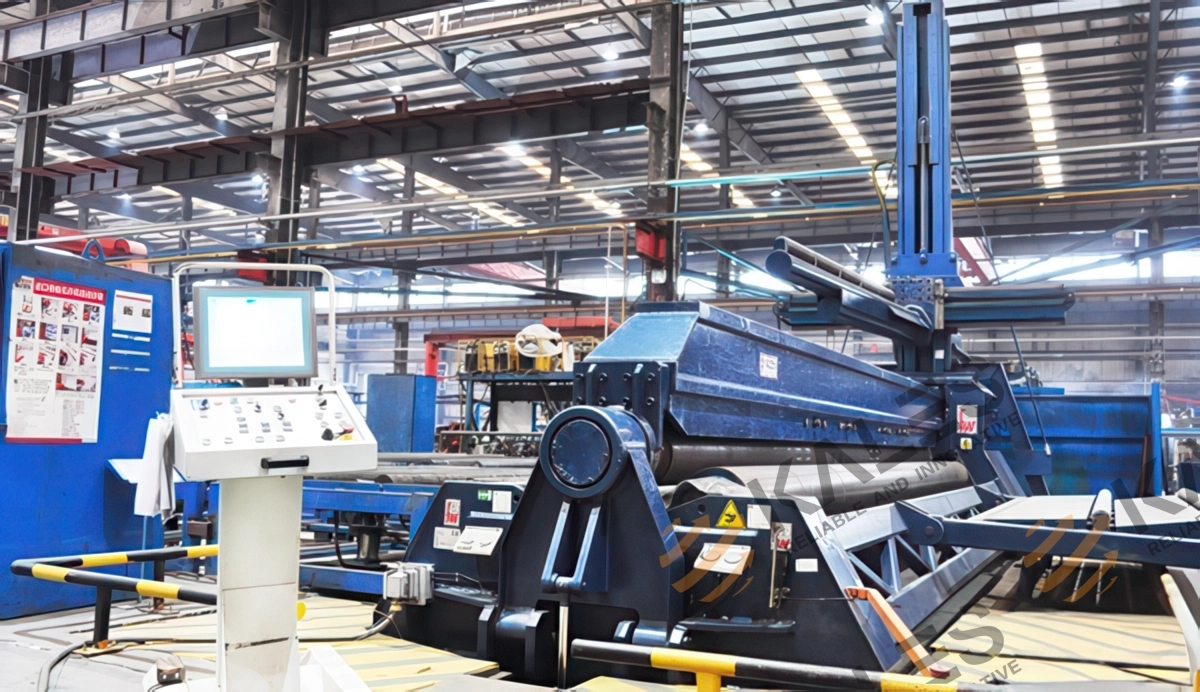
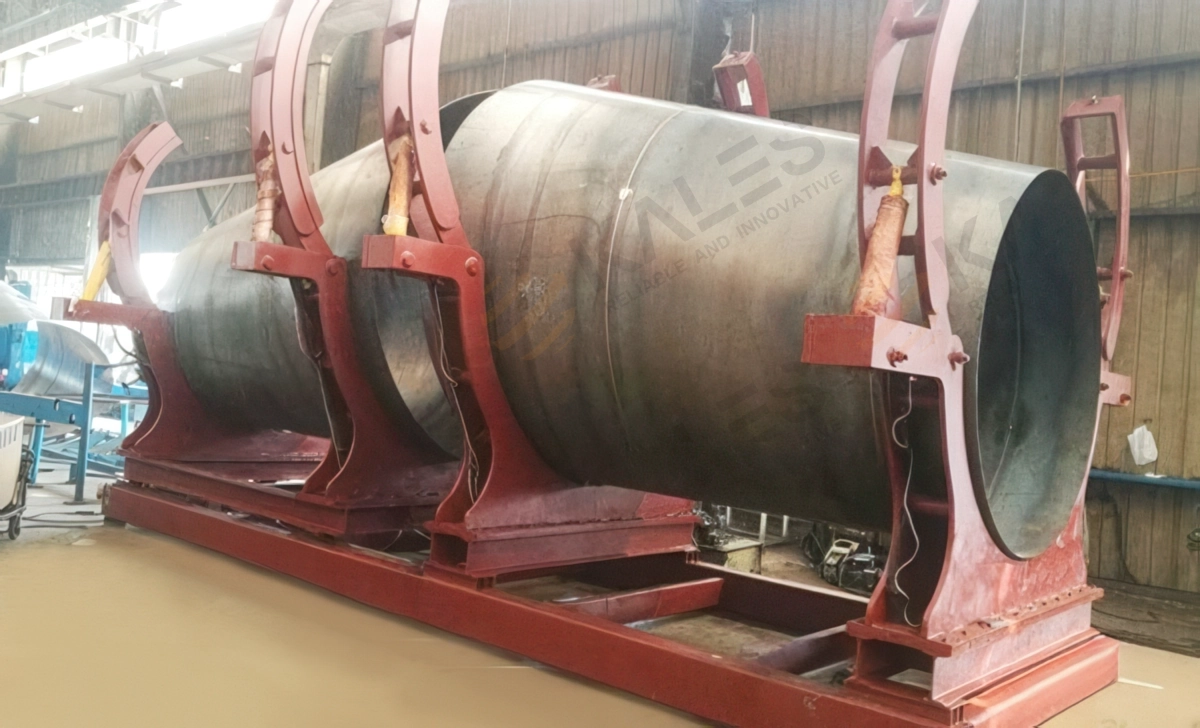
- We strictly utilize premium T700/Q345B high-strength steel that is laser-cut to a strict tolerance of ≤ 0.01mm to maintain 100% material integrity.
- We process the tank body using advanced CNC rolling machines in a single pass, completely eliminating the hammering and internal stress that cause structural weak points.
- We assemble the sections on a framed assembly platform to guarantee a perfectly straight and true tank body alignment.
🔥 Step 3: Robotic Welding – The Invisible Craftsmanship
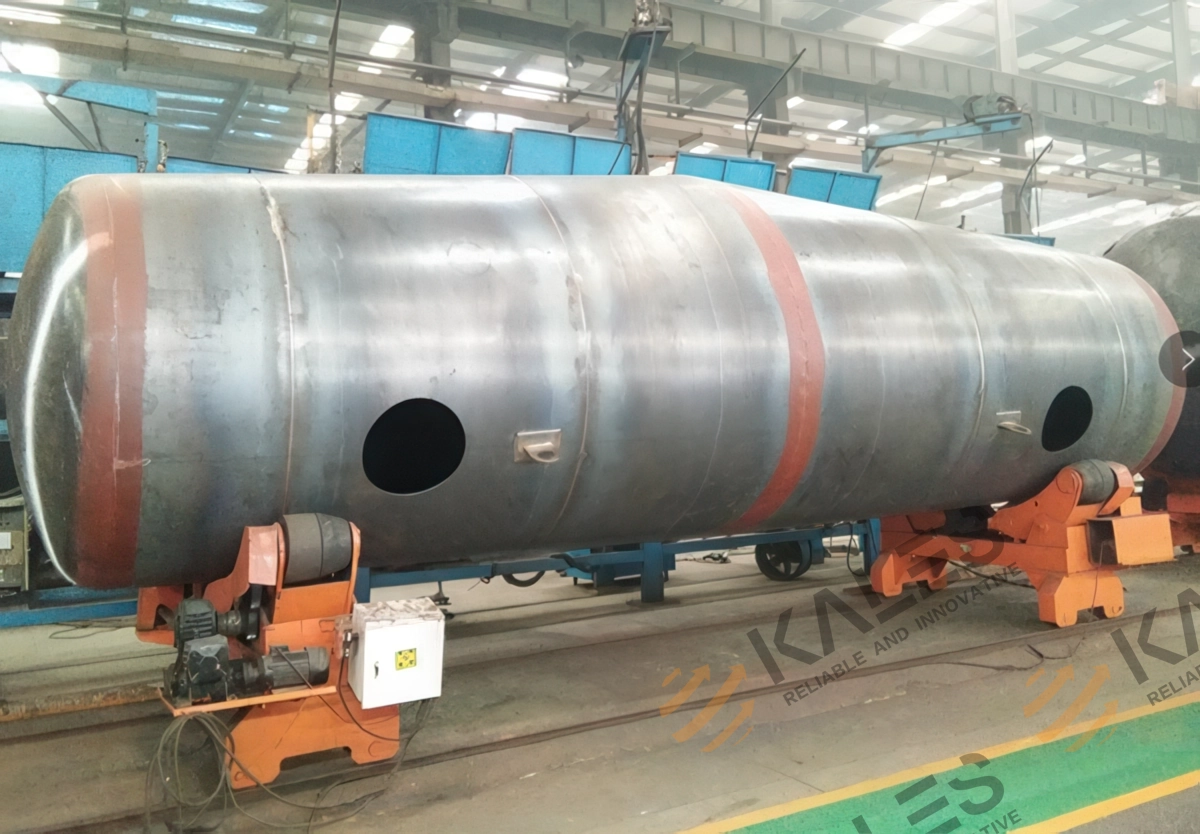
We utilize fully automated robotic welding technology to ensure the tank can safely withstand high internal pneumatic pressure without failure.
- We deploy single-sided welding with double-sided forming technology to create deep, consistent penetration for maximum seam strength.
- We ensure all welds are flawlessly uniform and completely free of porosity or slag inclusions, which is critical for pressure vessel safety standards.
- We guarantee even stress distribution across the entire tank body to prevent localized stress points that lead to metal fatigue over time.
⚙️ Step 4: Chassis Alignment – Eliminating Trailer Sway
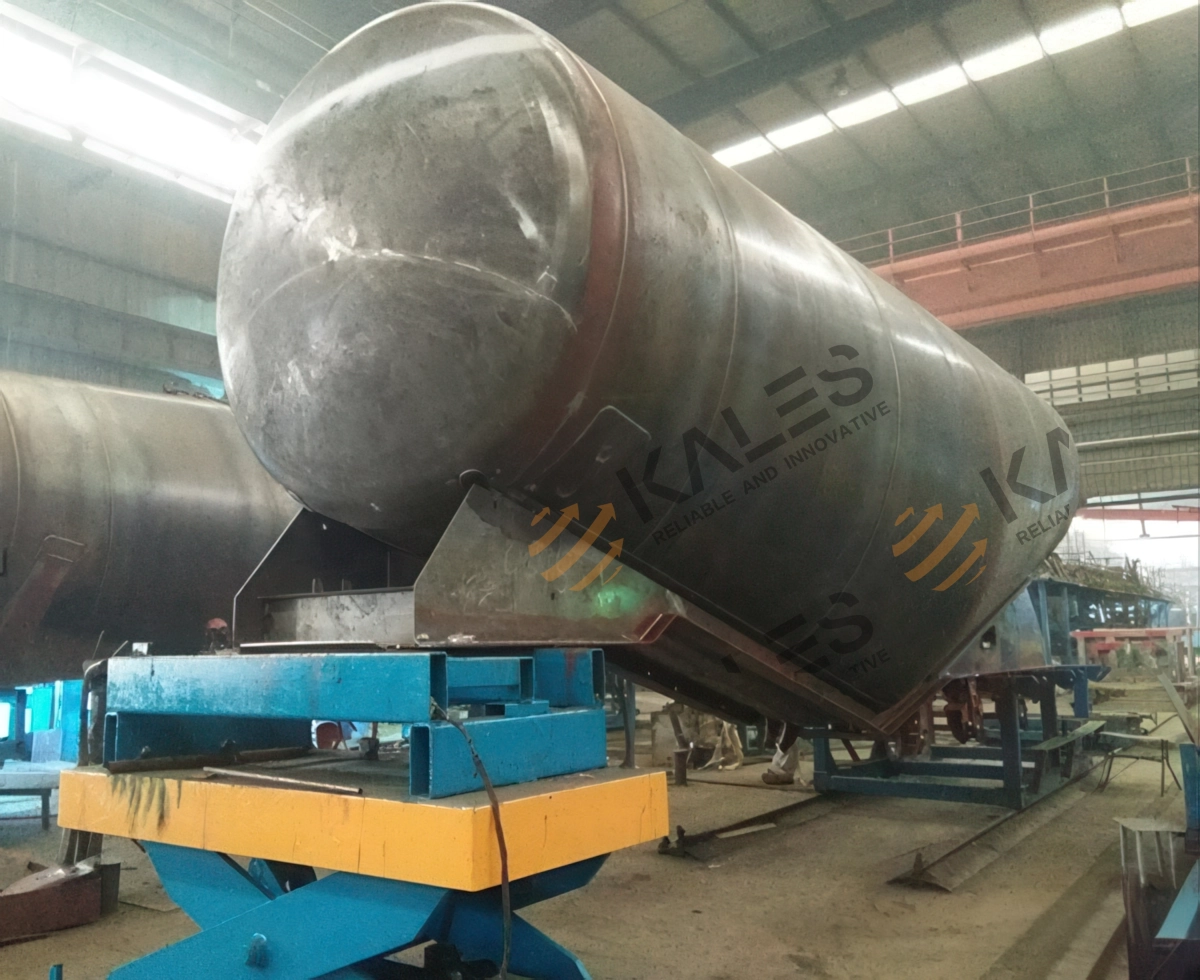
A frequent driver complaint with inferior trailers is a dangerous “swaying” or “wobbling” sensation at highway speeds. Kales resolves this by performing meticulous chassis and kingpin laser alignment immediately after the tank is mounted.
💨 Step 5: The “Heart” of the System – Air Compressor & Discharge
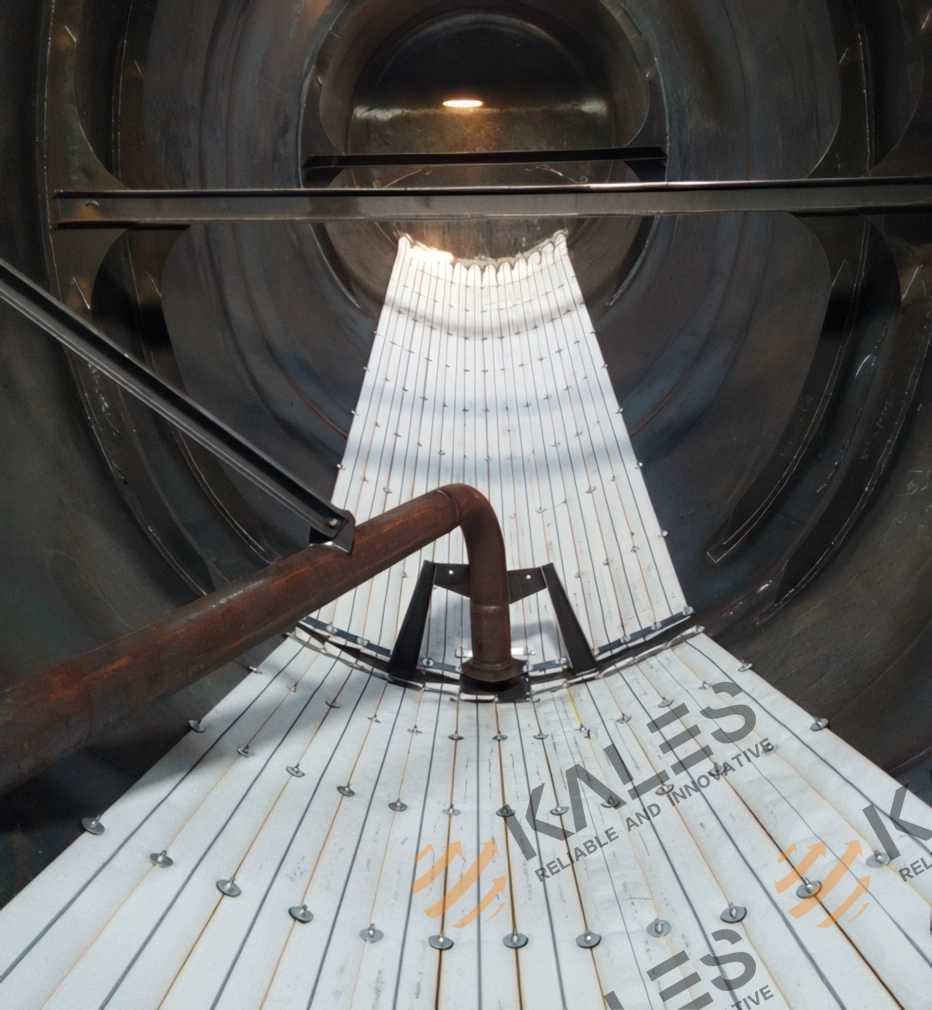
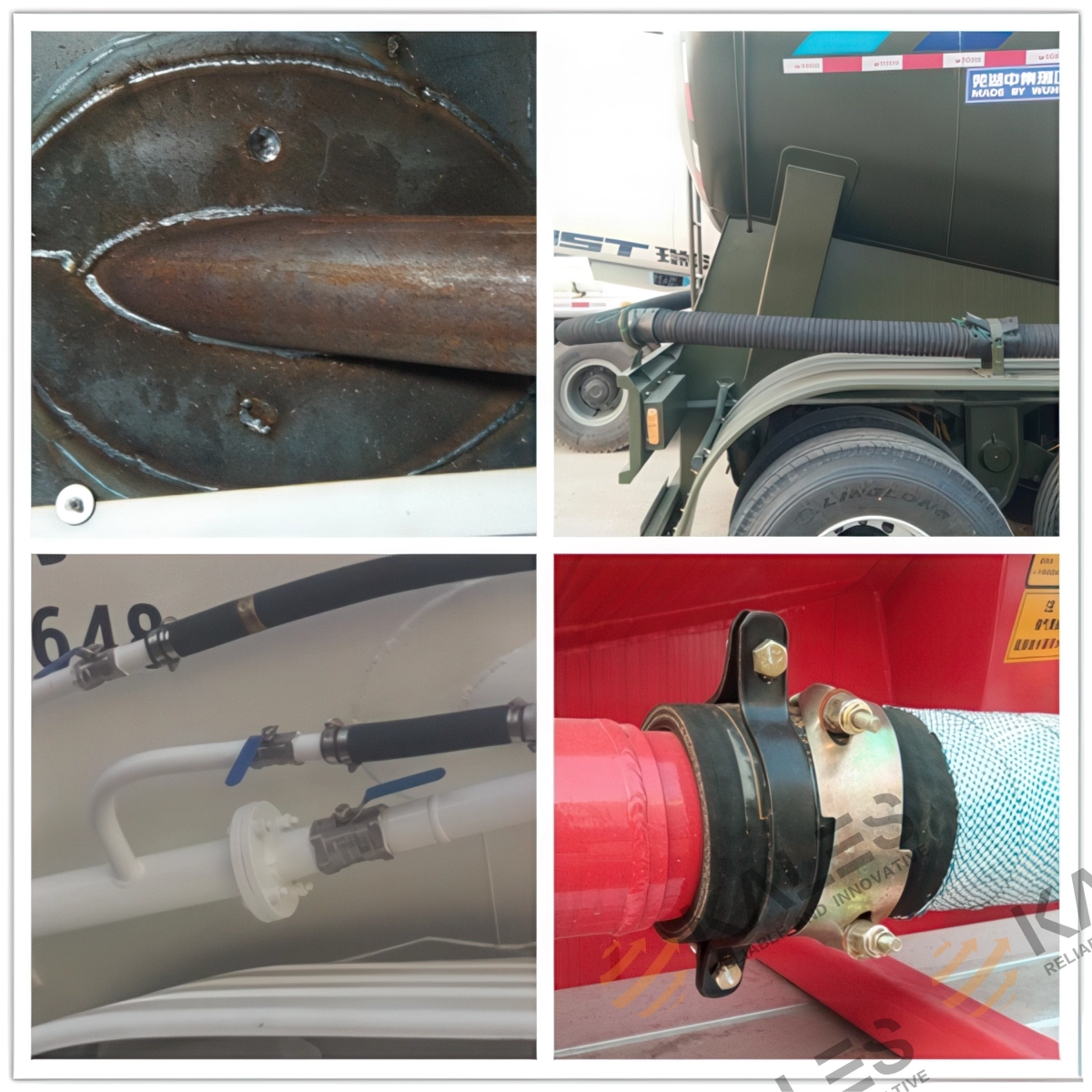
The operational efficiency of a pneumatic trailer relies entirely on its power source and internal fluidization design.
- We equip our trailers with renowned Weichai Diesel Engines and Bohai/Fuda Air Compressors (12m³ double-cylinder) to ensure a massive and stable air pressure output.
- We combine an enlarged outlet with a high-angle fluidized bed to achieve remarkable discharge speeds of up to 1.5 tons per minute.
- We implement a “No-Dead-Corner” internal tank structure to guarantee a residual rate of <0.3%, ensuring you deliver more product on every load.
🎨 Step 6: Protective Coating – Marine-Grade Protection
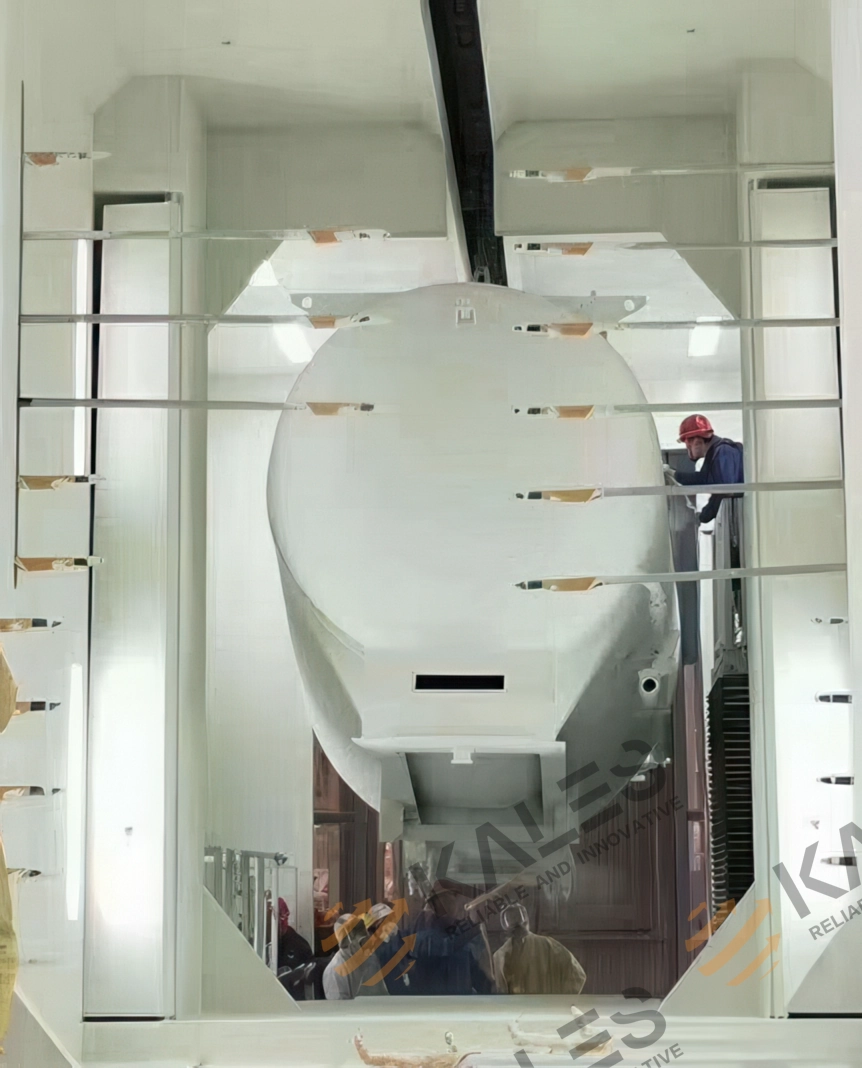
- We apply an environmentally friendly, phosphate-free, and heavy-metal-free Polyurethane Powder Coating.
- We ensure our coating thickness reaches H-Grade (Marine Standard) at 120μm+, providing superior resistance to salt spray and humidity.
- We guarantee our paint finish is proven to withstand 5–8 years without fading or peeling, even in harsh tropical climates.
🔍 Step 7: Quality Control – Rigorous Pressure Testing
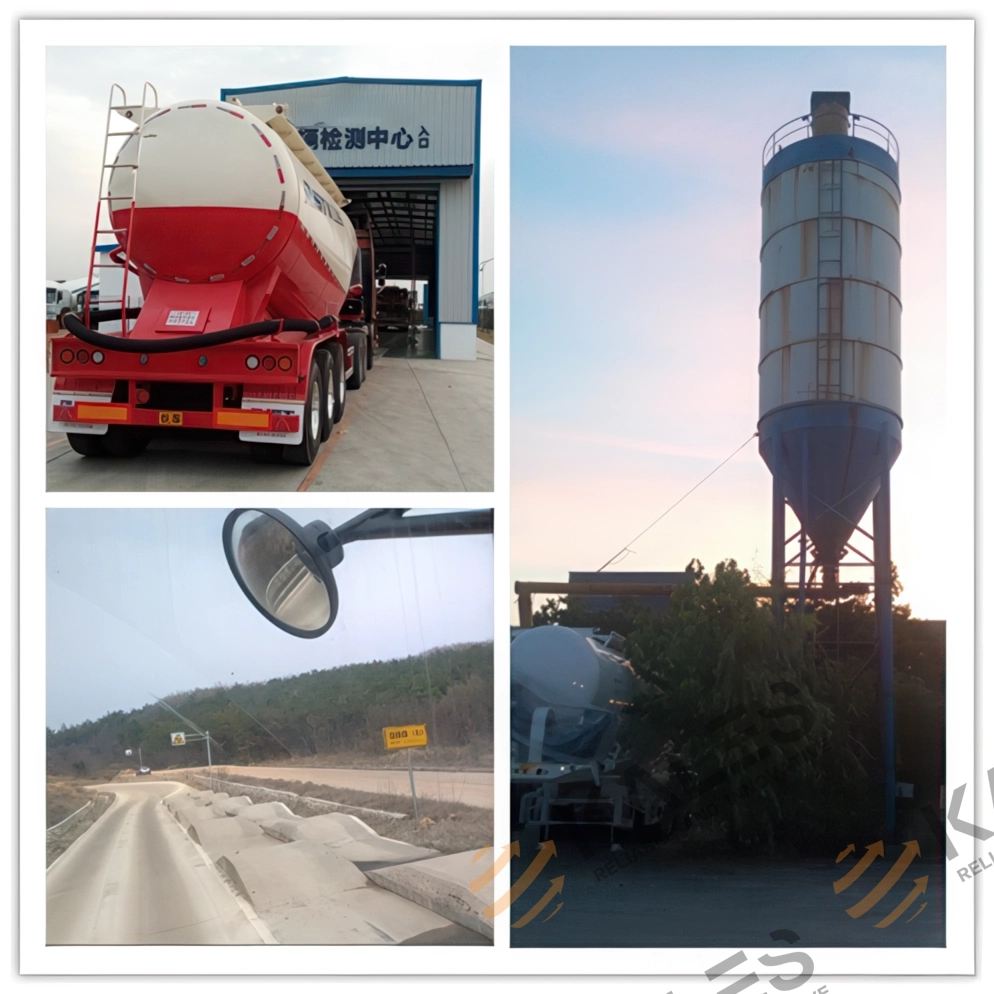
Every cement bulker trailer must pass a rigorous QC inspection before shipping:
- We conduct strict Air Tightness Tests using high pressure to ensure absolutely zero pneumatic leaks.
- We perform Discharge Efficiency Tests to manually verify unloading speeds and residue rates.
- We execute 30 km/h Cornering Stability Tests on the testing track to ensure anti-rollover safety for the driver.
If it doesn’t pass, it doesn’t ship. Period.
While Kales pneumatic trailers are engineered for a discharge speed of up to 1.5 tons per minute, actual unloading efficiency is highly dependent on the density, humidity, and particle size of the specific dry bulk material being transported, as well as the skill of the compressor operator.
Frequently Asked Questions
What is the discharge speed of a Kales powder tanker?
When equipped with our standard 12m³ air compressor and handling standard dry cement, a Kales powder tanker achieves a rapid discharge speed of approximately 1.2 to 1.5 tons per minute, leaving a residue rate of less than 0.3%.
What is the best steel for manufacturing a cement bulker?
T700 high-strength steel is considered the industry standard for premium cement bulkers. It offers exceptional tensile strength, allowing manufacturers to reduce the tare weight of the trailer without compromising the pressure vessel’s structural integrity.
Can a pneumatic dry bulk trailer haul different materials?
Yes, pneumatic trailers can haul various dry bulk powders including fly ash, lime, and flour, provided the particle size is ≤ 0.1mm. However, thorough cleaning of the tank interior is mandatory when switching between different types of materials to prevent contamination.
Ready to Upgrade Your Logistics Fleet?
Kales Vehicle provides customized bulk powder transport solutions tailored to your specific payload and terrain requirements. Don’t compromise on your most valuable asset.